Key points
- Our food systems lie at the heart of the interactions between human, animal, plant and environmental health. In the face of climate, health and biodiversity crises, the transformation of these systems is no longer an option; it is becoming a necessity.
- Several key levers for implementing the One Health approach were identified during this progress meeting:
- Embedding One Health within territories, as close as possible to actors;
- Breaking down the silos between public policies, research and operational action;
- Mobilising all disciplines, including the human and social sciences;
- Investing in prevention rather than focusing solely on crisis management;
- Building strong partnerships between institutions, scientists, funders, farmers and civil society.
Lumpy skin disease, bluetongue and epizootic haemorrhagic disease, African swine fever, and peste des petits ruminants: the prevention of emerging animal diseases has become a major health challenge in Europe and throughout the world.
Whether epizootic (affecting animals) or zoonotic (transmissible to humans), such as Rift Valley fever – which recently affected Senegal and Mauritania – these emerging diseases call for the deployment of One Health approaches and large-scale international cooperation. Initiatives such as PREZODE and its PREACT programme illustrate these efforts, through projects like AFRICAM and, more recently, ASEACA.
The key challenge is to shift from a crisis management approach to one focusing on preventing the risks of emergence.
Thierry Lefrançois
Adviser to the CEO of CIRAD, specialist in One Health approaches
One Health: preventing and limiting the emergence of new diseases
The One Health approach is based on the interdependence between human, animal, plant and ecosystem health. It recognises that most emerging diseases, and particularly zoonoses, originate in the interactions between these different “compartments”. Driven by climate change, biodiversity loss and food system change, these diseases require global and coordinated responses to ensure they are better anticipated and controlled.
“Preventing the emergence of new pathogens means detecting them as early as possible through participatory surveillance, involving veterinary services, livestock farmers and local communities. It also requires rebalancing what is known as the agroecosystem, in other words rethinking the way we produce our food”, says Thierry Lefrançois. “Agroecology, for example, is a powerful lever for preventing infectious disease emergence, improving food security and enabling sustainable territorial development”.
This transformative “One Health” approach requires sustained political commitment, international cooperation and shared efforts to integrate social and ecological dimensions into the management of health risks.
Elisabeth Claverie de Saint Martin
CEO of CIRAD
This is the focus of the One Health Summit on 7 April, which continues the momentum of the One Planet Summits that address the major global crises – climate, biodiversity, food and health security. This ninth summit aims to translate the One Health approach into concrete, coordinated actions at the international level.
Held as part of the French G7 presidency, the summit aims to place these issues at the top of the international political agenda.
The One Health Summit is an initiative of the President of the French Republic, who has decided – as part of France’s G7 presidency and for the first time – to bring together heads of state and government from both the Global North and South to put the “One Health” approach at the top of the international agenda . Science will be at the heart of the summit, with the organisation of an international scientific conference. We are also inviting numerous actors from civil society, local authorities, youth organisations, the private sector, development banks and philanthropic organisations, all of whom are actively involved in implementing the “One Health” approach.
Anthony Chaumuzeau
Secretary General of the One Health Summit
Implementing the One Health approach and transforming food systems
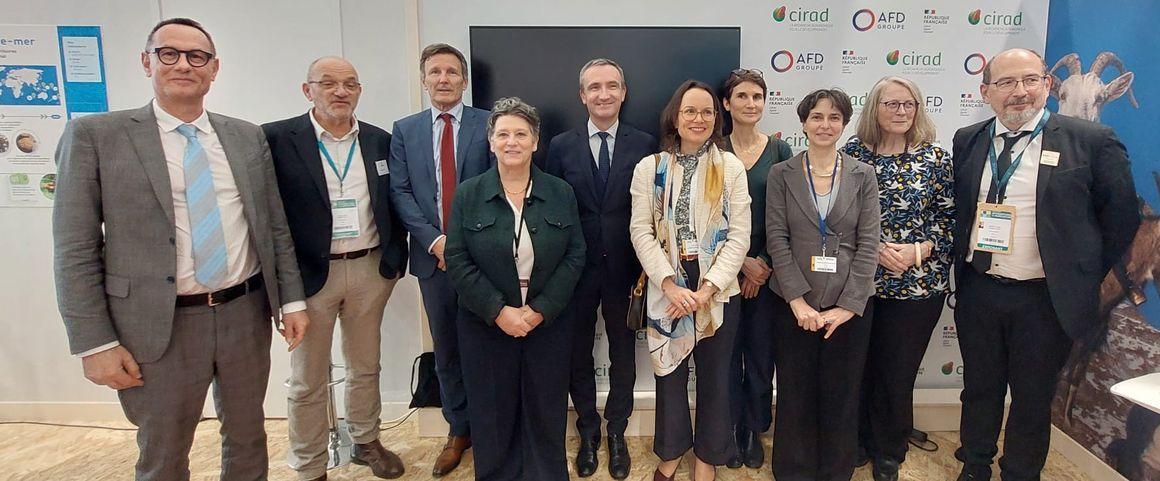
The progress meeting on the summit, held at the International Agricultural Show on 26 February, highlighted the urgent need to act collectively and to strengthen the dialogue between science, local territories and decision-makers in order to better prevent the health crises of the future.
The speakers underscored the central role of food systems in global health dynamics. Current food systems, closely connected with the environment and agricultural practices, have a direct impact on the health of human and animal populations.
In this context, the One Health approach proposes a profound transformation of food systems towards greater resilience, sustainability and social justice, by mobilising territorial actors, policymakers and agricultural organisations.
The discussions also stressed the need to strengthen integrated surveillance systems, to stimulate innovation in environmental health, and to promote public policies consistent with One Health principles.
Participants emphasised that only transdisciplinary and international cooperation can help to effectively prevent the emergence of new diseases and to build stronger health and food systems for the future.
The seven focal areas of the summit and the scientific conference, and their respective contacts at CIRAD:
- Zoonotic reservoirs and vectors: Marisa Peyre
- Sustainable food systems: Muriel Figuié
- Antimicrobial resistance: Sophie Molia and Flavie Goutard
- Exposure to pollution (and pesticide reduction): François Cote
- Data: Jean François Dufayard
- Human and Social Sciences: Aurélie Binot
- One Health Governance: Thierry Lefrançois
One Health approaches are increasingly popular, particularly since the Covid-19 crisis. Rather than being limited to diseases alone, they are intended to promote human, animal and plant health, within healthy ecosystems. However, they remain difficult to implement. In a new policy brief, CIRAD suggests a way of putting them into practice, taking a holistic approach to health on a territory scale.
Monitoring, understanding and responding to emerging animal and plant diseases through a One Health approach
CIRAD is actively engaged in tackling emerging diseases, whether they affect livestock, crops, or human health. Its teams conduct research to better understand the mechanisms of disease emergence and transmission, and to thereby anticipate risks, for example with Crimean-Congo haemorrhagic fever or the Nipah virus.
CIRAD also contributes to international health surveillance through the ESA platform and regional networks in Southeast Asia, the Indian Ocean and the Caribbean, following a “One Health” approach.
It plays a key role in the diagnosis of animal diseases by developing innovative tests (for example, the Rift Valley fever test) and serving as a reference laboratory for major epizootics such as peste des petits ruminants or lumpy skin disease. Its work also focuses on developing practical management and control solutions, particularly through vaccines and vaccination strategies for diseases such as avian influenza.
In plant health, CIRAD works in a similar way for plant pests and diseases by proposing strategies for the early detection of outbreaks and control measures, including resistant or tolerant crop varieties (for example, citrus varieties being developed to combat HLB, also known as yellow dragon disease) within agroecological systems, as well as mobile field diagnostic tests (such as Lamp-PCR).