



















- Home
- Press area
- Press releases
- ASEACA launched to strengthen zoonotic disease prevention
Preventing the risks of zoonotic disease emergence: the new ASEACA project has been signed
Institutional news
23 February 2026
The PREACTS programme (PREzode in ACTion in the global South) represents France’s contribution to funding the PREZODE initiative (PREventing ZOonotic Disease Emergence). ASEACA is its third phase, following AfriCam and ASAMCO. ASEACA was signed on 23 February between the Agence Française de Développement and CIRAD.
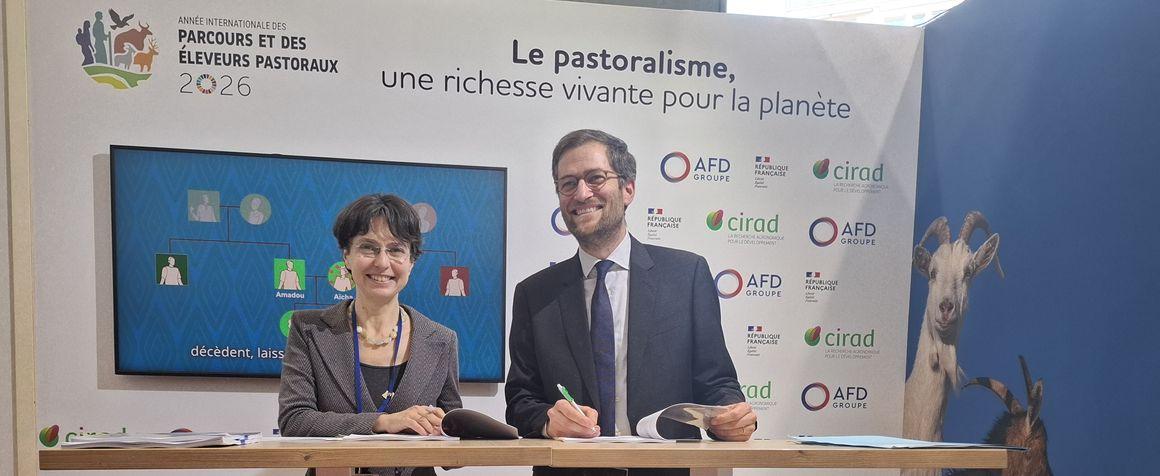
Elisabeth Claverie de Saint Martin, CEO of CIRAD, and Bertrand Walckenaer, Deputy Director-General of AFD, during the signing at the 2026 International Agricultural Show. © J. Kuhn, CIRAD
Mobilising the One Health approach to reduce the risks of emergence of zoonotic pathogens with pandemic potential in the context of environmental, climate and social changes, as well as gender inequalities, is the objective of the ASEACA project, which will run until 2029 within the framework of the PREACTS programme (PREzode in ACTion in the global South).
With a budget of 5 million euros provided by AFD, ASEACA will be implemented by CIRAD and its partners.
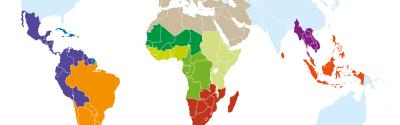
Its aim is to support and reinforce the deployment of sustainable solutions to prevent the emergence and transmission of zoonoses in three regions: Southeast Asia (Vietnam and the Philippines), Southern and Eastern Africa (Mozambique, Zimbabwe and Tanzania), and the Caribbean.
These regions and countries were selected jointly by CIRAD and AFD, taking into consideration:
- the risk of emergence of pandemic-prone zoonoses within their territory ;
- the existence of a national One Health strategy or a commitment to establishing one, along with strong political support from governments for implementing a One Health approach ;
- the existence of robust, foundational CIRAD and PREZODE partnerships ;
- opportunities for synergies with projects funded by AFD or prospects for funding in the targeted areas.
The aim will be to support their national strategies and policies at the interface of human, animal and environmental health, and in particular to:
- Improve knowledge of the risks of zoonotic emergence at the human-animal-ecosystem interface, according to sociocultural contexts, the environment, and local socioeconomic practices and constraints ;
- Identify, monitor and reduce these risks by developing local risk reduction and surveillance strategies with frontline actors, with a view to informing public policies at the national and supranational levels ;
- Strengthen local risk management capacities by supporting existing local actors and initiatives ;
- Strengthen the capacities and inclusion of communities and civil society organisations in health-related decision-making, drawing on participatory science and fostering continuous dialogue between the State, science and society ;
- Understand gender inequalities in zoonotic emergence in order to better integrate them into risk reduction and prevention strategies ;
- Strengthen regional “One Health” collaborations and partnerships and promote cooperation between initiatives and sectors, building on existing tools and/or those developed within other projects.
The content of the project is based on a co-construction process, involving regional workshops and discussions with and among national partners, at the country and regional levels.
It is structured around four components: assessing the risks of zoonotic disease emergence; reducing the risk of zoonotic emergence (prevention strategy); co-developing and implementing surveillance and early detection strategies and socioeconomic assessments; and promoting a gender, climate, and State-science-society dialogue approach in connection with work conducted in the context of PREACTS-AFRICAM and ASAMCO.
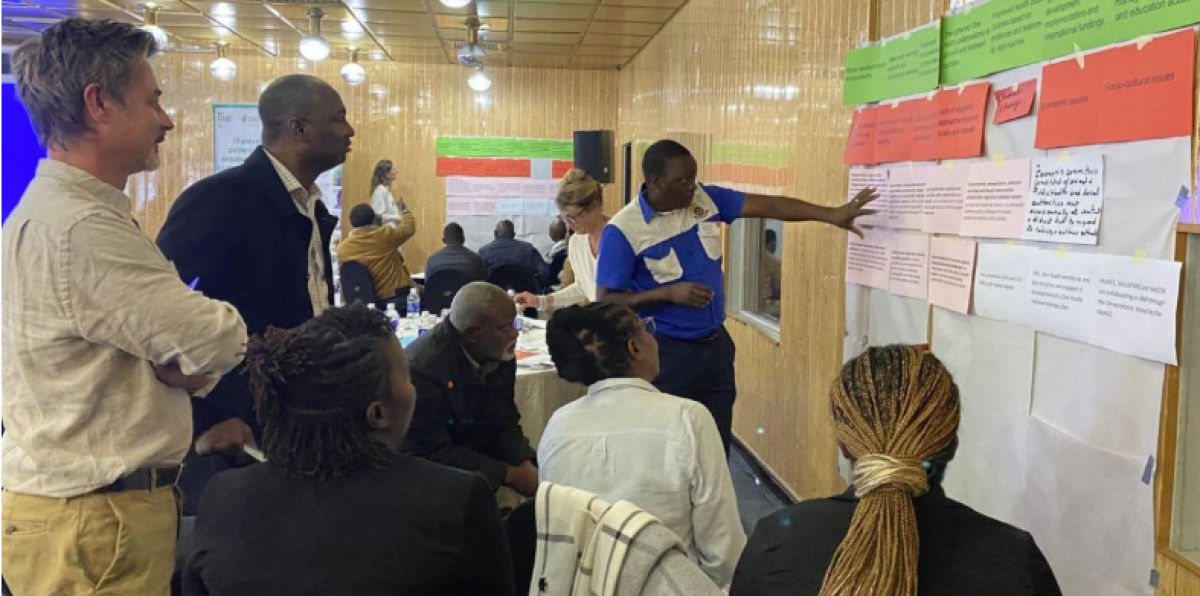
ASEACA project co-construction process. © CIRAD
ASEACA (Preventing the risks of emergence of zoonotic diseases with pandemic potential in Southeast Asia, Southern and Eastern Africa and the Caribbean) is co-constructed with stakeholders in accordance with the five pillars of the PREZODE initiative:
- Understanding zoonotic risks and risk-related practices ;
- Co-constructing solutions to reduce zoonotic risks ;
- Strengthening early warning systems to detect zoonotic risks ;
- Promoting a global information system for surveillance and early detection ;
- Engaging stakeholders and reinforcing “One Health” networks and policies.
See also
Institutional news 8 June 2026
Launch of the AIKO project: Artificial intelligence to process scientific literature

Institutional news 18 May 2026