The Africa Forward Summit marks a strengthening of relations between African countries and France. It will bring together a wide range of players—States, firms, young people, artists, civil society and diasporas—, illustrating the extent and the dynamism of those relations. It will also shine the spotlight on the shared commitment on the part of the countries represented to develop concrete solutions to common challenges, such as building stronger health systems, food sovereignty, competitiveness in the digital field, access to energy, and connectivity.
Fruitful public-private partnerships around agricultural value chains
Public-private cooperation and innovation will be centre-stage on the first day of the summit (11 May), during a Business Forum, Africa Forward Inspire&Connect, due to be attended by 1500 economic decision makers.
CIRAD will be present alongside its African partners, to strengthen their existing partnerships and meet various players from the private sector and the innovation ecosystem, notably within the framework of the International Innovation Hub, and also of its expertise in terms of geographical indications and agricultural value chains, particularly dairy, and smart farming.
Geographical indications, to capture more value
The imbalance in relations between stakeholders in the various value chains means that producers and rural territories face a major challenge: capturing more of the value generated from their local resources and emblematic agricultural products.
Since 2021, the GI Support Fund, implemented by AFD and CIRAD, has funded 11 projects in ten African countries (Senegal, Benin, Ivory Coast, Ethiopia, Rwanda, Uganda, Kenya, Zimbabwe, South Africa and Madagascar), by means of an approach that combines support for both the legal and institutional framework and national producers embarking on a GI approach.
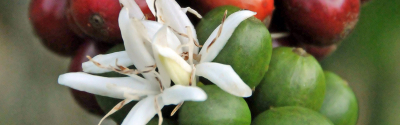
Two GIs have been registered thanks to the fund: weda, a vitamin-rich fruit from Casamance in Senegal, and Karoo lamb from South Africa. Others are under way, for instance riz Danané (Danané rice), an emblematic product from the Tonkpi region in Ivory Coast, coffee from Uganda, Rwanda and Ethiopia, honey from Zimbabwe, Madagascar and Kenya, and tea from Kenya.
In addition to supporting GIs, the GI Support Fund also provides backing for national legal frameworks. A law governing GIs is currently passing through Parliament in Ethiopia and Madagascar.
Coline Lenseigne
CIRAD, GI Support Fund project leader
Supporting the development of dairy farming in West Africa
As part of the rollout of its agricultural policy, the Economic Community of West African States (ECOWAS) adopted a regional strategy in 2020 for the promotion of local dairy value chains in West Africa ("Milk Offensive"), dairy being one of the five strategic agricultural value chains specified in regional agricultural policy.
The strategy set out to promote "a West Africa that emerges as one of the dairy basins of the African continent and progressively increases its contribution to regional trade in dairy products of Community origin". By 2030, it aims to have doubled annual local fresh milk production, from the current 5 billion litres to 10 billion.
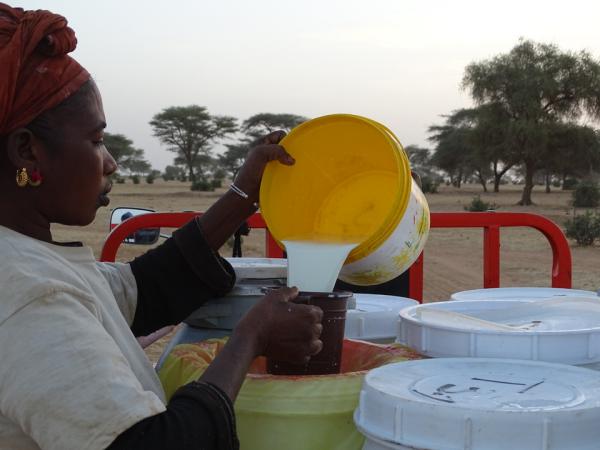
CIRAD, alongside its partners in the dairy value chain, such as the Laiterie du Berger, is supporting that dynamic through its research, within the framework of various projects funded by AFD, including PAOLAO, a project to provide technical support to assist steering of ECOWAS dairy strategy, and in the past AFRICA-MILK.
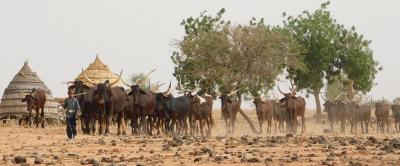
For more than a decade, CIRAD has been supporting players in the dairy sector in the Sahel, from producers to the authorities through industry and NGOs. A look at how CIRAD is contributing to the changes under way in the region: improving collection capacity, supporting dairy policy, building local skills, and so on.
Alongside ISRA and INRAE, CIRAD is co-organising the 5th "Lait, vecteur de développement" meetings in Dakar, Senegal, from 12 to 14 May.
CIRAD is supporting its partners as regards the dairy value chain in West Africa, but also of 14 other strategic value chains such as fruit and vegetables and pulses.
Alexia Prades
Value Chains Officer, CIRAD
A hub for innovation within food systems
The development of firms and start-ups within agricultural value chains in Africa is vital for the continent's food security, and its young people depend on it for jobs. The innovation projects with the best chance of success are those built on strong existing innovation mechanisms (living labs, innovation platforms, networks of players working to support innovation), rather than isolated initiatives. Multi-stakeholder platforms are ideal for scaling up, as shown by the International Innovation Hub (IIH).
The IIH aims to build skills among players working to support innovation (incubators, marketing services at universities and research centres, public employment players) within dynamic ecosystems, and to build a local, regional and international network to foster the emergence of innovative enterprises (start-ups, SMEs, etc) within food systems, supported or generated by research.
Lisa Blangy
Deputy Head of Research Impact and Marketing, CIRAD, co-founder of the initiative
After a pilot project in West Africa, the IIH is planning to extend to cover East Africa (notably Tanzania and Kenya) and North Africa, by opening up to other national players and initiatives.
CIRAD and its partners in African countries: research rooted in a solid, dynamic network
CIRAD has built solid, trusting relations with many partners, both public and private, across Africa. These collaborations allow them to work together to tackle the many scientific issues facing the different countries concerned, and are aimed at building innovative solutions with and for farmers and local communities.
Jean-Paul Laclau
Director General in charge of Research and Strategy, CIRAD
Six regional offices, 12 platforms in partnership
CIRAD's operations, which are structured around six regional offices, cover a large part of the continent, where 60% of its expatriate staff members and more than 40% of its projects are based. Some 145 of its scientists are hosted by their national and international research partners, with which they work under the umbrella of 12 platforms in partnership for research and training (dPs).
Two new platforms were launched in 2025: TRACE, to support agroecological transitions in the Great Rift Valley (Ethiopia, Kenya, Tanzania and Uganda), and Sol AfricaO, on soil functioning and health in West Africa (Benin, Burkina Faso, Ivory Coast and Senegal).
CIRAD also works with SMEs, producer organisations and NGOs such as DyTAES in Senegal, which is working to support the country's agroecological transition.
Research for impact: three levers geared towards solutions
CIRAD is focusing its research efforts on two global challenges: climate change and biodiversity; three levers geared towards operational solutions in the fields of agroecology, One Health and sustainable food systems; and a territory-based approach that serves to articulate research around a given territory and collective action.
The vision held by CIRAD since the Ouagadougou Declaration rests on these three levers, which should be capable of providing an integrated, simultaneous response to agricultural, environmental and health issues: agroecological transition, the One Health approach, and food system sustainability.
Elisabeth Claverie de Saint Martin
CIRAD CEO
Since the Ouagadougou Declaration, CIRAD has significantly strengthened its cooperation with regional players and also those on the African continent, supporting regional structures such as CORAF/WECARD (West and Central African Council for Agricultural Research and Development), CCARDESA (Centre for Coordination of Agricultural Research and Development in Southern Africa), ASARECA (Association for Strengthening Agricultural Research in Eastern and Central Africa), and continental organisations such as RUFORUM (Regional Universities Forum for Capacity Building in Agriculture) and FARA (Forum for Agricultural Research in Africa).
Transforming food systems and farming through research in partnership with Africa: TSARA
Lastly, CIRAD is a founding member of the TSARA initiative (Transforming Food Systems and Agriculture through Research in Partnership with Africa), which since 2022 has associated French agricultural research establishments with those in 14 African countries. Following the Africa Forward Summit, the initiative will be holding a TSARA Science Day on 13 May, with a morning on the topic of smart farming and geospatial technologies, and its General Assembly on 14 May in Nairobi.
To attend any of these events as a journalist or request an interview on one of these topics, contact presse@cirad.fr.