














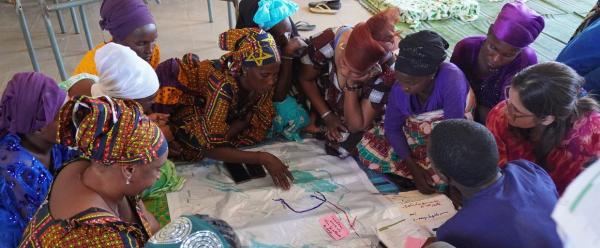
Just out 6 October 2026


The CIRAD regional office for East Africa is based in Nairobi, Kenya. The establishment’s researchers work in several countries in the region, notably Ethiopia, Kenya, Tanzania and Uganda. Its teams conduct research and development projects in partnership with local universities, agricultural research organisations and NGOs, and major international research centres (icipe, ILRI, IITA).
East Africa is characterised by considerable heterogeneity, marked by economic contrasts and political or climate instability. The region’s people, who mostly live in rural areas, depend on family farming, which is particularly vulnerable to shocks such as extended droughts and recurrent flooding. In this context, food insecurity is closely linked to territorial fragility and difficult market access. In response, CIRAD has placed the agroecological transition at the heart of its operations, to make food systems more resilient. Through the TRACE platform in partnership, we are working with our partners to co-construct innovative solutions to improve soil, crop and animal health. In particular, our approach makes use of living labs and regional networks to foster sustainable, inclusive production systems.
To address the challenges encountered at the biodiversity-health-agriculture nexus, our scientists are developing a One Health integrated approach, which is vital in a region dominated by pastoral livestock production and co-existence with wildlife. Lastly, capacity building and academic training are a strategic pillar for long-term support of public policy and economic transformation in the region.
Just out 6 October 2026
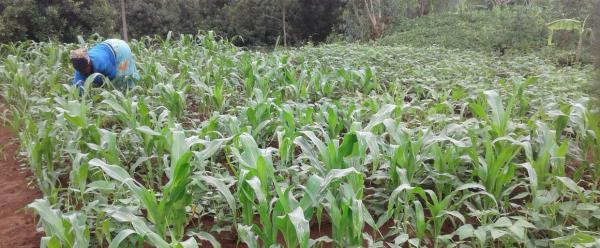
Results & impact 3 September 2026
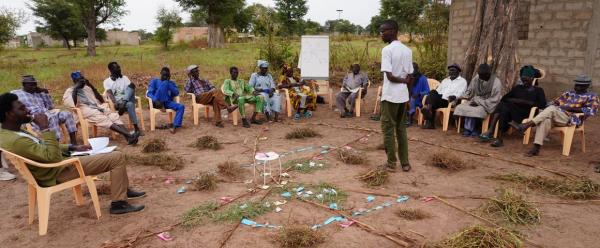
Science at work 17 August 2026
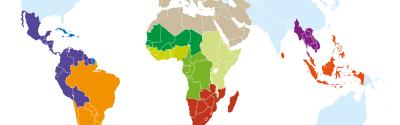
The dots show the countries in which CIRAD and its partners work. They do not show specific sites.
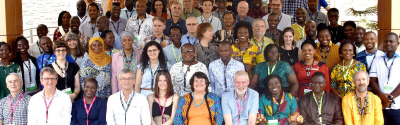
CIRAD is involved in several master's-type academic training courses in East Africa. Its researchers in the region also regularly organise professional training courses, and CIRAD sometimes helps to provide such training for its partners.
See also: Teaching and trainingCIRAD Regional Office for East Africa
C/o ICRAF, PO Box 30677, 00100 Nairobi,
Sylvie Lewicki
Kenya
Tel.: +254 20 722 4653 or +254 20 722 4652
Fax: +254 20 722 4001