







Science at work 14 October 2026

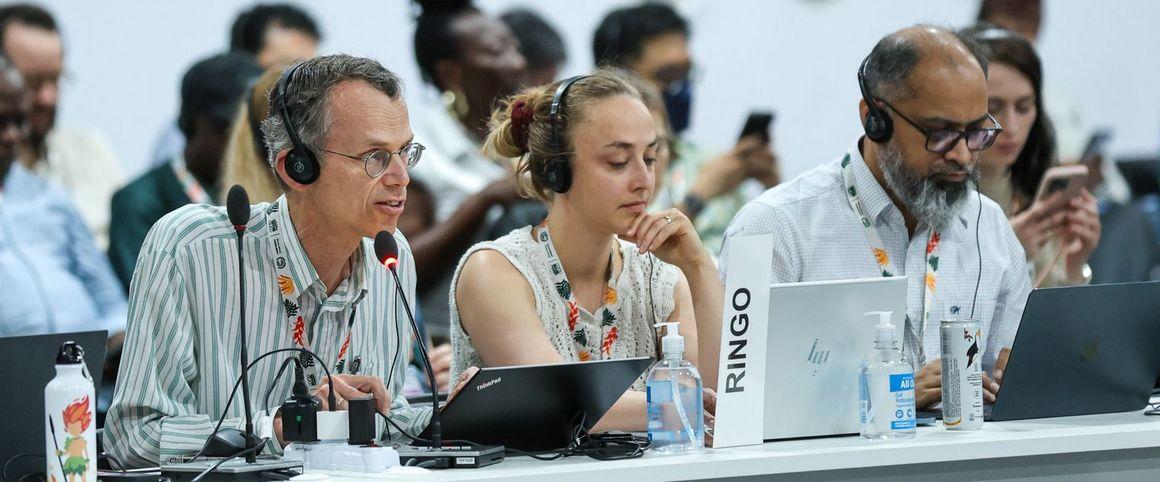
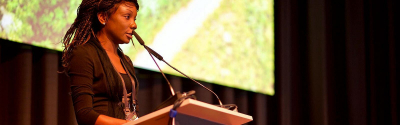
Emma Jagu Schippers (centre), an economist at CIRAD, during the official COP30 negotiations on Article 6 of the Paris Agreement. Belém, Brazil © DR
Agricultural and food systems currently account for 37 % of global greenhouse gas emissions, and the IPCC warns that this figure could rise to 65 % by 2030. For this reason, and because of its location and its many ongoing projects and partnerships in the region, CIRAD played a more active role at COP30 than at any previous climate COP.
This involvement included around 15 scientists, an unprecedented presence in the negotiation zone, stronger partnerships to jointly deliver our messages, and above all the organisation of, or participation in, some 40 side events at strategic pavilions and those of various institutions, reflecting our partnerships: local authorities, banks, universities, NGOs, states and international organisations (UNFCCC, FAO).
“This flagship event of multilateralism may only be progressing in very small steps, but it remains essential if we are to address global challenges together”, says Vincent Blanfort, Climate Change Officer at CIRAD. “Although agricultural issues are not at the heart of climate negotiations, they have never been so visible, and CIRAD engaged fully in these efforts”.
As evidence of this, the Agrizone, led by EMBRAPA and the Brazilian government, became, for the first time in the history of climate COPs, a space devoted specifically to agricultural issues. “It is worth noting that, among EMBRAPA’s international partners, CIRAD organised the highest number of events within this Agrizone”, says Pierre Marraccini, CIRAD’s Regional Director in Brazil.
Researchers addressed a range of topics, including food systems, deforestation, livestock farming, carbon storage, agroecology, North-South cooperation, and territorial approaches. Below is a look back at their participation.
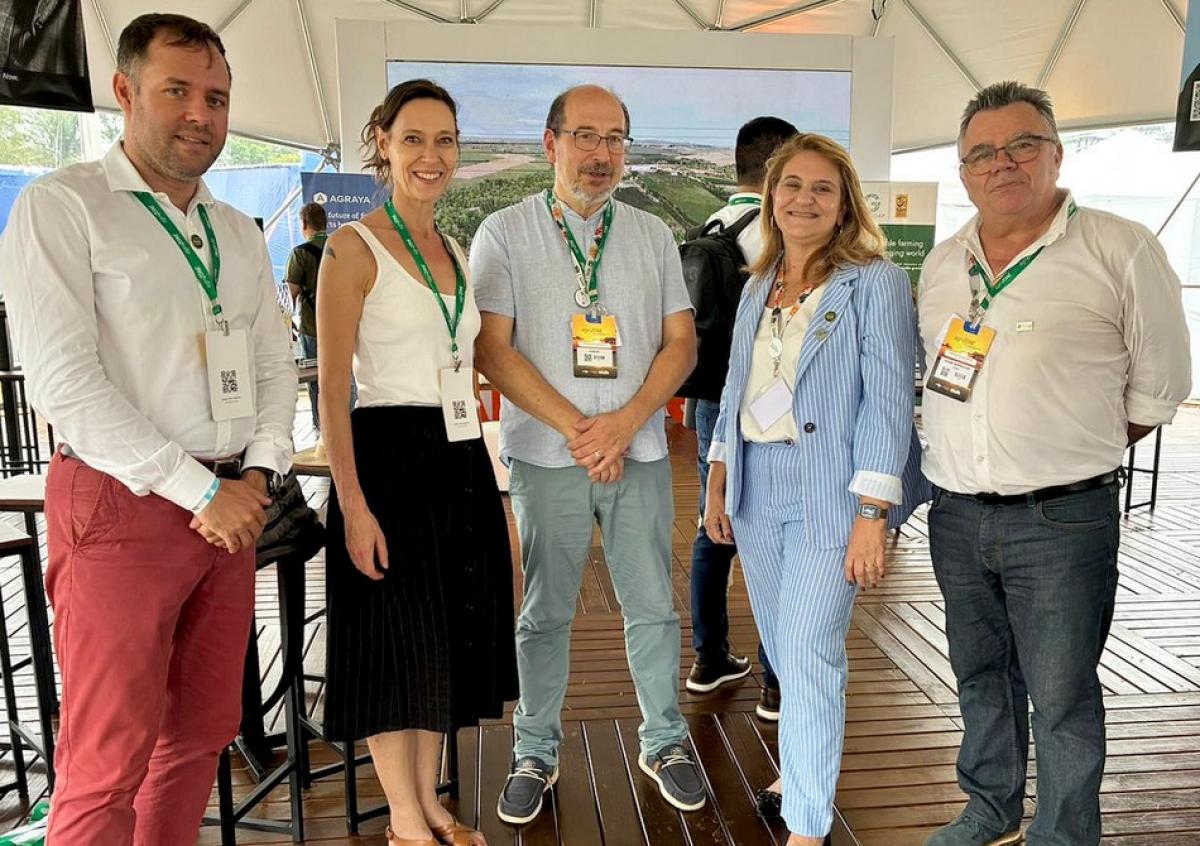
Meeting with EMBRAPA’s management team in the Agrizone. From right to left: Pierre Marraccini (CIRAD Regional Director in Brazil), alongside Silvia Maria Fonseca Silveira Massruhá (President of EMBRAPA), Thierry Caquet (Vice-President of International Policy at INRAE), Murielle Trouillet (Deputy Director of International Relations at INRAE) and Pierre-Adrien Romon (Agricultural Adviser at the French Embassy in Brazil)
COP30 provided an opportunity to present the colossal work behind the new book coordinated by CIRAD: L’agriculture et les systèmes alimentaires du monde face au changement climatique.
The book brings together contributions from no fewer than 150 scientists worldwide. Combining analyses and recommendations, it is intended as a guide to understanding and anticipating climate-driven changes in the agricultural and food sectors.
The key findings of this book were presented at several side events during COP30. A position paper, translated into English and Portuguese, provides a summary. The English-language edition of the book is due to be published in January.
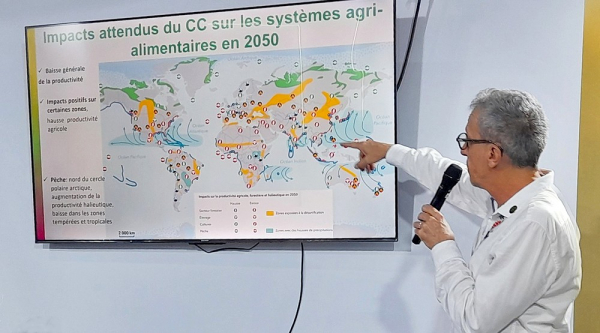
Vincent Blanfort, Climate Change Officer at CIRAD, during the presentation of the book “L’agriculture et les systèmes alimentaires du monde face au changement climatique" in the “Francophonie” pavilion
In the run-up to COP30, Géraldine Derroire, an ecologist at CIRAD, co-authored a One Forest Vision policy brief. This paper calls for a scientific, digital and societal alliance between the three major tropical forest basins. The goal is to produce comparable data without overlooking local realities. According to the ecologist, “it is therefore essential to draw on the social sciences in order to contextualise policies and technical support”. Géraldine Derroire had the opportunity to present this work to French President Emmanuel Macron on the Iaraçu caravan, as well as at the France pavilion (blue zone).
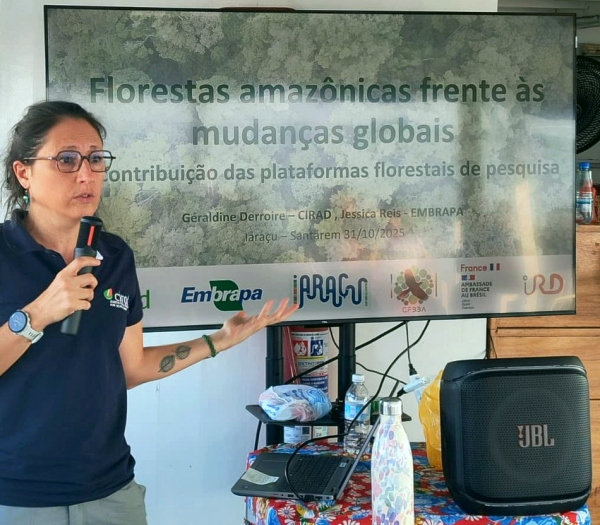
Géraldine Derroire, an ecologist at CIRAD, presenting her work on the Iaraçu caravan © DR
For the first time, CIRAD was also present in the negotiation zone. Emma Jagu Schippers, an economist at CIRAD, delivered a speech during the discussions on Article 6 of the Paris Agreement, dealing with international cooperation in the fight against climate change. She participated under RINGO status (Research and Independent Non-Governmental Organisations) on this topic.
At the United Nations Framework Convention on Climate Change (UNFCCC) pavilion, Emma Jagu Schippers also organised an event focusing on cooperation between countries of the Global North and Global South in the field of forest conservation.
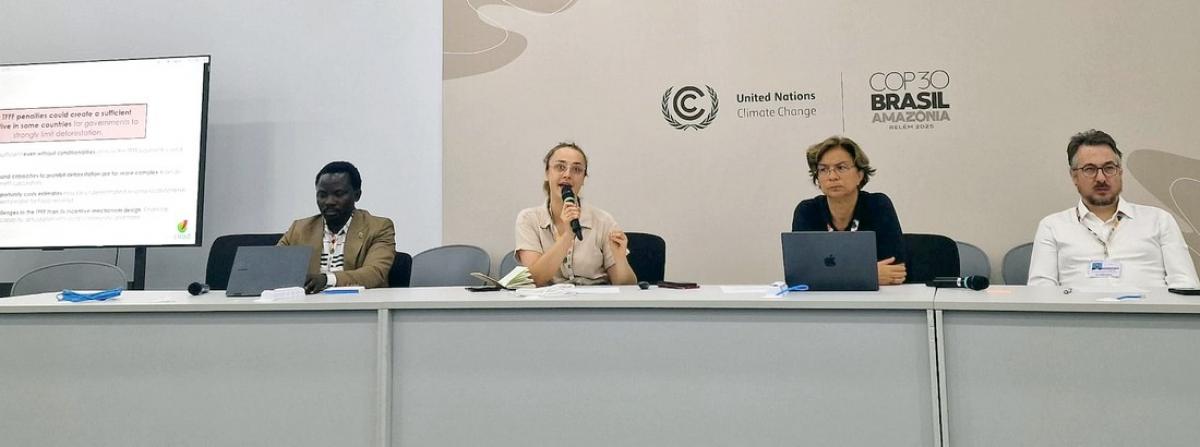
Emma Jagu Shippers speaking about North-South cooperation in the blue zone at the UNFCCC pavilion, alongside Marie Gabrielle Piketty (CIRAD), Tamsir Mbaye (CNRF/ISRA) on the left, and Alexandre Strapasson (University of Brasilia) on the right. She discussed the opportunities and limitations of the “Tropical Forest Forever” Fund proposed by Brazil to reduce deforestation © CIRAD, V. Blanfort
The TerrAmaz project has just come to an end after five years aimed at identifying operational levers to combat deforestation in the Amazon, based on territorial approaches. The project, funded by AFD, was implemented in Brazil, Colombia, Ecuador and Peru. The COP in Belém provided an opportunity for CIRAD and the project’s many partners to present their findings at the UNFCC pavilion in the blue zone, at the pavilions of the State of Pará and Banco da Amazônia (BASA) in the green zone, as well as in the Agrizone.
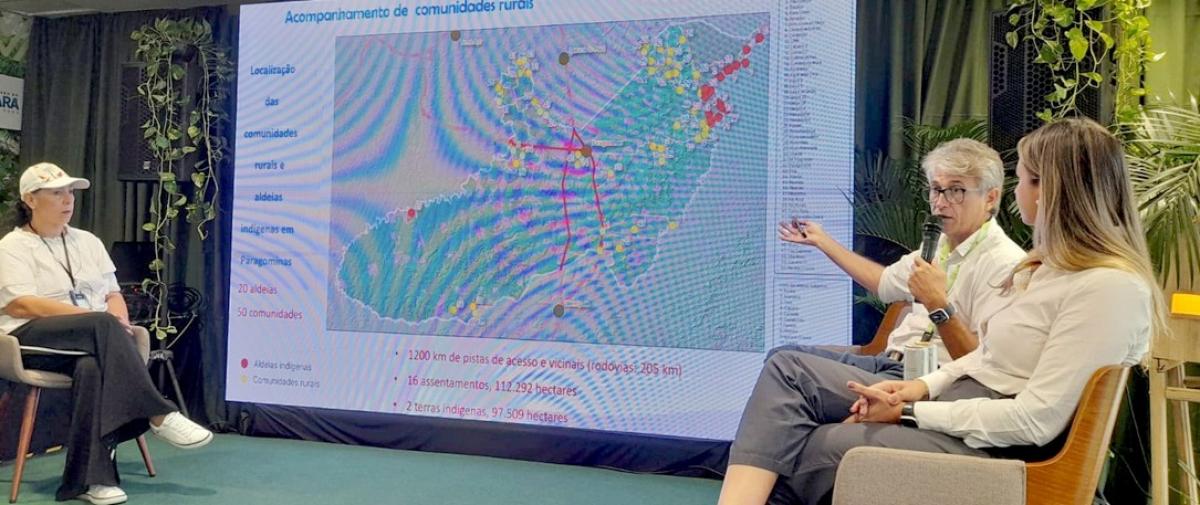
René Poccard, a geographer at CIRAD, presenting the findings of the TerrAmaz project at the pavilion of the State of Pará, alongside Xismena Martinez from the Government of Guaviaré in Colombia, a TerrAmaz partner (left), and Dominique Silva Castanheira, Secretary for Sustainable Development of the municipality of Paragominas (right)
Launched at COP21 in Paris in 2015, the “4 per 1000” initiative gathers research on soil carbon sequestration, with CIRAD coordinating activities in the French overseas territories.
At COP30 in Belém, the collective presented a policy brief highlighting the fundamental role of local communities in soil carbon conservation strategies. A number of side events reviewed recent scientific advances concerning the carbon storage capacities of soils worldwide, and more broadly addressed the issue of soil health. Raphaël Marichal, a soil ecologist at CIRAD, organised two events on this topic, with funding from the FEFACCION project (Team France fund for action in the Amazon on climate change and its impacts).
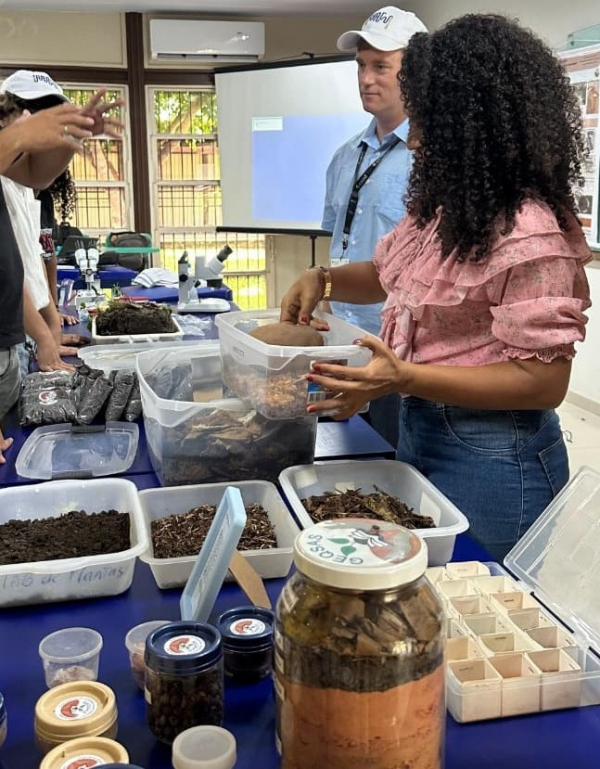
Raphaël Marichal, an ecologist at CIRAD, discussing the importance of soils in our ecosystems during a public outreach event at the Federal University of Pará (UFPA)
Another event co-organised by CIRAD at the UNFCCC pavilion was entitled “Harnessing synergies between climate, biodiversity and food through community-led land actions”. Bringing together a multidisciplinary panel of experts, its aim was to analyse the trade-offs and synergies involved in developing solutions based on sustainable land management, addressing climate-biodiversity-food security interactions. Another goal was to place women, local communities and indigenous peoples at the heart of processes as effective stakeholders.
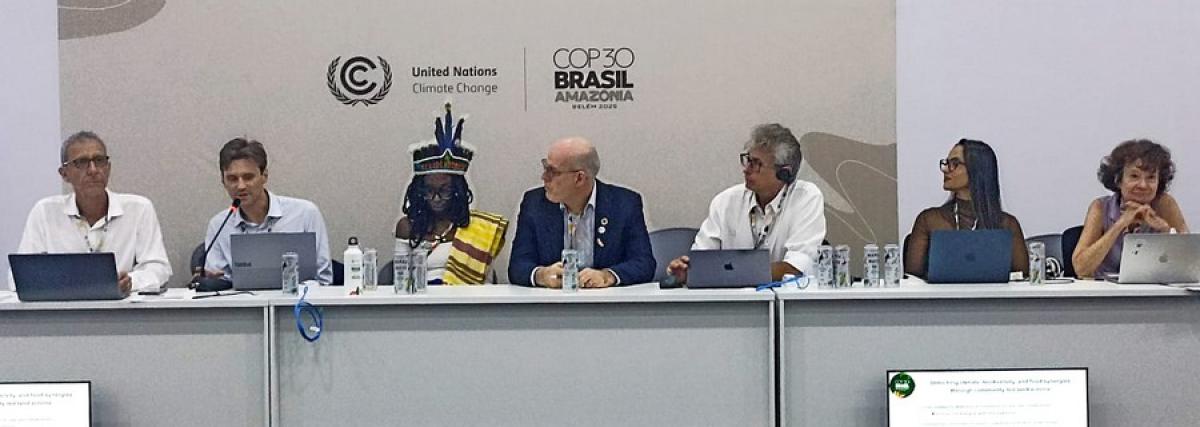
This event was co-facilitated by Vincent Blanfort (left), a researcher at CIRAD and Climate Change Officer © M. G. Piketty
At the heart of rural areas in Brazil that have been affected by years of forest degradation, farmers are developing agroforestry solutions to restore the land. More than 400 agroforestry initiatives have been identified in the Belém region. As part of the Sustenta e Inova project, , a group of student-farmers undertook university training with the Federal University of Pará (UFPA), in partnership with CIRAD: the Refloramaz group. During the closing seminar of the course in April 2025, these Brazilian agroforestry leaders drafted a manifesto to present their shared demands to policymakers. At COP30, this "Manifesto for Forest Restoration and the Promotion of Life in the Amazon" was delivered to several Brazilian ministers: Marina Silva, Minister of Environment and Climate, Paulo Teixeira, Minister of Agrarian Development, and Sonia Guajajará, Minister of Indigenous Peoples. The document was also endorsed by the renowned Brazilian climatologist Carlos Nobre.
More than 400 representatives have already signed the manifesto, from a range of institutions, mainly in Brazil, but also in other countries (Colombia, Peru, Suriname, French Guiana, France, Belgium, Congo). This all helps to improve the visibility of solutions for climate justice, supported by smallholder and agroecological farming that concerns millions of people in Brazil and worldwide.
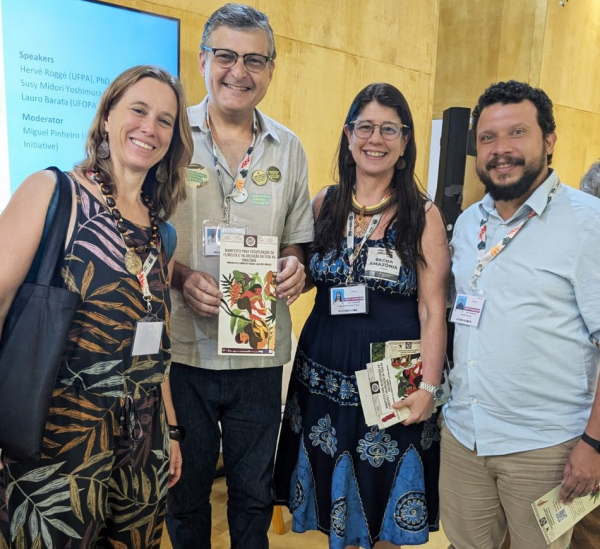
PPresentation of the Manifesto to a longstanding CIRAD partner: Paulo Petersen, coordinator of the “National Articulation for Agroecology”, a network of more than 500 institutions working for agroecology in Brazil. He served as the UNFCCC “special envoy” to represent family farming in the official COP30 negotiations. This marks the first time that family farming has featured on the agenda of a climate COP
An event entitled “Vegetation carbon and soil carbon in the Amazon” was hosted at the pavilion of the Territorial Collectivity of French Guiana (CTG). The objective was to create a forum for dialogue to strengthen regional partnerships, in particular between French Guiana and Brazil, on levers for mitigating climate change in the Amazon forest territories.
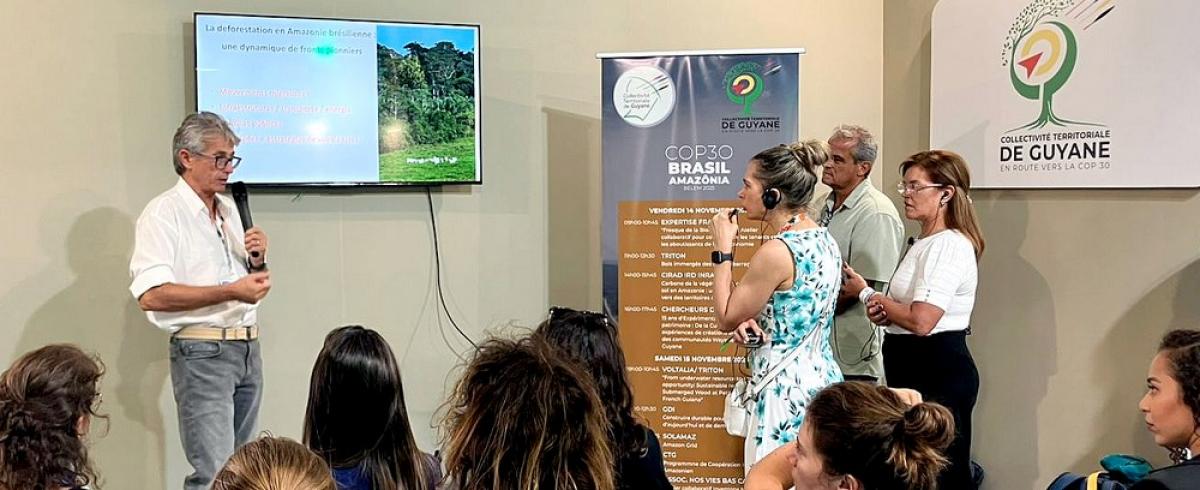
© CIRAD, G. Derroire
At the France pavilion, Emilie Coudel, a socioeconomist at CIRAD, led an event on the governance of South American tropical forests. Three examples of “forest living labs” were presented, two in Brazil and one in Guatemala. These initiatives are based on a vision of science that is rooted in local territories and, above all, collaborative: indigenous peoples and local communities are involved in these research projects from the outset.
For Brazil, the discussions focused on two living labs that have just been launched as part of the CAPOEIRA project (Advanced research centre on socio-ecological restoration in the Amazon, coordinated by Embrapa with the participation of CIRAD). These living labs help to sustain collaborations that have existed for around 10 years in two Amazon territories. Lívia Navegantes Alves and Rosileia Carvalho (UFPA) discussed the contributions of the Sustenta e Inova project in the Belém region, particularly through training for agroforestry leaders. Beatriz Abreu dos Santos (University of Brasilia) presented recent progress by the Guardians of Good Living, collective, a social movement of young Amazonians advocating an alternative way of life for the Lago Grande territory in the Santarém region.
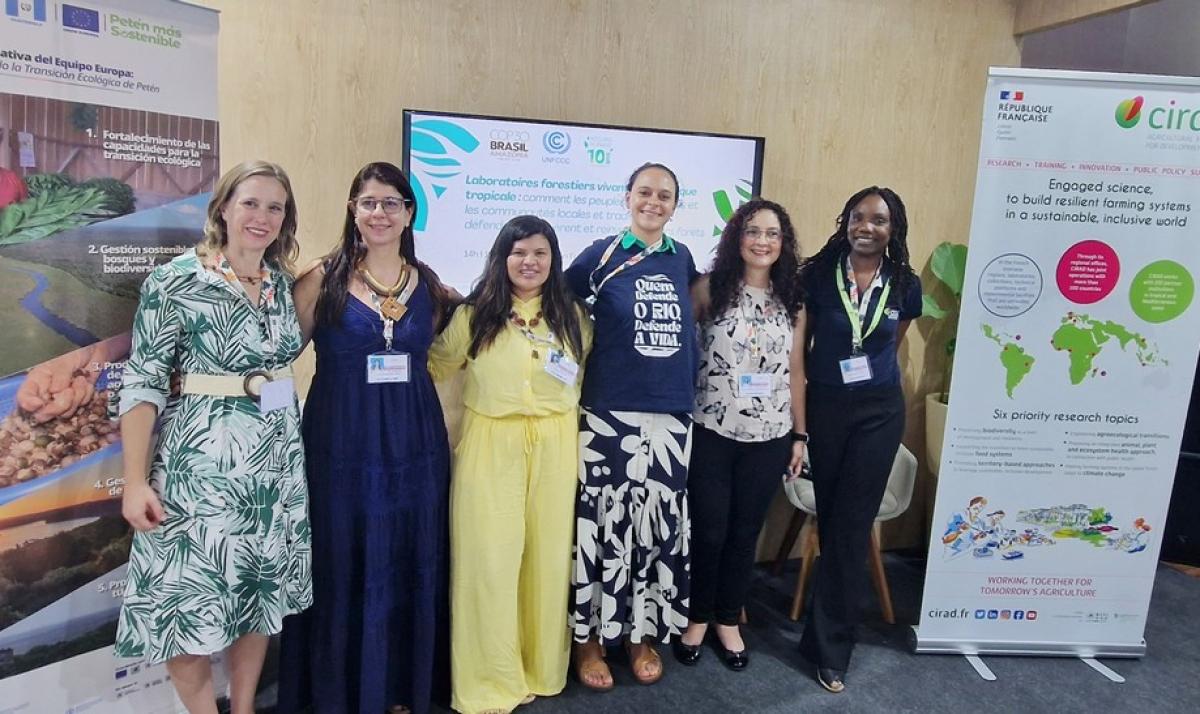
Roundtable on three forest living labs involving indigenous peoples, from left to right: Emilie Coudel (CIRAD), Lívia Navegantes (UFPA), Rosileia Carvalho (UFPA and representative of a traditional community), Beatriz Abreu dos Santos (UNB), Teresita Chinchilla (ACOFOP) and Marie-Ange Ngo Bieng (CIRAD)
For Guatemala, the focus was on the ConForMa project, which studies the exceptional conservation status of community forests in the Maya Biosphere Reserve in the north of the country. Funded by the French Global Environment Facility (FFEM), this project is coordinated by Marie-Ange Ngo Bieng, an ecologist at CIRAD. Together with Teresita Chinchilla, Technical Director of the Association of Forest Communities of Petén, they presented this inspiring model to show how French research can work with communities and indigenous peoples to innovate in the protection of tropical American forests.
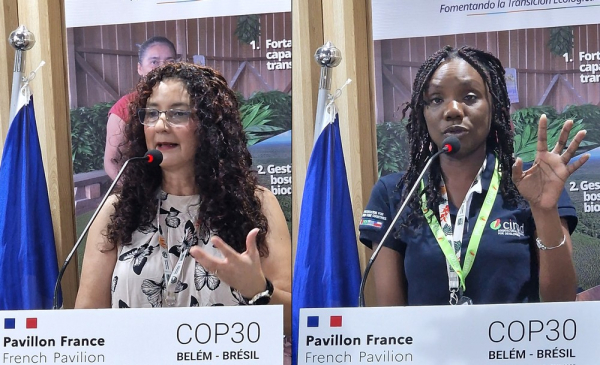
In the France pavilion, Teresita Chinchilla (ACOFOP) and Marie-Ange Ngo Bieng (CIRAD) presenting the case study on forests in the Maya Biosphere Reserve in Guatemala and its community-based forest management model as part of the ConForMa project
These initiatives, in both Brazil and Guatemala, directly reflect the strong presence of representatives of indigenous communities and peoples at COP30, where they asserted their rights to receive payments for environmental services, in order to support their forest protection actions, recognising forests as a common good.
Science at work 14 October 2026
Science at work 7 October 2026
Science at work 30 September 2026