




Science at work 14 October 2026

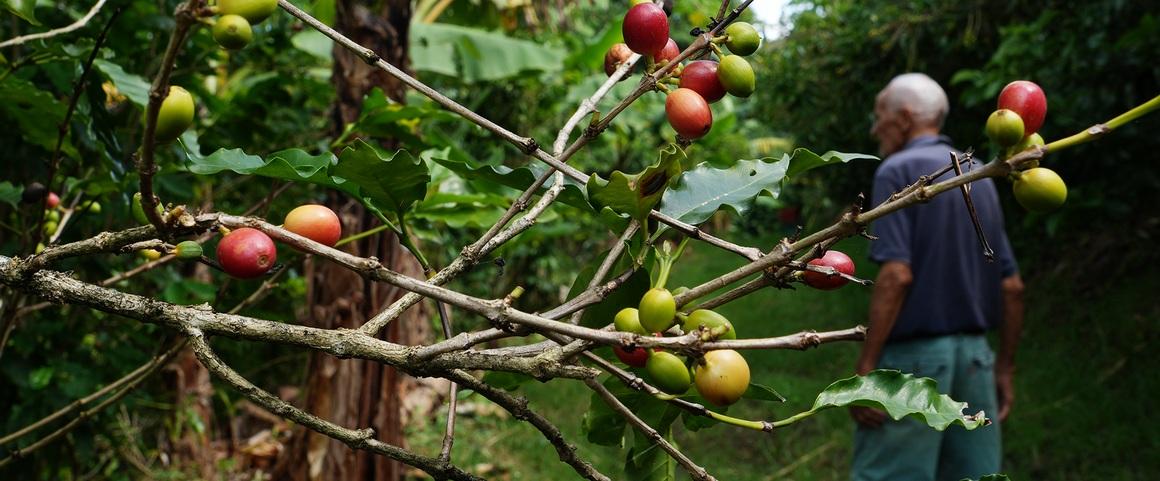
Étienne Crane, coffee producer, on his farm in Vieux-Habitants (Guadeloupe) © Y. Sanguine, CIRAD
“Guadeloupe has around 7 000 farmers. Of these, only around 50 grow coffee, making it a niche crop on the island”. Nadine Andrieu is an agronomist at CIRAD and is currently working on a project to revitalise the coffee sector in Guadeloupe together with producers’ associations, including the Association des Producteurs de Fruits et de Christophines de Guadeloupe (ASSOFWI) and the Syndicat des Planteurs de Café, Cacao et Vanille de la Guadeloupe (SAPCAV).
“Most coffee farms are diversified; coffee trees are grown under forest cover, alongside bananas or within a Creole garden”, says Gérard Berry, president of SAPCAV. “The Creole garden is a traditional Caribbean farming system that associates different species in space and time: citrus fruits, cocoa trees, banana plants, various ground cover crops, papaya trees and taller trees. Each garden is unique to its owner. Strong family traditions often determine which plants and varieties are grown”.
Although coffee cultivation is now relatively marginal in Guadeloupe, this was not the case just a few decades ago. Bananas, which now play a major role in the territory’s economy, were originally grown as shade for coffee trees. In the early 20th century, a series of cyclones, along with epidemics of coffee leaf rust – a fungal disease –, decimated Guadeloupe’s coffee crops, which were intended for export at the time.
Today, interest in the coffee sector is once again growing on the island, but the goals have shifted. Creole gardens and agroforestry systems, which are crucial for high-quality beans and healthy coffee trees, are now the preferred models among producers. Meanwhile, local roasters concentrate on meeting domestic demand rather than pursuing export at any cost.
Only a handful of coffees can boast of having a “name”, generally associated with a terroir or a particular production method. Jamaica’s “Blue Mountain” is regarded as one of the finest coffees in the world, and is consequently one of the most expensive. But how did this Guadeloupe coffee come to be known as “Bonifieur”?
Historically, coffee in Guadeloupe was a colonial crop, introduced to the island in the 17th century. Like cocoa, it was initially grown using slave labour. Over time, the quality of Guadeloupe coffee caught the attention of roasters in mainland France, who found that adding just 20% to their usual blends significantly improved the final product. Roasting, like winemaking, is in fact a matter of blending different origins to create a coffee regarded as “balanced”.
Guadeloupe coffee thus “enhances” blends, hence its name, “Bonifieur”, from the French verb bonifier, meaning “to improve” or “to enhance”. Although the designation is not officially registered, it applies only to certain parts of the island: only farms situated on Basse-Terre, in the Côte-sous-le-vent region and the coastal section of the “banana crescent”, can legitimately claim to produce this exceptional coffee.
Several factors may explain this extraordinary quality: first, Guadeloupe’s microclimate makes it possible to cultivate Arabica typica, renowned for its flavour profile and typically suited to high-altitude environments. Next, the volcanic soils of the fields lying beneath La Soufrière undoubtedly contribute to the aromas developed by the beans. Today, the plant combinations found in Creole gardens are clearly recognised by local producers and roasters as influencing the coffee’s aromas and taste: a certain acidity, or a more pronounced caramelisation, for example.
By the late 17th century, coffee production in Guadeloupe had reached 6 000 tonnes per year. Over the centuries, bananas and sugarcane gradually replaced coffee and cocoa as export crops.
Measuring barely two millimetres, the coffee berry borer is one of the main pests affecting coffee trees. Found in nearly all coffee-producing regions worldwide, it reached Guadeloupe in 2021. It is currently the principal agronomic threat to the development of the sector on the island.
“The coffee berry borer makes holes in the cherries, affecting the quality of the coffee”, says Nadine Andrieu. “After roasting, if the damaged beans have not been removed, the coffee develops a burnt flavour. This not only reduces overall volumes, but also increases the manual labour required to sort the cherries”.
An initial exploratory study conducted by CIRAD found that certain vegetation cover conditions can reduce the impact of the coffee berry borer on coffee trees. The more diverse the plant associations, the less the trees are affected. Agroforestry systems, typical of Creole gardens, are therefore to be prioritised. Further research is underway, this time focusing on beneficial ants, to assess their impact on coffee berry borer populations.
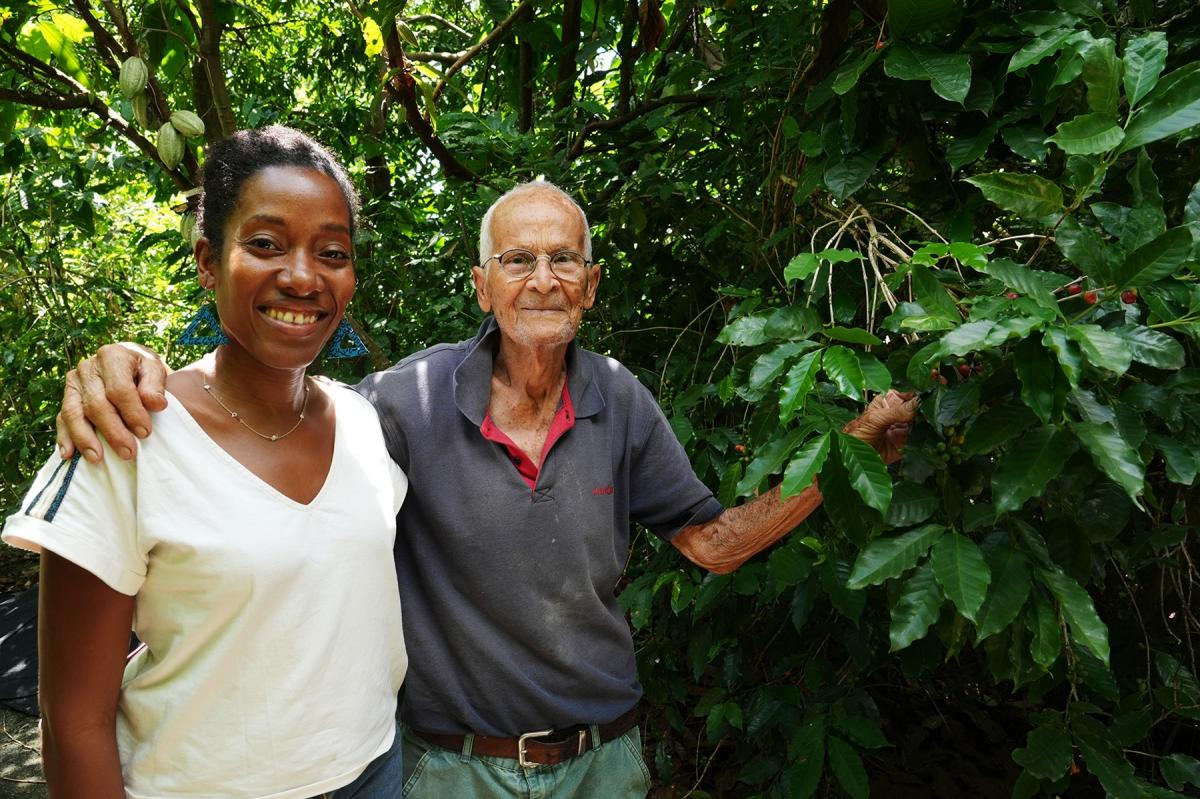
Nadine Andrieu and Étienne Crane at Café Man Lisa, in the municipality of Vieux-Habitants, Guadeloupe. Étienne Crane’s farm is a Creole garden primarily composed of coffee trees, along with cocoa trees (cocoa pods in the background), citrus fruits, papaya trees, banana plants, yams, and more. © Y. Sanguine, CIRAD
Coffee consumption on the island is very high, and for good reason: many families still have a Creole garden with a few coffee trees, and roast their own coffee. This “grandmother’s coffee” is more bitter, with a slightly longer roasting time.
Next, there are the specialists: professional roasters for whom coffee processing is a genuine passion. Several roasters operate on the island and purchase the entire local production, in contrast to other coffee-producing regions around the world, where most of the coffee is exported. Roasters such as Vanibel thus play a key role in structuring the local sector, selling blends made from Guadeloupe coffee and also opening their family farms for visits.
In Jarry, at the centre of the archipelago, the craft coffee roasters “Les Bonnifieurs” offer a different approach: coffee roasted on the premises, with a selection of origins, mainly from Guadeloupe and across the Caribbean. David Blicq and Lionel Desvarieux, the company’s two founders, describe themselves as “aspiring chemists”, as they approach roasting with near-scientific precision.
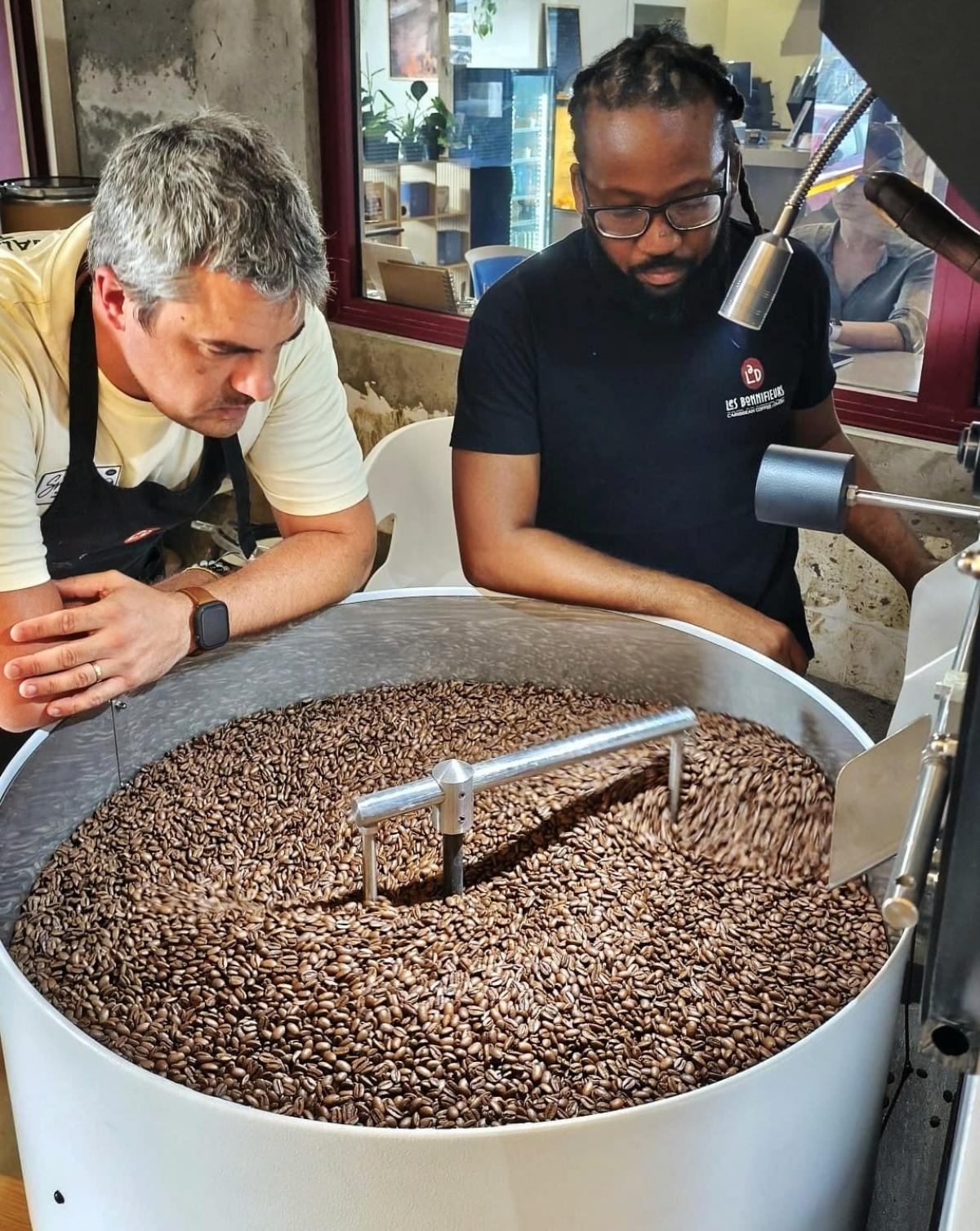
From left to right: David Blicq and Lionel Desvarieux, the founders of the artisanal roastery Les Bonnifieurs, located in Jarry in the municipality of Baie-Mahault © L’Atelier les Bonnifieurs
“First we test the organoleptic qualities of the bean to determine its sugar and amino acid content”, says Lionel Desvarieux. “This measurement guides the roasting process, because depending on the chemical composition of the bean, we’ll get different levels of acidity, a longer finish, better caramelisation, and so on. Roasting takes from 10 to 13 minutes. We connect our PC, and for half of that time we don’t speak as we’re concentrating on the indicators”.
This is a highly technical process, and contrasts with the slightly darker traditional coffee that the older generations enjoy. Étienne Crane, a coffee producer in Vieux-Habitants, preserves the art of traditional roasting, as he roasts his own coffee according to a method passed down by his mother. This coffee, called “Man Lisa” in her memory, is available in a number of the island’s fine food stores.
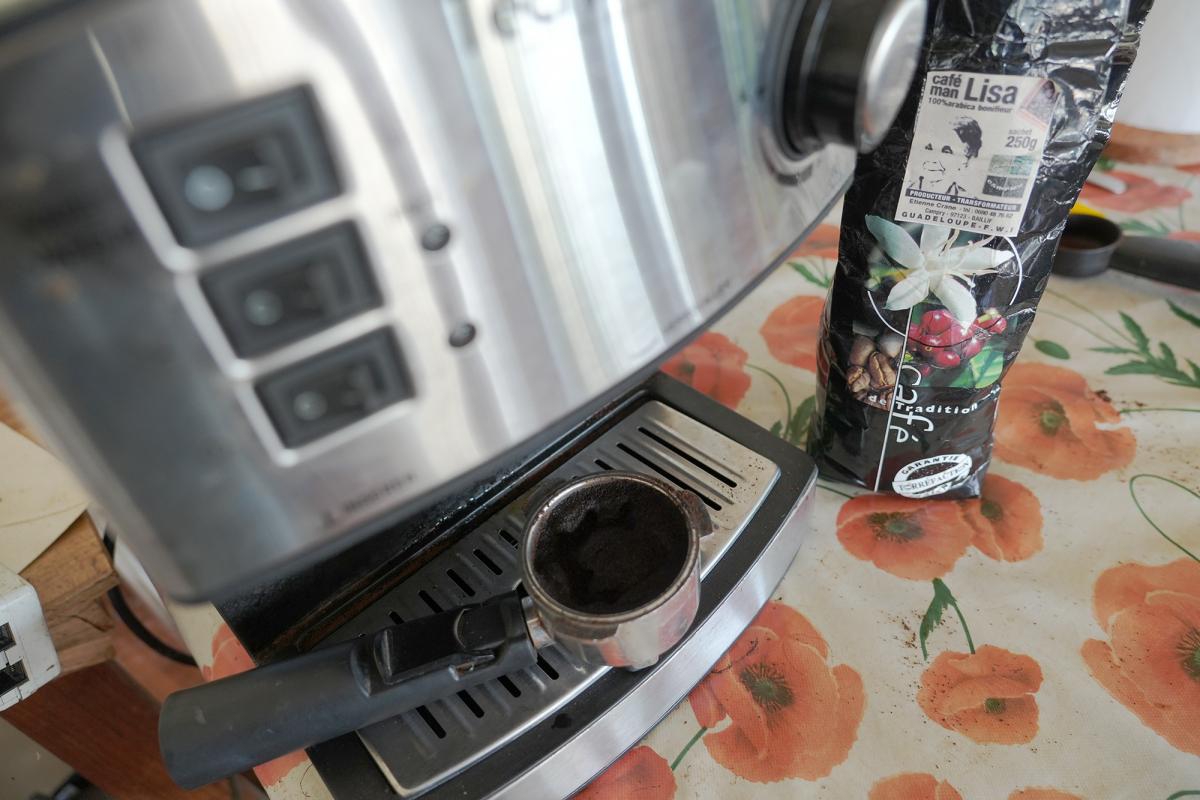
Étienne Crane’s Man Lisa coffee is roasted in the traditional Guadeloupean style, with beans that are slightly more darkly roasted © Y. Sanguine, CIRAD
“Guadeloupe has a strong tradition of expertise in coffee roasting, and this is a real asset for the sector”, says Gérard Berry. “A kilogram of roasted coffee is worth far more than a kilogram of green coffee. Exporting a finished product rather than the raw material provides an opportunity for generating wealth on the island, and thus for the people of Guadeloupe”.
In an effort to enhance production, both researchers and private actors are working to optimise certain stages of the supply chain. CIRAD and Les Bonnifieurs are thus conducting their own sensory analyses, while also consulting other professionals. For example, the Bordeaux-based company Belco, a green coffee trader, has already provided an analysis of several samples. Initial results indicate that post-harvest drying of the beans could still be improved.
Ultimately, Guadeloupe coffee, whether Bonifieur or not, could join the elite ranks of specialty coffees. Of the three criteria, the sector already meets that of traceability, and also satisfies sustainable production thanks to its agroforestry systems that minimise chemical inputs. The drying process still needs to be perfected, to enable producers to achieve quality scores awarded by panels of “coffee cuppers”.
The challenge now is to identify the best economic model for this promising sector. Production costs are very high, while volumes are still low. As Étienne Crane points out, harvesting is done by hand and is extremely labour-intensive. “It takes one person four seven-hour days to pick around 25 kg of coffee cherries. 100 kg of coffee cherries will yield 20 kg of parchment coffee, where the thin shell surrounding the bean remains. 20 kg of parchment coffee produces 11 kg of roasted coffee if there is no waste, or only 5 kg in the worst case”.
Some countries, such as Brazil, have mechanised coffee harvesting to reduce labour time. However, mechanisation is not always possible, especially on steep terrain, and is very difficult to implement in an agroforestry system. Moreover, a machine will be unable to sort ripe beans on the tree, leading to losses from green beans picked too early, and then additional sorting work before processing.
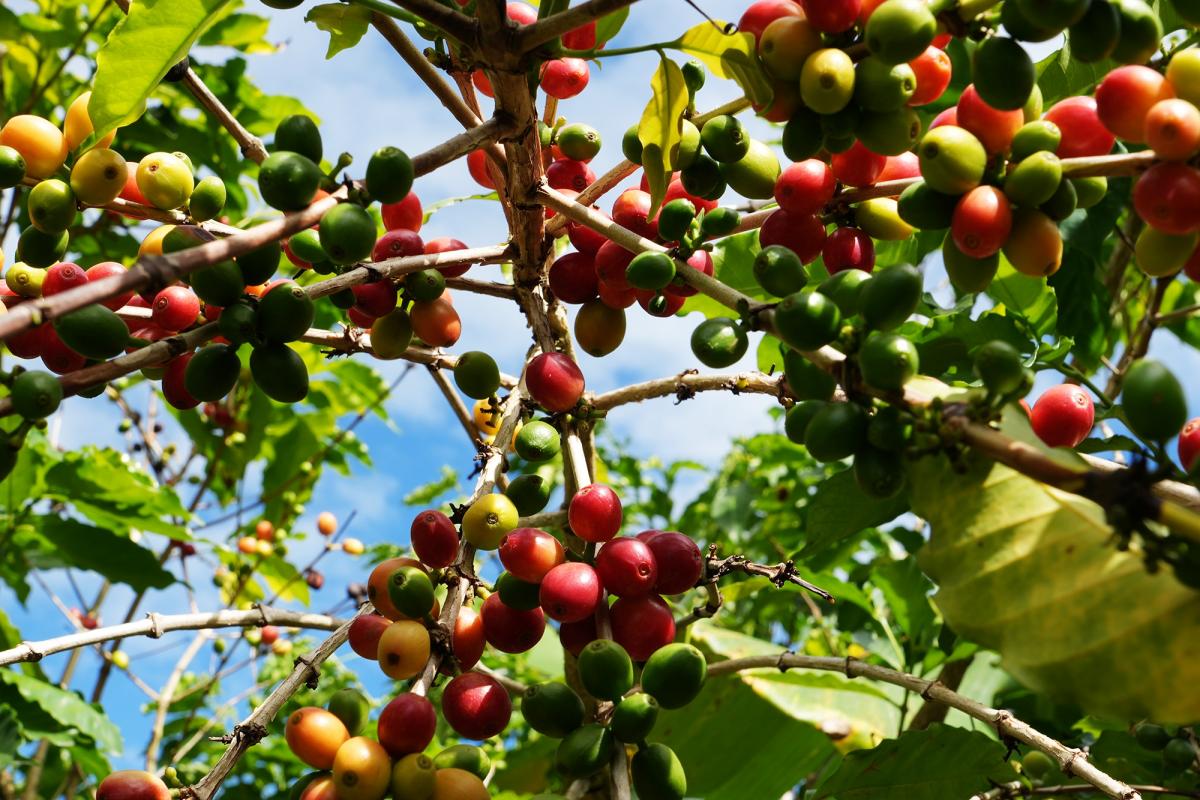
Manual harvesting is time-consuming, but it avoids the need for post-harvest sorting and respects the natural ripening of the beans. Here, only the reddest beans are picked © Y. Sanguine, CIRAD
According to Lionel Desvarieux, green coffee from Guadeloupe is often sold at low prices by the producers themselves: “A few years ago, some farmers were selling their green coffee at eight euros per kilo. By comparison, on the international market, roasted Bonifieur coffee can easily fetch 150 euros per kilo”. The roasters “Les Bonnifieurs” have chosen to keep the price at 39.60 euros per kilo, to ensure it remains affordable for consumers in Guadeloupe. “At 9.90 euros for a 250-gram packet, we want everyone on the island to be able to buy excellent Guadeloupe coffee at least occasionally. Our priority is to meet local demand first, and then, when production is high enough, we’ll think about exporting”.
This price of around 10 euros for 250 grams is adopted by many of the island’s producer-roasters, though it sometimes remains below production costs. To avoid farms selling at a loss, Les Bonnifieurs recommend exploring certain by-products, such as cáscara. The pulp of the coffee cherry is dried and then consumed as an infusion or tea. Cáscara has a cherry-like flavour that is very different from coffee itself. Some processing methods turn this pulp into liqueur, syrup or even jam. Other marketable by-products include parchment, as mentioned by Étienne Crane, which can be used as mulch. Finally, several producers also sell small coffee saplings to other farms.
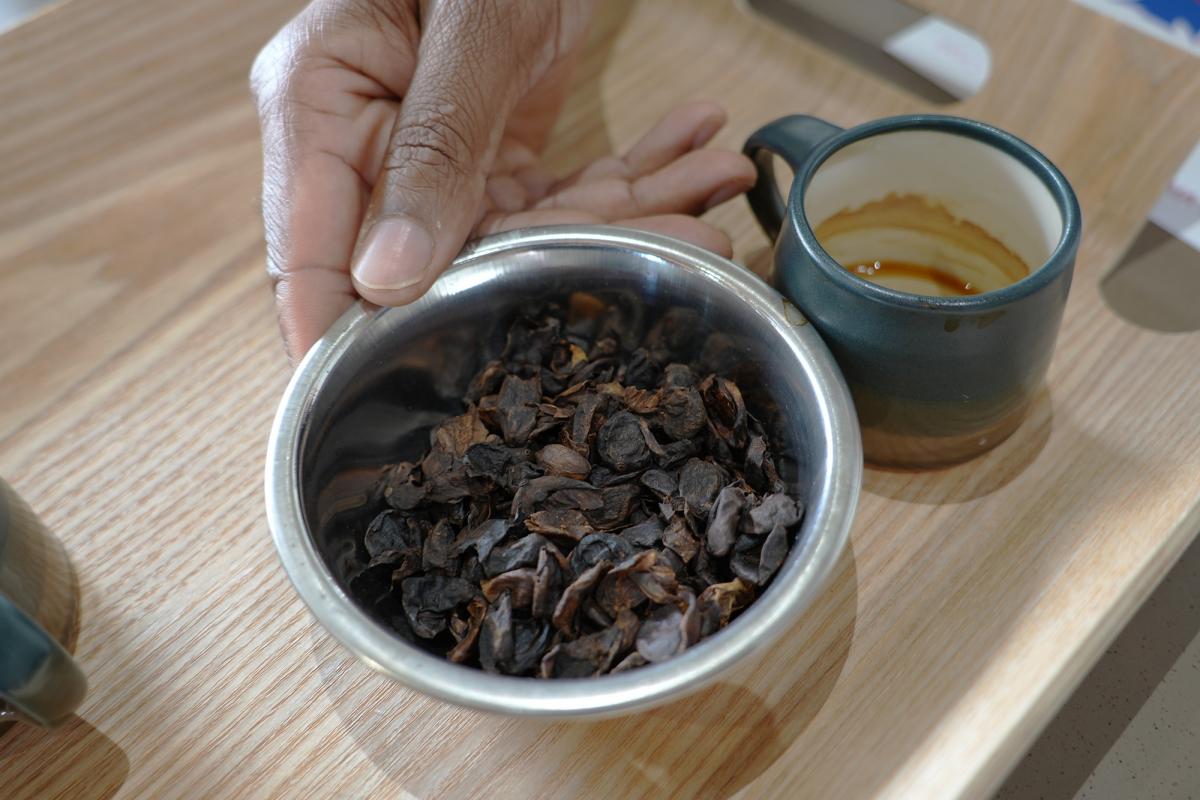
Cáscara sold by Les Bonnifieurs. This infusion is made from the dried pulp of coffee cherries © Y. Sanguine, CIRAD
The coffee sector in Guadeloupe still has progress to make and needs both public and private support to achieve the goals it has set. One thing is certain: the actors already engaged are well on their way to reviving Bonifieur production, not as an export commodity or a colonial crop, but as coffee grown in Creole gardens and primarily intended for Guadeloupean consumers.
Science at work 14 October 2026
Science at work 7 October 2026
Science at work 30 September 2026