



Science at work 14 October 2026
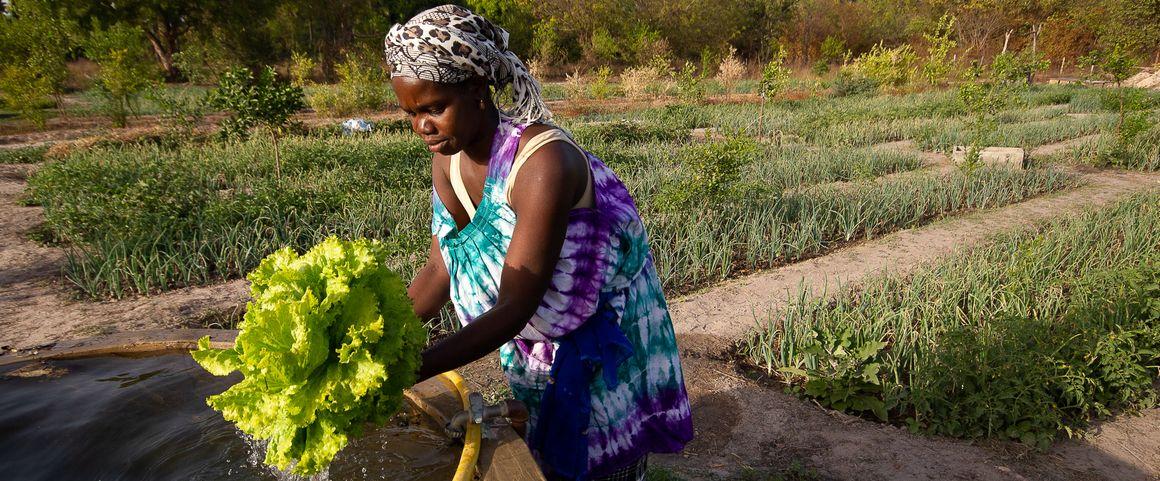
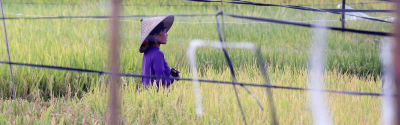
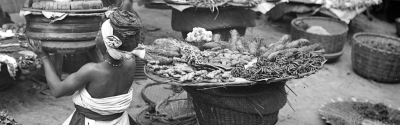
Senegalese vegetable farmer © R. Belmin, CIRAD
Across Burkina Faso, Mali and Senegal, some ten localities covering different ecological zones took part in the project. More than 350 producers benefited from interventions and contributed to the development of solutions. Fourteen agroecological systems were thus identified as being suited to local conditions, after being tested and approved by farmers. The FAIR Sahel project received co-financing of nine million euros from the European Union and Agence Française de Développement. CIRAD coordinated the work.
Today, the FAIR Sahel partners are identifying the key lessons learned. “Agroecology is a successful strategy, provided it is properly supported and guided”, says Amélie D’Anfray, an agronomist at CIRAD. “Transforming production systems requires the commitment and mobilisation of all stakeholders. From producers and public authorities to civil society, the agroecological transition can only take shape if it benefits everyone involved”.
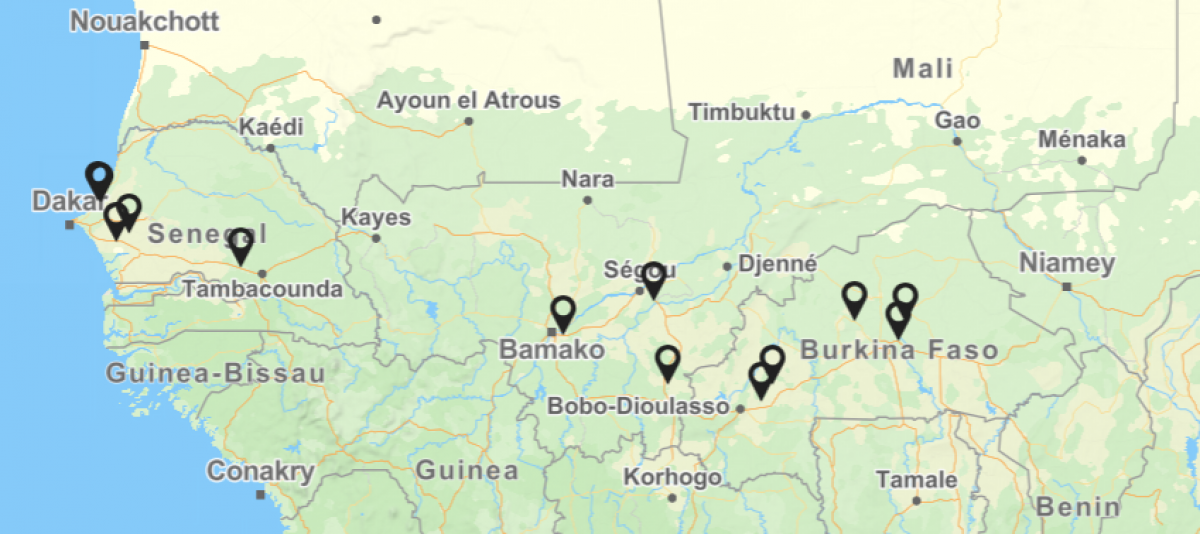
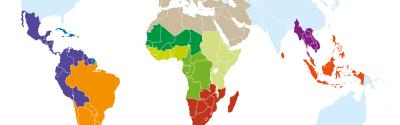
FAIR Sahel project areas of activity
Agroecological practices are not new in Sahelian agriculture. The initial assessment phase revealed the wide range of techniques already employed by farmers. In Mali, for example, producers make extensive use of organic fertilisation and intercropping. The use of organic fertiliser derived from animal or plant matter is therefore relatively common.
“Whether in Mali, Burkina Faso or Senegal, we are working in areas where many farms already operate in synergy with the resources available”, says Amélie D’Anfray. “Producers strive for optimisation and constantly test new practices. Some of these can still be optimised, while in other cases farmers guide us towards combinations that we, as agronomists, would not have thought of”.
Although agronomic research tends to favour cereal-legume associations, farmers in Koussanar, Ndiob and Diouroup in Senegal have thus guided scientists towards combinations of groundnut and cowpea, both legumes. These agroecological systems are surprising from an agronomic perspective, yet they prove effective and are well suited to the soil and climate conditions as well as to local demand.
In each locality, the FAIR Sahel project was built around the co-design of solutions. “Central fields” were established at the heart of several partner farms in order to facilitate exchanges between scientists, farmers, members of farmers’ organisations, NGOs, and so on. “These central fields served as test plots, but also as demonstration sites and as spaces for exchange and learning”, says Amélie D’Anfray. “The idea was to showcase the potential of optimised agroecological systems, which could then be adapted by each producer to their own specific conditions”.
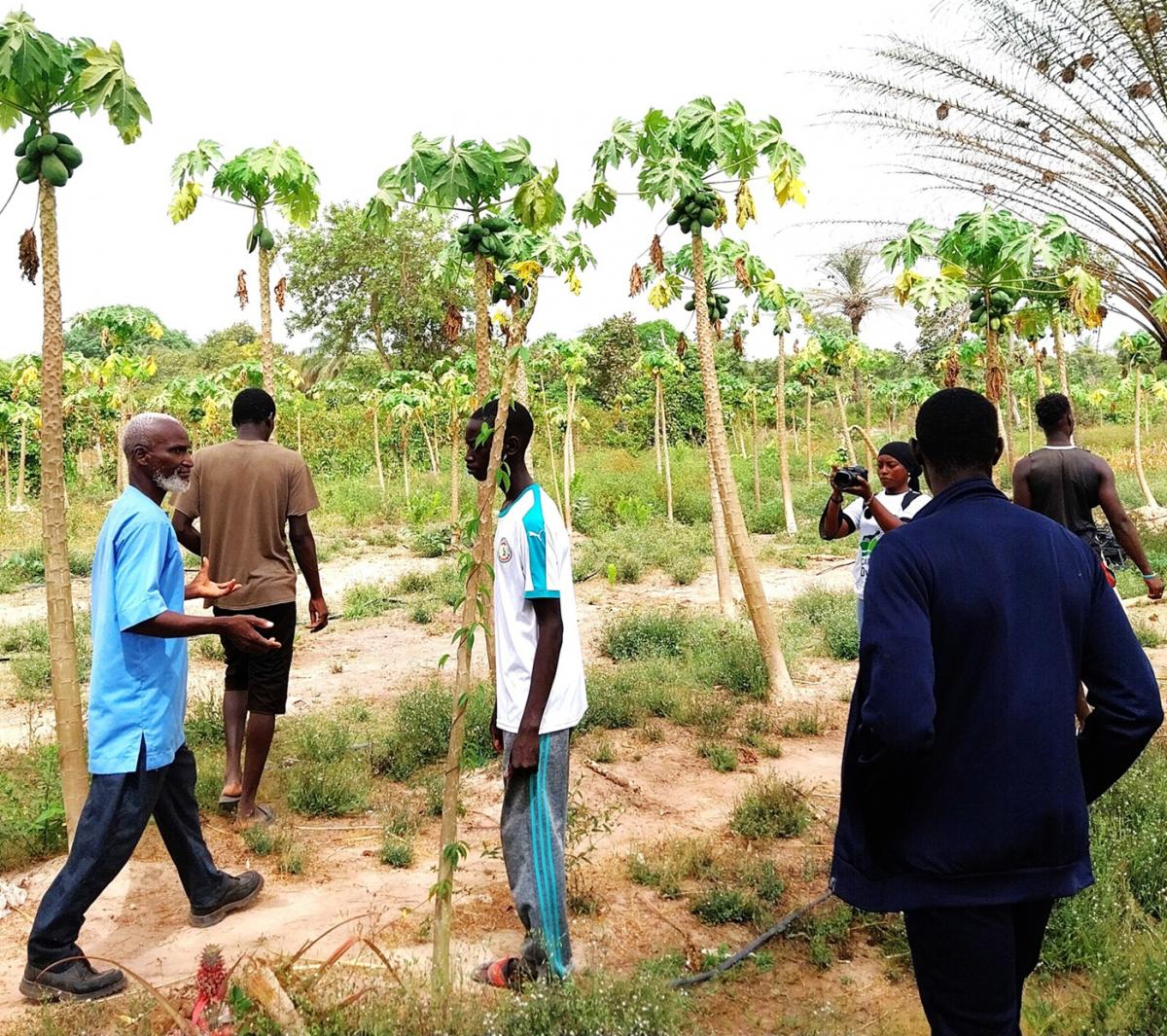
Visit to a central field by farmers in Senegal © I. Diallo, CIRAD
While agroecological intensification involves optimising synergies between different crops and resources at the plot level, a similar dynamic can be seen at the institutional and social levels. From the outset, the FAIR Sahel project sought to engage the agricultural development sector, whether through farmers’ organisations, NGOs, the public authorities, or other private actors.
According to Éric Scopel, an agronomist at CIRAD, this simply means applying the agronomic rationale that underpins agroecological practices: “Agroecology is based on the benefits derived from a whole range of interactions between the components of the cultivated ecosystem. This also means we have to take into account factors and stakeholders that we would not have considered otherwise. Focusing on manure means engaging with livestock farmers who can supply the necessary animal organic matter. Developing systems that include groundnut means examining the local oil mills that could purchase some of the resulting by-products”.
This process is being led by regional development actors. Each country already has its own rural development plans and structures. FAIR Sahel worked to involve these national and municipal actors to ensure that the agroecological intensification implemented at farm level is viable in the long term. For example, in Burkina Faso, discussions on integrating fodder into cropping systems were also pursued with stakeholders in the livestock and dairy sectors, in the context of a platform later developed as part of another project: the One CGIAR Agroecology Initiative.
The innovations delivered by FAIR Sahel are not only technical, but also organisational and socio-cultural. Through the project, platforms for dialogue between producers have been strengthened or even institutionalised, thus enabling better dissemination of good practices in terms of crop associations, variety and seed selection, and the use of machinery and tools. Approaches to selecting agricultural inputs and production methods have shifted towards greater producer responsibility, both to safeguard the quality of available food products and to comply with environmental standards.
Combining technical, organisational and socio-cultural dimensions means innovations can be sustained over time and can also generate signs of change through three dissemination pathways: horizontal, vertical and deep.
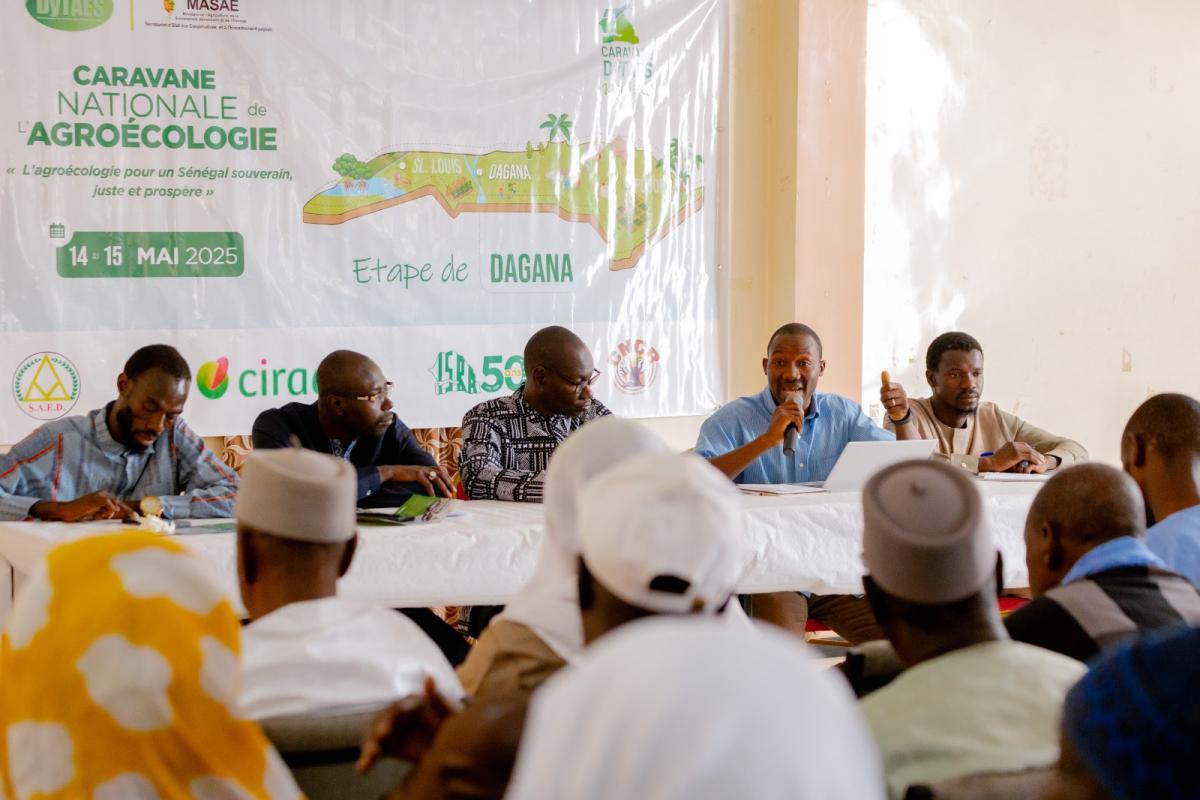
Discussions during an Agroecology Caravan stop in 2025, in Dagana, northern Senegal © R. Belmin, CIRAD
The “holistic” approach advocated by FAIR Sahel thus requires integrating both the physical and the socio-economic dimensions. However, this approach implies a shift in timeframe, as “change” is no longer expected only at the technical level, but also in terms of social organisation. Yet the transformation of social structures often takes far longer than changes in agricultural fields. Agronomic research and development projects must take account of this longer timescale in order to achieve real impact.
Improving the dissemination of innovations and the necessary socio-technical arrangements can also be facilitated if successive projects pursue the same or similar objectives as previous initiatives. For example, in Senegal, the Mahdia project can be seen as building directly on the innovations generated by the FAIR project.
Science at work 14 October 2026
Science at work 7 October 2026
Science at work 30 September 2026