










Science at work 14 October 2026

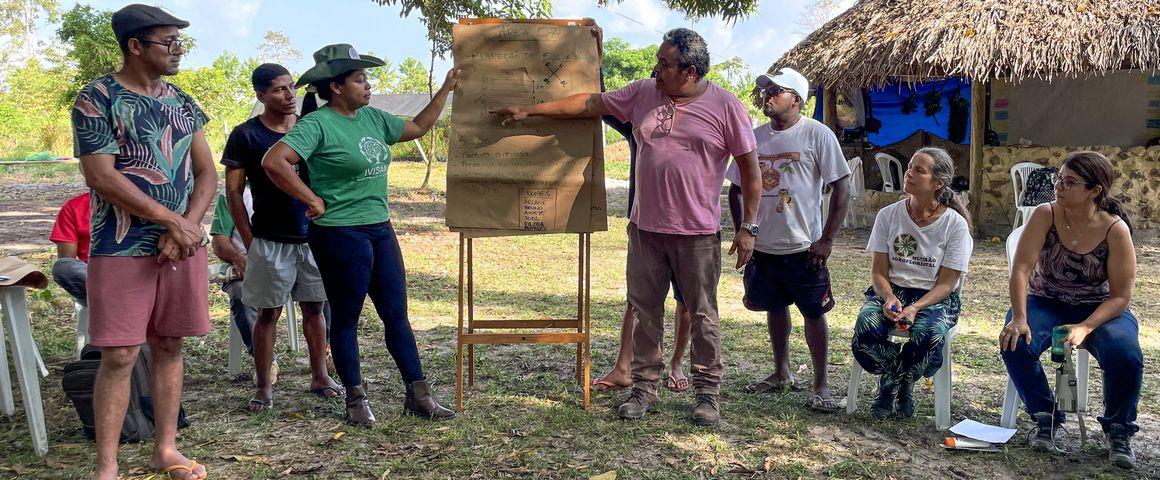
Training module in a rural community: in addition to the student group, the classroom is open to all the community's inhabitants © I. Moreira, Refloramaz
For a growing number of farmers around Belém, combining trees with crops or livestock production has resulted in a lot of changes. The region, in Pará state, is one of the most deforested in the Brazilian Amazon. Its soils are increasingly degraded, making food production difficult for its many farming communities, quilombolas (Afro Brazilians) and Amerindians. However, trees, which were long left out of farming systems, have huge potential to repair ecosystems, whether by fertilizing soils, retaining water, creating a favourable microclimate or attracting pollinators. Agroforestry systems, which combine trees and crops, are therefore a particularly good way of restoring these degraded areas and guaranteeing farming communities' food security.
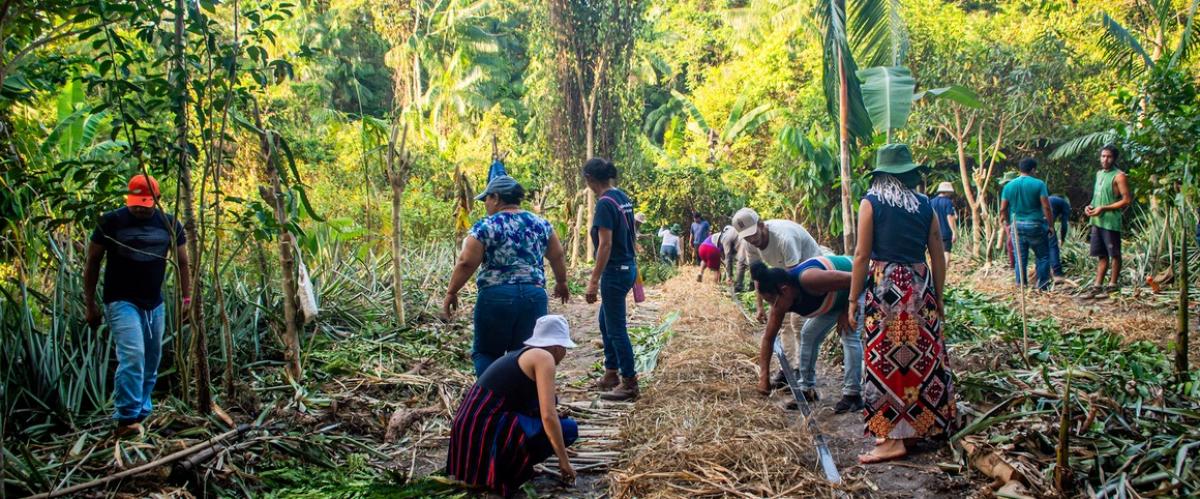
Collective work to set up a new agroforestry system © I. Moreira, Refloramaz
Since 2016, Franco-Brazilian scientific teams have been studying the different agroforestry systems that are flourishing around Belém. Their survey inventoried more than 400 farmer initiatives. Agroforestry systems in the Brazilian Amazon are particularly diverse, ranging from export products such as cocoa to food crops, with several dozen species per hectare.
Within a 300-km radius of Belém, there are two main agroforestry models. The first, which is more commercial, combines cocoa trees with açai palms. It often comprises fewer than ten tree species per hectare, and consumes large amounts of chemical inputs. This agroforestry model is geared towards markets and export, and benefits from growing public policy support. The other is ultra-diversified agroforests, with up to 70 tree species per hectare. These forests are run by Amerindian, Afro Brazilian and farming communities in the Amazon, usually to feed their families. Rather than using inputs, these farmers generally make use of a wide range of service plants.

Traditional agroforestry system associating a wide range of species, including cassava, cocoa and açai © F. Almeida (Instagram @estudiodumundo)
In the most diversified agroforests, farmers refer to food forests: the concentration of species warrants the comparison with a forest, although the species grown are chosen in line with community requirements. In addition to food crop production, these systems include cocoa and açai, which are sold, along with medicinal plants and timber trees. "Some farmers have in-depth knowledge not just of the different species, but of the beneficial combinations of trees", says CIRAD socioeconomist Émilie Coudel. "For instance, they plant certain trees to attract native bees and boost fruit crop pollination, or other species to repel insect pests."
The course organized by the Refloramaz group, "Environmental restoration and agroforestry systems in the Amazon", was intended to allow for exchanges about the different existing agroforestry practices and for the circulation of traditional and academic know-how. "The course set out to highlight the dominant role played by family farmers and Amazonian peoples, both quilombolas and Amerindians, in forest restoration operations", Livia Navegantes, tutor at the Federal University of Pará, explains.
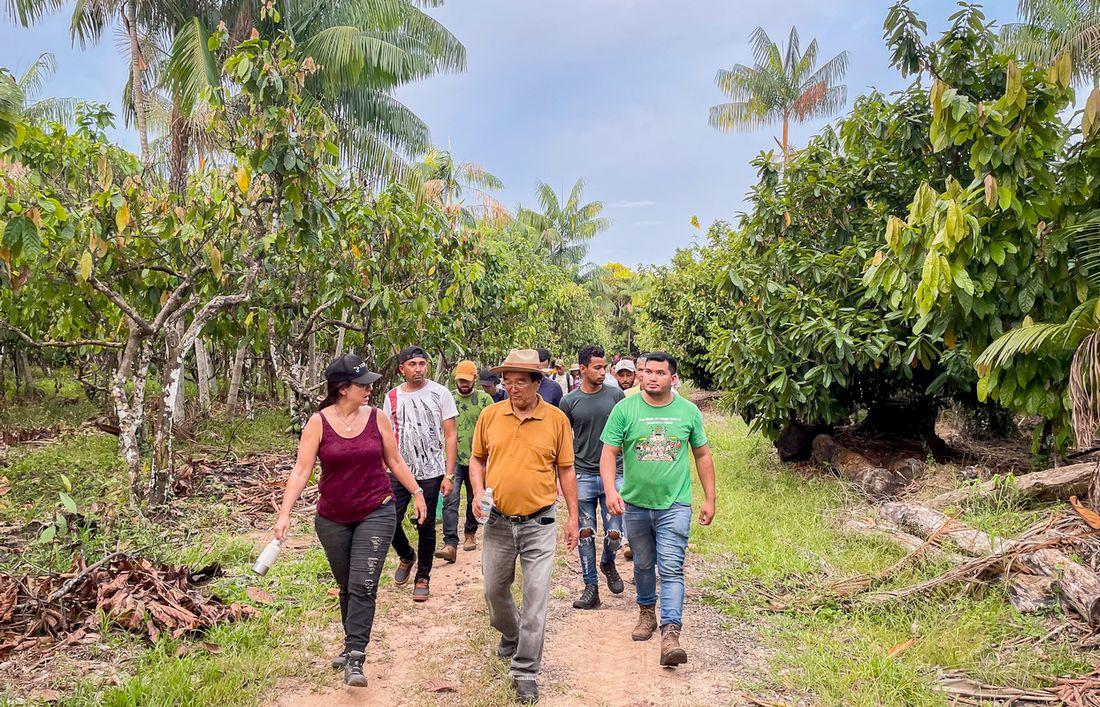
Lívia Navegantes, tutor at the Federal University of Pará, tours an agroforestry system combining several species, including cocoa and açai, the fruit of a palm © I. Moreira, Refloramaz
By selecting a range of profiles, from various Amazonian communities (farmers, technicians, teachers from rural schools and colleges, social movement leaders), the course enabled the participants to promote and share agroforestry practices suitable for the realities in the Amazon, in the territories of eastern Pará. "We shared lots of knowledge in our group", says Justiniano, a young family farmer from Paragominas. "Every region has its own way of planting and producing, and we were able to share a range of experiences."
Students from an academic background were able to expand their practical knowledge, while those from a more technical background were able to familiarize themselves with the world of science. "As well as the course teachers", Justiniano explains, "there were colleagues supporting us, particularly when it came to technical terms that we didn't know. They were always therefore to help us and explain the words we didn't understand".
Before I went on the course, I had no idea what agroforestry was. We had been practising it in our fields without realizing. When the opportunity arose, I did some research and found out that it was something I was already working on, and this sparked my interest.
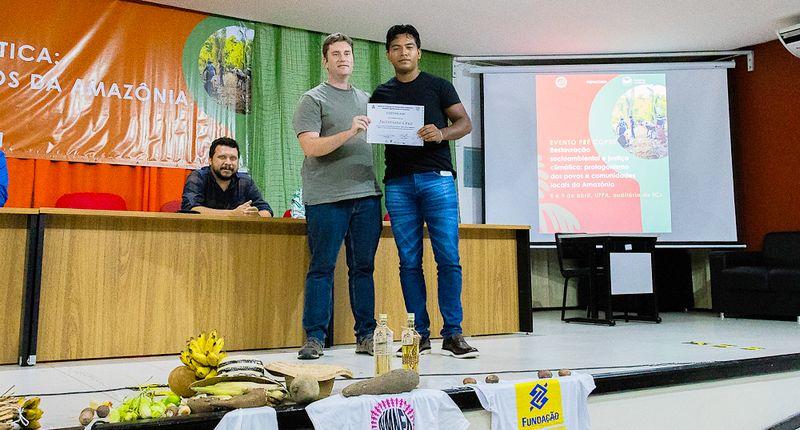
Justiniano (R) receiving his diploma, flanked by Gabriel Resque from the Federal Rural University of Amazonia (left) and Raphaël Marichal from CIRAD (middle). Belém, April 2025 © I. Moreira, Refloramaz
Justiniano also explains that some farmers with more experience of agroforestry systems were able to teach the other students about a number of techniques, such as how to prepare banana plants, to grow Mexican sunflowers (Tithonia diversifolia), which a lot of people see as a weed, as a soil fertilizer, and to prepare cassava cuttings to encourage germination. In bringing together technicians, university students and farmers, the course was banking on inclusive teaching, based on dialogue, knowledge sharing and encouraging all the students to stand on their own two feet.
With an area of 1 247 689 km² (more than twice that of France), Pará is the second largest Brazilian state. Although it hosts four Federal and two State universities, access to higher education is still a major challenge for a large part of the population, particularly in isolated rural communities. The Refloramaz course is distinguished by its innovative approach: instead of being taught on university campuses, it was rolled out across communities in eastern Pará, where some of the chosen students live. It comprised modules alternating theory teaching, participatory exchanges and hands-on sessions, and members of local communities were also invited to take part, fostering collective learning anchored in local realities.
"We rolled out a series of collective operations, known in Brazil as mutirões, to set up agroforestry within communities. This is what is known as living labs. These experiments will remain after the course, with their successes and failures, plants that continue to grow, life that continues to develop, and will serve as examples for other farmers keen to have a reference in terms of agroforestry in their communities", Livia Navegantes explains.
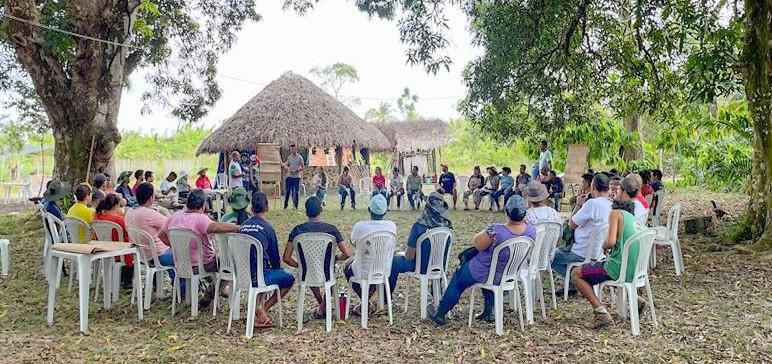
Training module in a rural community: in addition to the student group, the classroom is open to all the community's inhabitants © I. Moreira, Refloramaz
To guarantee the circulation of knowledge and optimize the impact of the course, students were selected for their involvement in their community or social organizations. In all, 19 such organizations were represented on the course.
"More than just to share knowledge, what we set out to do with the course was to set up a network of 'restorers'", says Émilie Coudel. "We met leaders very involved in their communities, wo had lots of ideas and suggestions, but did not know each other. We really wanted them to meet, talk, and discover other ways of doing things, and from there, to work together to suggest actions to town halls and to the State, and recommend priorities for public policy. This is the Refloramaz group's strong point: its ability to spearhead proposals comes from the grassroots level, based on farmers' actual needs, while remaining close to the university to ensure that it remains credible as regards public decision-makers. Those decision-makers have taken this on board and listen to them."
Many of the newly qualified students are keen to share the knowledge acquired on the course. Miquele Silva, a family farmer belonging to the feminist movement of women from northeastern Pará (MMNEPA), explains: "I am a member of the MMNEPA and the course helped me with a proposal of talks with the other women belonging to the movement, to make sure not just that agroforestry practices have a future in my region, but that they are rolled out across territories where other women live".
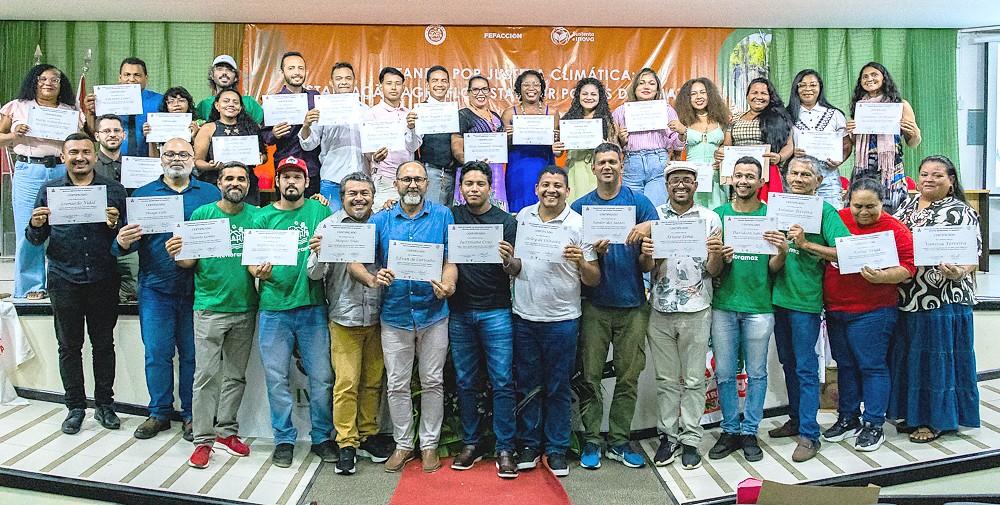
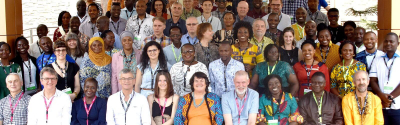
Diploma ceremony following the Environmental restoration and agroforestry systems in the Amazon course, Belém, April 2025 © I. Moreira, Refloramaz
The newly qualified students now make up a network of leaders trained in agroforestry issues in the context of the Amazon, and are keen to pursue the collective discussions and requests in terms of public policy that arose during the course. Top this end, they have decided to set up a popular forum on agroforestry in the Amazon as a space for discussion, and have invited many institutions to take part: secretariats in Pará state, technical advice institutions, associations, and the labour tribunal. The priority topics for the forum are:
By creating a space for discussion, involving policy bodies, administrative and legal institutions and civil society organizations, the course participants are hoping to co-construct environmental restoration operations and agroforestry systems across Pará state.
By offering transverse courses open to various student profiles, universities can drive the creation of solutions to the issues surrounding climate change.
There is no silver bullet, and we cannot rely on science alone to come up with solutions, unless we mean citizen science, science practised hand-in-hand with communities, with society, to build alternatives. In terms of heritage, the course and the project as a whole are working hard to promote know-how and share knowledge.
The Refloramaz course shows that it is possible to innovate by giving farmers a place in academia and by exchanging various types of knowledge. This was confirmed by Katia Silene Tonkyre, the first female cacique from the Akratikatejé Amerindian people, who was invited to participate in the course's closing seminar, held at the Federal University of Pará: "We are now able to share our life experience and in turn acquire new knowledge. We are taking what is good as an example for investing in our territory. We will leave whatever is not good here. We are here to learn from one another. We have nothing to lose and everything to gain from joining forces".
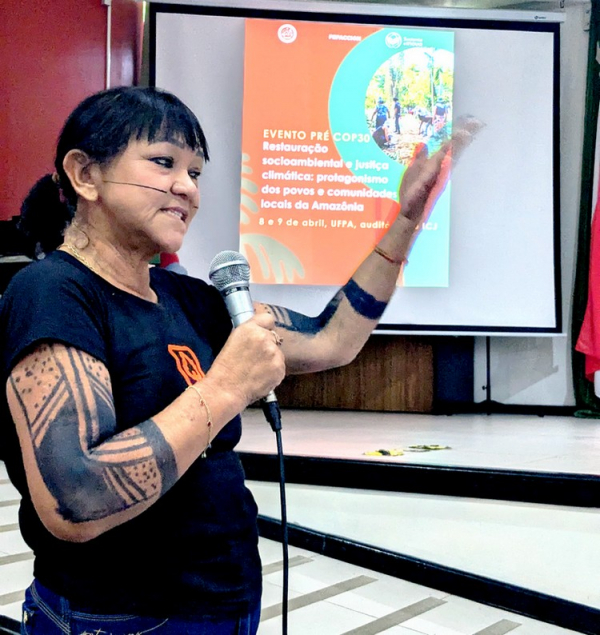
Cacique Katia Silene Tonkyre was invited to take part in the course's closing seminar, held at the Federal University of Pará © I. Moreira, Refloramaz
Science at work 14 October 2026
Science at work 7 October 2026
Science at work 30 September 2026