












Call to action 3 August 2026
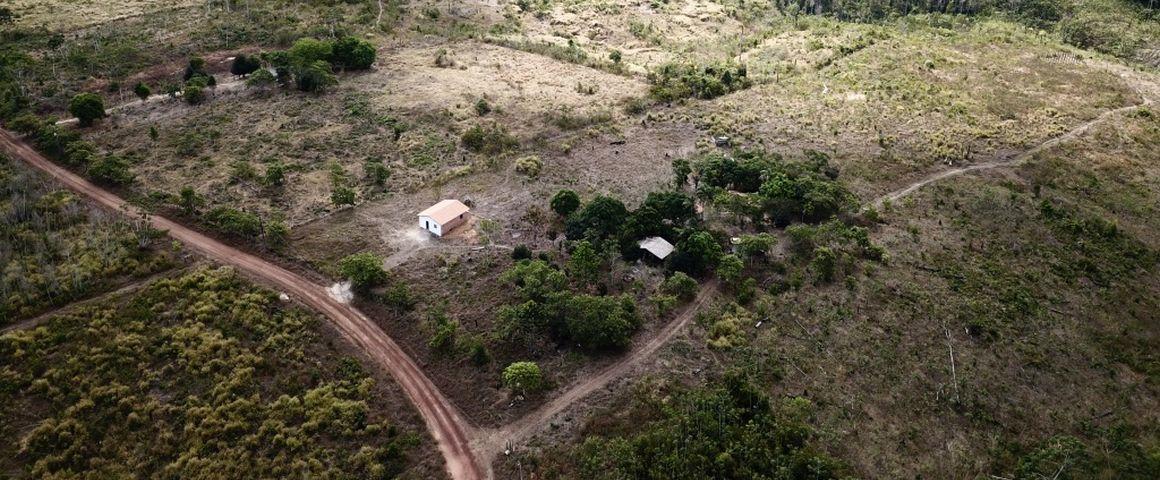
Paragominas, in Pará state, Brazil. The region has seen a period of significant deforestation and forest degradation © L. Blanc, CIRAD
Unlike deforestation, forest degradation does not result in forest cover loss, but in the gradual alteration of the capacity of forests to provide essential services: biodiversity, carbon capture, climate regulation and wood resources.
Degradation is often caused by forest fires or over-logging, and precedes and exacerbates deforestation. The problem is that until now, there was no standard method of reporting large-scale degradation. For want of a tool to define and measure it, forest degradation is still a blind spot in public policy. To fill this gap, a CIRAD/IRD/CNRS/ECOFOR consortium has come up with a new forest classification. Its work, funded by the AFD Forest Scientific and Technical Committee, is reported in a new policy brief.
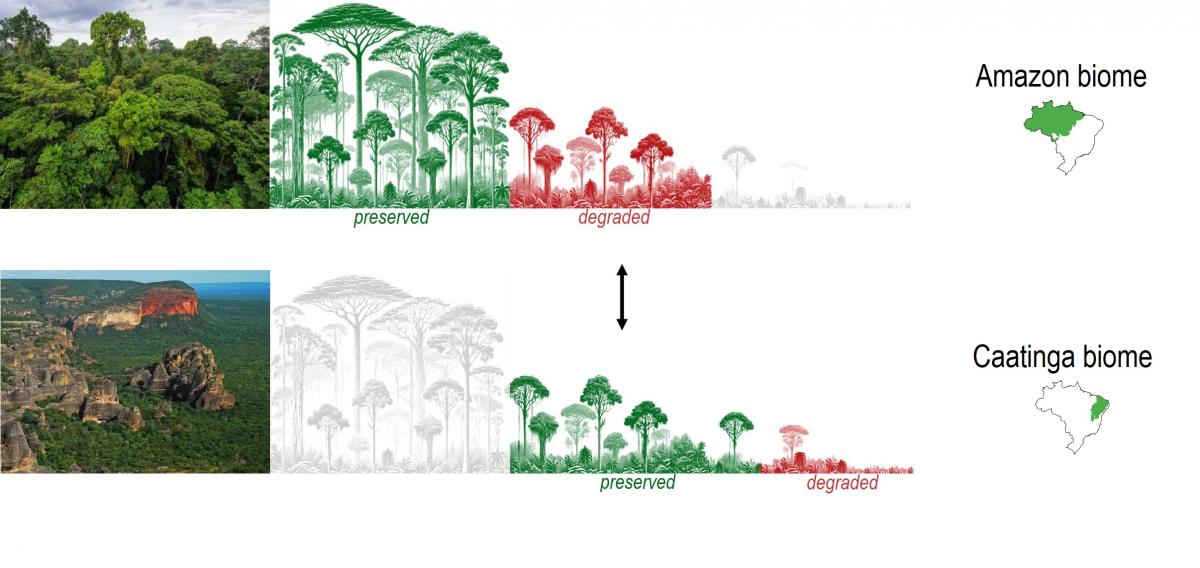
La forêt tropicale humide dégradée peut avoir une structure forestière (hauteur de canopée et couvert forestier) semblable à celle d’une forêt tropicale sèche sans perturbation. Cet exemple entre deux biomes forestiers situés au Brésil illustre toute la difficulté autour de la mesure de la dégradation forestière.
The principle of the new method is simple: to compare the observed canopy height and forest cover with reference values established for intact forests in each type of ecosystem (evergreen tropical rainforest, semi-deciduous forest, dry forest, etc). The approach was tested in Cameroon, and can be used to map degraded forests and fine-tune national estimates, while remaining compatible with international monitoring tools (FAO, EUDR).

En suivant la nouvelle méthode, le consortium a établi qu’il existe sept types forestiers au Cameroun. Sur cette cartographie de 2020, les scientifiques détaillent deux exemples distinguant les zones forestières dégradées (en jaune) et les zones forestières intactes (en vert).
This methodological advance offers new prospects for public policy, particularly EU ones. It could enable a revision of the definition of "forest degradation" in the EUDR (EU Deforestation and Forest Degradation Regulation), which is now seen as too restrictive since it excludes certain major causes such as fires or over-logging.
Over and above the regulation, the approach could also inform innovative funding mechanisms, such as the Tropical Forest Forever Facility, aimed at rewarding forest countries for their efforts to preserve their ecosystems.
Lastly, the authors stress that measuring is not enough: understanding the human dynamics behind forest degradation is still vital for reversing the trend. This policy brief therefore calls for greater dialogue between researchers, decision makers and local players, to build more effective, fairer and more sustainable tropical forest conservation policies.
Call to action 3 August 2026

Call to action 23 May 2026
Call to action 30 March 2026