


















Call to action 3 August 2026

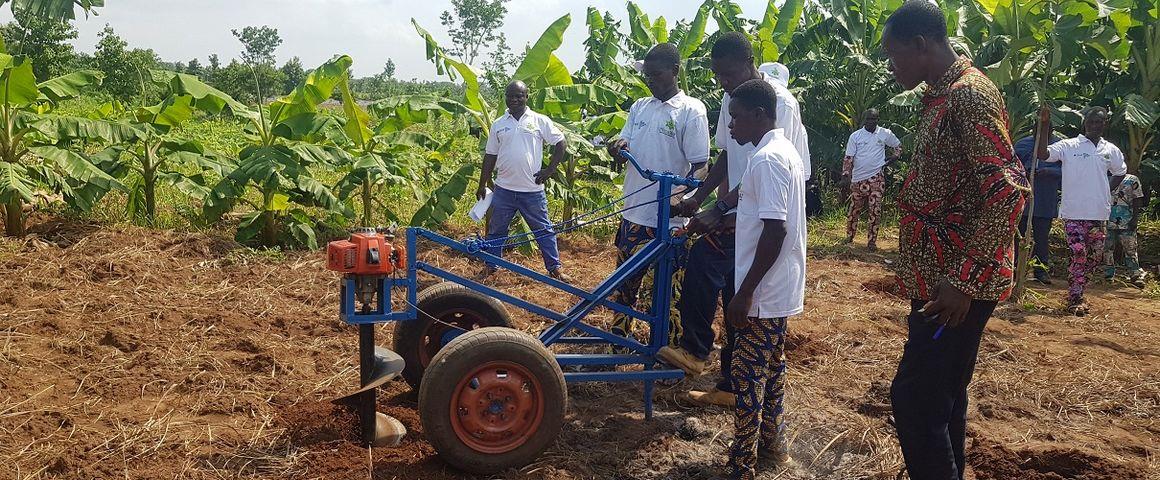
Mechanised prototype produced in Benin being used in a plantain banana plot © MecaWAT
Agricultural mechanisation in Africa is currently seeing renewed interest on the part of decision makers and the research sector. However, there is insufficient data to clearly identify the challenges involved in appropriate, sustainable mechanisation.
The MecaWAT project in Ivory Coast, Ghana and Benin served to analyse farmer practices and work organisation in detail, including their use of agricultural mechanisation.
Its work showed that far from being a uniform process, mechanisation has contrasting effects from one zone to another: increased use of hired labour in some rice-growing systems in Ghana; reduced use in plantain plantations in Ivory Coast; and the creation of new bottlenecks in cotton-growing zones leading to increased herbicide use. These results highlight the importance of documenting how work is organised, the consequences for employment—particularly of young people—and the environmental impact of these transformations.
One of the other important activities of the MecaWAT project was the participatory co-design of equipment, associating local craftspeople, farmers and researchers. As needs vary significantly from one territory to another, this approach served to develop several prototypes that were adapted, tested and validated by farmers. These operations were conducted in all three countries, in banana- and cotton-growing zones.
The approaches used ensured that the farmers' criteria—arduousness, spare part availability, ease of maintenance and compatibility with agroecological systems—that are often difficult to anticipate by means of technical analyses alone were taken into account more effectively.
Future-proofing mechanisation calls for robust service environments: training in use and maintenance, agronomic advice, appropriate microfinance, and repair and maintenance infrastructures. However, the players involved—craftspeople, mechanics, trainers, public institutions, importers and research centres—often intervene in a somewhat uncoordinated way. The innovation platforms set up by MecaWAT in Benin and Ghana demonstrate the potential of such forums for dialogue to structure effective long-term support.
Call to action 3 August 2026

Call to action 23 May 2026

Call to action 30 March 2026