The essentials
- 37% of greenhouse gas (GHG) emissions come from agrifood systems, and the figure could reach up to 65% by 2050 (IPCC, 2022). For CIRAD, there is an urgent need to transform food and farming systems.
- CIRAD has been working in the Amazon for more than 40 years, and has built a strong, wide-ranging partnership with Brazil in particular. With nine expatriate researchers, CIRAD conducts many projects in the country each year alongside local experts, notably on territorial sustainability and the fight against deforestation.
- Some 15 CIRAD scientists specializing in various fields will be contributing to COP30.
CIRAD will be participating in COP30, as it has every year since COP21. Some 15 of its scientists will be sharing their knowledge via conferences, roundtables and side events, to call for a transformation in agrifood systems in response to climate change. This topic is a growing part of the talks at successive COPs: at COP27 in 2022, the Sharm el-Sheikh joint work on implementation of climate action on agriculture and food security was approved by all the countries present, and the following year, at COP28 in Dubai, 152 countries (out of 197) signed the Declaration on sustainable agriculture, resilient food systems, and climate action.
Sustainable agricultural transitions, forest conservation and social inclusion are closely linked
While agriculture and food systems are major GHG emitters, they are also victims of the effects of climate change (droughts, flooding, fires, etc). According to IPCC forecasts, between 8 and 30% of agricultural land will be unsuitable for production by 2100.
Tropical forests face the same problem: they have the capacity to capture carbon, but they have reached a tipping point beyond which they could emit it. Moreover, in addition to zones that were deforested long ago to enable agricultural activities, forests also face an increase in illegal activities, which have been the main source of deforestation in recent years.
There is an urgent need to transform farming systems and forest farms sustainably, in response to these issues.
Decisions about farming and food systems are complex, as they encompass several fields, but they are vital, as in addition to mitigating climate change, those systems play a key role in food security, health, poverty alleviation and the rural economy in the vast majority of countries worldwide.
Vincent Blanfort
CIRAD Climate Change Officer
CIRAD scientists are working on numerous projects, and have shown that agriculture and forestry can and must be part of the solution to climate change.
Climate justice, to redesign the future
The intensification of flooding and droughts is threatening agricultural production in the Amazon, which is already poorly connected to global markets, exacerbating food insecurity among Amazonian communities. Although those communities bear little responsibility for global crises, they are hard hit by the consequences. What initiatives are there to denounce this climate injustice and redesign the future?
The people who are contributing least to climate change are those who suffer the most from it. This is the observation on which the concept of climate justice is based. In Brazil, social movements are using the concept to support alternative development approaches, primarily for rural communities. Research is backing these movements by documenting operations and building forums for exchanges within territories.
Sustainable exploitation of tropical forests
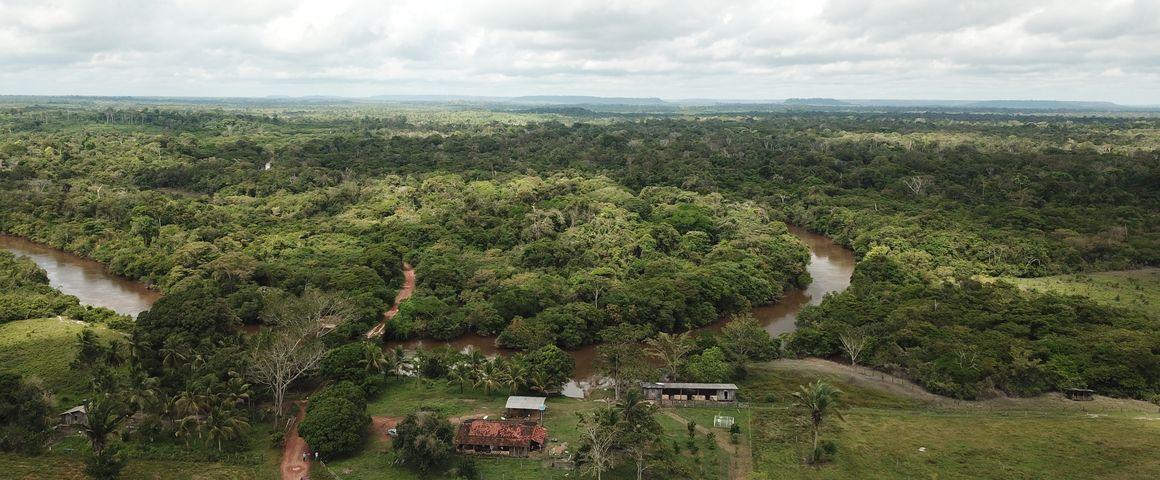
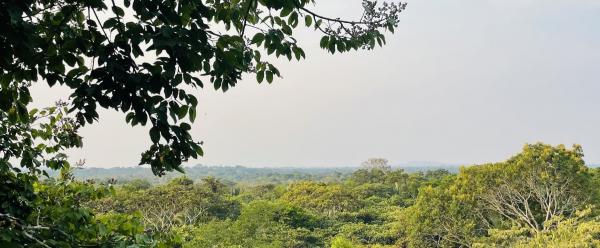
The forests of the Amazon are home to an exceptional wealth of biodiversity, and contribute to the health and subsistence of millions of people. However, they face an uncertain future as a result of climate change. How are carbon stocks and biodiversity affected by climate change? How can we adapt forestry methods to the resulting issues?
Les forêts amazoniennes sont menacées par les changements climatiques, la déforestation et la dégradation, et le développement des monocultures. Pour préserver à la fois ces territoires, les humains et les forêts qui les peuplent, et l’équilibre climatique mondial qui en dépend, il est nécessaire de comprendre les transformations en cours et de (re)penser des imaginaires et des gouvernances nouvelles qui prennent en compte les attentes locales et les dynamiques globales, fondés sur des principes de justice sociale et écologique. Le Cirad, en collaboration avec ses partenaires institutionnels et des communautés locales, explore les transformations socioécologiques et tente de repenser les usages et la gouvernance des territoires pour répondre aux défis d’un monde en transition. Foresterie innovante basée sur la plantation d'espèces natives, prospective participative et gouvernance régénérative, les pistes à étudier sont nombreuses.
Reconciling human activity and conservation
Community forestry concessions allow indigenous peoples and local communities to manage forest territories. Conservation has had extraordinary results in the areas concerned: deforestation rates are close to zero, while allowing local people to exploit natural resources and farm for their own consumption.
CIRAD is coordinating the ConForMa project, in partnership with the forest community association Acofop. The project, funded by the Fonds français pour l’environnement mondial (FFEM), aims to secure the future of community forest management in Guatemala and promote it on the global stage. CIRAD CEO Elisabeth Claverie de Saint Martin was in Guatemala from 16 to 20 September for the project launch.
What CIRAD scientists will be doing ahead of and during COP30
Before
CIRAD scientists will be involved in the IARAÇU river caravan, which will be travelling along the Amazon from Manaus to Belém to promote dialogue on climate issues between science, society and policymakers.
Programme (in French).
During COP30, you can meet up with CIRAD experts
- Vincent Blanfort, Climate Change Officer and FairCarbon project (Carbon in continental ecosystems: levers and pathways for carbon neutrality) in French Guiana
- Marie Hrabanski (remotely), Joint Climate Change Officer
- Nathalie Cialdella (remotely), Açaí’action (Co-building knowledge and consolidating quality markets for the products of the socio-biodiversity in the Amazon)
- Pierre Marraccini, CIRAD Regional Director for Brazil and Southern Cone countries
- René Poccard-Chapuis (Brazil), dP Amazonie (Forests, agriculture and territories in the Amazon platform)
- Raphaël Marichal (French Guiana), dP Amazonie (Forests, agriculture and territories in the Amazon platform); FEFAccion (Fonds Équipe France actions en Amazonie sur le Changement Climatique et ses Impacts) and FairCarbon projects in French Guiana
- Marie-Gabrielle Piketty, TerrAmaz (Support programme for the development of Amazon territories)
- Emilie Coudel, Sustenta&Innova (Restoring altered areas in Amazon territories)
- Marie-Ange Ngo Bieng, ConForMa (Concerted future forest management: the example of the Selva Maya and forest communities in Petén, Guatemala)
- Géraldine Derroire, TMFO (Tropical Managed Forests Observatory) and One Forest Vision
Discover the programme
Feeding the world in the light of the climate emergency: transforming agriculture sustainably
The challenge is huge: to reduce GHG emissions linked to food production while increasing yields, so as to guarantee global food security for an expected 10 billion people by 2100.
Research is playing a central role in tackling climate change issues, notably to make scientific knowledge as widely accessible as possible.
To mark COP30, a book entitled Climate Impacts and Challenges on Agriculture, Forests, and Food Systems: A global Perspective, coordinated by CIRAD researchers, is due to be published by Springer.
This book shines the spotlight on the specificities of countries in the global South, which are often overlooked in scientific work, despite the fact that they are among the most vulnerable to climate change. At a time when international solidarity is in doubt and multilateralism is being rediscussed, the scientific world has a duty to resist.
Vincent Blanfort, Marie Hrabanski, Julien Demenois
Book coordinators
A new book by almost 150 scientists from the global North and South, coordinated by CIRAD, looks at the range of strategies for transforming the world's farming, food and forestry systems sustainably in reponse to climate change. It was first published in French by Editions Quae, and is also available in English, published by Springer. The book is intended for policymakers and civil society.
The French version of the book was presented to journalists at an online press briefing on 23 September.
CIRAD and the climate COPs
CIRAD has been following climate talks actively since COP21, where the Paris Agreement was signed. It is a member of the French interministerial group for food security on Climate, and participates in the climate COPs as an observer. It is also regularly asked to revise IPCC reports, and contributes to the Koronivia joint work, in association with its partners in the global North and South.
Farming and food systems have long been missing from COP talks. They are now an increasing part of the discussions, which resulted in the Sharm el-Sheikh joint work on implementation of climate action on agriculture and food security that was unanimously approved at COP27 in 2022, followed the next year by the Dubai Declaration on sustainable agriculture, resilient food systems, and climate action at COP28 (read the debrief on COP28).