












- Home
- Worldwide
- CIRAD worldwide
- Projects
- CONFORMA project
Concerted future forest management: the example of the Selva Maya and forest communities in Petén, Guatemala - CONFORMA
The ConForMa project aims to strengthen community forest management (CFM) as a strategy for the conservation and concerted management of tropical forests, as well as for sustainable development in local communities in Guatemala.
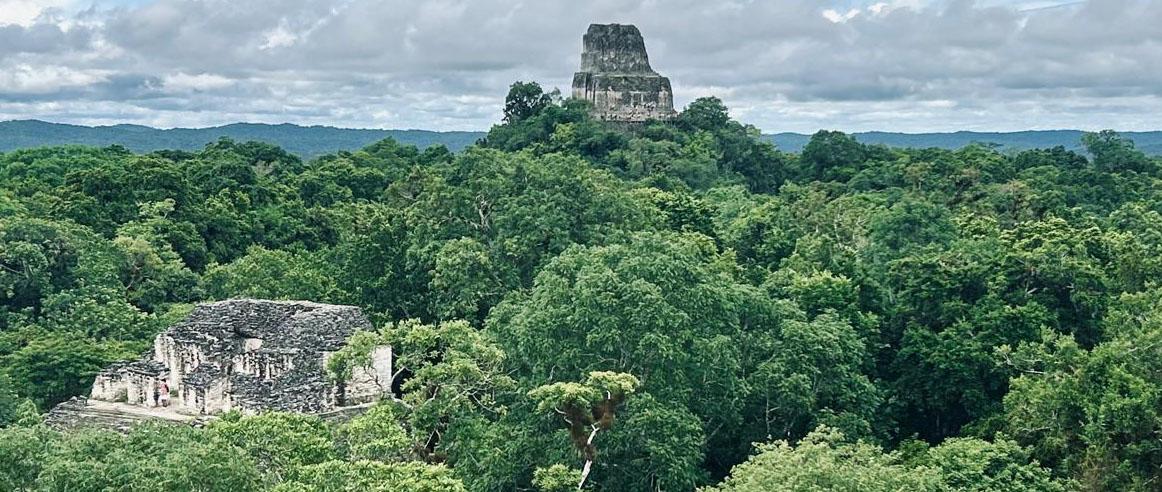
Tikal Park within the Maya Biosphere Reserve, in the Petén department of northern Guatemala: a site of outstanding natural and cultural heritage © M-A Ngo Bieng, CIRAD
A response to climate and social challenges
The goals of this project are: to strengthen efforts to combat deforestation and global biodiversity loss; to adapt to climate change (droughts, extreme rainfall); and to reduce poverty and the historical inequalities faced by indigenous communities.
Specific objectives on three levels
- Local/community level: conservation, sustainable management, forest restoration, diversification, ecotourism, ecological monitoring;
- Territorial level: multi-stakeholder consultations for sustainable governance adapted to the local context and to global challenges;
- International level: promotion of the CFM model at the pan-tropical level.
Innovation, restoration, governance: the pillars of the ConForMa project
ConForMa aims to consolidate an effective model of ecological, economic and social forest management, driven by local populations and indigenous communities, and to replicate this success in other tropical forests around the world. This involves:
- Showcasing silvicultural innovation and “climate-smart” restoration
- Promoting inclusive economic diversification (wood and non-wood products, ecotourism)
- Strengthening territorial governance
- Promoting CFM internationally as a replicable model for the conservation and sustainable use of forest ecosystems in the Anthropocene
Contract partners
- Centre d'études mexicaines et centraméricaines (CEMCA) ;
- Centre de recherche et d'enseignement en agronomie tropicale (CATIE) ;
- Rainforest Alliance ;
- l'Association technique internationale des bois tropicaux (ATIBT) ;
- l’Association des communautés forestières de Petén (ACOFOP).