COP17 desertification: recognising the role of pastoralism in sustainable ecosystem management
Event23 July 2026
COP17 on combating desertification will be held in Ulaanbaatar, Mongolia, from 17 to 28 August 2026. The United Nations Convention to Combat Desertification (UNCCD) is gradually recognising the role of pastoralism in sustainable land management. CIRAD will be at COP17 to call for greater recognition of pastoral social-ecological systems, which are a real asset for the planet.
CIRAD scientists will be at Desertification COP17 to call for greater consideration of scientific knowledge of the role of pastoralism in combating desertification.
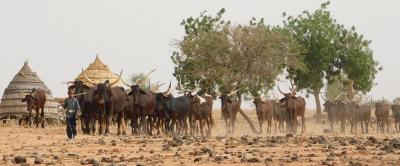
Pastoralism helps to preserve biodiversity and adapt to climate change, but pastoral systems are under threat from increased land pressure and widespread natural resource degradation.
Almost 500 million people worldwide rely on pastoralism for a living, 70% of them women and young people.
Rangelands house 67% of the world's biodiversity hotspots and cover almost half its land area.
Grasslands and rangelands store almost a third of the world's soil carbon.
With their agroecological practices, pastoral societies contribute to sustainable global food systems. However, they now face a range of threats: climate change, biodiversity loss, pollution, the loss of traditional knowledge and the marginalisation of pastoralists are all undermining these systems.
Supporting pastoralism via the Rio Conventions
Provided States recognise its true worth, pastoralism can play a key role in tackling global challenges. It is an agricultural production practice, a way of life, a nature-based solution and a social-ecological system capable of responding to current environmental crises. Pastoralism is a crucial ally in achieving the aims of the three Rio Conventions, with the following events this year: DesertificationCOP17 in Ulaanbaatar, Mongolia, BiodiversityCOP17 in Yerevan, Armenia (18-30 October), and Climate COP31 in Antalya, Türkiye (9-20 November 2026).
The really challenge is no longer to demonstrate the merits of pastoralism for the climate, biodiversity or soils, taken separately, but to gain recognition of its capacity to produce simultaneous co-benefits for local communities, food systems and ecosystems. The issue is making the approach built on the synergies between the three Rio Conventions the basis for future public policy and investment, to benefit pastoralists and sustainable rangeland management.
Jean-Daniel Cesaro
geographer at CIRAD and member of the French Scientific Committee on Desertification
CIRAD is working with its partners to gain greater global recognition of pastoral systems.
It has three priority lines of work that it will be defending at this year's three COPs: 1. supporting sustainable transition in pastoral territories; 2. co-producing knowledge and data to trigger international synergies that benefit pastoralism; 3. consolidate multi-stakeholder and multi-level cooperation to benefit pastoralism.
Pastoralism was long seen as a livestock system of the past, but is now increasingly being recognised as a solution to the challenges posed by climate change, biodiversity erosion and soil degradation, while contributing to more sustainable food systems. Just ahead of COP17 of the United Nations Convention to Combat Desertification (UNCCD), CIRAD has published a position paper calling for the synergies between the three Rio Conventions to be harnessed, to support sustainable pastoralism in support of resilient social-ecological systems.
(Re)listen to the conference on pastoralism and global challenges (Pastoralisme et défis globaux: terres, climat, biodiversité au cœur des négociations internationales) held on the CIRAD-AFD stand at the 2026 Paris International Agricultural Show:
Following this COP17, CIRAD will be organising an online press briefing (for journalists) on 15 September 2026 (10:30-12:00 CEST) on "The year of three COPs: issues for agriculture in the global South". Information and registration: presse@cirad.fr
The International Year of Rangelands and Pastoralists
To promote the role and know-how of pastoralists in response to global challenges and obtain recognition of the importance of such social-ecological systems in the three Rio Conventions, the UN has declared 2026 the International Year of Rangelands and Pastoralists (IYRP).
CIRAD will be working throughout this international year, and participating in the Global Pastoralist Gathering and Conference, which will bring together 300 delegates from 102 countries ahead of COP17 in Ulaanbaatar. Following the event, recommendations will be drafted and reported to policymakers at the opening of COP17.
The Global Pastoralist Gathering, organised ahead of COP17 in Mongolia, is the culmination of an unprecedented international push by pastoral communities and the start point for a Global Alliance for Rangelands and Pastoralists. The ambition is to ensure that pastoralists' views continue to fuel public policy well beyond the International Year of Rangelands and Pastoralists. Pastoralists are not only asking to be heard; they are asking to be recognised as fully-fledged partners in building a more sustainable future.
Serena Ferrari
economist at CIRAD, member of the International Year of Rangelands and Pastoralists 2026
CIRAD and its partners will also be promoting an immersive exhibition, "Transhumance 360°", which uses virtual reality headsets to take visitors on a trip through pastoral landscapes. The exhibition, which has already been shown at several international events, will be accessible during COP17 on the Team France collective stand.
CIRAD experts presented the issues surrounding pastoralism and the main events planned for this international year at an online press briefing, (replay available).
Rangelands and pastoralists will be centre-stage in 2026, with a United Nations International Year. This unprecedented initiative shines the spotlight on their role and expertise, which are central to a number of global issues: climate change, biodiversity, food security and social justice.
Concrete work to support pastoralists
CIRAD works with pastoralists the world over, and with its partners, to tackle the issues they face.
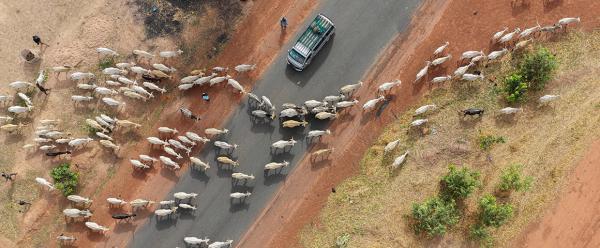
Its expertise rests on the results of action research projects alongside pastoral communities over several years, from West Africa to central Asia via southern Africa: land restoration led by livestock farmers, cohabitation between livestock and wildlife, resilience to climate and security crises, or trans-border territorial foresight exercises.
Five countries, five stories giving a different picture of pastoralism
Factsheets have been produced for five countries, and are available to journalists on request from presse@cirad.fr:
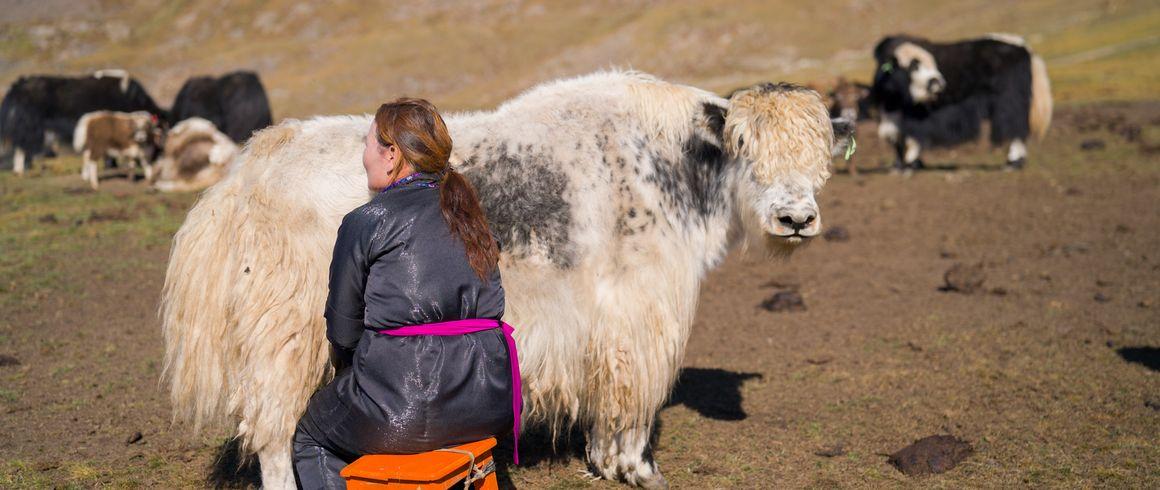
Mongolia: in the COP17 host country, livestock farmers are designing their future A couple of months ahead of COP17, Mongolia—with almost 77% of its land area degraded—is testing its own solutions with livestock farmers. (Nomad4Life: How Mongolian Herders Sustain Their Rangelands)
Mozambique: livestock and wildlife, cohabitation needs to be reinvented On the fringes of a National Park, livestock farmers and large wild mammals must learn to share water, grasslands... and diseases.
Burkina Faso/Togo: a border area aiming for more peaceful transhumance by 2035 What if, rather than submitting to tensions regarding transhumance, a cross-border territory were to write its own scenarios for the future?
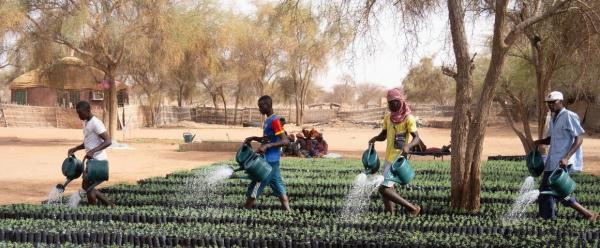
Senegal: when livestock farmers manage reforestation What if the best way of restoring degraded areas were to leave it up to livestock farmers to decide?
Sahel: pastoralism in the light of climate and security crises In the Sahel, livestock farmers' resilience hinges on a map: that of transhumance routes, water points and livestock markets. (See 10 years of work in the field of pastoralism in the Sahel)
Sous-estimé, parfois considéré comme un relent du passé, le pastoralisme fait pourtant vivre plus de 200 millions de personnes à travers le monde. Face aux crises actuelles, ce mode d’élevage, à la fois souple et résilient, présente des avantages inattendus. Retrouvez nos scientifiques et partenaires dans cette huitième saison de Nourrir le vivant, pour un voyage dans le temps et dans l’espace, au plus près des troupeaux et des humains qui les accompagnent.