

















Call to action 23 May 2026

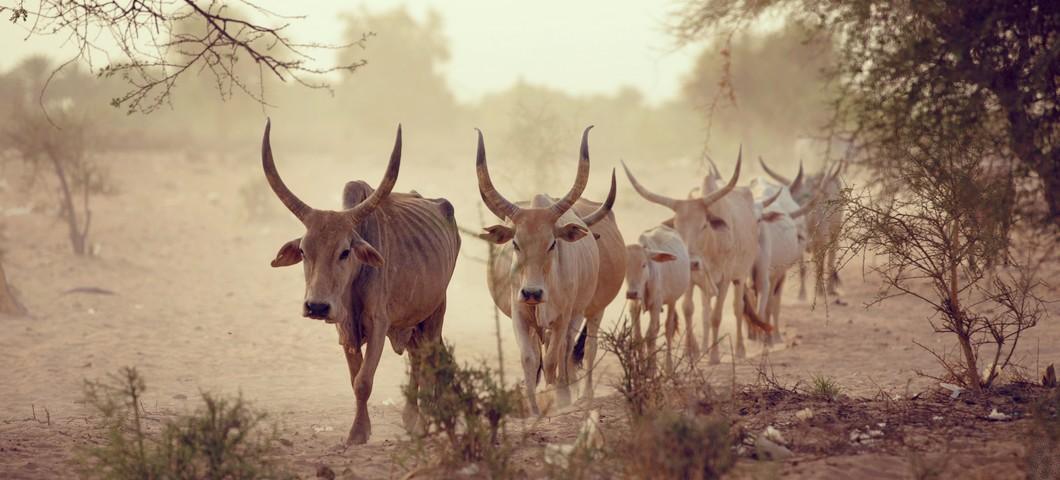
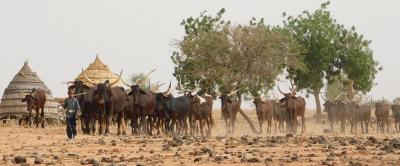
Zebus on the shores of Lake Guiers in Senegal. Pastoralism provides a livelihood for 500 million people across the world © R. Belmin, CIRAD
The essentials
Did you know that pastoral rangelands cover 50% of the world's land area? Little is known about such ecosystems, as they are often found in "marginal" areas far from decision-making centres. They are usually arid, semi-arid or mountain environments largely unsuitable for agriculture, but where pastoralism makes use of natural vegetation that could not otherwise be used.
As the herds are mobile, fodder resources are used seasonally, without exhausting ecosystems. For Guillaume Duteurtre, Head of the SELMET research unit, "this mobility is not a vestige of the past that is set to die out, but a way of adapting to climate hazards and to the heterogeneity of the natural resources available. It is therefore more relevant than ever".
For a long time, pastoralism was reduced to its productive function alone, but it is in fact a real sustainable territorial management system. First and foremost, it performs a vital economic function, albeit one that is often unseen. More than 200 million people worldwide depend directly on pastoralism for their food and income. In many parts of Africa, Asia or the Mediterranean, it is the agricultural activity best suited to local ecological constraints.
However, pastoral activities also play a determining role in how ecosystems function. "By keeping the vegetation open and diverse, they help preserve biodiversity, reduce fire risks in some territories, foster natural nutrient recycling and help restore soils by providing manure", Guillaume Duteurtre explains. "Herd movement also spreads seeds and helps renew many natural habitats."
In addition to these ecological functions, there are social and cultural aspects that are often overlooked in the media and in political spheres: pastoral activities maintains pastoral know-how, structure rural territories, serve to pass on local knowledge, build cohesion between communities and allow collective management of natural resources. All these elements make territories more resilient to crises.
During recent research work in the Sahel, a team of scientists led by CIRAD demonstrated that rangelands store large quantities of carbon in their soils and vegetation. In some territories, that carbon capture compensates for, or may even exceed, herd greenhouse gas emissions, resulting in neutral if not negative carbon balances.
These results highlight the importance of adopting an ecosystem approach, taking account of the full range of services provided by pastoral activities, rather than limiting assessments of pastoralism to greenhouse gas emissions alone. Research into pastoralism can also supply new scientific evidence to inform climate policies better adapted to the realities of dry zones.
One of the most persistent misconceptions consists in associating extensive livestock farming with land degradation. CIRAD's work has shown that on the contrary, provided rangelands are adequately managed, pastoralism is a powerful lever for combating desertification.
Herd mobility avoids putting excessive pressure on plant resources while maintaining rangeland ecological cycles. Scientists stress that degradation is much more frequently caused by the fragmentation of rangelands, land tenure insecurity or restrictions on movements than by pastoralism itself.
"At Desertification COP16, pastoralism emerged as a vital player in land restoration and sustainable natural resource management." Jean-Daniel Cesaro is a geographer at CIRAD. For him, "COP17 now needs to convert this acknowledged fact into concrete commitments".
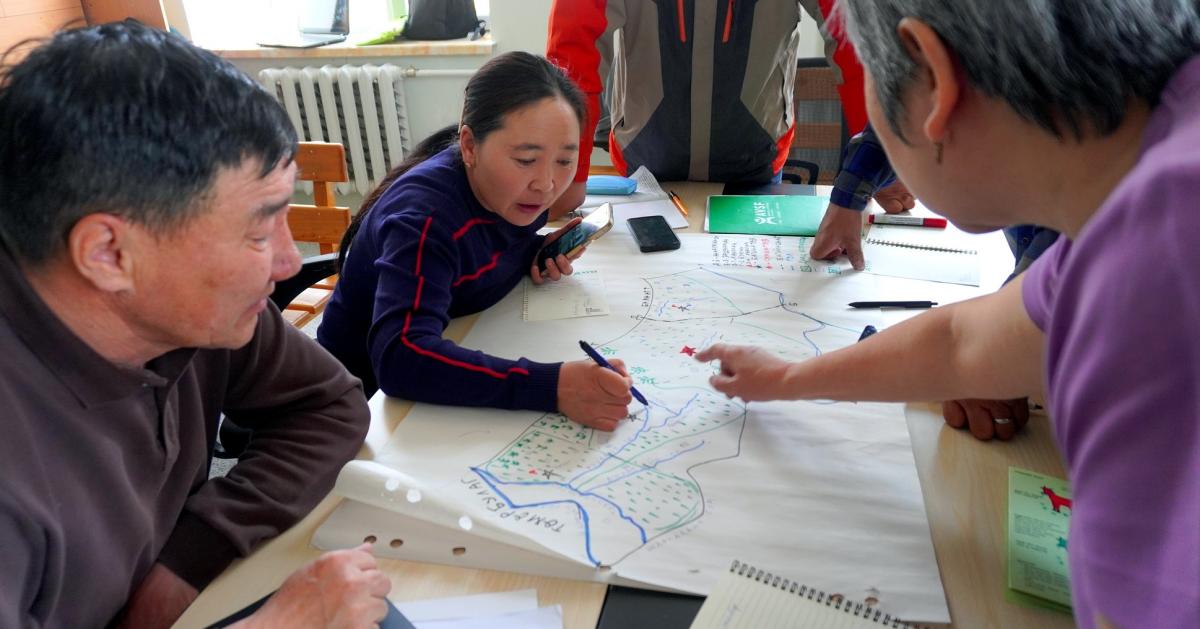
Nomad4Life project workshop in Mongolia © J-D. Cesaro, CIRAD
As well as its research, CIRAD helps public players and pastoral organisations build appropriate solutions.
In the Sahel, the Pastoralism and drylands in West Africa platform (PPZS) has been a globally recognised scientific cooperation laboratory for more than twenty years. Its work with African partners ranges from pastoral resource management to land tenure governance, territorial dynamics, information systems and organisational innovations.
This research in partnership has served to influence public policy, improve consultation systems between players and achieve greater recognition of pastoral areas in several countries.
Pastoral systems remain fragile in the face of climate change, land pressure and socioeconomic change. Competition for access to land, urbanisation, infrastructure development and conflicts are steadily reducing the areas available for herd mobility that are vital for pastoral livestock farming.
For CIRAD's scientists, the priority is now to ensure that the merits of pastoral activities are fully recognised in agricultural, environmental and climate policy. This means going beyond an exclusively productive view of such territories and considering the full range of services they provide for society.
In the runup to COP17, CIRAD has a clear message: restoring rangelands is not just a matter of replanting trees or making landscapes green again. It also means preserving management systems that for centuries have allowed dry zones to live sustainably. As such, the pastoral communities that manage these vast swathes of rangelands are crucial allies for simultaneously tackling the challenges surrounding desertification, biodiversity, climate and food security.

Call to action 23 May 2026

Call to action 30 March 2026
Call to action 25 November 2025