








Call to action 3 August 2026
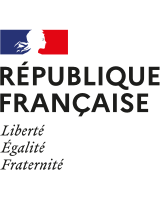
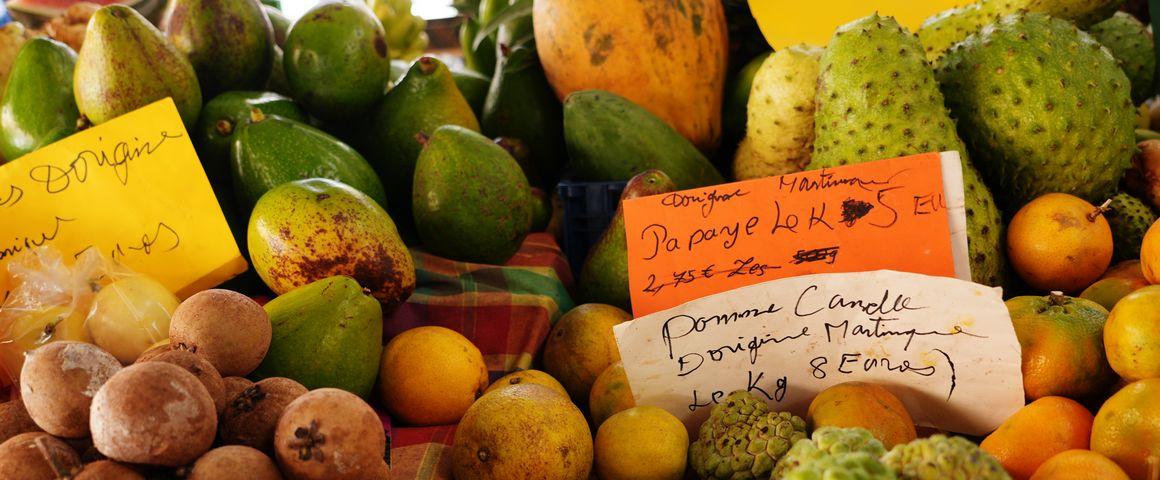
Fruit and vegetables from farms in Martinique, on sale at the market in Fort-de-France © Y. Sanguine, CIRAD
«"Producers' organisations are simply groups of several farmers who decide to pool certain resources. In particular, this helps them shift the balance of power with other players in the sector, for instance supermarket chains. A PO always has more weight in negotiations with a major distributor than an individual farmer."
Laurent Parrot is an agronomist with CIRAD, currently assigned to the Campus Agro-Environnemental Caraïbe (CAEC) in Martinique. He has worked on the feasibility of various agroecological practices for growing tomatoes, looking into the agronomic and economic issues facing market gardeners on the island.
«"POs are key players in guaranteeing the fruit and vegetable value chain's agroecological transition. To address the lack of resources often reported by farmers, they can act as a relay for preparing subsidy applications, accessing calls for collective projects, or setting up investment cooperatives. By strengthening their role as a collective "one-stop shop" they facilitate access to resources that are often difficult for individuals to access. Such structures are vital if we want to reduce chemical input use."
The island's market gardeners often deplore the lack of outlets their products and the resulting losses. As regards direct sales to individuals, one of the obstacles is a lack of promotion of "ugly" fruit and vegetables (those with blemishes, irregularities or lumps, etc). To address the issue, POs organise education campaigns or forge partnerships with caterers or charities. The aim is to raise consumer awareness of the taste and nutritional value of local products, over and above their appearance.
POs therefore use various communication tools to promote local products. They develop collective promotional campaigns, territorial branding, or labels to recognise sustainable practices, freshness, proximity and health benefits. In response to expectations in terms of transparency and trust, POs sometimes also organise producers' markets, open days, or partnerships with schools.
Local products are worth talking about. Unlike other regions, Martinique does not yet really promote its producers and terroirs. POs have a role to play in producing visual content and narratives, to increase local people's attachment to their agricultural sector.
"Our job as a producers' organisation to coordinate and support our farmers' efforts to supply quality fruit and vegetable. Reducing our dependency on synthetic pesticides, which is a major health issue, has a direct impact on our activities, since it means adjusting our members' practices and crop management sequences. We need to show creativity and an ability to innovate, and sometimes be prepared to accept slightly lower yields.
Joining a professional producers' organisation, recognised by the State, allows farmers to concentrate on their core job, which is to produce. The PO deals with marketing, hence with product monitoring and traceability from farm gate to consumer. These operations boost consumer trust in our products and promote the image of farming in Martinique as healthy and sustainable, by means of partnerships and local distribution circuits."
Mr Gérald Viviès, administrator of the "Maraîcher Horticole Martinique" Economic Interest Group
POs tailor their services, training courses and marketing strategies to suit farms. This allows them to respond better to the range of market demands: direct sales, catering, or supermarkets. Above all, they can then act as collective representatives in talks with distributors, notably as regards packaging requirements that are often unsuited to local realities.
This shift in the balance power is good news for producers, notably when POs are able to negotiate changes in specifications or develop specific circuits better suited to local production.
Setting up groups also serves to structure supply, for instance by grouping production and optimising logistics. Whereas small farms are less profitable due to their low production volumes, POs generate economies of scale and thus improve profit margins.
Martinique lacks agrifood processing units, which means avoidable losses. Furthermore, the links between producers and processors are not yet strong enough. POs are acting on these two issues. Firstly, they can initiate or support the development of collective processing facilities: canneries, dryers, cutting plants, etc. Such operations provide concrete solutions to the matter of unsold goods or unsized produce.
Secondly, POs act as active mediators between producers and processors, brining supply into line with demand and securing supplies by means of contracts or shared logistical platforms.
Coordinating every link in the chain, from farm to fork, is a fundamental challenge. POs are well placed to structure the value chain, guarantee traceability, secure product flows and federate partners around a shared vision.
For Laurent Parrot, "provided they are supported and strengthened, producers' organisations can become drivers of the agroecological transition in Martinique. They are the ideal interface between agricultural diversity and economic coherence, between local quality and market demand, and between individual know-how and collective strategy." As the researcher reminds us, solutions to the technical challenges posed by the agroecological transition on a plot scale are built at side-by-side with those to the economic issues facing farms.
Call to action 3 August 2026
Call to action 30 March 2026
Call to action 25 November 2025