













Just out 25 September 2026

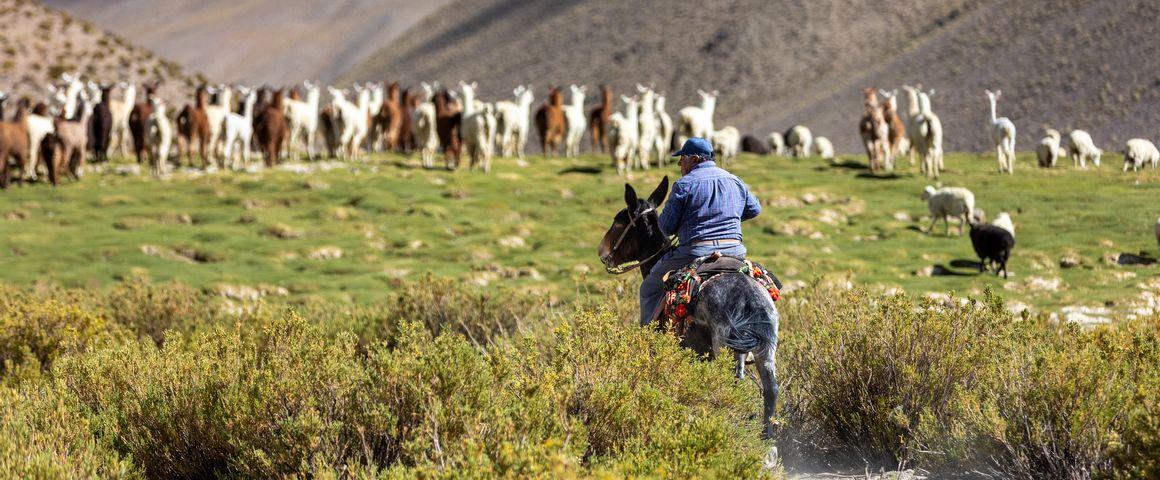
Llamas in the "vega", mountain pastures in Argentina © IMAGEO
Rangelands cover almost half the world's land area. They house exceptional biodiversity, store a large share of the world's soil carbon, and provide almost 500 million people worldwide with a livelihood. However, these areas and the pastoral societies that tend them face major threats. Climate change, landscape artificialisation and fragmentation, land grabbing, lost traditional knowledge and marginalisation of livestock farmers are making these social-ecological increasingly fragile, despite the fact that research has repeatedly demonstrated their contribution to food system sustainability and natural resource preservation.
In response to this situation, CIRAD is calling for greater recognition of the role of pastoralism in global policy. While the three Rio Conventions—on climate, biodiversity and the fight against desertification—have complementary objectives, they still address pastoralism in a fragmented way. Pastoralism is often seen in the light of its greenhouse gas emissions or supposed environmental impact, it remains insufficiently recognised for its numerous ecosystem services: maintaining open landscapes that foster biodiversity, storing carbon in soils, supporting sustainable natural resource management, adapting territories to climate risks and preserving the livelihoods of rural communities.
The latest CIRAD position paper, entitled Pastoralism and the Rio Conventions: harnessing synergies for resilient socio-ecological systems, shows that an integrated approach would make it possible to move beyond those segmented visions. Based on the multi-functionalism of pastoral systems, CIRAD calls for pastoralism to be fully integrated into national and international strategies regarding climate, biodiversity and sustainable land management. Such recognition would have co-benefits for all three Rio Conventions and inform more coherent public policy in response to environmental crises.
The paper insists on the need to support sustainable transitions within pastoral territories, by fostering concerted rangeland management, securing herd mobility, restoring ecosystems hand-in-hand with pastoral communities and developing solutions combining livestock farming, biodiversity and climate adaptation.
The second ambition is to generate knowledge: CIRAD argues in favour of developing indicators better suited to the realities of pastoral systems, co-producing data with local stakeholders, and using modelling to inform public policymaking.
Lastly, the paper stresses the importance of stepping up cooperation between researchers, farmers' organisations, and national and international institutions, to make the voice of pastoralism heard in the main environmental talks.
This position paper is based on several decades of work by CIRAD teams and their partners in Africa, Asia and other pastoral regions worldwide. It calls upon numerous examples of research and innovation, from rangeland restoration and sustainable land management to territorial planning, common resource management and One Health approaches. These experiences show that pastoral communities are not just subject to environmental crises; they are also key players in building solutions.
In the runup to the next cycles in implementing the Rio Conventions and the post-2030 international agenda, this publication invites policymakers to change how they see pastoralism. By fully recognising the contributions pastoral societies make to the climate, biodiversity and sustainable land management, it is possible to build fairer, more effective policies better suited to grassroots realities.

Just out 25 September 2026
Just out 9 April 2026