
















Just out 25 September 2026

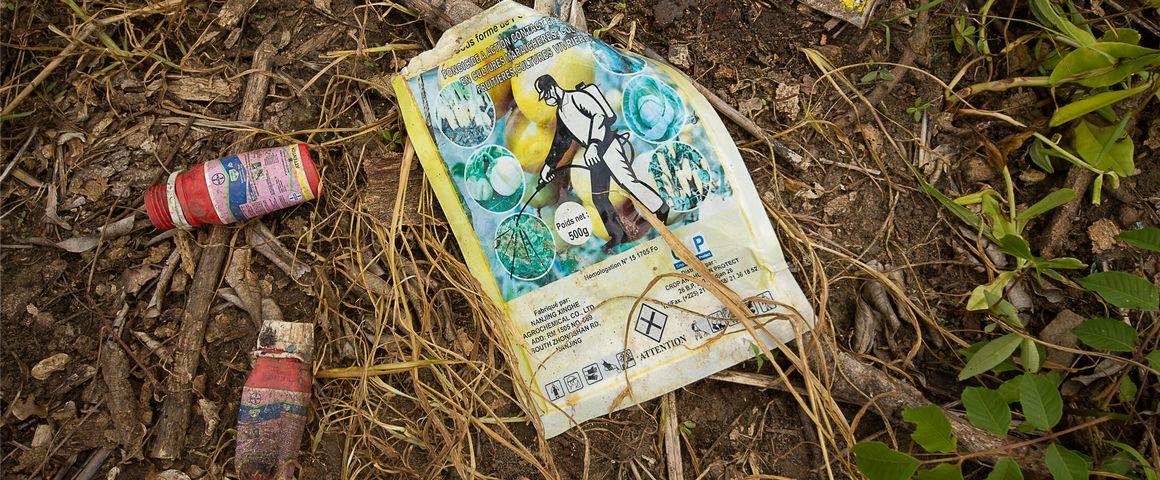
Used pesticide packaging dropped on the ground. In addition to the cost, systematic pesticide use harms the environment and has risks for the health of producers and consumers © R. Belmin, CIRAD
Using pesticides has helped to secure agricultural production in recent decades. However, their harmful effects on the health of farmers, consumers and ecosystems have now been widely documented. Soil and water contamination, declining biodiversity, the development of resistance in pests and diseases, and health risks are all impacts that call for a rethink of crop protection strategies.
As stressed in the latest issue of the CIRAD institutional policy brief Science Horizon, reducing pesticide use does not mean merely replacing one molecule with another. To be sustainable, any reduction must be seen as a transition, based on an in-depth transformation of farming systems. That transformation must make use of the principles of agroecology, crop diversification and biological regulation, and in general follow a "One Health" approach to agro-ecosystems.
Solutions for achieving transition exist, and are based on the one hand on allowing for the constraints facing producers, particularly the most vulnerable among them, and on the other hand on capacity to combine technical innovations, organisational innovations and public policy innovations. However, rolling them out means removing several barriers: technical support for producers, access to information, training, development of multi-stakeholder consultation and innovation platforms, stronger regulatory policies, economic incentives and eventually shared responsibilities for the various players in the transition, from producer to consumer by way of private and public decision-makers.
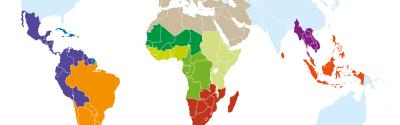
In highlighting the main recommendations prompted by this work in partnership across different value chains and territories, this latest CIRAD policy brief provides decision support to foster agroecological transitions in tropical countries, and paves the way for the multi-institutional development of the PRETAG initiative. The aim is to reconcile agricultural production, human health, biodiversity preservation and territorial resilience.
Just out 25 September 2026
Just out 27 July 2026

Just out 9 April 2026