Africa Forward: CIRAD strengthens its partnerships in East Africa and worldwide
Institutional news18 May 2026
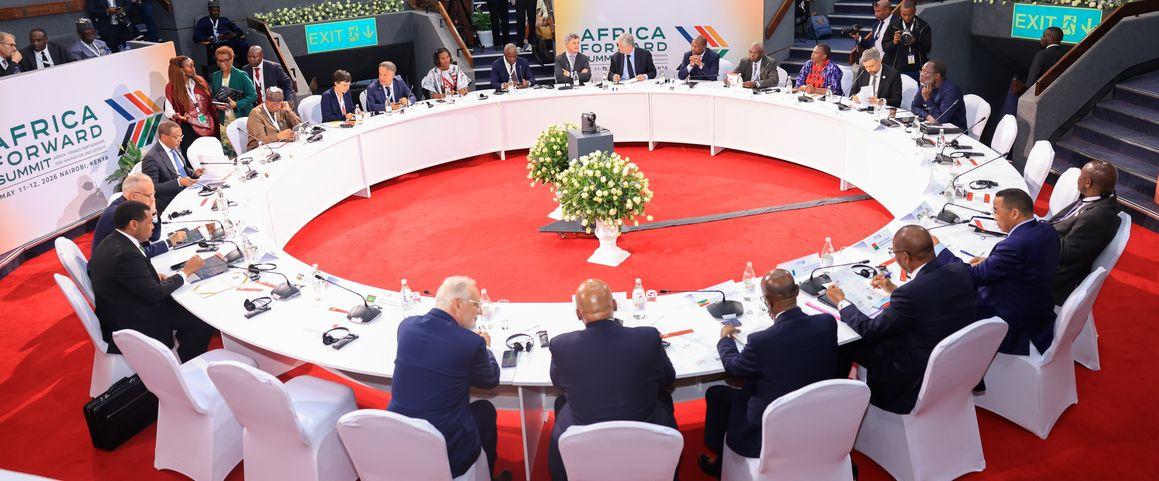
During the Africa Forward Summit, CIRAD met with several partners from both East Africa and elsewhere, and finalised agreements to support the development and strengthening of African agricultural value chains, enterprise and smallholders. The agreements illustrate the way in which CIRAD can respond to the needs of African countries in terms of research and agricultural innovation. Those needs are both substantial and varied, as shown during a roundtable on agriculture attended by Elisabeth Claverie de Saint Martin, the then CIRAD CEO.
With more than 1.5 billion people, 60% of them aged under 25, and a population set to reach 2.5 billion by 2050, Africa has strong human and economic potential. Agriculture, which represents between 30 and 50% of GDP in most African countries and employs an average of just under 60% of the working population, is a key sector in African economies.
In January 2025, the continent adopted the Kampala Declaration, which alongside the Comprehensive African Agricultural Development Programme (CAADP) constitutes an action framework and roadmap for sustainable, resilient, productive African food systems that provide both jobs and income.
Agriculture is well placed in the Africa Forward Summit final declaration
The Africa Forward Summit final declaration adopted on 12 May included the conclusions of the roundtable on agriculture attended by Elisabeth Claverie de Saint Martin, the then CIRAD CEO, and INRAE President and CEO Philippe Mauguin.
In the declaration, representatives from a dozen or so African countries confirm the need to transform agriculture into a modern sector that will remain competitive and resilient despite climate challenges. This shared ambition aims to make agriculture a driver of sustainable development, economic sovereignty and job creation.
The countries have committed to strengthen farming, food and livestock systems that will benefit nutrition, by means of a One Health approach. They will be investing in agricultural research, innovation and climate-smart practices.
Agroecology, agroforestry, quality local seed and sustainable soil management will be encouraged, with particular emphasis on developing sustainable fertiliser supply chains (support for the Africa Fertilizer and Soil Health Action Plan: 2024-2034), and on higher and technical agricultural education to foster youth employment.
Supporting education, training, innovation and enterprise
The African countries at the summit, alongside France and Kenya, announced their wish to strengthen agricultural value chains by developing agrifood processing, mobilising public and private investment, logistics and trade within the African Continental Free Trade Area (AfCFTA).
The aim is to make agriculture a driver of industrialisation, value addition, and economic sovereignty. The countries also intend to support young people, women and smallholders. That support will involve better access to finance, land and innovative digital technology.
Building skills and innovation incubators is also a priority, along with strengthening research and development partnerships with French institutions.
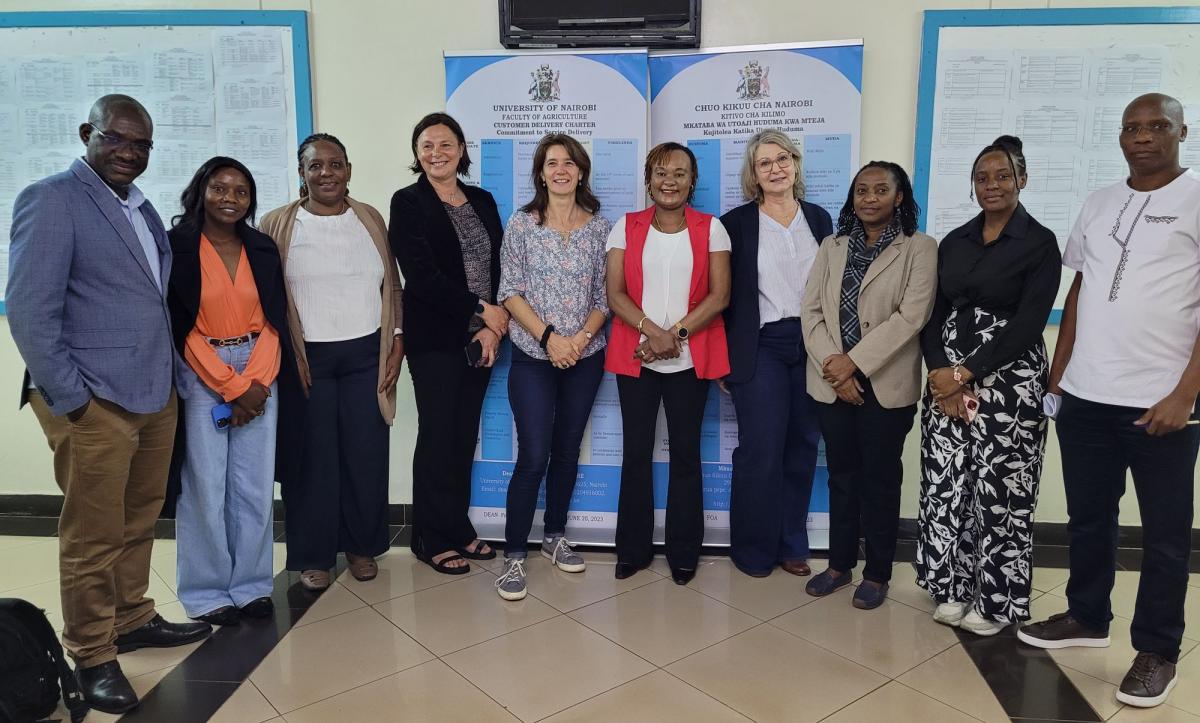
Collaboration on training with the University of Nairobi Faculty of Agriculture
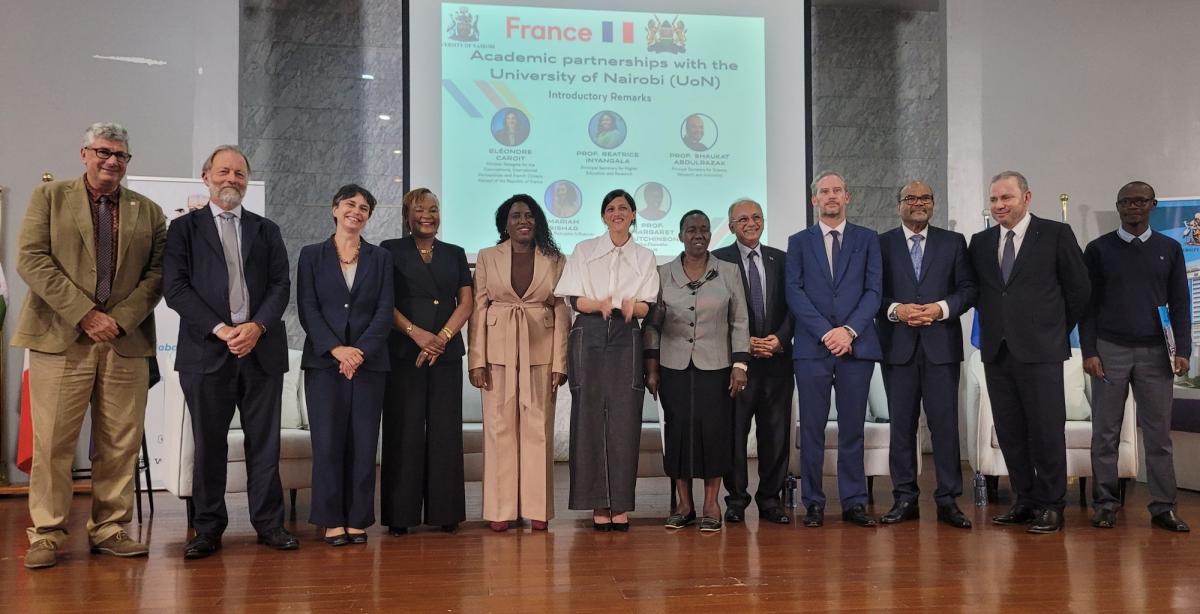
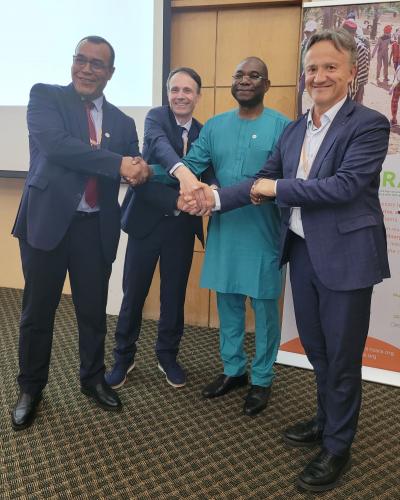
Within this framework, CIRAD signed a letter of intent on 13 May concerning the SHIFT-KFproject (Strengthening Higher Institutional Agriculture and Food Training – Kenya-France) coordinated by the University of Nairobi and AgroParisTech and aimed at modernising higher education in the fields of agriculture,agroecology and food systems.
The project was prompted by the fact that sustainable transformation of the agricultural and food sector requires new skills more geared towards innovation, enterprise and digital technology. Its ambition is to build a real innovation ecosystem associating universities, research, businesses and the authorities.
It intends to make the Kenyan agrifood sector more attractive and more competitive in the long term while providing jobs for young graduates.
That ambition is shared with the International Innovation Hub, which visited the Nairobi Faculty of Agriculture on 8 May as part of its rollout in East Africa.
Through the Qualisud research unit, CIRAD will also be helping the university and economic players to identify the main technical obstacles surrounding food processing, and to design appropriate solutions for better postharvest loss management and improved product quality. The aim is also to respond better to market demands and boost added value generation within Kenya. Supporting value chains with potential for geographical indications will be a particular priority.
Supporting agricultural value chain development in East Africa
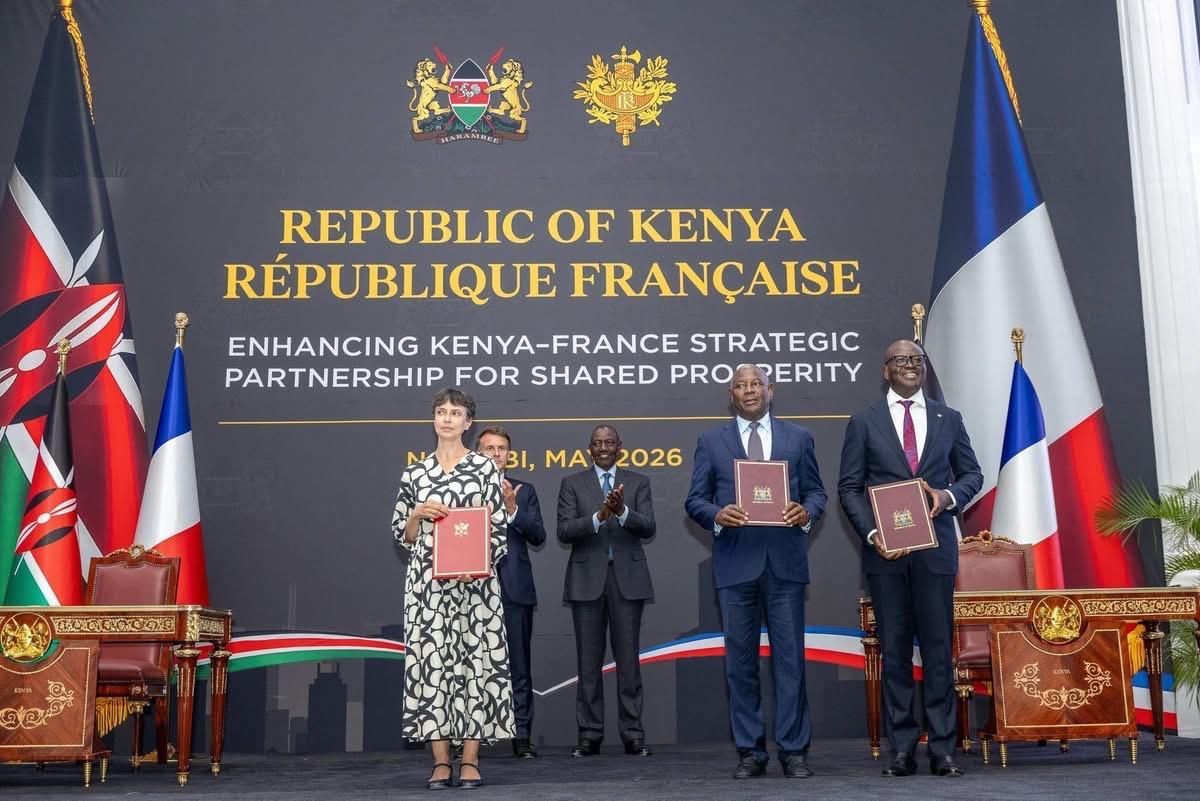
Along similar lines, CIRAD also signed an agreement with Equity Bank Kenya and Equity Group Foundation on 10 May, ahead of the summit, at a ceremony attended by Presidents Macron and Ruto, and another on 11 May during the Business Forum with Sonader (Société Nationale de Développement Rural) to support the development of horticultural value chains, focusing on soils and access to water, plus one on the dairy value chain with several institutions and agricultural federations in Mauritania.
Equity is one of the largest agricultural banks in East Africa, and supports business creation and the development of agricultural value chains. This ambitious partnership is aimed at building innovative initiatives in the fields of climate resilience, sustainable development, agricultural enterprise, health, technology and artificial intelligence. It is founded on skill sharing, training, innovation and mobilisation of public and private players, and is intended to foster high-impact projects capable of providing long-term solutions to the agricultural, economic and environmental challenges facing the continent and accelerating the sustainable transformation of farming and food systems. To begin with, CIRAD and Equity Group could work alongside Kenyan institutions to set up geographical indications for the tew value chain.
Supporting the most vulnerable smallholders in Africa and worldwide
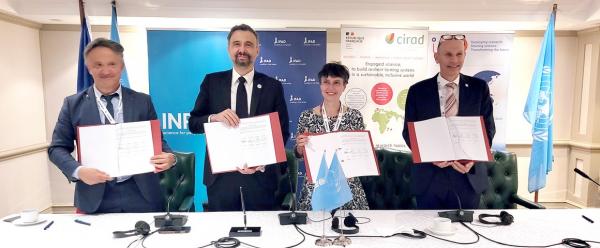
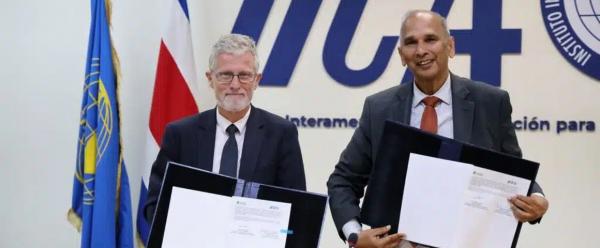
Alongside the summit, CIRAD, along with IRD and INRAE, signed a memorandum of understanding with IFAD. In combining IFAD's operational expertise and the world class capacities of CIRAD, INRAE and IRD, the partnership paves the way for concrete, science-based solutions capable of accelerating transition in rural territories.
The dynamic centres on supporting smallholders, strengthening value chains, mobilising the private sector and informing public policymaking, based on evidence. Particular attention will be paid to vulnerable regions in which the climate, economic and social challenges call for innovative, inclusive and rapidly applicable solutions.
Alongside the Africa Forward Summit in Nairobi, CIRAD, lNRAE and IRD have signed a Memorandum of Understanding with IFAD (International Fund for Agricultural Development), a specialist agency of the United Nations. The agreement covers the creation of a platform for collaboration putting innovation and scientific excellence at the service of investment in transforming rural areas.
By officialising their cooperation, the four partners have confirmed their shared vision: to develop and scale up transformative solutions capable of boosting resilience to climate change, preserving biodiversity and building more sustainable, equitable rural economies.
The MOU also marks a decisive stage: that of an alliance between science, innovation and grassroots action to maximise the impact of rural development, from a local level right up to major global policy.
Meetings with partners following the summit
Partnership between the CGIAR, France and national agricultural research and extension systems (NARES)
CIRAD was at ILRI on 13 May for a meeting aimed at strengthening the partnerships between the CGIAR, France (CIRAD, INRAE, IRD) and national agricultural research and extension systems (NARES). The results of past collaboration were assessed before discussing the future plan of action for the various partners.
With the CGIAR, a historical partner, CIRAD conducted 45 projects involving NARES between 2020 and 2025, and we are continuing to collaborate on the network's new portfolio. Our collaborations cover topics such as agroecology, agriculture , climate change and food systems. They have resulted in almost 800 publications over five years, and rely on two major assets: mutual researcher exchanges, particularly of junior researchers, and complementary networks, particularly in Africa.
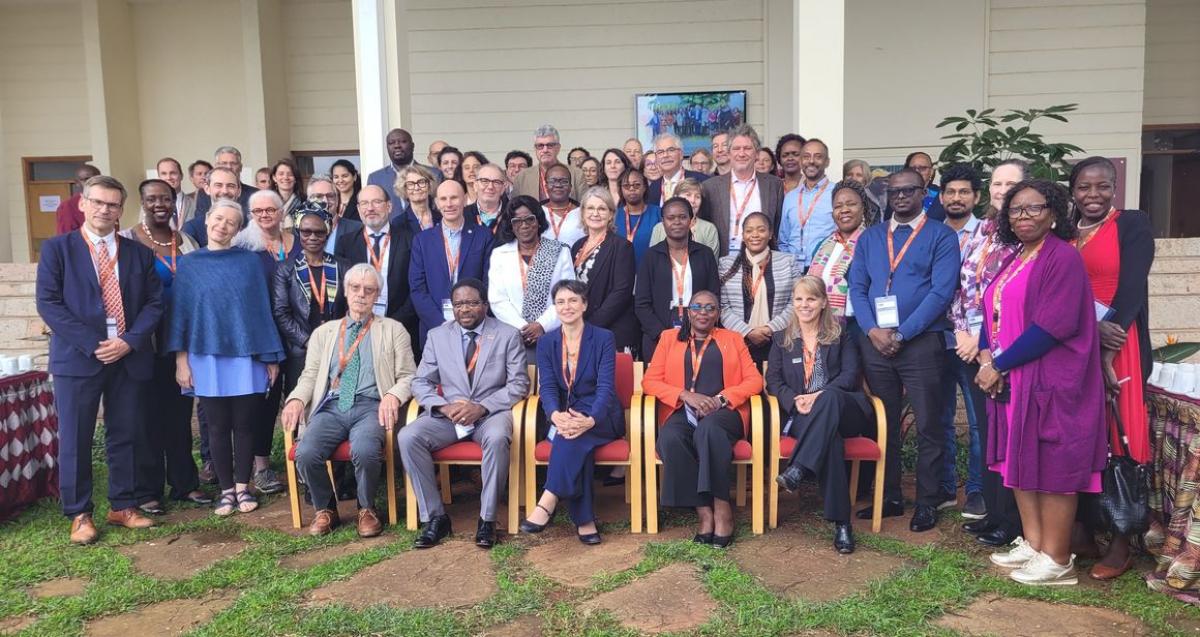
The following day, at the General Assembly of the TSARA initiative (Transforming Food Systems and Agriculture through Research in Partnership with Africa), held at ICRAF in Nairobi, CIRAD and the Ecole Nationale d’Agronomie de Meknès (Morocco) handed over the joint presidency of TSARA for the coming year to INRAE and icipe.
At the ceremony, Eric Justes, Head of CIRAD's PERSYST Department, who was representing the CEO, declared "To promote agroecology and sustainable food systems in Africa, we need to change the current agricultural paradigm, because the days of boosting yields through intensive, uncontrolled use of chemical inputs and fossil fuels are over".
The TSARA roadmap is structured by two scientific lines: agroecological transition, backed by geospatial tools, and the link between processing, local markets, frugal innovation and nutrition-health. TSARA relies on living lab-type participatory field approaches associating local enterprise and dialogue with the authorities. The alliance is keen to consolidate its role at the science-policy interface, echoing the Nairobi Declaration adopted by African Heads of State. Junior researchers and openness towards European partners remain central to the dynamic.
During this fourth General Assembly, six new members joined the initiative: the University of Nairobi (Kenya), Sine Saloum El-Hâdj Ibrahima Niass University (Senegal), Dilla University (Ethiopia), the EIAR (Ethiopian Institute of Agricultural Research), IAV Hassan II (Morocco) and INRAB (Institut national des recherches agricoles du Bénin), bringing the number of partners to 38 (from 16 African countries and France). See the list of members.