












Science at work 14 October 2026


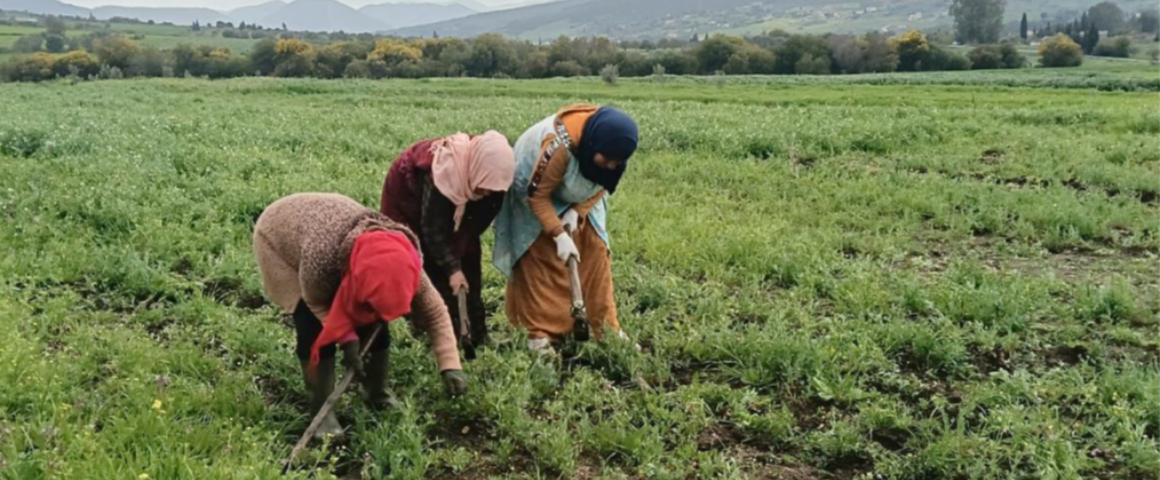
Women farm workers in the fields in Tunisia © N. Hammami
The work done by women farm workers in Tunisia is often largely invisible, with the media only showing an interest in the event of traffic accidents. However, they are a major lever in the country's agricultural sector. Some 91 000 women, 93% of whom have non-permanent jobs, work without contracts, without social security and without institutional recognition of their status.
These women are not sufficiently taken into account by public labour protection and inspection systems. Their basic rights play second fiddle to farm profitability.
This insecurity does not just affect their day-to-day lives, it is also putting young people off the idea of agricultural work. This will eventually jeopardise the entire sector. The women's working conditions were documented by a group of researchers based on field surveys in 2024. As part of the "Tamkin Femmes Rurales" (Tamkin rural women) project, the group organised a workshop in Béja governorate in 2026 with women workers and grassroots players, to sketch out public action that would tangibly improve their daily lives.
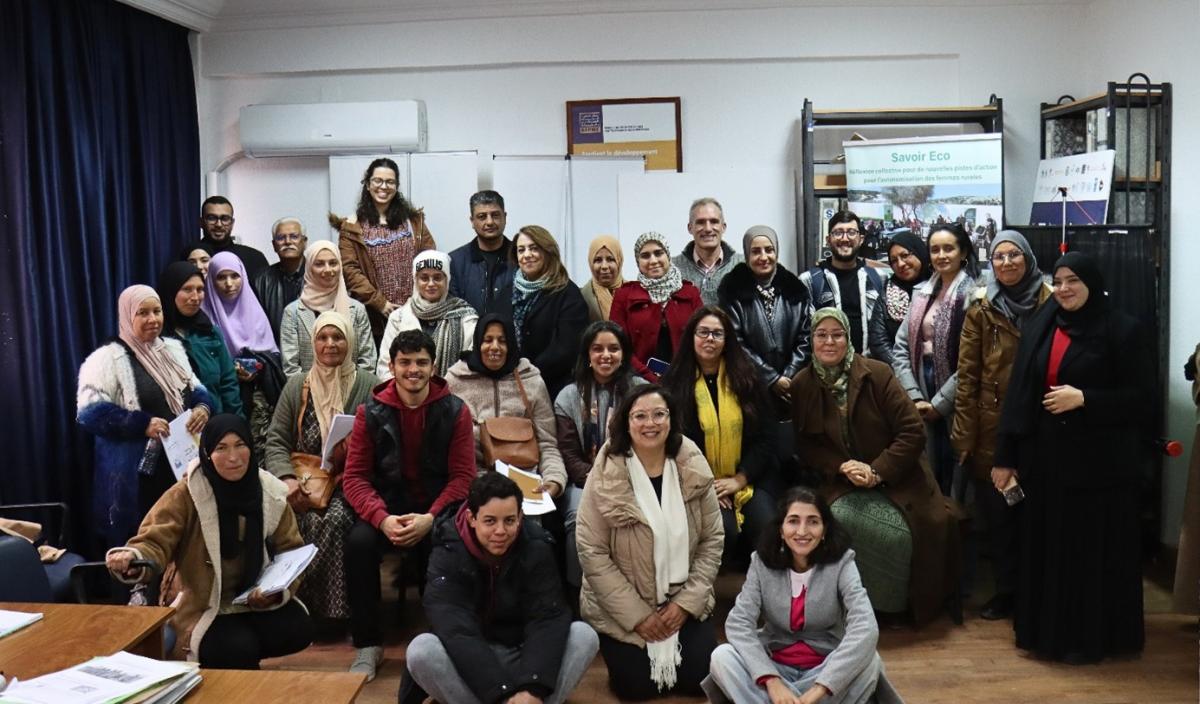
Workshop in Béja with women farm workers and grassroots players © N. Hammami
The "Tamkin Femmes Rurales" project (2025-2026), led jointly by APEDDUB, INRAT, INAT and CIRAD, aimed to work with rural women and grassroots players to devise forms of public action that would improve those women's living conditions and economic independence. The project was supported by Savoirs Eco, a programme funded by the EU and implemented by Expertise France.
The transport provided for women farm workers often leads to accidents. The middlemen in charge of taking them to work on farms often use vans and pickups.
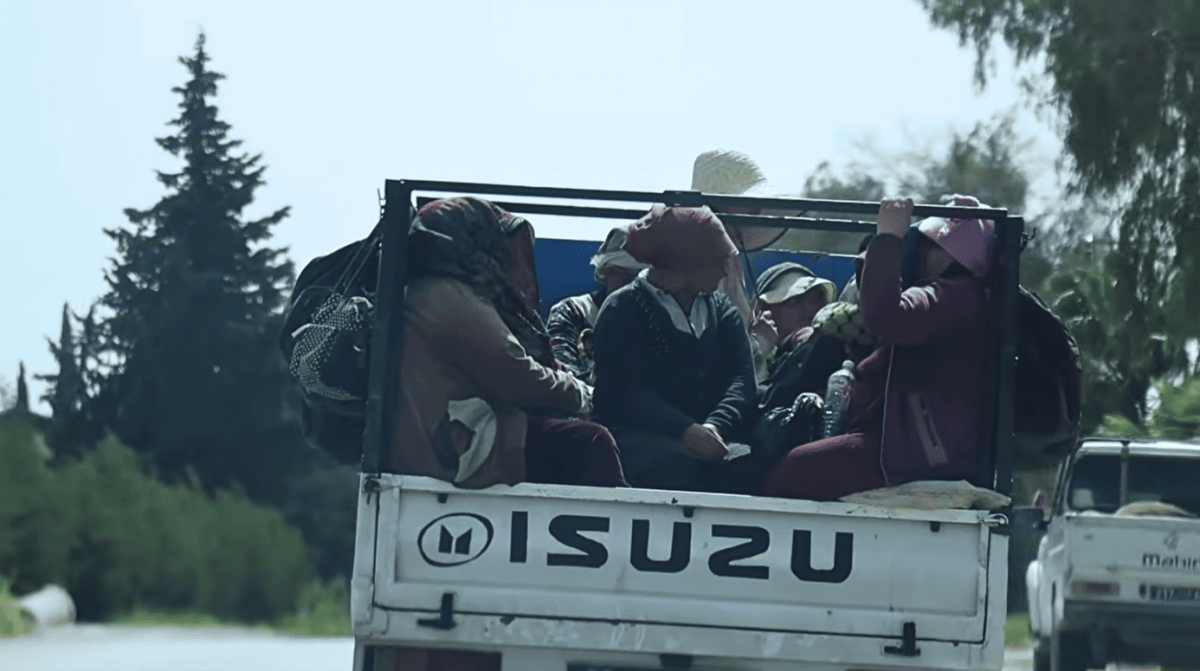
Transporting women workers to the fields © N. Hammami
Although a law was passed in 2019 in favour of developing a specific transport category, run by approved firms, it has not yet been put into practice. The state of farm roads, which are not suitable for conventional buses, makes applying those regulations particularly complicated.
Grants could be made to allow transport firms to invest in more suitable vehicles. At the same time, working with unions to draw up specifications, along with a transition period before applying sanctions, would allow the sector to adapt gradually.
On farms, employers and farmers seldom supply protective gloves, masks or boots, exposing workers to phytosanitary products (pesticides, herbicides, insecticides, etc) and thus to work-related illnesses.
The women's lack of negotiating power also affects pay levels. In Béja, wages are between 2 and 6 euros a day (10 to 20 dinars), which in many cases is below the official guaranteed minimum agricultural wage (SMAG), set at 17.6 dinars a day in 2024, a level that is in any event insufficient for workers in Tunisia to live in decent conditions in 2026.
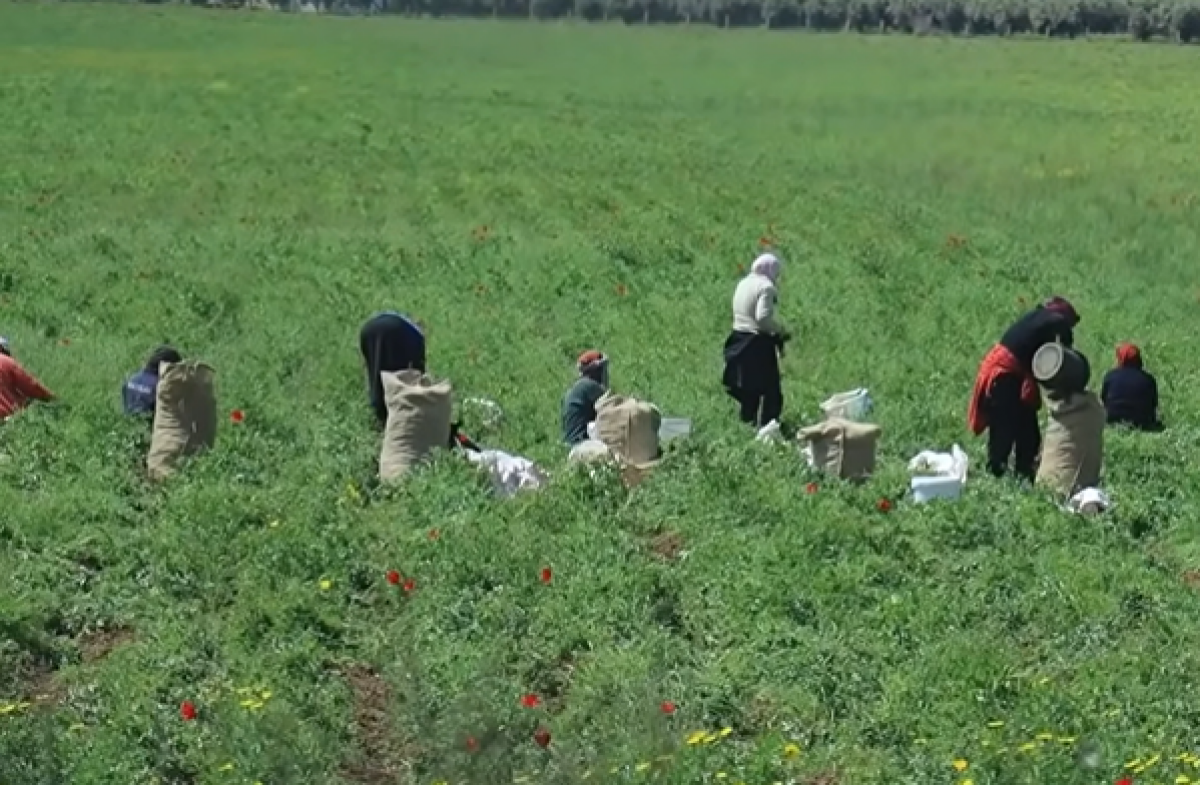
Women farm workers in Tunisia © N. Hammami
Increasing the human and financial resources available for labour inspections would help ensure greater compliance with the guaranteed minimum agricultural wage and allow the cost of protective equipment to be included in operating costs. Adherence to these standards could eventually become a requirement for anyone applying for public aid, which would boost their application.
The fact that 92% of women farm workers do not have social security can often be put down to a pragmatic choice, albeit a short-term one. Joining the national social security scheme (CNSS) means workers paying quarterly contributions, with penalties for late payments, whereas women farm workers do not have a guaranteed year-round income.
Moreover, declaring an official income often leads to the loss of social benefits. Many workers already benefit from the "Amen Social" scheme, a social protection initiative in Tunisia that supports its most vulnerable citizens, which they see as more advantageous in the short term. For women with low, irregular incomes, who are often over 40, paying into the CNSS late on can look like a bad investment. A decree-law passed in 2024 introduced a specific social security scheme for women farm workers, but it has not yet come into force, and in any case will not be enough to overcome every constraint on those women's inclusion in such a scheme.
One first step towards social security would be a professional card specifying their status. It should be possible to base contributions on income.
In addition to what they earn from farming, there is another way of empowering women in rural parts of Tunisia. Across the country, women have set up agricultural and fishery development groups to promote their products: distilled herbs, honey, couscous, bsissa, crafts, etc. By sharing processing, storage and marketing operations, those all-female groups allow their members, who are often geographically isolated, to access trade circuits that they cannot access individually.
All-female groups, led by women entrepreneurs with local expertise, are a model of economic inclusion by means of collective organisation. However, for the dynamic to fulfil its promise of long-term autonomy, their fragile marketing system - which is too reliant on occasional trade fairs and institutional support - requires more structured back-up.

Science at work 14 October 2026
Science at work 7 October 2026
Science at work 30 September 2026