The essentials
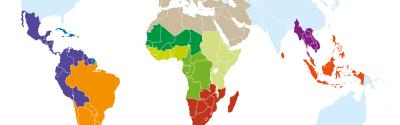
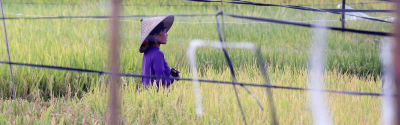
- FAO estimates that on average, in Latin America, Africa and Asia, 43% of agricultural workers are women. They therefore provide a huge proportion of agricultural labour. They also play a role in food systems, on different levels and in different links in value chains, or in their households, through their food practices.
- Since 2020, CIRAD has been building on the experience of a Community of Practice (CoP) on gender in research content. For the 70-odd members of the CoP, the challenge is to design and roll out new gender-aware approaches. The first stage consisted in documenting the different ways in which the establishment's scientific projects address gender issues. Although there are still some major difficulties, significant progress has been made.
"Our ambition is to move from so-called gender-blind research to gender-aware research" says CIRAD economist Emmanuelle Bouquet, who coordinated the CoP working group along with Jean-Michel Sourisseau. "In addition to the fact that we are determined to produce relevant scientific results, we know that research plays an essential role in shining the spotlight on women's work, identifying the constraints and opportunities specific to women and documenting the inequalities they face on a daily basis."
Anything that is invisible is unlikely to be taken into account on a political level. Nathalie Cialdella, an agronomist with CIRAD and member of the CoP, explains: "what we are doing with our surveys and research projects is documenting and understanding the activities and needs of women in rural areas, and the relations between their work and that of men".
"Unless we think about gender issues in advance, it is already too late"
The members of the CoP scrutinized a dozen R&D projects, and reached the same conclusion in every case: gender issues must be anticipated. "It is really hard to launch a debate about gender after the event or halfway through a project. To get satisfactory results in research terms, we can't settle for final indicators such as "so many women benefited from the project's results". On the one hand, this can be seen as gender-washing, and on the other, it is superficial and generally means that we miss out on really interesting, important results."
"Really including gender issues necessarily means thinking about them in advance", says Jean-Michel Sourisseau. "Surveys are more complex, thus more expensive and time-consuming, and we need to allow for that. Surveyors need to be trained in these issues. This is far from trivial, and we need to think about it before we venture into the field."
Who does what with what? This simple question ensures that we do not overlook any essential link of a food system under study. However, in practice, there are several major problems.
"Moving on from gender-blind tools"
Why is it so hard to generate knowledge about rural women's work? "Because of bias, inappropriate tools or indicators, disciplines dragging their feet, a lack of interdisciplinarity... need I go on?", CIRAD socioeconomist Jean-Michel Sourisseau asks. "In many cases, the problem is not so much a lack of good will as methodological problems, which are not that easy to solve."
"We ran up against real methodological and logistical problems", says Emmanuelle Bouquet. With her colleague Sandrine Dury, they coordinated the Relax project (Agropolis Fondation, Fondazione Cariplo and Fondation Carasso), aimed at understanding the agriculture-food nexus in order to improve food diversity among farming households in Burkina Faso. The researcher sets out the obstacles linked to conventional household survey tools, which tend to override what differentiates women's resources and activities from those of men.
Emmanuelle Bouquet: "We have survey forms that describe how farms operate in a non-gendered way. However, we know that men and women do not have access to the same resources or do the same work. We could come up with specific questions, or separate parts of questionnaires for men and women, but conventional surveys are already so complex that it is both difficult and costly to add gender-based modules. Especially as it is vital to study what happens within households, since it is on that level that interactions between men and women, hence gender relations, play out".
In seeking pragmatic solutions to these problems, the Relax project served to show that gender roles are many and varied, and sometimes overlap. Women cook and manage food, obviously, but they may also be farmers, sometimes working for men but sometimes in their own right, and they get involved in crops that are of interest on a nutritional level, such as legumes and pulses. As for men, they obviously grow crops, but they also have food responsibilities, in that they manage cereal granaries and contribute to food budgets.
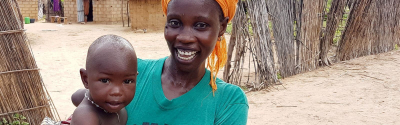
A lack of dietary diversity means that people living in the cotton-growing regions in Burkina Faso still suffer from chronic malnutrition. For four years, the RELAX project has brought together scientists from several disciplines to analyse the determinants of food diversity. This research has revealed that 80% of women are affected by micronutrient deficiencies. It has also produced operational recommendations to improve nutrition security for people in Burkina Faso.
Moreover, initial experiments with gender-aware research may raise new questions. Emmanuelle Bouquet quotes an example: the agricultural land certification programme in Madagascar, the results of which look good at first glance in terms of gender. Women land owners certify their land as much as men. "However, if we look into what households own, our surveys showed that many women access land ownership jointly with their husband, by buying land. And when those jointly owned plots are certified, only the husband's name appears on the certificate, rendering their wives completely invisible. What rights do those women have if they divorce or their husband dies? This is a very complex question, which is a crucial issue for women. However, if we stay on a household scale, the issue is sidelined."
Taking account of gender specificities also requires extensive knowledge of the social context, and suitable methods to document them. Nathalie Cialdella, project leader of Açai'action (Interreg Amazon Cooperation Programme - ERDF - IACP), explains: "as part of our work, we analysed açai picking and processing activities to make juices. We realised that in Brazil, processing workshops were dominated by men, whereas it was predominantly women who were involved in French Guiana. We were told in Brazil that mashing the fruit was tiring, physical work and was therefore something for men to do. We didn't hear that in French Guiana. This means we must take account of individual cases, otherwise we risk reaching a conclusion that stems from gender-based assumptions that are incorrect in other situations."
"Even if we realize we are not addressing the issue properly, it is difficult to overcome some obstacles specific to approaches and methods", Jean-Michel Sourisseau adds. "In agronomy, we talk in terms of human work units, which are asexual. For instance, agricultural mechanization is considered asexual, although in many cases it is in fact masculine. We therefore need to be able to propose new, more appropriate tools. This takes resources, and arguments, to successfully change habits."
"A gender-aware approach is an overall approach"
For the three scientists, addressing gender calls for an overall approach, incorporating the scientific dimension of a project and governance aspects. "We talk about the relations between the sexes", Nathalie Cialdella explains. "We have seen that questions of equality in terms of governance within the Açai'action project have an impact on how scientific questions are formulated. And vice versa."
The CoP used this observation as the basis for a simple reflective interpretation framework enabling all the stakeholders in a project to estimate how sensitive their work is to gender issues. The tool can be applied to any type of research conducted at CIRAD. "We sometimes hear that gender issues are irrelevant in the case of a scientific project centring on biology or genetics", Emmanuelle Bouquet says. "Actually, as soon as a project is likely to have an impact on a given society, there is a good chance that it will also have an impact on relations between the sexes, or that it will have a different impact on men from that on women. Deciding whether we think that is important is a choice."
The aim is not to provide turnkey tools, but to switch from gender-blind approaches to gender-aware ones. "What we want is to be able to offer more comprehensive, fairer research results", Jean-Michel Sourisseau adds. "The aim is not necessarily to transform the societies with which we work, particularly since we are not necessarily a good example either. However, what we do want is to help improve the documentation available on rural women's work worldwide. As scientists, we believe this is our contribution to more enlightened policy decisions, for more free choice."
After a few months' rest, the CoP will shortly be resuming its work on a more long-term basis and as a more visible part of CIRAD's scientific operations. This will provide an opportunity to review everything CIRAD has done about gender since the end of the Gender-SMART project. Rural women are not done yet!
Recent publications
Bouquet, E. and Dury, S., 2024. Le genre pour mieux comprendre les liens entre agriculture et alimentation chez les ménages agricoles. In L. Guyard, M. Jannoyer and A. Zeller (eds) Le genre en recherche : évaluation et production des savoirs. (Versailles: Quae), 149-170. https://www.quae.com/produit/1782/9782759236091/le-genre-en-recherche
Burnod, P., Bouquet, E. and Rakotomalala, H., 2025. The long and winding road of the land reform in Madagascar since 2005: governance, implementation, and outcomes. Land Use Policy, 158, pp. 107711. https://doi.org/10.1016/j.landusepol.2025.107711
Cialdella N., Koanda M., Superti E., Euler A., de Abreu Sá Diniz J.D., Cerdan C.. 2024. How emerging non-timber forest products markets transform gender division of labour? Learnings from açaí (Euterpe oleracea) in the Amazon. In IUFRO 2024 World Congress: Forests and Society Towards 2050. Book of abstracts. Uppsala: IUFRO, p. 543. IUFRO 2024 World Congress: Forests and Society Towards 2050. 26, 2024-06-23/2024-06-29, Stockholm (Sweden). https://iufro2024.com/wp-content/uploads/iufro2024abstracts.pdf
FAIR Sahel 2024. Le genre dans la recherche-action en agroécologie. Position paper. https://www.fair-sahel.org/content/download/4642/35415/version/1/file/Note+Fair+Sahel+-+02+-+Genre+dans+la+recherche-action+en+agro%C3%A9cologie+-+06.pdf
Lourme-Ruiz, A., Koffi, C.K., Gautier, D., Bahya-Batinda, D., Bouquet, E., Dury, S., Martin-Prével, Y. and Savy, M., 2021. Seasonal variability of women’s dietary diversity and food supply: a cohort study in rural Burkina Faso. Public Health Nutrition, pp. 1-13. https://doi.org/10.1017/s136898002100417














.jpg)