

Science at work 14 October 2026
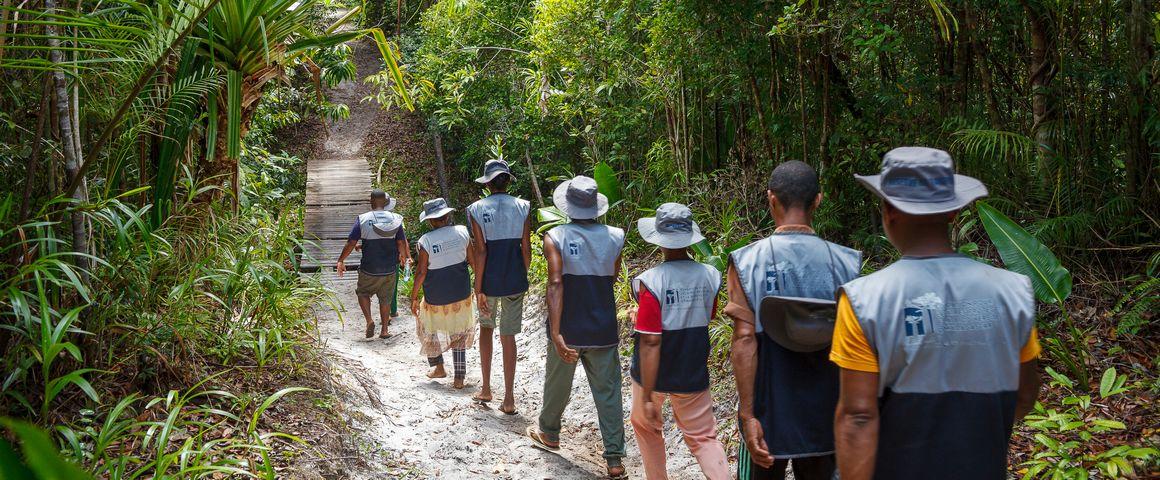
Community patrol in the Tampolo reserve, Fénérive Est © Bastien Defives
The Indian Ocean countries are home to vast biological diversity, primarily in their forests. However, human activity and local communities' urgent needs can threaten the sustainable preservation of that biodiversity. For a long time, scientists studied the issues surrounding forest biodiversity conservation and use, but for want of interdisciplinarity, their studies did not always succeed in painting an overall picture of the social, economic and ecological aspects of those issues. Furthermore, conservation actions in the field are not always well received by local communities. On the contrary, they sometimes trigger conflict and social inequality around protected areas.
Biodiversity means paying attention to the relations between societies and their environments, but also to the inequalities, power relations and forms of recognition that structure those relations. The aim is not just to protect nature better, but also to create the conditions to allow the different stakeholders to participate in the choices that shape their environment and their future.
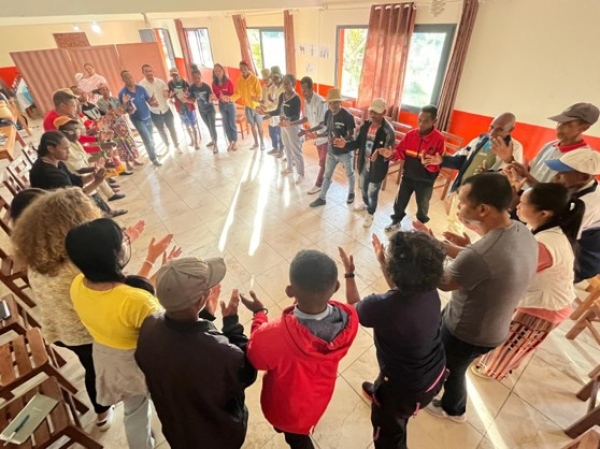
Collective workshop in Ranomafana with several members of the AMTLL © Varuna Living Forest project
It was the need to boost the synergies between the different players and pool their knowledge that prompted the creation of TLLs devoted to fair, sustainable management of forest biodiversity in the Indian Ocean. This led to the three TLLs in Madagascar and the Comoros, headed by the Varuna Living Forest project, steered by CIRAD and funded by the Agence française de développement (AFD).
Each territory has its own issues, and player involvement also varies. The aim is to start from grassroots realities in the territories and work collectively to identify the problems, compare points of view, produce knowledge and test solutions tailored to local situations. The approach centres on a range of principles:
Living labs are therefore not just spaces for consultation or platforms to bring players together. They are part of a long-term process during which relationships are built, knowledge is compared and solutions are modified following experiments.
Making players with different experiences and responsibilities work together is not an easy undertaking. The words they use, their priorities, their working methods and their way of defining problems may diverge. Scientific knowledge, practical knowledge and local people's experiences are not always given the same precedence.
Living labs work to open spaces in which these different experiences can be expressed, discussed and put to work. Role play, forum theatre workshops, field explorations, training courses and seminars are all tools for studying concrete situations, revealing tensions and looking into other possibilities for action. The aim is not necessarily to make disagreements disappear, or to reach a consensus at any cost, but to create the conditions to understand those disagreements, discuss them and take a collective look at their consequences.
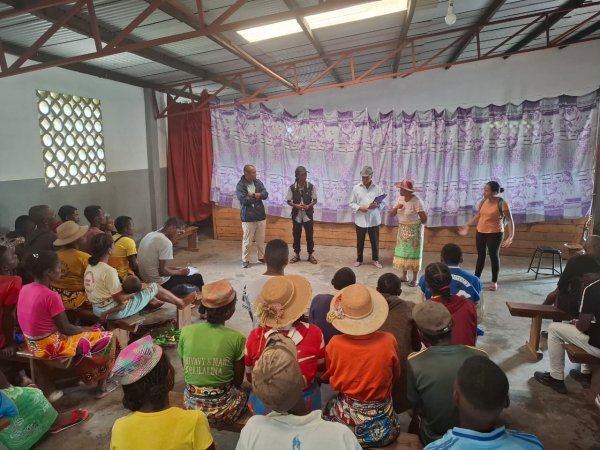
Forum theatre in Ambodivoangy, Fianarantsoa © Varuna Living Forest project
This approach also means looking at the space given to each participant: who speaks? Who defines the priorities? What experiences are seen as legitimate? How can we avoid existing power relations being reproduced within the very spaces reserved for dialogue?
Forum theatre (FT) is a participatory theatre method designed to discuss oppression-based relations and/or power relations, whether conscious or otherwise, between various players.
As a participatory research method, it offers a framework for a collective analysis of situations experienced as problematic and for finding alternatives. As part of the Varuna Living Forest project, FT plays have been created based on lived situations seen as unfair by TLL members. Performing those plays has enabled collective debate of the injustices felt by the different stakeholders. Following the performances, solutions have been looked at collectively. While some plays have been created with professional theatre groups, TLL members have also been given training in the use of the approach, to allow them to use the consultation method in their territory.
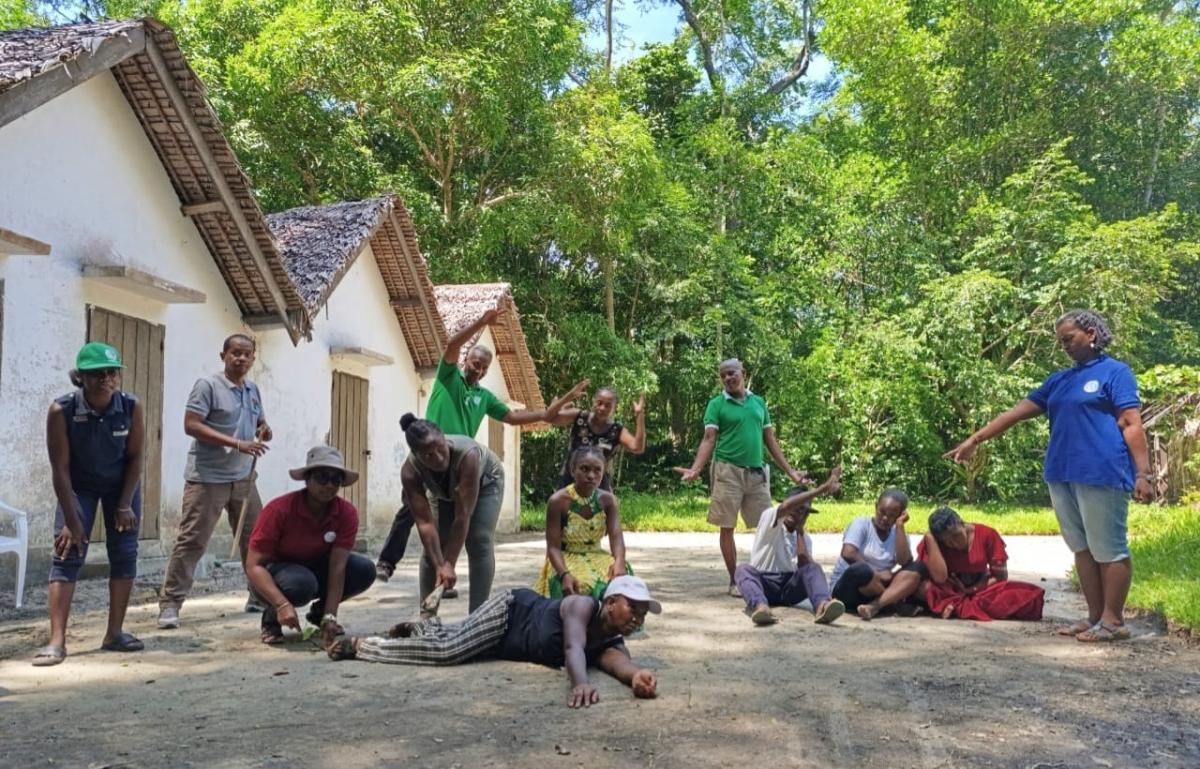
Forum theatre in Tampolo © Varuna Living Forest project
The experiments in Ranomafana and Tampolo in Madagascar, and Mohéli, in the Comoros, illustrate the diversity of issues the approach proposed within the TLLs can address.
The creation of the reserve in 2015 triggered conflicts between the different players, marking the failure of a decision primarily geared towards preserving the environment, without taking account of local people's needs.
After the protected areas were created, there were conflicts between the managers of those areas, because their creation triggered constraints.
Those conflicts resulted in a lack of managers and in damage to the largest trees in the protected area. There were tensions between managers, the authorities (police and the forestry authority that took over management), and local communities.
In 2023, the creation of the Tampolo TLL (LVTT/TTLL), confirmed by a prefectoral order, served to roll out actions aimed at strengthening the links between the different players. The aim, through initial collective actions, was to restore trust and cooperation between them. For instance, to share know-how and foster the emergence of new knowledge based on local experiences, initiatives such as a living library and agroforestry "teaching plots" have been set up in collaboration with women's associations and primary schools. Several members of the TLL have been trained to share their knowledge of biodiversity and the environment with the reserve's visitors.
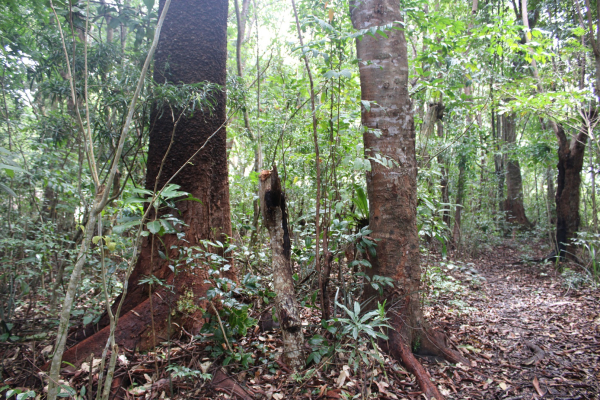
Traces of tree felling in the Tampolo reserve © Miarinirina Rananja, CIRAD
Moreover, this rapprochement between the different players has served to boost the activities that generate income for neighbouring communities. To quote just one example, 20 eco-guides have been trained and officially certified, with support from the Regional Tourist Board, to create jobs and promote sales of local products.
Like a conventional library, a living library is a place where visitors can go to find information about a topic of their choice. The difference is that instead of books, they consult people who know about the topic and to whom they can put their questions. Several staff members from the Tampolo reserve have been trained to share their knowledge, notably of biodiversity and the environment, with visitors. The living library also uses various activities and methods (participatory art workshops, photographic exhibition-discussions) to share knowledge or open spaces for dialogue between people from rural communities on the fringes of the new protected area.
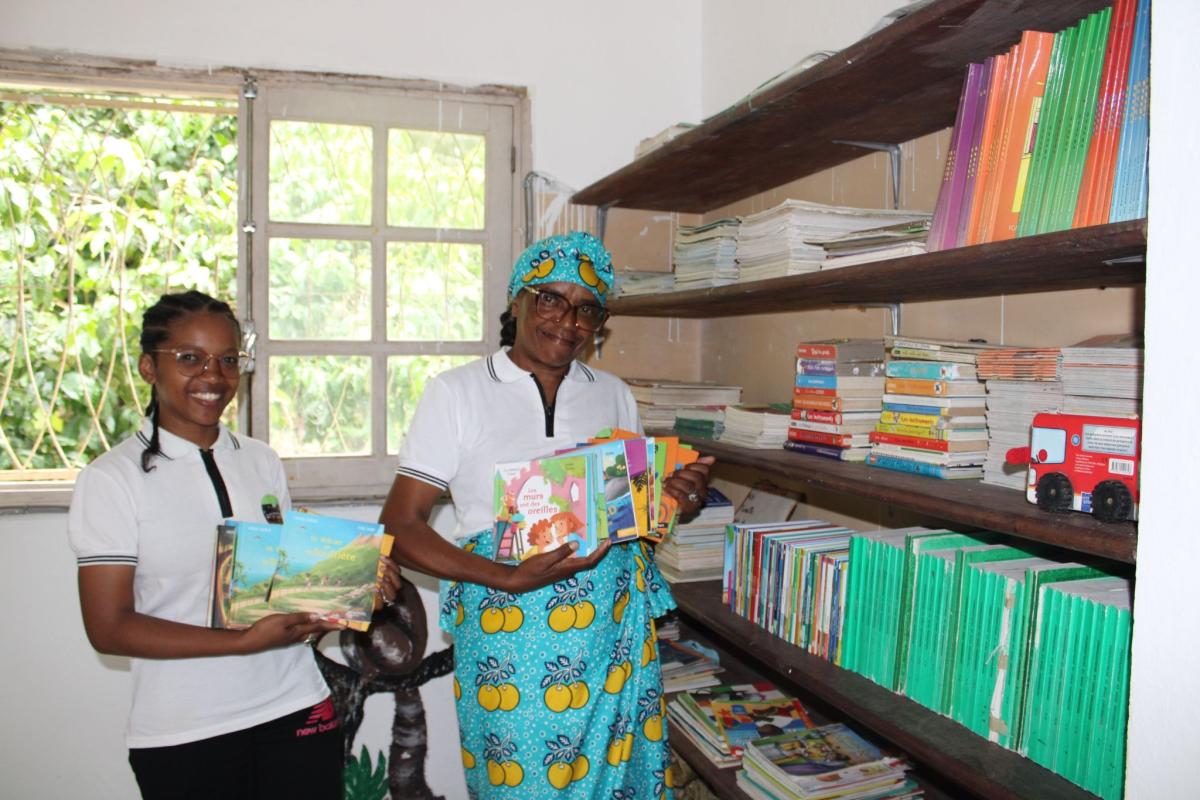
The Head of the library (L) with the Tampolo Reserve Coordinator (R) © Miarinirina Rananja, CIRAD
The Atiala Miaina TLL in Fianarantsoa (LVTTAM/AMTLL) is working in the zone on the edge of Madagascar's oldest national park: Ranomafana. The TLL was set up by order of the Chancellor of the University of Fianarantsoa. Its collective work is primarily aimed at boosting the synergies between conservation initiatives, better recognising the role of communities involved in forest management, and foster knowledge sharing among the range of stakeholders (communities, NGOs, the regional authorities, Madagascar National Parks, etc) working in the zone.
The real advantage is that it is well known and we can say that we've built a climate of trust… People are more open and communication is smoother within the laboratory.
By linking up various players and therefore different types of expertise, the AMTLL has been able to satisfy some of the expectations of the VOIs (local management communities) and build their skills in terms of making optimum use of the forest zones for which they are responsible. In the village of Ambatolahy, collective action has allowed the creation of a tourist circuit based on the combined knowledge of scientists and local people. Actions have been rolled out to consolidate governance of the VOIs and boost the visibility and economic viability of their activities.
Work in another village has made income-generating activities more sustainable, notably by introducing an improved still that uses less wood, for sustainable production of local rum or "toaka gasy".
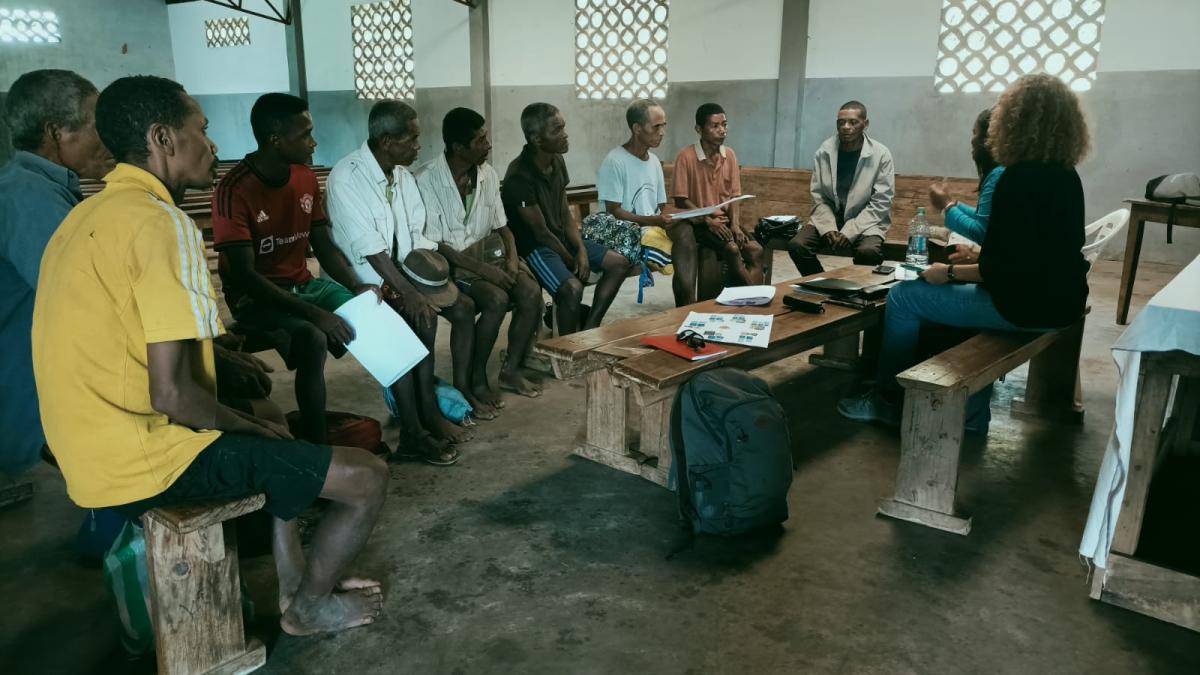
Meeting in the village of Ambodivoangy, Fianarantsoa © Varuna Living Forest project
There were no research laboratories on Mohéli until the Mohéli living laboratory (LVM/MLL). The laboratory is now part of the University of the Comoros and is working on the issues surrounding terrestrial and marine biodiversity, and secure land tenure.
The MLL has brought scientific researchers and local communities closer together. We have broken down the barriers erected by scientists who used to say that knowledge only came from them.
Mohéli island has several legal systems: modern law, customary law and Islamic law. However, the members of the MLL noted that the links between Islamic law and environmental law were not clear for many people. They therefore set out to bring together practicians and academics specialising in the two systems to identify in the Koran, the hadiths of the Prophet, doctrine and usage those provisions that could be used to guide the discussions of socio-ecological justice on Mohéli. This served to determine the responsibilities of many players in the injustices caused by behaviour likely to threaten community life on Mohéli as a whole. The MLL has also collected the history of five localities to supplement the school curriculum, with a view to teaching pupils about history to allow them to understand current issues.
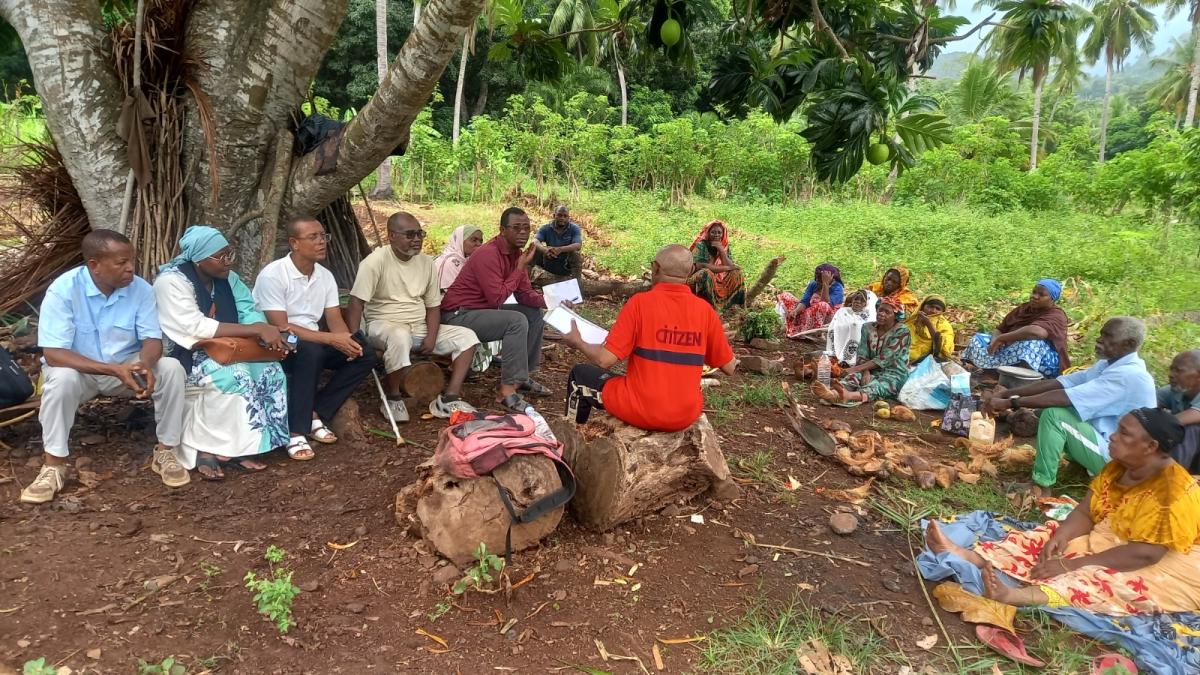
Discussions of secure land tenure on Mohéli, as part of the MLL © Varuna Living Forest project
The experiments in the three territories have involved more than 1000 people and helped to build new knowledge and skills, better mutual understanding and new relations between players.
They have also enabled students to be trained in transdisciplinary research and supported the emergence of new forms of organisation and cooperation. Three organisational innovations have been institutionalised, helping to secure the future of certain collective dynamics.
These results are a reminder that innovation does not just mean developing a technique or tool. It can also concern ways of cooperating, of sharing responsibilities, of producing knowledge and of making decisions. However, the transformations achieved remain fragile. Their long-term future depends on the continuity of the partnerships established, resources available, institutional recognition and capacity to maintain effective, equitable participation. It also means watching for tensions and power relations that groups may encounter.
A living lab is not a ready-to-use method. It requires time, trust, adjustment and constant attention to collective working conditions.
The Varuna Living Forest project ended in June 2026 but the TLLs are continuing. The experiments underway call for a change in perspective: sustainable biodiversity management does not only depend on the quality of ecological knowledge or the efficacy of conservation schemes. It also rests on the capacity of stakeholders to build relationships, recognise the many forms of knowledge, discuss their disagreements and work together to devise solutions tailored to grassroots realities.
Science at work 14 October 2026
Science at work 7 October 2026
Science at work 30 September 2026