



















Science at work 30 September 2026
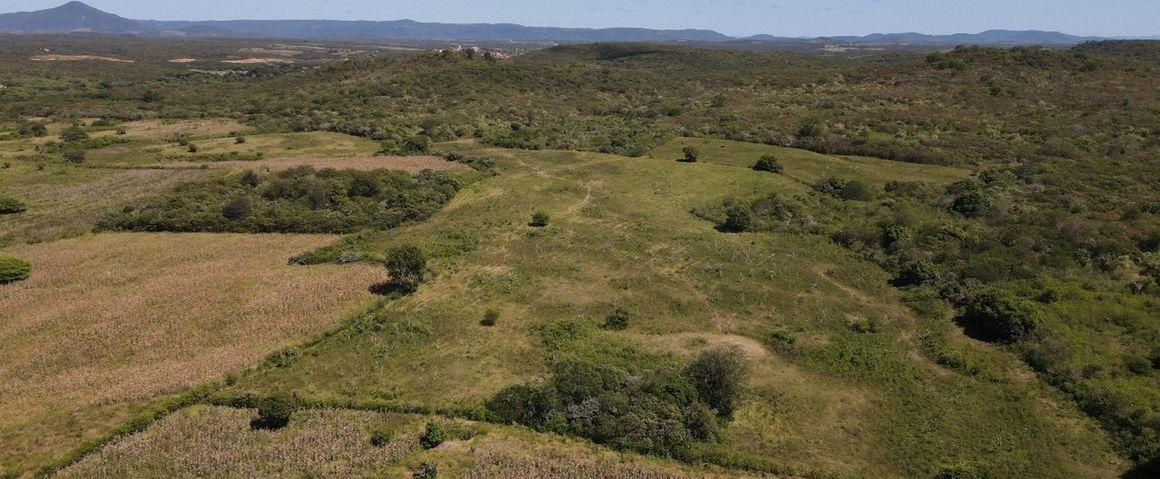
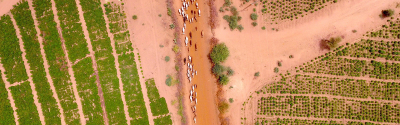
Rural caatinga landscape in the rainy season, in semi-arid inland Ceará © FUNCEME
Nine million people live in the state of Ceará. Between 2012 and 2018, a severe drought revealed the limitations of the state's water supply system. To make the system more resilient, the Ceará state government launched a major programme to treat water and supply urban centres. The project is called "Malha d’Água", which translates as "water system".
Malha d’Água is based on treatment plants and a vast network of supply pipes to carry treated water from large strategic reservoirs to urban centres in the municipalities and districts of inland Ceará. By connecting different regions to more reliable water sources, the project should reduce the effects of drought and guarantee safer, more consistent access to water for local people. However, in modifying water resource distribution within territories, the initiative is upsetting local equilibria and has raised issues surrounding governance in the light of the changes.
"For Malha d’Água to work, we needed to discuss scales on territory and local level, and how the communities concerned were going to benefit and make the most of the structure", says Eduardo Martins, Chair of the Foundation for Meteorology and Water Resources in Ceará (FUNCEME). "This gave rise to a proposal for an action research project on water governance, which would look not just at the water resources sector, but also at how to articulate the sectors and different scales: the Sertões project".
The Sertões project began in 2020, and entailed two successive phases: Sertões 1 and Sertões 2. The first phase served to conduct a diagnosis of current governance, water usage and territorial dynamics in Ceará state, while the second focused on co-constructing and testing pilot local water governance and territorial intelligence schemes. The project was implemented by CIRAD and FUNCEME and funded by the Agence Française de Développement (AFD).
During the diagnosis phase, the Sertões project analysed the changes in water usage as a result of those in agricultural production systems. Agricultural practices clearly directly influence the volume of water used, and consequently the volume available across territories.
Following the 2012-2018 drought, there was a change in agricultural production systems in many territories in inland Ceará. Traditional rainfed crops (maize, beans) partly gave way to dairy production, which is more economically worthwhile for family farmers.
Studies have measured the impact of those changes on water resources. Between 2010 and 2020, the number of water reservoirs increased in most regions, in some cases by up to 120%.
To grow the fodder needed to feed dairy animals, farmers have had to set up new agricultural plots, which has led to an increase in caatinga deforestation and in open areas. It has also fostered soil erosion, since it is no longer protected by natural vegetation or regenerated as it traditionally was, by means of long forest fallow periods. Dry-season fodder production also relies on irrigation, which increases water requirements.
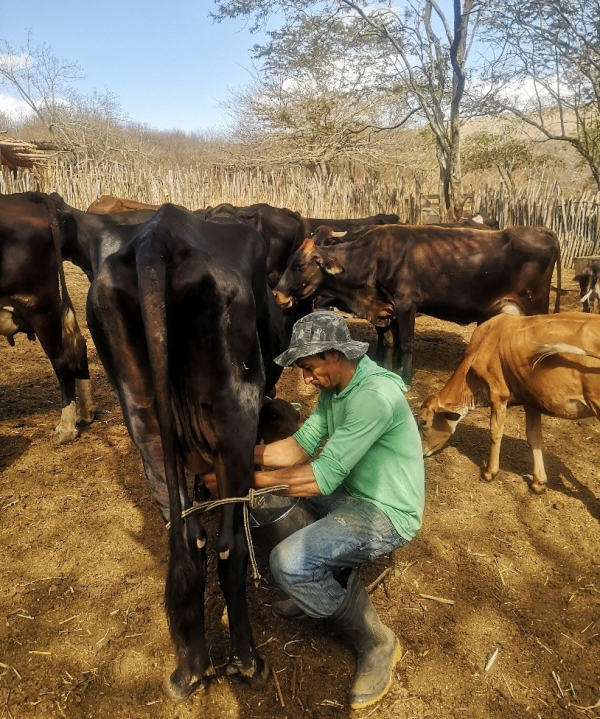
Dairy production is a major source of income for family farmers in Ceará, but also increases the pressure on the territory's resources © I. Tritsch, CIRAD
Individual surveys of farmers in the municipalities of Piquet Carneiro and Quixeramobim showed that dairy production is a real economic opportunity for family farmers in Ceará. However, the current production model is intensive, specialised and uses a lot of the territory's resources, in addition to external chemical inputs. It therefore does not look sustainable and is vulnerable to climate change.
To make farming systems more sustainable and resilient, the Sertões project particularly recommends diversifying production and supporting a move towards more sustainable, efficient dairy production practices. "There are still many fields that require study to make dairy production more sustainable and efficient: water use, fodder choices, soil management and organic fertiliser use", says CIRAD researcher Eric Scopel.
At the same time, the project tested new local water governance and intersectoral territorial coordination schemes. It was within that framework that two municipal water councils (CMA, Conselho Municipal da Água) were tested.
Ceará state has a participatory water governance system, centring on large basins and strategic reservoirs and relying on basin committees in particular. This system was particularly innovative for Brazil, and has inspired other states. However, it takes little account of the local scale, and particularly of the changes in the number of small reservoirs, despite the fact that an increase in the number of small reservoirs can affect the volumes of water in the large strategic reservoirs. That interdependence highlights the need to articulate the different water governance scales more effectively.
This disconnect between scales is compounded by the significant sectorisation of water governance. Public policy, monitoring schemes and decision making are largely organised by sector of activity (agriculture, water resource management, notably treatment), with limited exchanges between stakeholders. That sectorisation limits coordination between institutions and can lead to overlaps in terms of interventions or funding, and disparities in the support given to territories.
"There no understanding without integration. We cannot understand a territory unless we talk, and unless we take data on board. This is what the Sertões project aims to provide: a methodology to ensure that integration." João Dehon, FUNCEME.
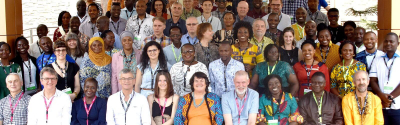
To address the issues surrounding local water governance, more than 60 workshops were organised for local communities, municipalities and the state, involving over 400 participants and 36 municipal institutions. Different participatory methods and approaches were used to encourage dialogue and collective knowledge production: participatory rural diagnoses, individual interviews, ComMod approaches directly based on serious games, for instance, and workshops to co-construct knowledge and recommendations.
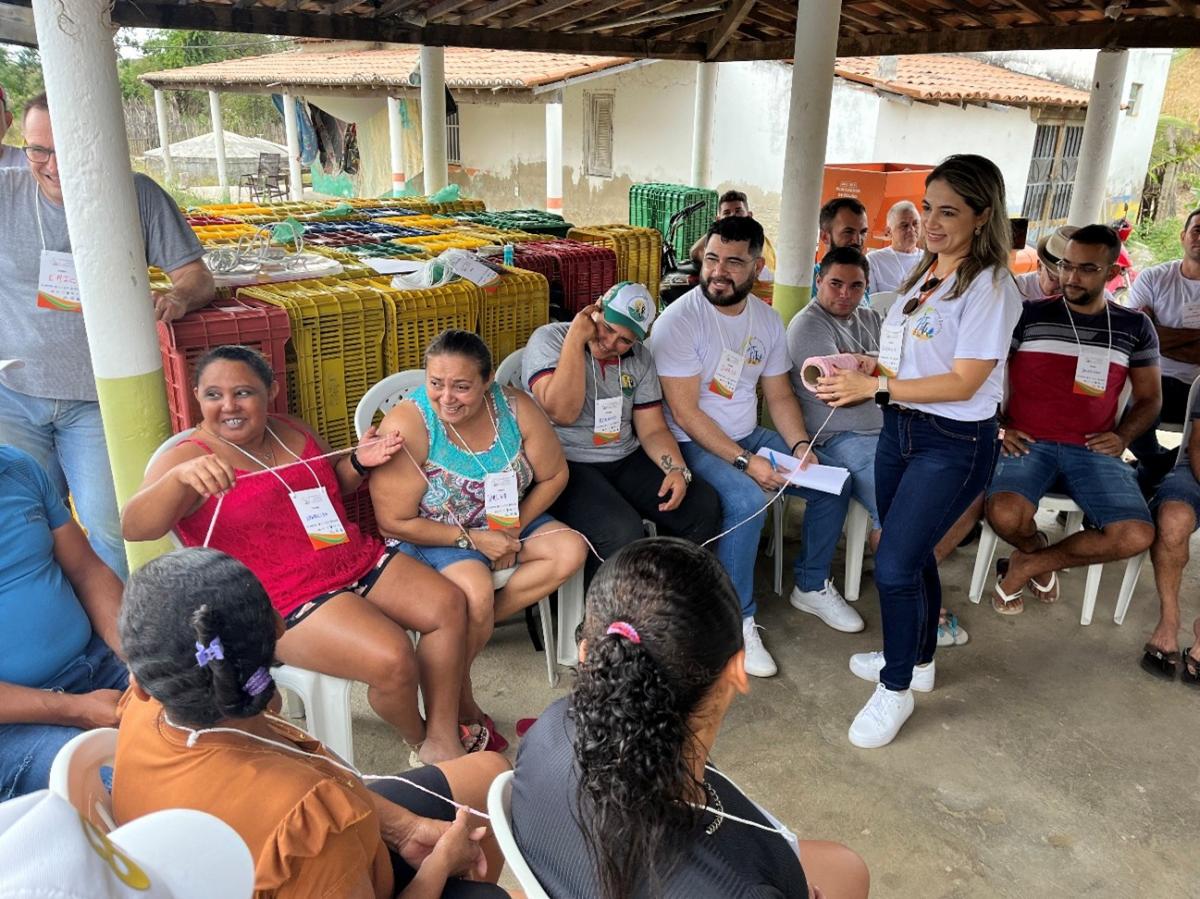
Participatory workshop organised to support the co-construction of municipal water councils, which act as local multi-stakeholder consultation platforms © Renan Lutiane, FUNCEME
Those exchanges gave rise to an innovation in terms of water governance, co-constructed by users and the institutional players involved in the various scales: municipal water councils. CMAs are not intended to replace existing water governance schemes; they serve as a complementary space for consultation, collaboration and articulation on a local level.
CMAs have the following roles:
Now that this new type of governance has been defined and set up in two pilot territories, Piquet Carneiro and Quixeramobim, the challenge is to roll the model out across Ceará state.
Setting up CMAs depends first and foremost on municipalities, which are responsible for doing whatever is necessary to structure them and make them official. To help local councils with this, Ceará state is due to provide technical training for future CMA members, set out a legal framework in the texts covering water governance in the state, and articulate the funding required to keep them alive.
To attract donors likely to fund water projects, it is recommended that such projects include a component and funding devoted to governance, and foster the establishment of a TIS to facilitate monitoring, decision making and transparency.
Science at work 30 September 2026
Science at work 23 September 2026

Science at work 9 September 2026