




Science at work 14 October 2026

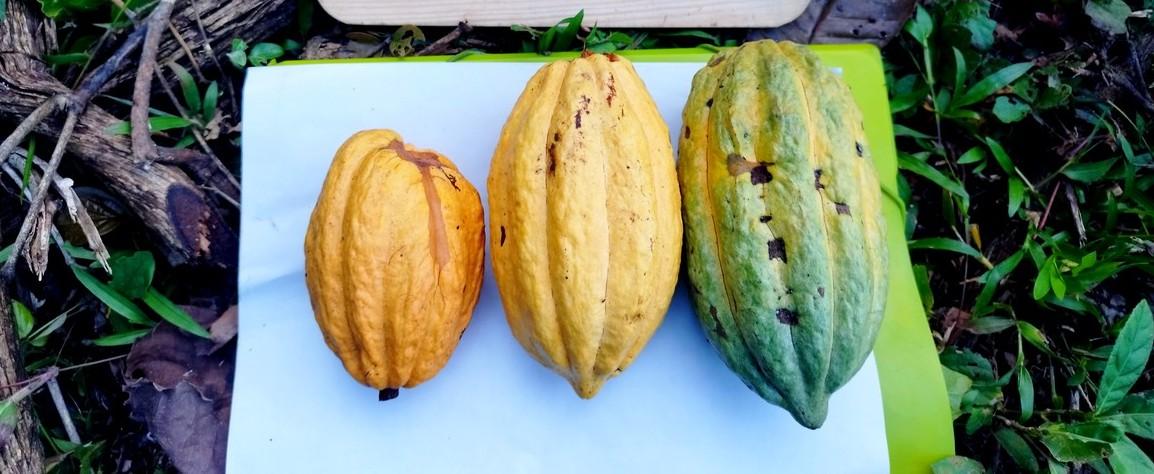
Pods harvested from a wild cocoa tree in the El Gran Ushashi forest protection zone © X. Argout, CIRAD
For 12 days, three 3 groups mixing scientists and cocoa growers crisscrossed protected Amazon forest zones in the Huayabamba valley, Peru. The expedition was intended to allow them to find and sample genetic material in the natural environment, in other words that had previously been unknown. Scientists call this bioprospecting. It is a vital part of understanding wild cocoa trees (Theobroma cacao) in this part of Latin America, which is also the cradle of these trees whose fruits are used to make chocolate.
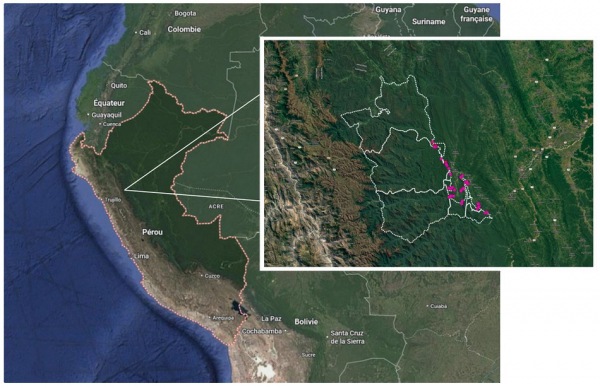
The expedition covered 11 primary forest concessions protected by local communities (in white on the smaller map). In pink, the 165 wild cocoa trees geolocated
The work was part of the Nativo project coordinated by CIRAD and implemented in close collaboration with the Choba Choba cocoa cooperative, the Alliance of Bioversity International and CIAT, local communities and farmers. It had financial support from the Vontobel Foundation, the Swiss foundation of the cocoa and chocolate industry, the Temperatio Foundation and Choba Choba AG.
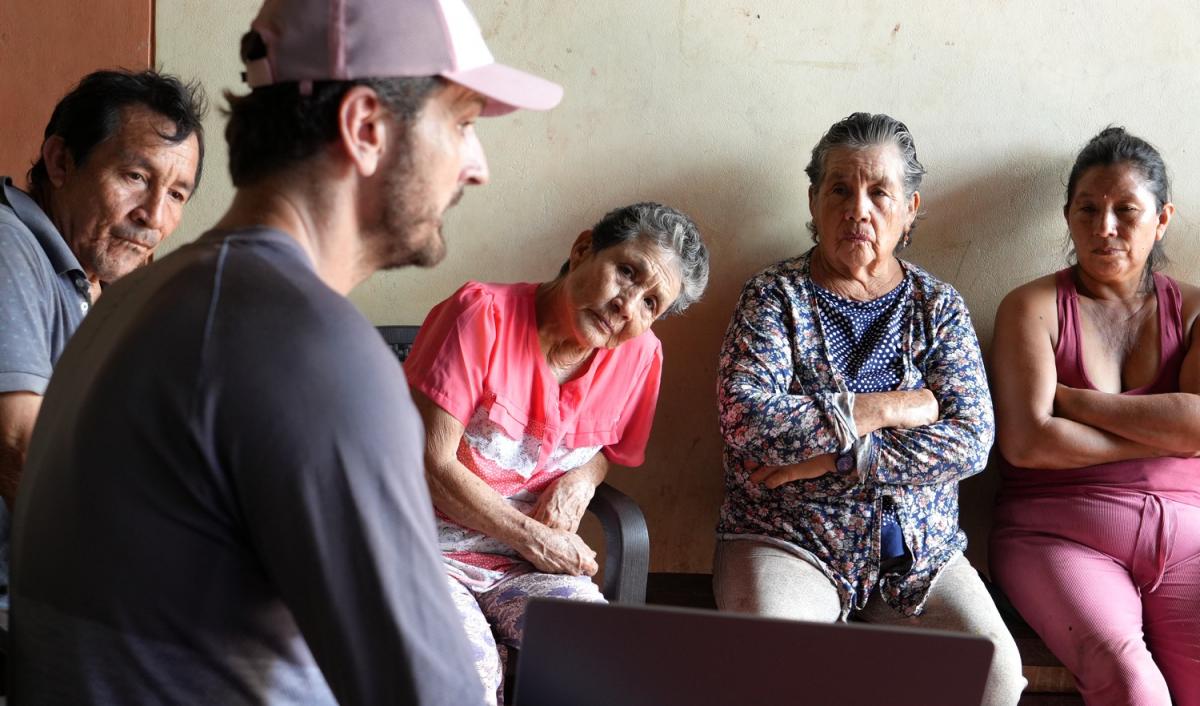
Xavier Argout presents the mission to local communities from the Pucalpillo concession © C. Dangléant, CIRAD
The Nativo project is the result of a wish on the part of cocoa growers in the region to diversify what they produce. The vast majority of people in the Huayabamba valley produce cocoa. They grow commercial clones (primarily CCN51), planted almost 25 years ago. Although that varietal uniformity was originally highly productive, it also opened the door to several pests and diseases, and crop losses are now running at almost 50%.
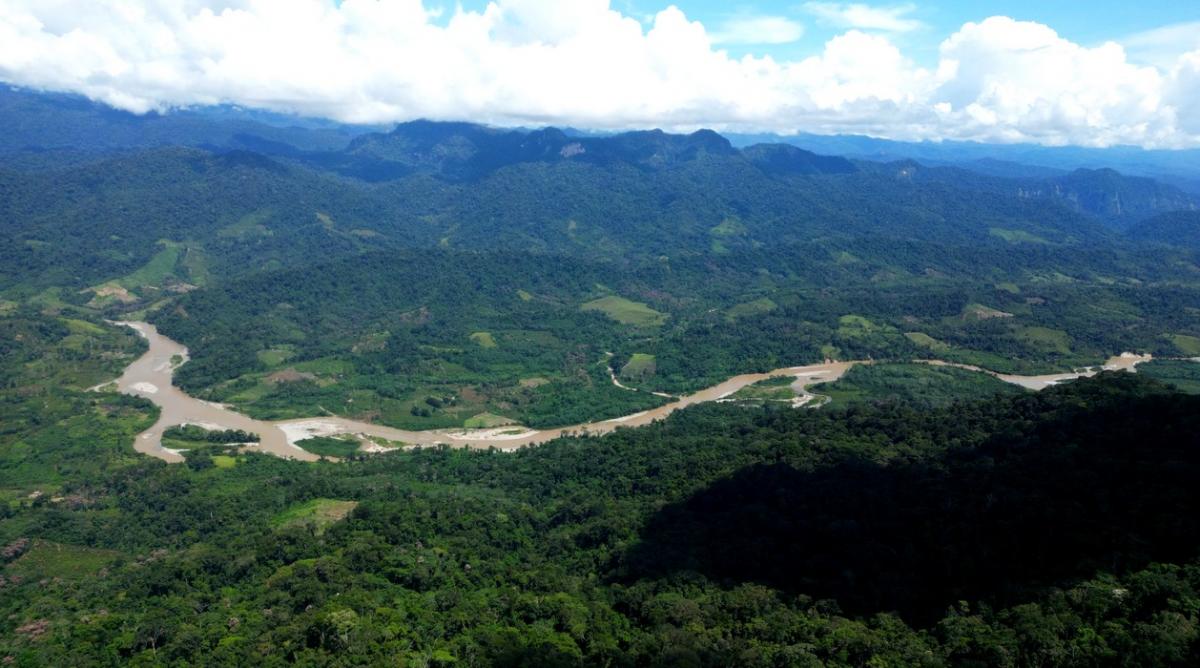
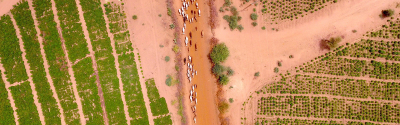
Drone's-eye view of the Huayabamba valley in the Peruvian Amazon © P. Japami
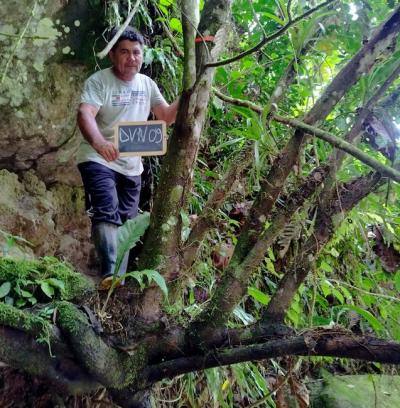
One of the members of the expedition, a cocoa grower and patrolman in the Dos Velos de Novia forest protection zone. He is holding an identification slate to keep a visual trace of the tree © X. Argout, CIRAD
The mission took several months to prepare and involved 65 people in all: scientists, cocoa growers and people in charge of forest conservation concessions. After 12 days of hard work in the heart of the natural forest, the operation was deemed a success, as confirmed by CIRAD geneticist Xavier Argout, who is currently coordinating Nativo. "This was not an easy mission. We walked between 15 and 20 km a day, and it was slow going in the dense forest and often through mud. However, the results have exceeded our expectations, because we never dreamed we'd find so many cocoa trees in these little pockets of primary forest!"
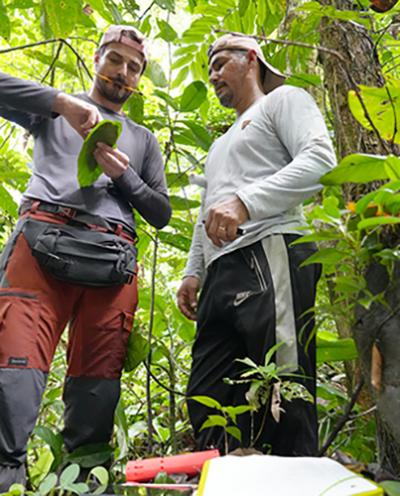
Sampling leaves from wild cocoa trees in the Pucalpillo primary forest concession. DNA will be extracted from them for genetic analysis © C. Dangléant, CIRAD
The teams involved in bioprospecting explored part of the 400 000 ha of protected primary forest and geolocated 165 wild cocoa trees (Theobroma cacao). The same protocol was used each time: data gathering for each tree and its environment, marking, then sampling of a few leaves for genetic analysis, of fruits if there were any, and of young branches for grafting, to allow the genetic material to be conserved in a conservation garden in the region. In all, these 165 wild cocoa trees were safeguarded by producing more than 1500 grafted plants, while the 25 fruits collected made it possible to plant 99 seeds.
For Xavier Argout, "finding so many cocoa trees was really a good sign in terms of finding varieties that might suit local conditions locales. And we really hope the results of our work can be passed on to producers in the region."
The team was surprised, but after all, this part of the Peruvian Amazon is the cradle of Theobroma cacao. It is home to a wide diversity of wild cocoa trees, not just in the midst of the natural forest, but sometimes scattered in cultivated plots. Eric Garnier is the founder and Executive Chairman of the Choba Choba firm. «"This unique biodiversity is a treasure on which we are hoping to build. This is why we launched the Nativo project nearly ten years ago, in a rather haphazard way. We began by working on native cocoa trees from the region that were growing wild in some plots. Their beans had really promising sensory qualities. We grafted native cocoa trees in order to propagate them in a conservation garden. Things have ballooned since, and we are proud to be working with CIRAD and the Alliance of Bioversity International and CIAT."
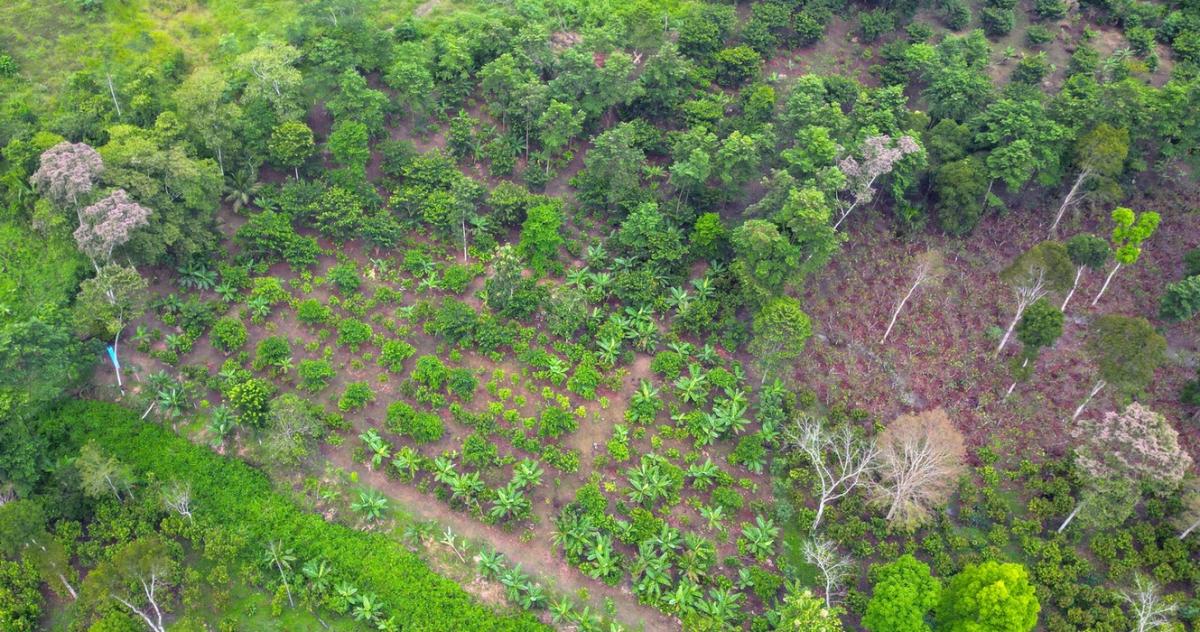
Drone's-eye view of the conservation garden set up by Choba Choba, which contains cocoa trees identified by growers as native to the region, found in cultivated plots alongside commercial clones © P. Japami
María del Pilar Castillo Pérez, Chair of the Choba Choba cooperative, adds: "the Nativo project is a great opportunity to identify the biodiversity among the cocoa trees in our forests. This isn't just a scientific issue, but one of creating opportunities for producers to have a cocoa with its origin in the region that will give them access to new markets. Markets that will promote the story of a cocoa that represents us and the way in which it is produced".
For several months now, the project has been entering a strategic phase, guided by CIRAD. Notably with this major step: bioprospecting. For Xavier Argout, "we are so lucky, as scientists, to be able to build on the dynamic begun by Choba Choba and on their conservation garden, in which we have already done genetic analyses. Bioprospecting wild cocoa trees in the forest was the next logical stage in discovering and characterising these native cocoa stands, which may hold essential keys to resilience, aromatic diversity and adapting to climate change".
The next stage is to reveal all the originality of the cocoa trees identified in the forest, by characterising their genetic diversity and agronomic performance, and the sensorial qualities of the chocolate made from these varieties native to the Huayabamba valley.
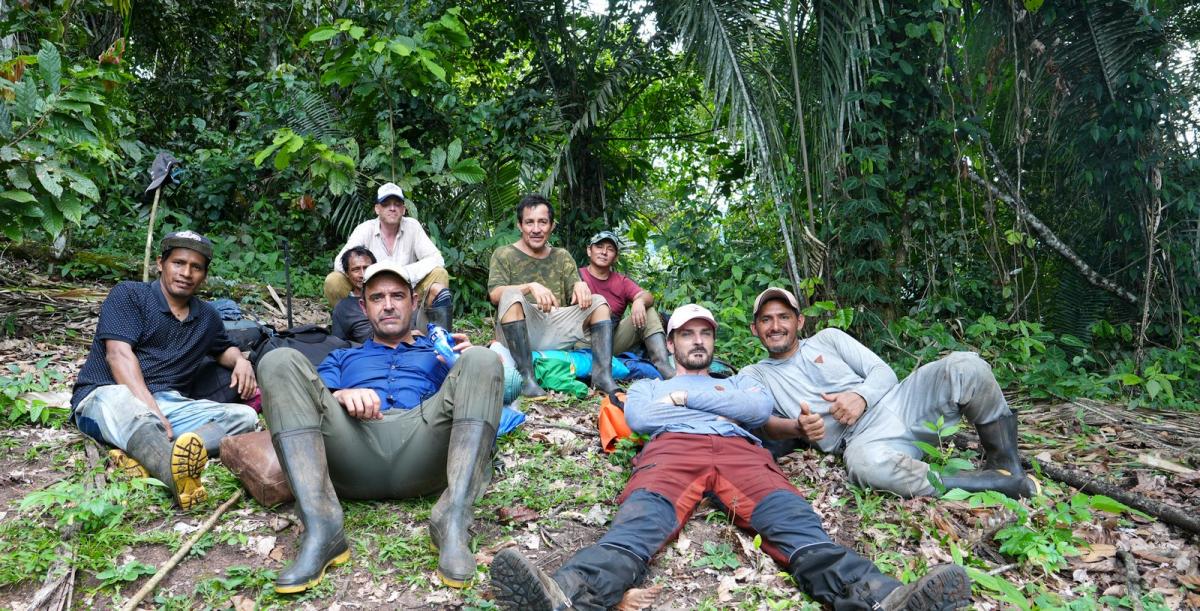
One of the three bioprospection groups after exploring the Pucalpillo concession © C. Dangléant, CIRAD
Science at work 14 October 2026
Science at work 7 October 2026
Science at work 30 September 2026