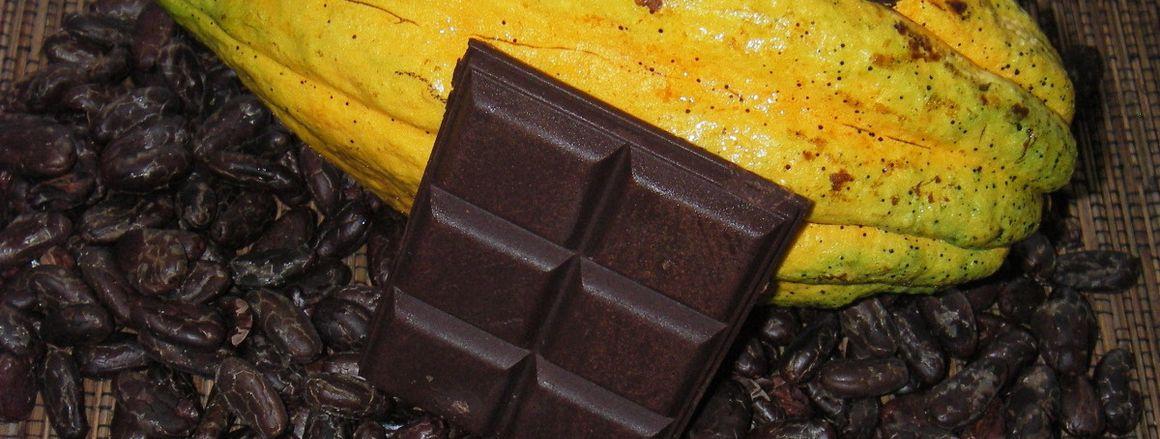
The history of the cocoa tree dates back to 5 000 BCE. Originating in the Americas, cocoa cultivation developed among the Olmecs, Mayas and Aztecs, who used it in particular for ritual beverages or as a form of currency. Following the discovery of the Americas by the Spanish, cocoa was introduced to Europe. At first people found it unappealing because of its bitter taste, but it quickly gained in popularity with the addition of sugar, vanilla and other spices. Today, more than 7 million tonnes of chocolate are consumed worldwide every year, with Europe being the biggest consumer.
Cocoa cultivation, which was originally only found in the Americas, was exported in the 19th century, in the context of colonisation, to other continents with tropical climates, particularly Asia and Africa.
Cocoa: a sector facing numerous challenges
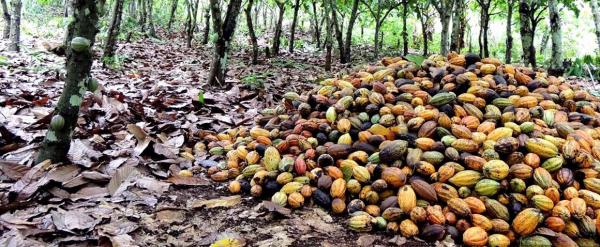
To meet strong market demand while dealing with low productivity from ageing or poorly maintained cocoa trees, producers have sought new plots of land. As a result, the area devoted to cocoa cultivation has almost tripled and now covers around 12 m ha worldwide, compared with only 4.4 m ha in the 1960s. This huge expansion has contributed to large-scale deforestation, particularly in Africa. In Côte d’Ivoire and Ghana, cocoa farming is responsible for 30% of deforestation.
With a view to the entry into force of the European Deforestation Regulation (RDUE), practices must change so that producers can maintain the same levels of production without expanding cultivated land.
A livelihood for millions of small-scale producers
The cocoa sector provides a livelihood for 40 to 50 million people worldwide, including 5.5 million family farmers and 14 million rural workers. Only 10% of these women and men earn a decent living, and some producers make use of child labour.
An increasing number of producers are now engaging in more environmentally friendly forms of production, without the use of child labour, as a means of ensuring decent incomes.
Diseases and pests are threatening harvests
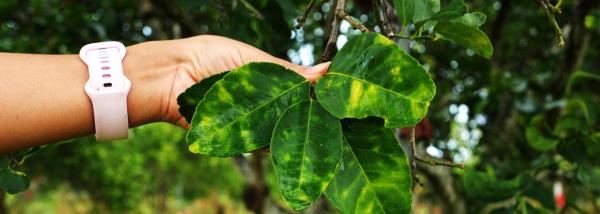
Cocoa trees are extremely vulnerable to diseases and pests. In Indonesia, 30 to 40% of cocoa trees are affected by insect pests, which reduces the quality of beans and their productivity. In West Africa, plantations are threatened by swollen shoot, a virus transmitted by mealybugs. This disease causes productivity losses of 25% in the first year, 50% in the second year, and ultimately leads to the death of infected cocoa trees within a few years.
Two serious diseases are also present on the American continent: frosty pod rot (caused by Moniliophthora roreri) and witches’ broom (caused by Moniliophthora perniciosa).
Climate disruptions affect cocoa prices and purchase prices
Today, Africa accounts for around 70% of global cocoa production, with Côte d’Ivoire and Ghana now ranking first and second worldwide by volume. In 2023, these countries experienced a 15% drop in yields due to heavy rainfall that disrupted flowering and triggered disease outbreaks. Difficulties continued in 2024, causing cocoa prices to double and reach 12 000 dollars per tonne by the end of the year. In 2025, production levels improved, harvests were better, and both supply and cocoa prices stabilised.
Cadmium, a source of concern for consumers
The presence of cadmium in cocoa has been an issue in Latin America for several years, and is now causing concern among consumers. This heavy metal, which is harmful to health, is naturally present in certain soils. Xavier Argout, a cocoa geneticist at CIRAD, explains the research currently being conducted to help producers move towards cocoa production that is sustainable, competitive and safeguards consumer health.
Research to address these challenges
CIRAD is working with its partners to structure the sector in order to address these multiple challenges. A ten-year research roadmap has been drawn up with four priorities: rehabilitating cocoa plantations by mobilising agrobiodiversity; contributing to the development of markets that combine sustainability and production quality; understanding, maintaining and promoting the genetic diversity of cocoa trees; and building the autonomy and capacities of cocoa producers.
By way of example, CIRAD works with producers to co-design agroforestry systems that address multiple challenges: barrier plants limit the spread of diseases in plantations, and can also provide additional income opportunities for producers and contribute to carbon sequestration.
Several years of experimentation in agroforestry have demonstrated the benefits of this approach.
More recently, the findings of the Cocoa4Future project in Côte d’Ivoire have identified practical levers to improve the resilience of cocoa production systems, territorial sustainability and support for producers.
The project aims to use agroforestry to make cocoa farms in Ivory Coast and Ghana less vulnerable by identifying levers for agricultural and socioeconomic sustainability, while preserving the environment.
At the same time, research on the genetic improvement of cocoa trees is being conducted to provide farmers with varieties that are more productive and more resistant to disease.
The main objective of the BOLERO project is to design new methods for breeding rootstocks in tropical arboriculture to improve the resilience of the polyculture and agroforestry systems of smallholder coffee and cocoa producers.