














Just out 6 October 2026

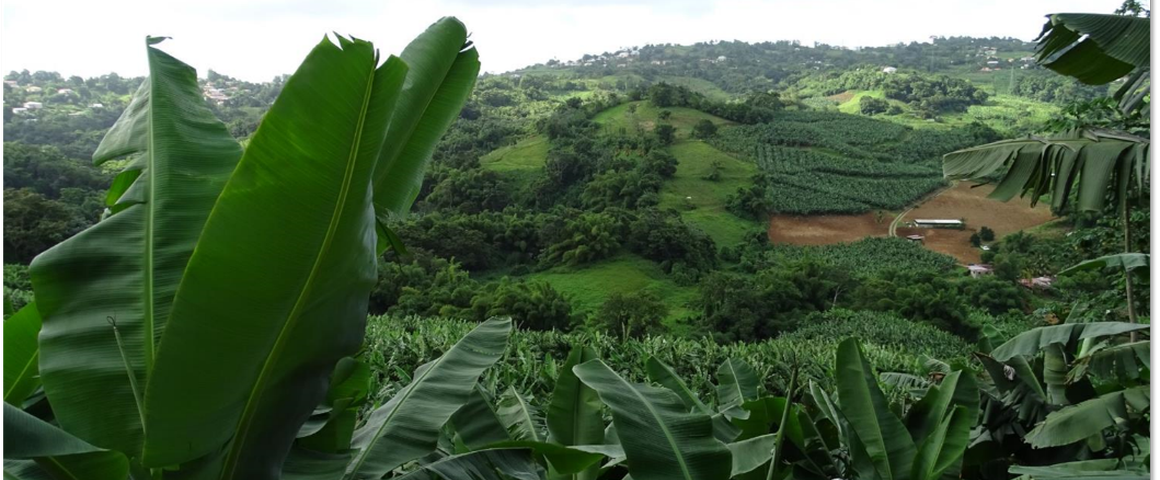
Le Galion watershed in Martinique. © CIRAD
“One Health”, in other words the interconnection between human, animal and environmental health, was the theme chosen for the opening of the scientific conference “Chlordecone: understanding and taking action” in Martinique on 23 June. It is also the subtitle of a new book on the subject, published by Quae, which was made available during the conference and is now freely accessible online.
In this book, we have chosen to focus on the One Health approaches currently being developed in our islands. These approaches are well suited to addressing the challenges posed by chlordecone, as they bring together a range of scientific perspectives, especially those of the social sciences. These approaches should be significantly developed and reinforced across our territories.
Organised by the National Scientific Steering Committee (CPSN) with the support of the Prefecture of Martinique as part of the Chlordecone Strategy, this conference held from 23 to 25 June 2026 brought together nearly 300 researchers who are actively working in the various fields of scientific research related to chlordecone.
On 26 June, members of the public were invited to visit the Chlor’acteurs Village to learn about the risks associated with chlordecone and how to protect themselves, and to find out about the support available.
Coordinated by the National Scientific Steering Committee (CPSN) as part of the Chlordecone Strategy, this book examines the impacts and challenges of chlordecone pollution in the French West Indies, together with the public measures introduced to limit exposure and to manage the associated risks.
Chlordecone, an organochlorine insecticide that is now banned, was used extensively in banana plantations in the French West Indies between 1972 and 1993, and persists in soils, ecosystems and the food chain. This collective multidisciplinary book presents the latest scientific knowledge on the subject. It draws lessons for the future, with the goal of promoting a “One Health” approach to address the challenges posed by this unprecedented health and environmental crisis.
The book is intended for scientists, teachers, policymakers, professionals or members of associations seeking a deeper understanding of the different pathways through which people are exposed to this widespread contamination, and those looking for long-term solutions to protect the health of populations and ecosystems in the French West Indies.
The book examines four broad categories of issues that have arisen for both research and action since the beginning of this crisis. These span environmental, food and health concerns, as well as the management of the crisis by policymakers at both the national and territorial levels:
Contents:
1. Chlordecone contamination of the environment: origins, findings and initial management measures
2. Analytical challenges for quantifying and monitoring contamination and assessing remediation solutions
3. What systems are needed to observe, understand and quantify the long-term trajectories of soil and water contamination?
4. Perceptions, experiences and knowledge of chlordecone pollution and the associated health risks: the contribution of the social sciences
5. The assessment of contamination risks for ecosystems and humans: processes, impacts and methodologies
6. How can the vulnerability of ecosystems be taken into account?
7. How can the vulnerability of the populations of the French West Indies be taken into account?
8. Management of chlordecone pollution in the French West Indies and the associated risks: a complex challenge
9. What tools and solutions to reduce exposure through soils, water and food?
10. Communication approaches to the chlordecone crises in Guadeloupe and Martinique — Power, public communication and mediation
11. Construction of the public issue and reception of public policies on chlordecone in the French West Indies (1968–2023)
12. How can data availability and use evolve towards a more integrated approach to chlordecone exposure?
13. Conclusion: what are the priorities for future research?
Just out 6 October 2026
Just out 12 June 2026

Just out 29 April 2026