










Just out 6 October 2026

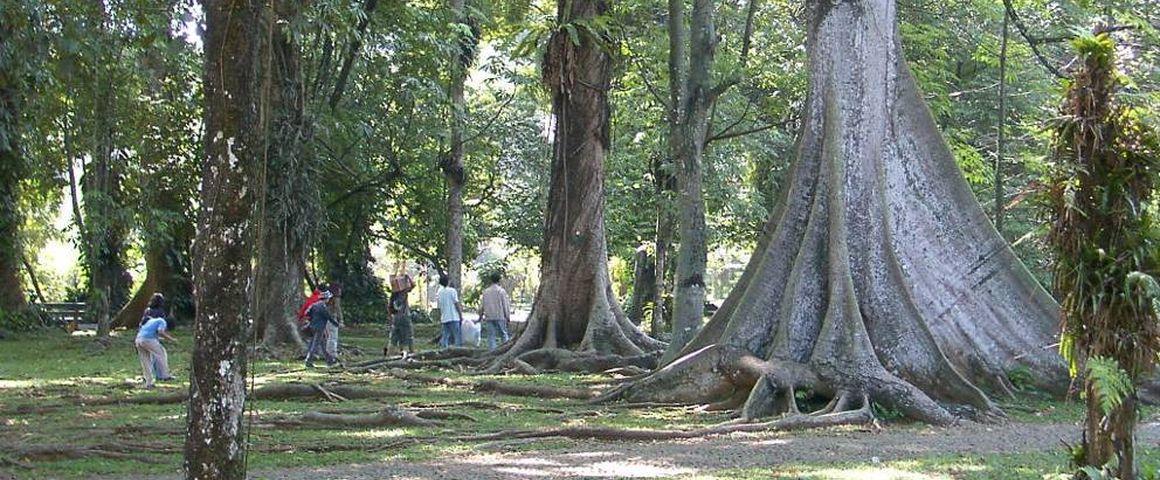
In Indonesia, buttress roots and a horizontal root, two types of roots with different functions (stability and water and nutrient transport), join forces to support and feed a tree © C. Jourdan, CIRAD
This book sets out to reveal the well-kept secrets of the underground world of the plant kingdom: roots in all their diversity, and even their eccentricities. In other words, the hidden side of plants.
While everyone is familiar with the aerial organs of plants (stem, leaves, flowers and seeds), their underground organs are still little-known. However, roots play a fundamental role in the life of all plants, whether wild or cultivated, large or small. They ensure plant nutrition and water supplies, but that is not all: they anchor the plant, slow soil erosion, and supply underground organisms with sugars and other carbon compounds, among other things. Moreover, their exchanges with their immediate environment foster microbial activity, which enriches the soil and in turns helps to protect the plant.
Roots are vital for the water cycle, and also help to mitigate climate change by storing carbon in the soil. More broadly speaking, they participate in various ways in efficient terrestrial ecosystem functioning.
Furthermore, they are an important source of food (beetroot, carrots, cassava, sweet potatoes, etc) and services (agricultural, forest, pharmaceutical, etc) for human societies.
In revealing the functions, interactions and capacities of roots to adapt to hugely varied environments, this book explores their little-known roles. It is intended for anyone interested in plants, crops, forests and soils.
About the authors
Philippe Hinsinger, a bio-geochemist, has 40 years' experience at INRAE. His expertise in the rhizosphere is internationally recognised. He is a Director of Research, and received the INRAE Grand Prix des Lauriers in 2025.
Christophe Jourdan is a specialist in root system anatomy and architecture at CIRAD. He has worked on a large range of plant species, particularly in tropical environments, and was awarded the 2025 University of Montpellier Prix de l’innovation for inventing Scanorhize©, a buried scanner that reveals soil life.
Reference
Hinsinger P., Jourdan C., 2026. Racines — Des plantes aux écosystèmes, Versailles, éditions Quae, 120 p.
Just out 6 October 2026
Just out 24 June 2026
Just out 29 April 2026