


















Results & impact 29 June 2026

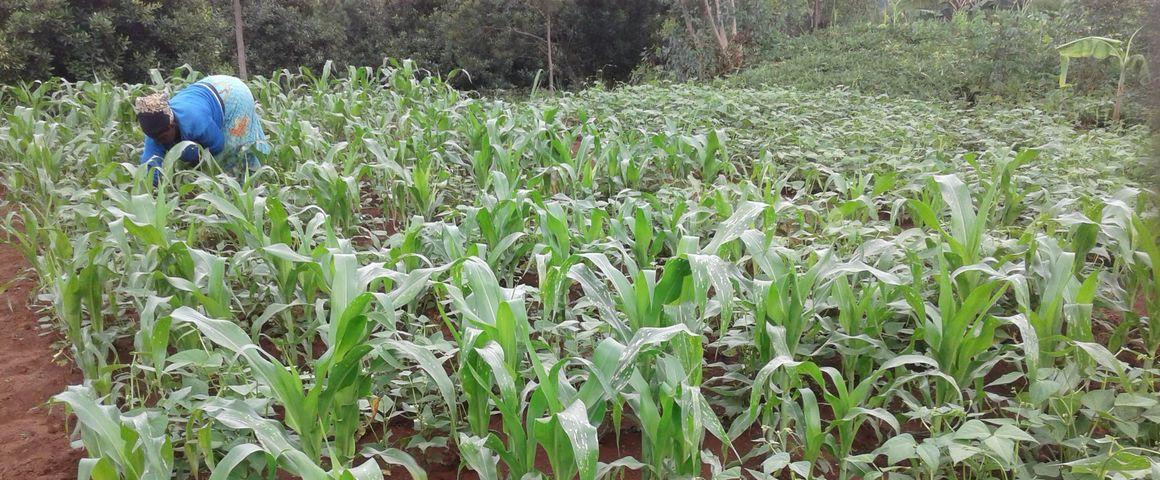
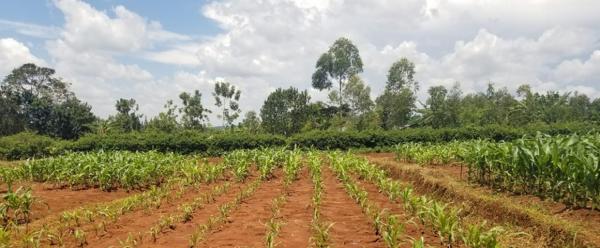
Maize-bean row intercropping in a smallholder farm in Rwanda. © E. Tuyishime, One Acre Fund
Rwanda has considerable agricultural potential but still struggles to increase crop yields. Current farming practices do not make optimal use of available resources (water, light, and nutrients), and lack sustainability. To address this challenge, the NGO One Acre Fund conducted an unprecedented large-scale trial across multiple environments and growing seasons on 382 plots throughout Rwanda. The study demonstrates the economic benefits of row intercropping and highlights the main barriers preventing its adoption by smallholder farming households.
Fondée sur l’association maïs-haricot en rangs, cette étude démontre les bénéfices de cette pratique. Comparée à d’autres systèmes de culture, tels que l’association par semis à la volée ou les cultures pures, elle obtient les meilleurs résultats en termes de productivité céréalière, de production nutritionnelle et de rentabilité économique. Néanmoins, les agriculteurs ont tendance à privilégier d’autres systèmes, moins intéressants financièrement mais également moins exigeants en main-d’œuvre.
The study, based on maize-bean row intercropping, demonstrates the benefits of this practice. Compared with other cropping systems such as broadcast intercropping or sole cropping, it ranks highest in cereal productivity, nutritional output, and economic profitability. Nevertheless, farmers tend to favor other systems, which are financially less attractive but also require less labor.
Labor demand is particularly high during the planting period. Row intercropping as other row cropping techniques requires a level of time and labor investment that is too great for many farming households, forcing them to choose cropping systems that are less productive and less profitable. It is essential to work hand in hand with farmers to co-design systems adapted to their specific situations and ultimately facilitate the adoption of row intercropping in Rwanda.
To increase the adoption of row intercropping and fully realize its potential, reducing labor requirements is essential. The researchers propose, among other solutions, integrating semi-mechanized planting tools that are co-designed with farmers.
Since every farm operates under specific environmental conditions and household needs, intercropping systems must remain flexible and be adapted to these diverse individual situations.
Broadcast intercropping has historically been practiced by Rwandan smallholder farmers, although it received limited promotion for many years. The findings of this study demonstrate the benefits of row intercropping, a relatively new form of intercropping in Rwanda, and highlight its potential contribution to food security, supporting a growing recognition among agricultural stakeholders of the value of intercropping for sustainable intensification.
While labour requirements remain a key challenge to overcome for wider adoption of row-based cropping systems, including row intercropping, intercropping more broadly remains an important opportunity to improve long-term soil health and contribute to food security in Rwanda. Further efforts to develop labour-saving tools and arrangements could help unlock this potential and maximize the benefits of intercropping in Rwandan farming systems.
Reference
Couëdel, A., de Dieu Mbarushimana, J., Nyombayire, A. et al. Maize-bean row intercropping in Rwanda: labor constraints limit application despite nutritional and economic benefits. Agronomy for Sustainable Development 46, 39 (2026). https://doi.org/10.1007/s13593-026-01103-z
Results & impact 29 June 2026
Results & impact 24 June 2026
Results & impact 3 February 2026