


















Results & impact 29 September 2026


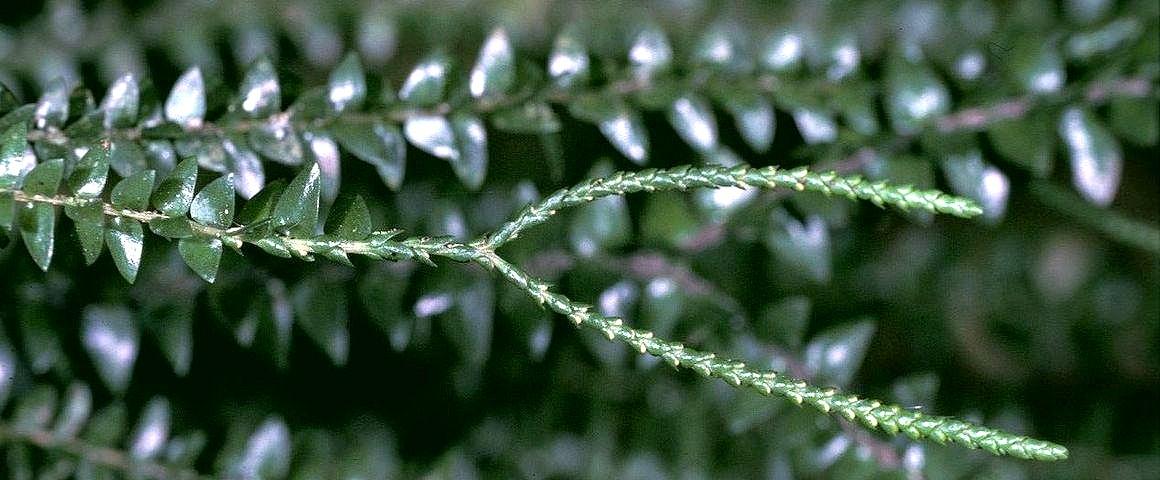
Lycophytes, which appeared some 420 million years ago, are the oldest existing vascular plant group. For a long time, they dominated the forests of the ancient world, and took a broad range of forms, including several arborescent species more than 30 metres tall. Mass extinctions and competition with other plant groups led to the disappearance of these large specimens, and the only remaining members of the group are herbaceous forms no more than a few centimetres tall. These modern species are now being used as a model to study the evolution of terrestrial plants. © D. Barthélémy, CIRAD
How can we trace the history of viruses that appeared hundreds of millions of years ago? An international team coordinated by INRAE and CIRAD provides a novel answer, having explored plant genomes to find actual viral molecular fossils.
During an infection, fragments of the genome of some viruses may be absorbed into the chromosomes of their host and thus transmitted from generation to generation over millions of years. Those sequences, known as endogenous viral elements (EVEs), are valuable archives of the history of viral infections.
The research team looked at the family Caulimoviridae, which contains plant viruses known to leave lasting EVEs in the genome of their hosts that are conserved as evolution progresses. By analysing the genomes of 93 species representative of the range of major terrestrial plant groups, from mosses to lycophytes* and ferns to conifers and flowering plants, the scientists identified more than 47 000 EVEs derived from Caulimoviridae (ECVs). Their analysis revealed the exceptional range of Caulimoviridae host plants, which covers all vascular plants, from lycophytes to flowering plants. It also showed that the diversity within this family of viruses had previously been largely underestimated: no fewer than 35 new evolutionary Caulimoviridae lineages were detected, including a hitherto unknown viral group only found in certain conifers.
By comparing the evolutionary history of Caulimoviridae with that of their host plants, the scientists demonstrated that numerous lineages of this viral family seem to have evolved in parallel with vascular plants for hundreds of millions of years. However, this very long-lasting cohabitation was not linear. The results showed a complex history, punctuated by occasional changes of hosts and by the extinction of certain viral lineages. Several may be associated with the mass extinctions that have marked the history of Earth, notably those at the end of the Permian period, some 252 million years ago, and at the end of the Cretaceous period, 66 million years ago. These events profoundly reshaped terrestrial ecosystems, by triggering the disappearance of a large number of species and opening new ecological niches that were subsequently colonised by new viruses.
This study demonstrates the exceptional merits of plant genomes as natural archives of virus evolution. Using the traces left by previous infections paves the way for elucidating the very long-term interactions between plants and their viruses, and the mechanisms by which viruses adapt to changes in ecosystems.
Vassilieff H., Serfraz S., Choisne N. et al. (2026). Endogenous viral elements trace the ancient origins and early evolution of the Caulimoviridae. PLoS Pathogens https://doi.org/10.1371/journal.ppat.1014340
*Lycophytes, which appeared some 420 million years ago, are the oldest existing vascular plant group. For a long time, they dominated the forests of the ancient world, and took a broad range of forms, including several arborescent species more than 30 metres tall. Mass extinctions and competition with other plant groups led to the disappearance of these large specimens, and the only remaining members of the group are herbaceous forms no more than a few centimetres tall. These modern species are now being used as a model to study the evolution of terrestrial plants.
Results & impact 29 September 2026
Results & impact 21 September 2026
Results & impact 3 September 2026