



















Results & impact 29 September 2026



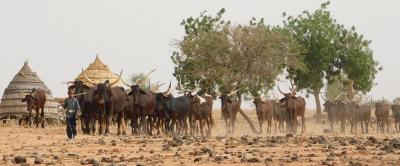
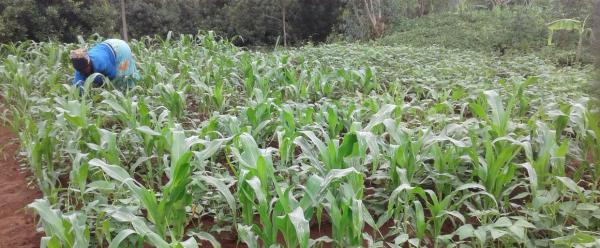
In the Mandoul region of Chad, where intensive vector control efforts have targeted the species Glossina fuscipes fuscipes, no tsetse flies have been detected since 2018. © I. Tirados, Liverpool School of Tropical Medicine (LSTM)
Every year, more than 700 000 people, especially children under the age of five, die from diseases caused by pathogenic microorganisms transmitted by vectors such as mosquitoes and tsetse flies. Tackling these diseases depends not only on medical treatments, but also on controlling and where possible eliminating the vectors themselves.
Over the past 20 years, an integrated approach combining medical interventions and vector control has considerably reduced the incidence of human African trypanosomiasis, commonly known as sleeping sickness. To date, the World Health Organization has confirmed the elimination of this disease as a public health problem in eight countries and aims to eliminate transmission entirely by 2030.
However, one uncertainty remains: the complete elimination of the vector, the tsetse fly, has not yet been formally demonstrated, leaving a risk of the disease re-emerging, as it did in the 1980s and 1990s, with almost 300 000 cases after the large-scale control programmes of the 1960s came to an end.
To address this concern, the researchers developed a six-step modelling framework that provides a probabilistic assessment of vector elimination. This approach takes into account:
This framework was applied to the Mandoul region of Chad, where intensive vector control efforts targeting the species Glossina fuscipes fuscipes were conducted between 2014 and 2025. Despite continuous monitoring, no tsetse flies have been detected there since 2018.
These findings are highly encouraging and have been accompanied by a dramatic reduction in cases of sleeping sickness. However, the researchers consider that it is not yet possible to conclude, with more than 90% confidence, that the vector has been completely eliminated, or that any remaining populations will die out naturally.
The end of vector control activities in April 2025 marked a new phase of observation. According to the study’s projections, if no tsetse flies are detected during the next two years, it will be possible to confirm their elimination with 99% confidence.
This methodological framework provides a valuable tool for public health decision-makers and is currently being discussed with WHO, FAO, WOAH and IAEA. It can be adapted to other vector-borne diseases, helping to guide vector elimination strategies and their monitoring, and to safeguard progress against the risk of resurgence. This framework can also be applied to species conservation and biodiversity, to address declining insect populations.
Our approach supports informed decision-making to achieve the lasting elimination of vectors and the diseases they transmit.
Reference
Modeling framework to demonstrate elimination of a vector population: Tsetse elimination in Chad, Proc. Natl. Acad. Sci. U.S.A. 123 (26) e2524729123, https://doi.org/10.1073/pnas.2524729123 (2026).
Results & impact 29 September 2026

Results & impact 21 September 2026
Results & impact 3 September 2026