















- Home
- Worldwide
- Our regional offices
- West Africa - Forest and Humid Savannah
- Actualités : Afrique de l’Ouest – Forêt et savane humide
- Cocoa4Future Cocoa farming
Cocoa4Future paves the way for sustainable cocoa farming
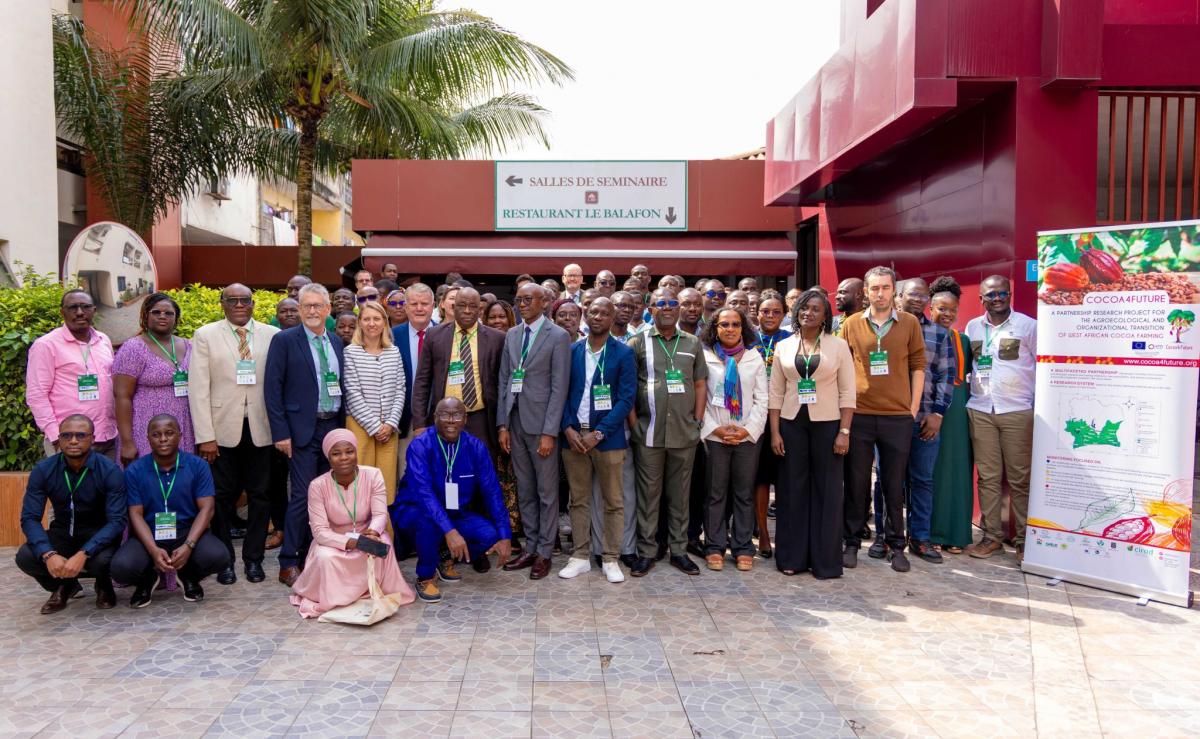
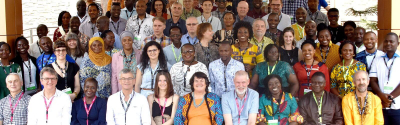
Family photo, civic closing workshop. © Cocoa4Future
A project born in the face of major challenges
West Africa is the world’s leading cocoa-producing region and is facing profound transformations. Climate change, soil degradation, the emergence of diseases such as Swollen Shoot virus, and pressure on natural resources are putting production systems to the test. The Cocoa4Future project, funded by the European Union (EU) and the Agence Française de Développement (AFD) through the Development Smart Innovation through Research in Agriculture (DeSIRA) initiative, was designed to offer scientifically sound and realistic solutions to these challenges.
Led by Cirad in partnership with national institutions, professional organizations, agricultural cooperatives and non-governmental organizations, the project has developed an integrated approach combining agronomy, social sciences, forestry, rural economics and digital innovations.
In Accra on November 19 and 20 and Abidjan on December 2 and 3, 2025, Cocoa4Future concluded with operational results and recommendations for scaling up solutions across the entire sector.
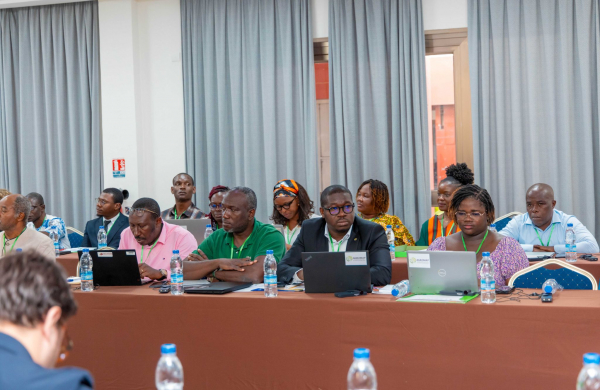
Participant in the project closing workshop. © Cocoa4Future
Agroecological practices adapted to actual conditions
Cocoa4Future has enabled the testing and validation of agroecological practices capable of improving the resilience of cocoa plantations. The agroforestry systems studied have proven effective in restoring soil fertility, limiting the spread of certain diseases, and protecting cocoa trees from climatic stress. The introduction of shade trees and complementary food crops also helps stabilize yields and strengthen the livelihoods of producer families. These practices, developed and tested in collaboration with producers, are a concrete response to the environmental and economic challenges facing the sector.
Technological innovation serving producers
Cocoa4Future has experimented with the use of digital tools to improve plantation management. Parcel mapping, early warning systems, diagnostic applications, and forecasting models have been developed and tested with local stakeholders. These tools promote better risk anticipation, informed decision-making, and more efficient operational planning. They help modernize agricultural practices while taking into account the technical and social realities of family farms.
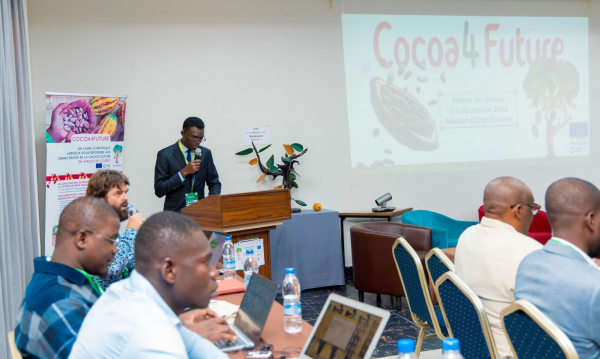
Launch of the closing workshop. © Cocoa4Future
A socio-economic approach to enhancing sustainability
Beyond agronomic and technological innovations, the project studied the socio-economic conditions necessary for a sustainable transition. Analyses showed that the most resilient farms diversify their sources of income, benefit from better access to support services, and fully value the contribution of women in cocoa production and processing. This integrated approach makes it possible to consider development models that combine economic performance, social equity, and the preservation of natural resources.
A closing workshop full of insights
The closing workshop held in Abidjan brought together project teams, institutional partners, cooperative representatives, and technical stakeholders. Discussions highlighted the scientific relevance of the actions carried out and the need for continued collaboration between all stakeholders to ensure the implementation of solutions. The meeting also underscored the importance of concerted efforts between public decision-makers, producer organizations, and the private sector to support consistent scaling up of innovations.
Cocoa4Future has demonstrated that combining agroecological practices and digital tools can transform the cocoa sector in a sustainable way. The results show that sustainability is not only an environmental goal, but also a means of boosting the economic resilience of producers and local communities.
Prospects for large-scale dissemination
The results delivered by Cocoa4Future provide a solid foundation for supporting national sustainability strategies in the cocoa sector. Their dissemination will depend on the collective ability to strengthen training, support innovation, consolidate local cooperation, and assist family farms in adopting practices adapted to ongoing changes. These achievements also represent an asset in meeting new international requirements in terms of traceability, combating deforestation, and improving working conditions.
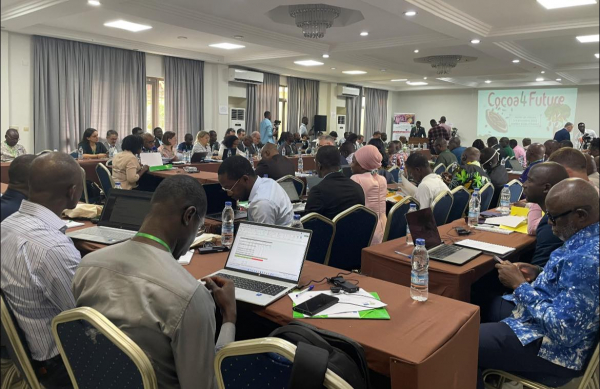
closing workshop project civ. © Cocoa4Future
Cocoa4Future is coming to an end, but the momentum it has created continues. The solutions put forward are concrete means of improving the resilience of cocoa systems, strengthening the sustainability of territories, and supporting producers in their day-to-day practices. The future of West African cocoa farming now depends on pursuing this collective commitment. Building on the project's results, decision-makers, professional organizations, private actors, and local communities now have the knowledge they need to accelerate the transition to a sustainable, competitive, and responsible cocoa sector. Together, this momentum can become a driving force for transformation for generations to come.