








Expert view 7 September 2026

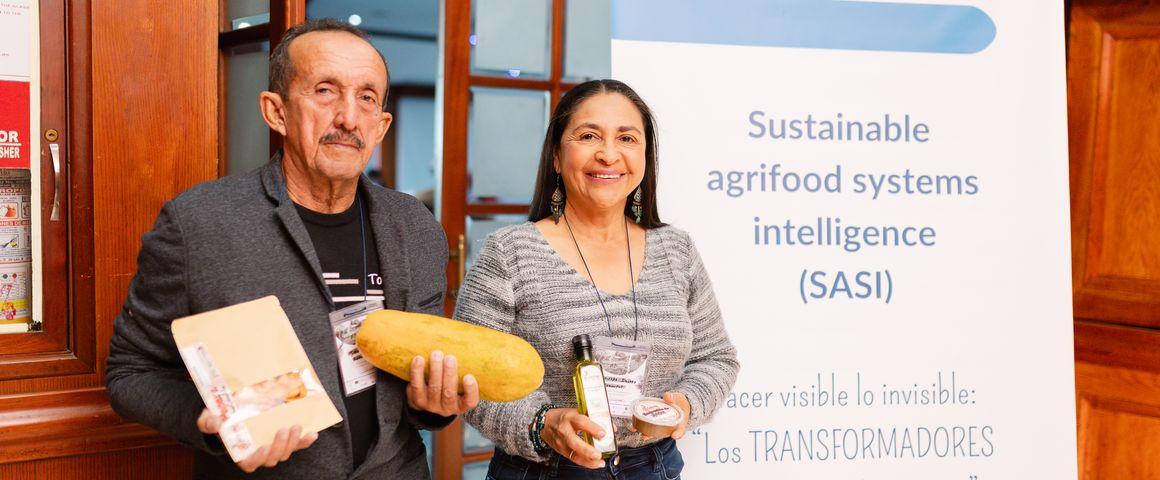
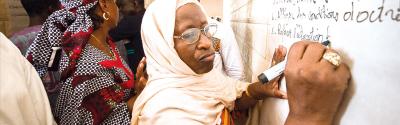
Yoleida Isabel Salcedo Martinez and a member of her association ASOAGROPAT at a workshop organised by the SASi initiative © ICRA
The essentials
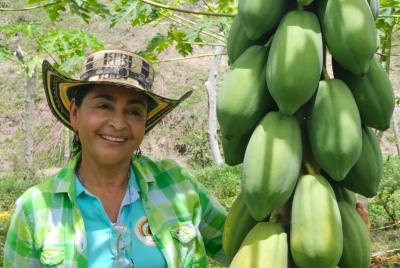
© M.-H. Dabat, CIRAD
Yoleida Isabel Salcedo Martínez represents the agro-entrepreneurial and community association ASOAGROPAT in Nueva Pativaca, a small, isolated rural administrative division in los Montes de María territory, northern Colombia. Nueva Pativaca has 300 inhabitants who live without electricity. The division is the furthest away from the municipality to which it is attached, Carmen de Bolívar, and access routes to it are in very poor condition.
The ASOAGROPAT association associates 45 families farming around twenty hectares in total. Its members are mostly women. Until now, those families traditionally grew dark tobacco, but they now produce fruit, particularly papaya.
By setting up agroindustrial projects, ASOAGROPAT works to develop high-added-value products that will boost its members' incomes. The organisation encourages organic production, and can offer products rich in protein, vitamins and minerals. Its watchword is solidarity: ASOAGROPAT members are all strictly on the same footing.
Yoleida finds it difficult to separate her own story from those of her association and her territory, since papaya would seem to be the cement binding them together. She sees the fruit as a link between her life and the collective journey of this forgotten territory in Colombia, which has seen the very darkest days of the conflict and is gradually recovering.
Yoleida Isabel Salcedo Martínez: Several associations and projects are supporting us at the moment, such as the Proyecto Agroecologia y ciencia comunitaria, with AEXCID, Ayuda en acción and Patrimonio Natural. However, the SASi collective initiative, with CIRAD, Agrosavia, ICRA and FAO, is one of the cornerstones of our drive for positive change in our food system. To put it more precisely, it is helping us to get to know ourselves better, in the territory of los Montes de María. Thanks to SASi, we are also able to meet champions of innovation, like ourselves, in other parts of the country, and swap our experiences. We sometimes even join forces to market our products.
Research is helping us preserve our native creole seeds. We are working on certification, on identifying the most profitable markets, and on conserving our tropical bosque seco (dry tropical forest), which is really fragile but which we're so proud of.
The SASi initiative helps us express ourselves during workshops and set a goal to work towards. We are working to rebuild the social fabric, conserve our reserves and our really unusual forest, and those are our priorities.
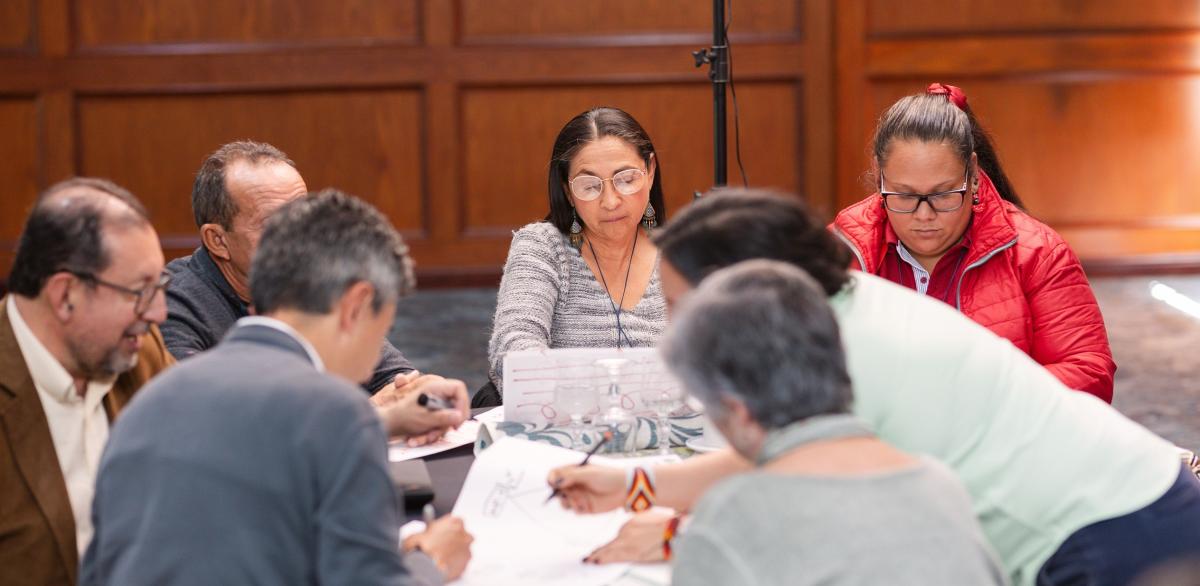
Group work as part of the SASi initiative, with CIRAD and ICRA © ICRA
Y.I.S.M.: I always wanted to be a lawyer or a social worker, but didn't have the chance to go to college. However, my life now has meaning, thanks to agriculture. The fact of being a community leader and representing an organisation has opened a lot of doors.
I live with my family in los Montes de María territory, which I had to leave when things got violent. It is one of the parts of Colombia hardest hit by the conflict. I came home after the peace agreements, about ten years ago. We had to start all over again; people had lost their trust in each other.
With a few others, we rolled our sleeves up. To start with, we only knew how to grey dark tobacco, which was our preferred crop and our economy before the war. So we planted tobacco, but we couldn't sell it anymore. The tobacco rotted because the big firms that used to buy it, such as Oveja or Carmen de Bolívar, had moved away because of the conflict.
We therefore had to reinvent ourselves. And that was when we were saved by papaya. Our lives changed: I can still remember how thrilled we were when we got our first cheque!
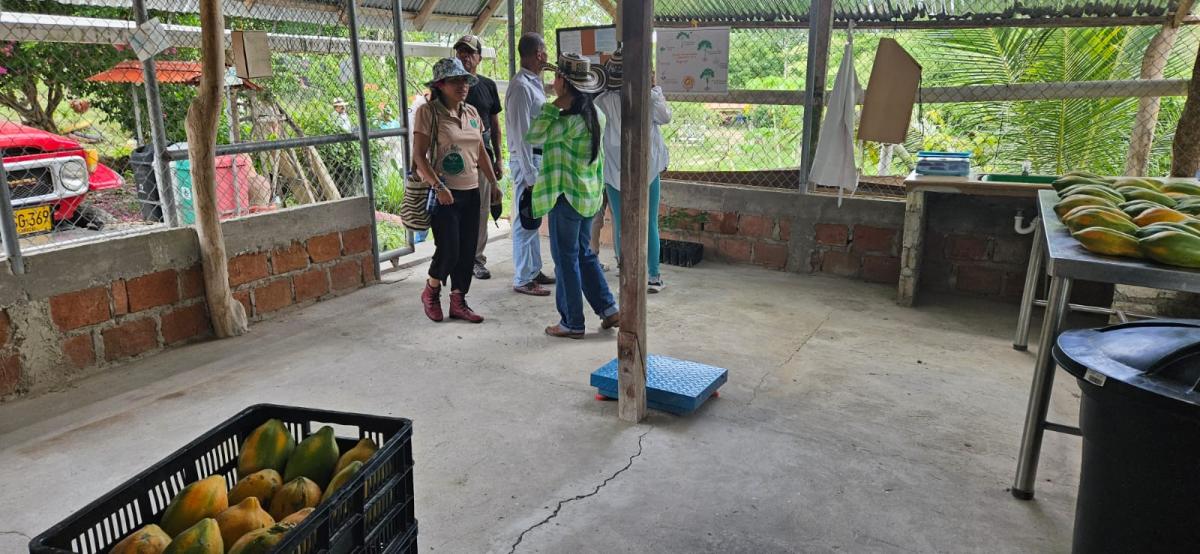
Site where the association's papayas are prepared for sale © M.-H. Dabat, CIRAD
Y.I.S.M.: To tell the truth, to begin with, there were several producers who didn't want to join us. They didn't believe it could be profitable. The association started off with several women and just three or four men.
We chose to bank on papaya to rebuild lost trust. It brought us back together and reconciled us, because we were very suspicious of each other. During the war, people went into hiding and saw others as enemies. There were so many victims of the war, often because of betrayals. The loss of trust was almost worse than the loss of lives.
Papaya has become a symbol of peace, love and reconciliation. Through the projects and workshops we are rolling out, it is helping us to forge new social links. But it is also a fruit with a great economic future. No agricultural product had ever brought us so much money, not cassava, yams, maize or traditional products. However, we are also growing sesame and making sesame paste, which was our main source of income during the Covid-19 pandemic.
You need to take special care when growing papaya. We are in a very specific zone where it is very hot in the daytime, with temperatures of more than 40°C and very cold mornings, which gives the fruit its unique colour and taste. Papaya is harvested after eight months, and each hectare produces a tonne of fruit a week.
It bis not easy to market papaya given the state of our roads. This is a major worry, and we have to transport our crop via Sucre department. However, it is worth it, and we are teaching our young people that.
I think big and work hard. Our dream is to transform the association into a firm, improve our marketing facilities instead of selling everything to collectors, and who knows, maybe one day we'll be able to export to the US, where people eat a lot of papaya? At the moment, Colombia plays just a small part in the international papaya, way behind Costa Rica, Brazil, Peru and Mexico, but everything is possible. However, before aiming to export, we need to improve our irrigation infrastructures.
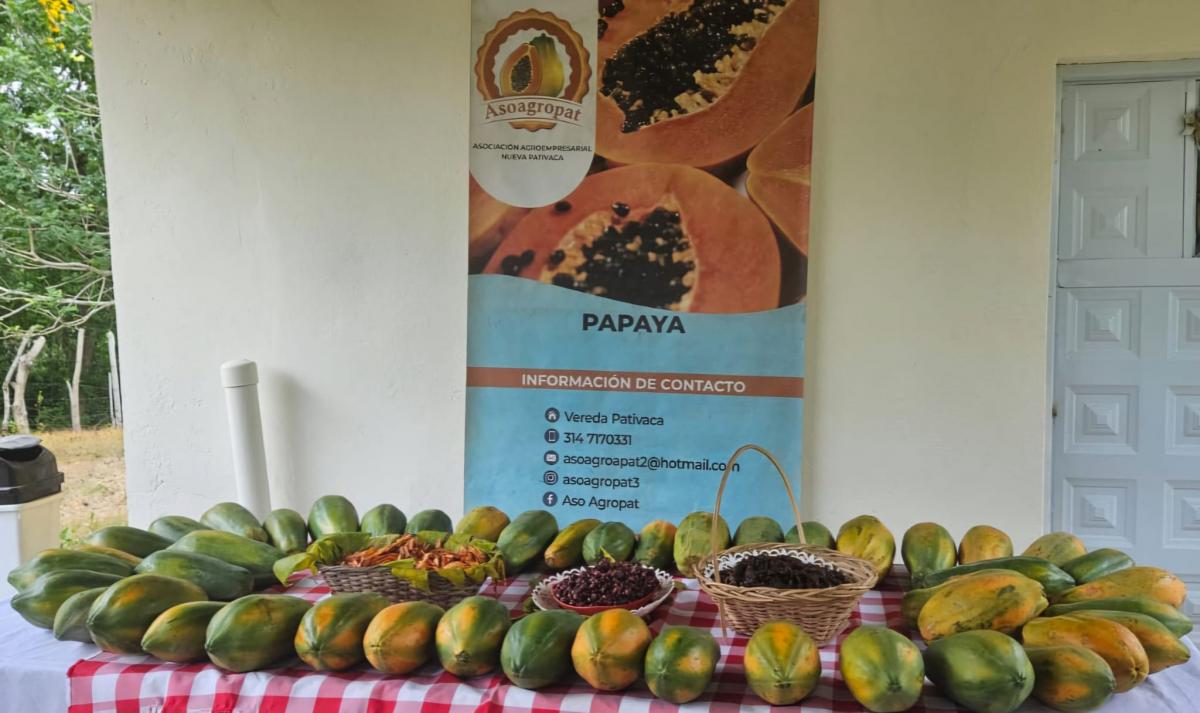
Papayas grown by the agro-entrepreneurial community association ASOAGROPAT © M.-H. Dabat, CIRAD
Y.I.S.M.: When people came home after the conflict, the territory had been almost abandoned. We didn't even know whether were part of Bolívar or of Sucre department, the public authorities thought so little about us. We felt like we were some sort of trophy brandished by a politician who reappeared every four years, but outside election campaigns, nobody bothered about us.
We knocked on several doors, and one day, someone sent us an agronomist and a social worker. They suggested we grew oranges or papaya. As our region is quite arid, we thought papaya would be better. We knew that the main problem there was access to water, and tobacco firms had dug wells, but for their own use. The lack of water is still a big issue for us: a lot of rain falls over the three winter months, but it's dry the rest of the time.
As things stand, we are continuing to get to know each other again and to rebuild the social fabric. We are trying to keep our young people, who also left and are reluctant to come home. Handing over to the next generation is proving difficult. We are looking for allies who could help us. As regards water, we need to get our groundwater back. Climate change is a real challenge for papaya growing, because it needs water. The Rural Development Agency has helped us develop an irrigation system.
Papaya has been a blessing for the community. It has given us an identity we didn't have. This has been a great experience, it's like a showcase for us to express ourselves, prove what we can do and publicise our work. We are now well organised, primarily a women's organisation, and are always looking to rebuild our social fabric, rebuild our territory and rebuild ourselves. This is our dream.
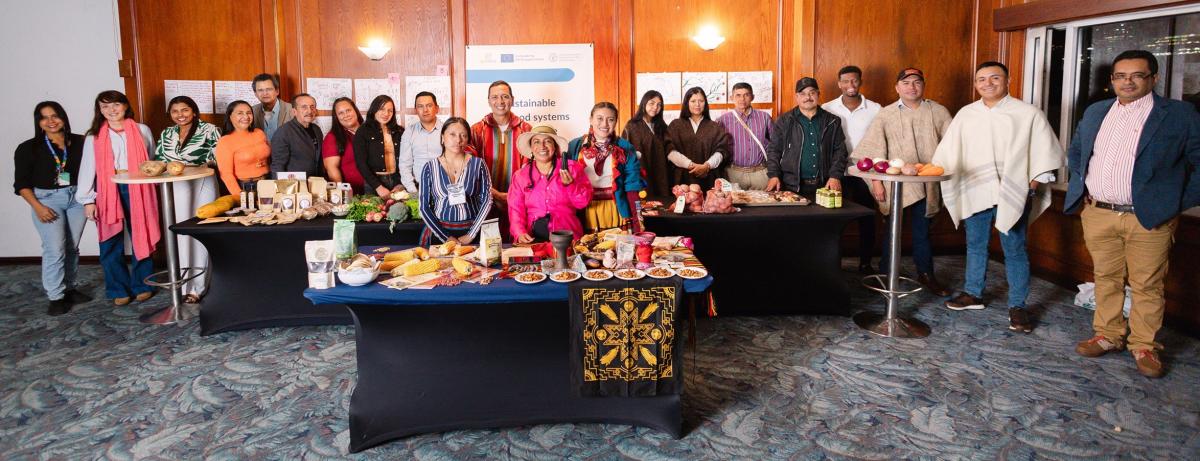
SASi initiative innovators and leaders alongside Yoleida © ICRA
For those who speak Spanish, here is a text written by Doña Yoleida, entitled "Sigue adelante", which could be translated as "Keep pushing on"
Sigue adelante
Hoy me abrazo como un ser que no se rinde. He caminado por senderos difíciles, he enfrentado carencias y dudas, pero también he encontrado en mi corazón la fuerza para seguir.
No estoy aquí por casualidad. Estoy aquí porque me lo he ganado con esfuerzo, con trabajo, con fe. Hoy celebro cada madrugada en el campo, cada gota de sudor, cada idea que no dejé morir y cada sueño que me mantuvo de pie.
Mi producto es más que un negocio: es mi historia, mi tierra, mis raíces y mi esperanza de futuro. Quien lo reciba no solo llevará algo hecho con mis manos, sino también con mi alma y con el amor por lo que soy.
Mañana, en la feria, me mostraré con orgullo. Hablaré con alegría, miraré a los ojos con confianza, y cada palabra será la semilla de una relación que crece. Porque no vendo solo lo que hago: comparto lo que soy, y eso es valioso.
Hoy me prometo no olvidar nunca que mi voz merece ser escuchada, que mis manos merecen ser reconocidas, y que mis sueños merecen hacerse realidad.
Soy parte de una familia que cree, que sueña, que transforma. No camino sola: camino con otros valientes como yo.
Desde este estante, grito dentro de mí: ¡Estoy lista para brillar, para servir y para dejar huella!
Y cuando mañana mis clientes me vean, sentirán que frente a ellos no solo hay una vendedora, emprendedora llena de orgullo, un corazón que inspira, y un ser humano que nació para soñar y cumplir cosas grandes.
Yoleida

Expert view 7 September 2026

Expert view 15 June 2026