



Expert view 19 October 2026
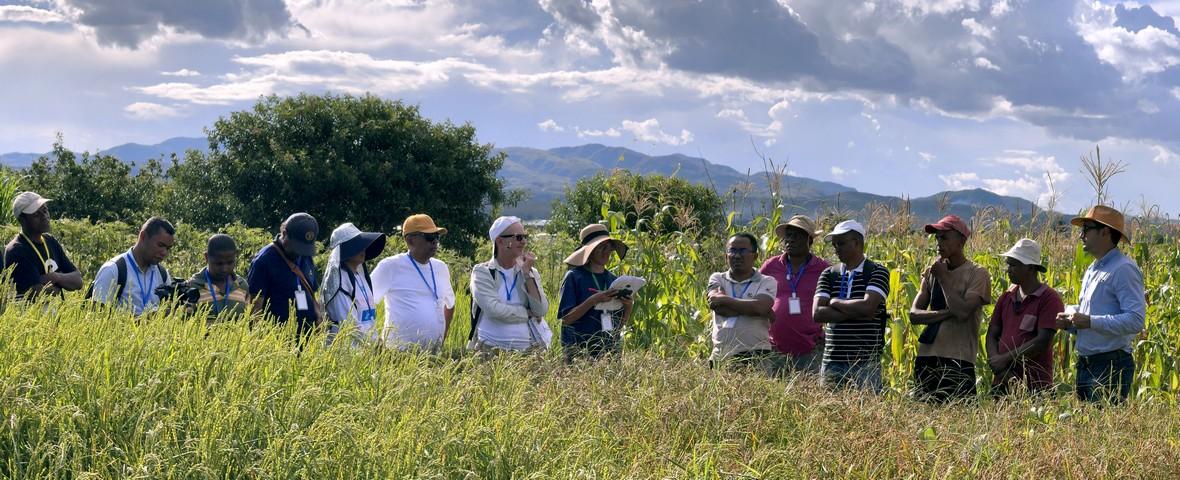
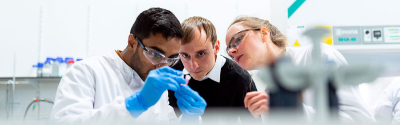
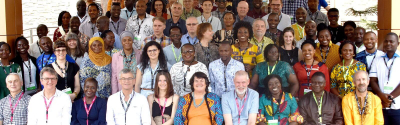
Exchanges between partners as part of the EU DINAMICC project in Madagascar © CIRAD, L. Fertin
What does the Global Gateway really change in terms of relations between Europe and Africa, notably within food systems?
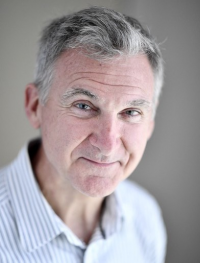
© F. Dunouau
Sylvain Perret: This strategy puts cooperation in an approach geared more towards investments and transactions, strategic partnerships, particularly with the private sector, innovation, sovereignty and competitiveness. While its scope is global, Africa as a continent is a priority. In short, Europe is affirming its determination to "do business" with Africa.
Although education, research and innovation are identified as major elements in this strategy, we need to redefine their contributions, functioning and objectives. This is a challenge, since agriculture is not seen as a major sector of intervention for the Global Gateway, which has other priorities such as energy, transport and digital technology. However, in Africa, the great majority of activity and income systems relate to agriculture. The commission is expecting us to come up with proposals. This is a great opportunity for us to consolidate research geared more towards societal and political issues, build partnerships based on trust, sustainability and shared prosperity, and build on the progress made in terms of agricultural value chains, which are particularly relevant for the private sector.
The rollout of the Global Gateway must be backed by improved skills, mobilisable knowledge, and dynamic innovation ecosystems. For these investments to have long-term impact, they must be built on a robust continuum between education, research and innovation.
Why emphasise those three components?
S.P.: We are convinced that investments must go beyond physical infrastructures. There will be no sustainable transformation without also investing in people, in knowledge and in territorial innovation capacity. This is the point we made both in a recent position paper and at a seminar in Brussels on 23 April.
The event brought together representatives from several European Commission Directorates General*, African partners such as the Regional Universities Forum for Capacity Building in Agriculture (RUFORUM) and the Forum for Agricultural Research in Africa (FARA), and representatives from the private sector.
The discussions revealed the essential role agriculture and food systems play in the rollout of the Global Gateway and in the response to the many interdependent challenges we face. It was clear to me that the European Commission is counting on us and trusts us. In this context, Agrinatura has a key role to play in Team Europe to build equitable multi-stakeholder partnerships.
How is the role of research being reshaped in this new context geared towards investment and impact?
S.P.: While science still centres on producing knowledge, that alone is no longer sufficient. Research must now support transformation by building interface facilities with the whole range of players (living labs, accelerators, innovation hubs, etc), including the private sector, by supporting public policy and consolidating innovation ecosystems (training and extension services, incubators, accelerators, etc).
CIRAD's history and specificities give it major assets in terms of these changes. Its culture of partnerships, constant dialogue with a wide range of players, including the private sector, and expertise in modelling, foresight, co-construction and impact assessment place it in a very specific position.
Why are partnerships between European and African institutions even more strategic nowadays?
S.P.: Because the challenges we face are profoundly interdependent. There are several urgent issues that call for coordinated action between Europe and Africa: the development of the bioeconomy and the circular economy, the emergence of players from the secondary sector, the promotion of strategic value chains as levers for transformation and the creation of attractive jobs.
This last question is particularly urgent in Africa: every year, between 15 and 20 million new young people arrive on the job market. However, the secondary sector in many African economies is still structurally limited. Agriculture and food systems will therefore continue to provide a large proportion of job opportunities for some considerable time. Education, research and innovation are essential for supporting the transition to more attractive, more productive and more profitable farming systems, while fostering the development of processing and storage activities that generate value.
The partnerships between African and European research and agricultural education establishments must be in step with the excellent relations between the African Union and the European Union, as shown by the HLPD on Science, Technology and Innovation and the FNSSA (Food and Nutrition Security and Sustainable Agriculture) partnership. They serve to mobilise complementary skills, resources and capacity in order to build appropriate solutions and boost the impact of investments.
Within this dynamic, CIRAD serves as a bridge between African and European players, backed by its extensive experience of cooperation and co-construction in the field of food system transitions.
For Agrinatura, such partnerships are vital for consolidating research, training and innovation capacity in the long term, and for boosting the impact of investments led by the Global Gateway strategy, notably in terms of sovereignty, jobs and skill building.
* International Partnerships (INTPA), Agriculture and Rural Development (AGRI) and Research and Innovation (RTD).
Expert view 19 October 2026
Expert view 12 October 2026
Expert view 7 September 2026