


Expert view 19 October 2026
Co-creation team of farmers and scientists © S. Koutchou, CIRAD
The essentials
Hermine Mahot is an agricultural engineer and researcher at the Institut de recherche agricole pour le développement (IRAD), where she specialises in plant pathology (plant diseases). She is part of a scientific team involved in the Sustainable agriculture living lab (LVAD) project, which aims to promote sustainable food crop production systems in Cameroon. The project is funded by the Organisation internationale de la Francophonie (OIF) and being implemented by IRAD in partnership with CIRAD, the International Institute of Tropical Agriculture (IITA) and the University of Yaoundé I.
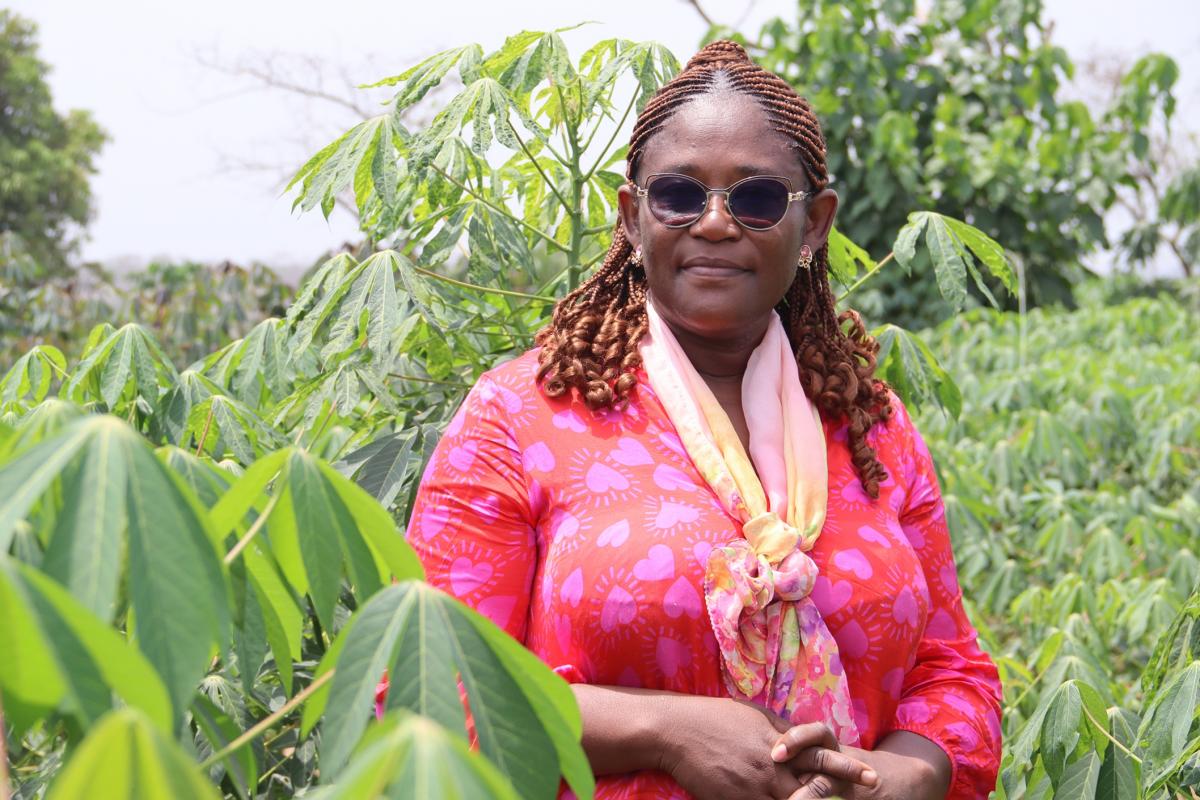
Hermine Claudine Mahot in a cassava field in Ntui © S. Koutchou, CIRAD
Hermine Claudine Mahot: In Cameroon, in zones under high population pressure, the main challenge is switching from subsistence farming to sustainable intensification, with the dual aim of guaranteeing families' food security and generating surpluses that can be sold. However, this transition may sometimes have environmental impacts, notably as a result of destroying forests to expand the areas available for crops.
For instance, this applies to Ntui, in central Cameroon, which was chosen for the LVAD project. Ntui is a good illustration of an ecological transition in which three distinct biotopes co-exist: forest, grassland, and an intermediate zone between the two. Although the region has high agricultural potential, it is increasingly fragile, for several reasons. The effects of climate change and gradual soil exhaustion, due to shorter fallow periods, are compromising agricultural productivity. Soils, which were initially fertile, are becoming increasingly degraded as a result of shorter rest periods and the continuous opening up of new land, which means an extension in the areas cultivated year on year.
In Ntui, cropping systems are dominated by slash-and-burn and complex systems combining tree crops such as cocoa and food crops such as cassava, maize, groundnut and plantain banana. Players in the food crop sector have identified two main critical challenges that hinder farm productivity. The first is a shortage of agricultural labour: with the vast swathes of land now available for cultivation, labour requirements for sowing, weeding and harvesting are growing apace. However, there is often not enough labour available, and it is costly. The second challenge concerns the lack of knowledge of resistant varieties: many producers face crop diseases and the effects climate variability but do not have sufficient information on improved seeds or on the best varieties for local agroecological conditions.
LVAD sees itself as an operational tool capable of addressing these challenges, while fitting in with the country's National Development Strategy (NDS) 2020-2030 and the National Climate Change Adaptation Plan. It is helping to meet food security and climate resilience targets by introducing innovations such as soybean growing or the use of biofertilisers, which restore soil quality long term and reduce dependence on chemical inputs, which are both costly and polluting.
H.C.M.: A living lab is a break from the conventional research model. Far from the image of a closed building peopled with researchers in white coats, LLs are a participatory research methodology anchored in grassroots realities. With this approach, farmers' traditional knowledge is not just a study topic, but the basis for co-constructing innovative solutions. LLs rest on three fundamental pillars. The first is co-creation, in which farmers change status and become co-researchers who play an active part in developing technology. They are no longer just "beneficiaries" but partners in their own right.
The second pillar is experimentation on the ground: trials not done in laboratories or on isolated experimental stations, but directly in farmers' fields. This makes it possible to assess the results in the field and means that the solutions offer are easier to adopt. Lastly, the third pillar is a multi-stakeholder approach associating farmers, scientists, buyers, processors and policymakers. This collaboration fosters greater understanding of the issues and serves to develop more inclusive solutions better suited to local realities.
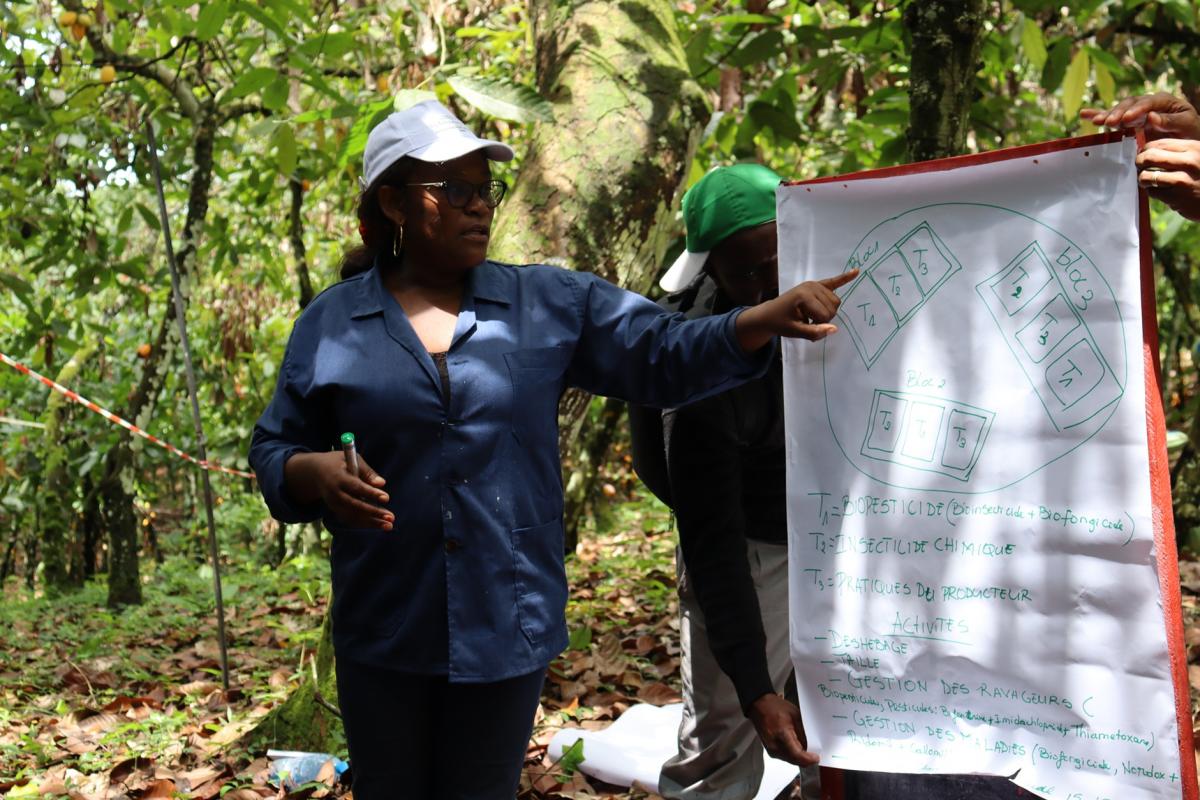
Explaining to farmers the various trials conducted in their agroforestry plots sub-divided into experimental blocks © S. Koutchou, CIRAD
H.C.M.: In terms of scientific innovations, LVAD has introduced legumes, notably soybean, into farmers' production systems. Those farmers have understood that soybean is not just a cash crop, but a source of nitrogen for surrounding crops, since it helps to enrich the soil naturally and boost its fertility for intercrops.
The project has also promoted the use of biofertilisers such as worm tea and lombricompost. These local solutions restore soil microbe activity without poisoning the ecosystem. To this end, farmers have been trained to produce and use biofertilisers, to foster their adoption and distribution.
On a methodological level, the project has relied on a co-conception approach involving the entire range of stakeholders in the food crop value chain. A participatory workshop enabled a diagnosis of the constraints encountered on the ground. Talks between farmers, researchers and policymakers served to pinpoint three main challenges: a shortage of labour, a lack of resistant varieties, and the existence of "pockets" of drought. The potential solutions were then discussed and chosen collectively.
Experimental installations were co-designed, set up on farms and monitored up to harvesting. A between-season visit by the different stakeholders served to observe the results in the field and discuss them collectively with a view to deciding on the subsequent stages of the project.
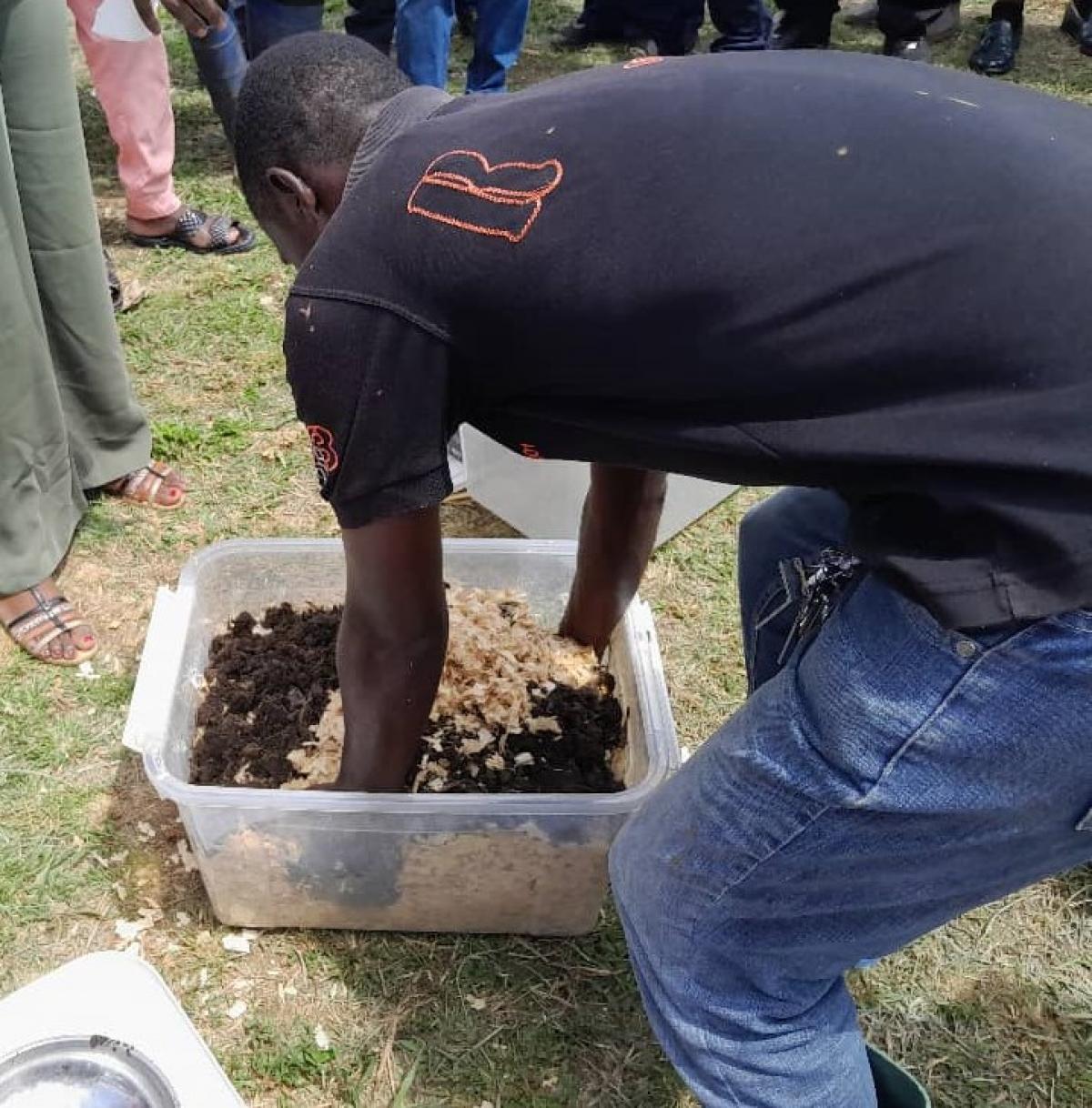
Demonstration of how to produce lombricompost from pig manure and white wood chips, adding water to produce a homogeneous mixture © S. Koutchou, CIRAD
H.C.M.: The project has allowed us to map the various players in the food crop value chain in Ntui, to identify their roles, interactions and degree of influence within the local farming system. The socioeconomic study conducted has also served to distinguish between four main types of farms, characterised by their different structures and farming practices.
Type 1 and 2 farms correspond to structured cocoa systems, which are diverse and sometimes more intensive, in which income is primarily generated by cocoa production. Type 3 covers farms that are often run by farmers from other regions, who face challenges in terms of access to land and technical integration when they arrive in Ntui. In these production systems, food crops are dominant, particularly maize. Cocoa plays a more secondary role. Household income is often topped up by paid employment off the farm. Lastly, type 4 farms are more precarious: they are mostly run by largely uneducated women and rely primarily on growing cassava and on non-agricultural activities such as small-scale trading.
The first season of field trials produced contrasting results as regards the efficacy of the inputs tested. Rhizobial inoculation was the most effective treatment, ahead of all the other non-inoculated and worm tea treatments, in terms of biomass production and soybean yields. Analyses also showed that the worm tea used for the first season was too dilute, which accounts for the poor results obtained with concentrations of 20 and 40%. However, performance varied substantially between plots, proving the determining effect of local management conditions and soil characteristics.
In addition to the map and the practical results produced by the trials, LVAD has generated several tangible results for producers in Ntui. It has helped to build farmers' technical capacity thanks to training in soybean growing, which has introduced both a new source of dietary protein and opportunities to make additional income. The project has also fostered a gradual transition to agroecological practices, notably through the adoption of organic fertilisation techniques involving making lombricompost and biochar. This serves to reduce dependence on costly chemical inputs while improving the soil structure long term. Lastly, between-season tours of the experimental plots fostered a collective learning dynamic, by creating forums in which farmers, technicians, scientists and policymakers can share their experiences.
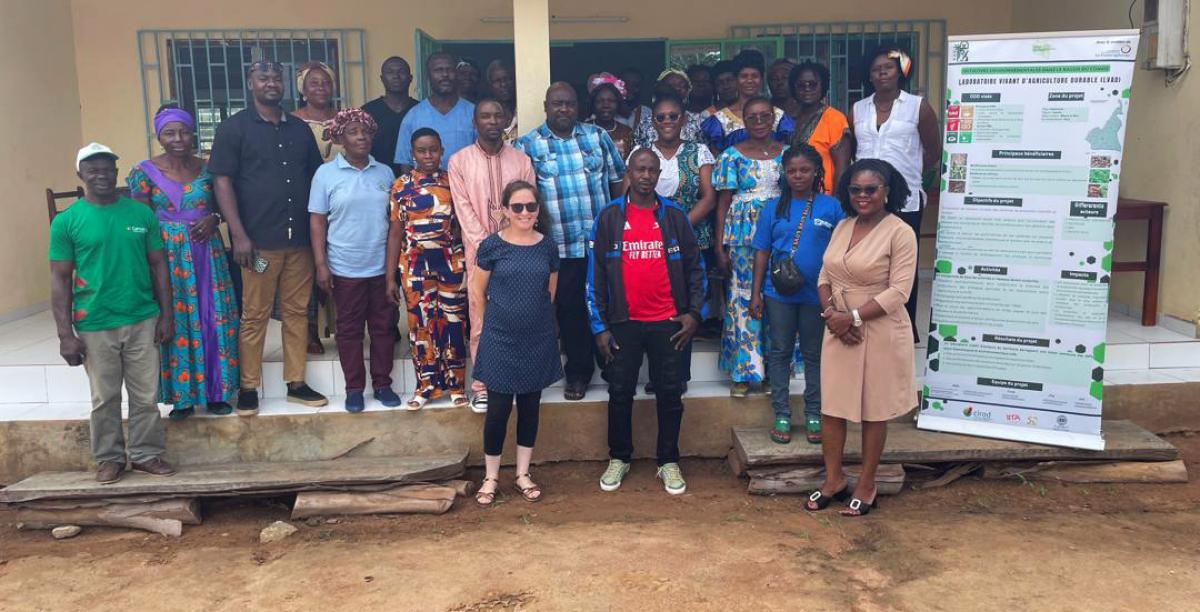
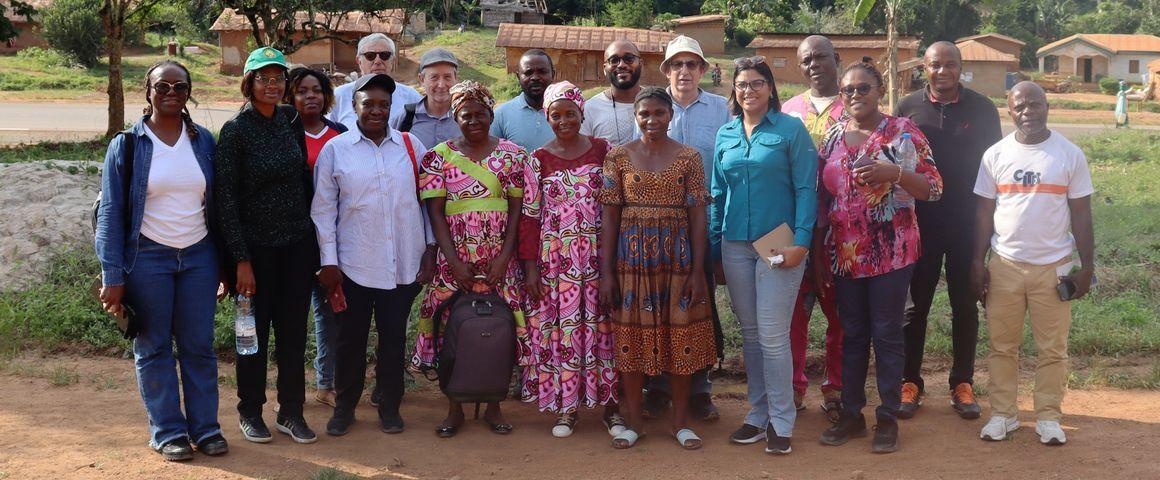
The LVAD project team, comprising women farmers and scientists © A. D'Anfray, CIRAD
Expert view 19 October 2026
Expert view 12 October 2026
Expert view 7 September 2026