











Results & impact 21 October 2026
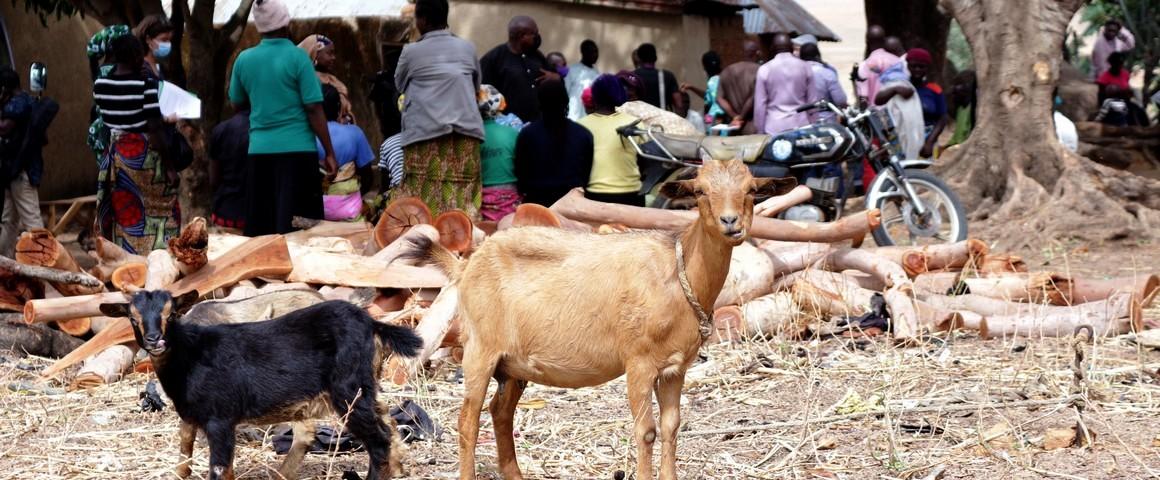
Goats in a Nigerian village. In the background, members of the LIDISKI project working with villagers © Ikore International Development
Some 2.25 million vaccines distributed, and 138 community agents trained and deployed to benefit 11 000 livestock farmers. In short, these are the results of the LIDISKI project. The project ended last year, and has already had a visible impact, since 99% of the farmers surveyed said that their incomes had improved, as a result of the reduced animal losses and higher productivity seen following the rollout of the project.
This award, in the "Sustainable livestock transformation, One Health, animal health, and reference centres" category, salutes the LIDISKI (Livestock Disease Surveillance Knowledge Integration) project's contribution to a sustainable transformation of livestock production in Nigeria and to promoting an integrated animal health approach. These initiatives fit with the four FAO strategic objectives: "better production, better nutrition, a better environment, and a better life, leaving no one behind".
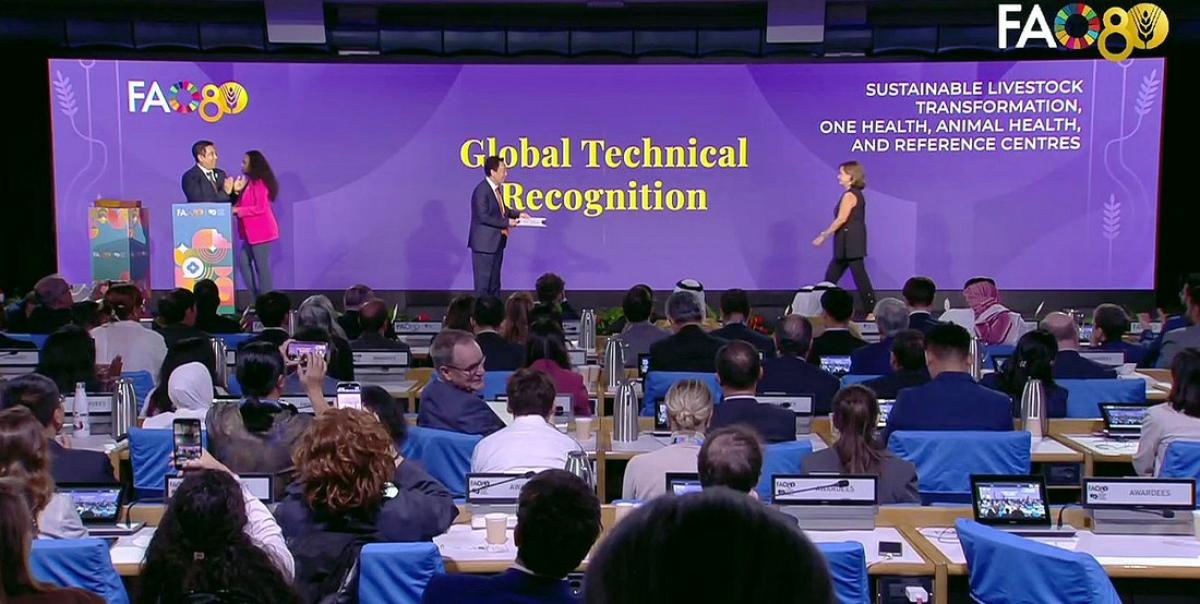
The ceremony at which FAO recognized the LIDISKI project, in the "Sustainable livestock transformation, One Health, animal health, and reference centres" category (screenshot)
At the award ceremony, Thanawat Tiensin, Director of the FAO Animal Production and Health Division, saluted the power of collaboration and excellence in action.
The project received 2.5 million euros of funding and was conducted between 2020 and 2024 by CIRAD and three partners: the National Veterinary Research Institute (NVRI, Nigeria), the Istituto Zooprofilattico Sperimentale delle Venezie (IZSVe, Italy) and Ikore International Development (Nigeria). LIDISKI combined scientific research and operational development operations, to improve access to veterinary services in rural parts of northern Nigeria and build animal disease monitoring and control capacity in the field.
For Marion Bordier, project coordinator and epidemiologist with CIRAD, "the project was a big success, not just on a scientific level, with its sound, significant results, but in terms of development: it enabled concrete changes at grassroots level. Above all, it was a really rewarding experience in human terms, built on solid collaboration, commitment and mutual learning on the part of all the partners".
The project's activities centred on two major diseases affecting family farms in Nigeria: la Peste des petits ruminants (PPR), which primarily affects goats and sheep, and Newcastle disease (ND), which affects poultry. In building capacity among animal health players and improving access to veterinary services, LIDISKI made livestock systems more resilient and supported smallholders' livelihoods against a backdrop of climate change.

Marion Bordier, LIDISKI project coordinator and epidemiologist with CIRAD, in action © Ikore International Development
To improve management of the two animal diseases, LIDISKI adopted an integrated, participatory approach resting on three pillars:
The results obtained thanks to the project bear witness to the scope and soundness of the operations conducted:
Results & impact 21 October 2026

Results & impact 18 September 2026
Results & impact 16 September 2026