










Results & impact 21 October 2026

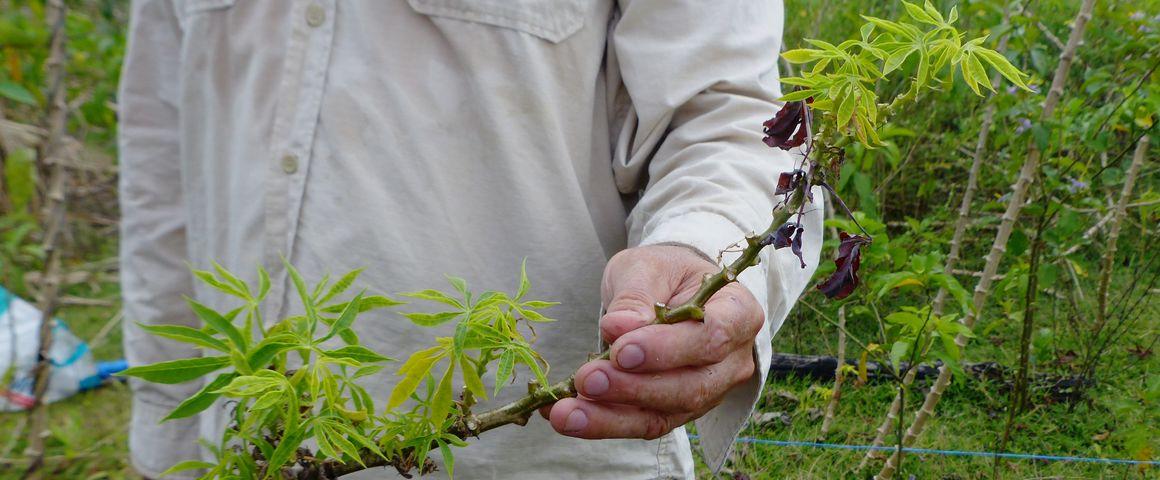
Cassava plant infected with witches' broom disease. Clear symptoms on some leaves © M. Chen, CIRAD
The essentials
"In French Guiana and Brazil, the current shortage of cassava is upsetting the food habits of a number of communities for which the root crop is part of daily life. Farmers are seeing sharp drops in their income if their fields are contaminated. We urgently need to find solutions, and this first project is a major step towards disease control strategies."
Abdoul-Raouf Sayadi Maazou is a geneticist with CIRAD and scientific coordinator of the DECODE project on early detection and rapid responses to cassava witches' broom disease. In 2024, CIRAD was awarded funding from the French Directorate for Food (DGAL) to document the crisis and conduct an initial risk analysis in French Guiana. Since the suspected pathogen is also responsible for a serious disease in cocoa plantings across Southeast Asia, the scientists involved have also looked into the risks for cocoa in French Guiana.
As Emmanuel Koen, Deputy Head of Plant Health and Protection at the DGAL, points out, "after identifying this disease that is threatening food security in French Guiana, the State services in charge of plant health in French Guiana launched initial operations to map the presence of the disease by means of increased surveillance, and to raise awareness of its impacts and the risks associated with certain cassava plant exchanges. The first results of the project have confirmed the surveillance data compiled and are valuable for introducing further measures to control the spread of the disease more effectively. They have also confirmed the need for close monitoring of the situation with cocoa, another major crop in French Guiana, as it could also be affected by the disease."
In less than a year, the scientific teams gathered data from 47 farms across three municipalities in the territory. Of 600 samples analysed, 153 tested positive, in other words were contaminated by the pathogen. The results showed regional variations in the epidemic, with some zones more affected than others, particularly the northern coastal area: Mana, Iracoubo and Sinnamary.
"Most of the time, the positive samples corresponded to plants with symptoms", Abdoul-Raouf Sayadi Maazou says. "However, some plants were asymptomatic. That means we will also be developing rapid detection tools for plantations that look healthy."
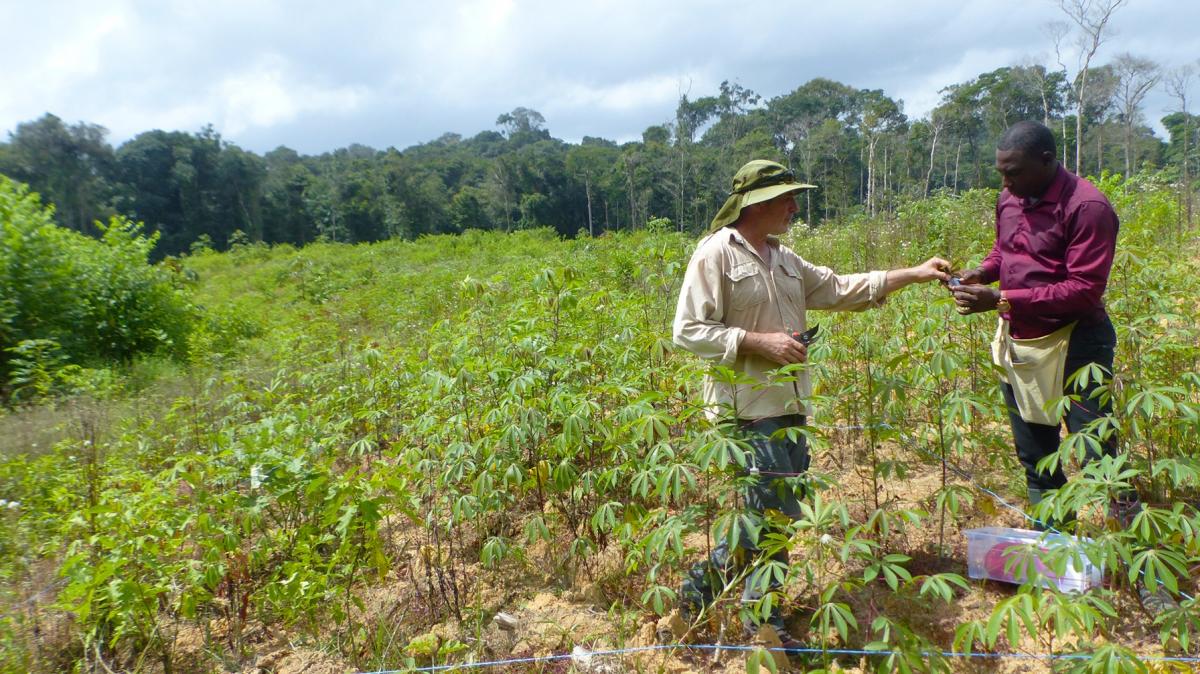
Abdoul-Raouf Sayadi Maazou (R) and Fabien Doare, an agricultural engineer with CIRAD, collecting cassava samples on a farm in French Guiana © M. Chen, CIRAD
Initial analyses show that local, environmental, climate or agronomic factors influence the incidence of the disease in the field. As regards farming practices themselves, the time between slash-and-burn and planting seems to be a risk factor. The plots with higher pathogen incidence levels were often those planted less than three months after burning.
Less dense soil cover also seems to favour the disease. The presence of weeds was associated with lower incidence, which suggests that they act as a barrier to or serve to dilute the fungus. "Additional studies will be needed to clarify these initial results", the researcher explains. "Other variables may also enter into account, such as plot age."
The fungus responsible for the epidemic in French Guiana also causes cocoa vascular wilt, a disease that is decimating plantations in Southeast Asia. South America is the cradle of all cocoa species, the Latin name of which is Theobroma cacao. French Guiana, for instance, is home to a living collection of more than 1600 trees of different cocoa varieties and a few related species: the French Guiana Tree Crop Biological Resource Centre (CRB-PPG), managed by CIRAD.
As part of the DECODE project, the CRB-PPG supplied some cocoa plants to enable tests of the risks of transmission from cassava to cocoa. The trees were planted near diseased cassava plants in three infected fields.
"Cocoa trees tested positive in two of the three fields", Abdoul-Raouf Sayadi Maazou reveals. "That suggests possible transmission, but we're not yet sure. We don't know either whether the pathogen strains found in French Guiana go on to cause disease in cocoa trees."
The researcher recommends caution pending new analyses: "until pathogen transmission has been clarified, the best solution is not to plant cassava near cocoa plantings". Other plants related to cocoa, such as cupuaçu, a major crop in the region, and avocado, are also concerned.
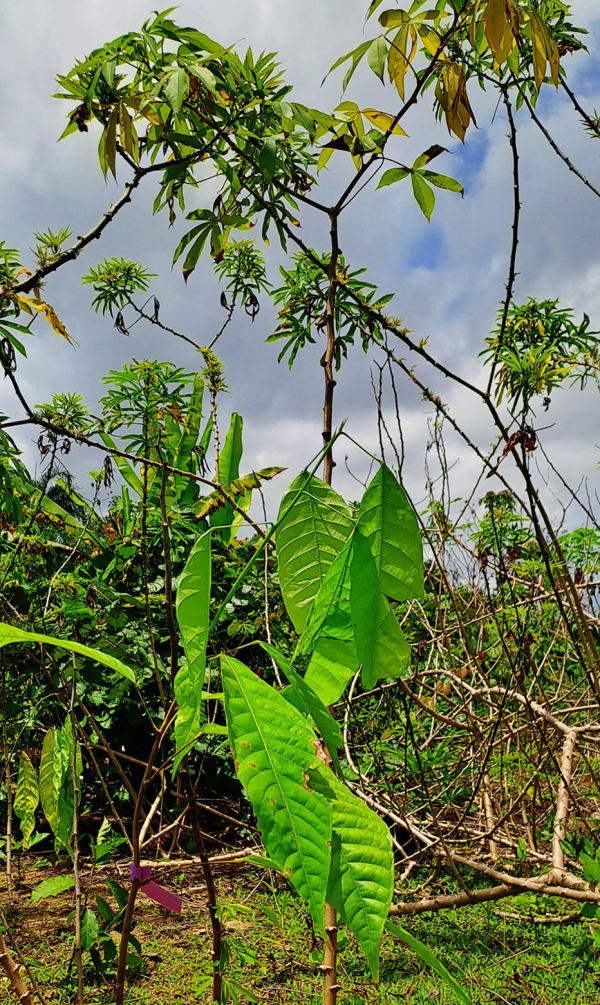
Cocoa plants under cassava, in a contaminated plot © A-R. Sayadi Maazou, CIRAD
The results obtained over the past year form the basis for disease monitoring and management operations in French Guiana. The first players concerned are obviously local communities and farmers, the very people who participated in the network of plots sampled for the DECODE project.
In French Guiana, many organisations are involved in controlling the crisis. SALIM in French Guiana and its delegate, FREDON, have been heavily volved from the start of the epidemic. Moreover, FREDON has participated in gathering data for use in risk analyses under the DECODE and DECODE+ projects.
As regards the Amazon, French Guiana already has close links with scientific and agricultural partners in Brazil, Suriname and Colombia. Future work on the disease, including the INTERREG PCIA project, will enable joint research operations by French and Amazonian teams. Several EMBRAPA centres (Brazil) are due to be involved. The Alliance of Bioversity & CIAT (Colombia), which identified the pathogen responsible for witches' broom disease and has vast experience of cassava, is also a major partner in tackling the epidemic.
Results & impact 21 October 2026

Results & impact 18 September 2026
Results & impact 16 September 2026