














Results & impact 18 September 2026

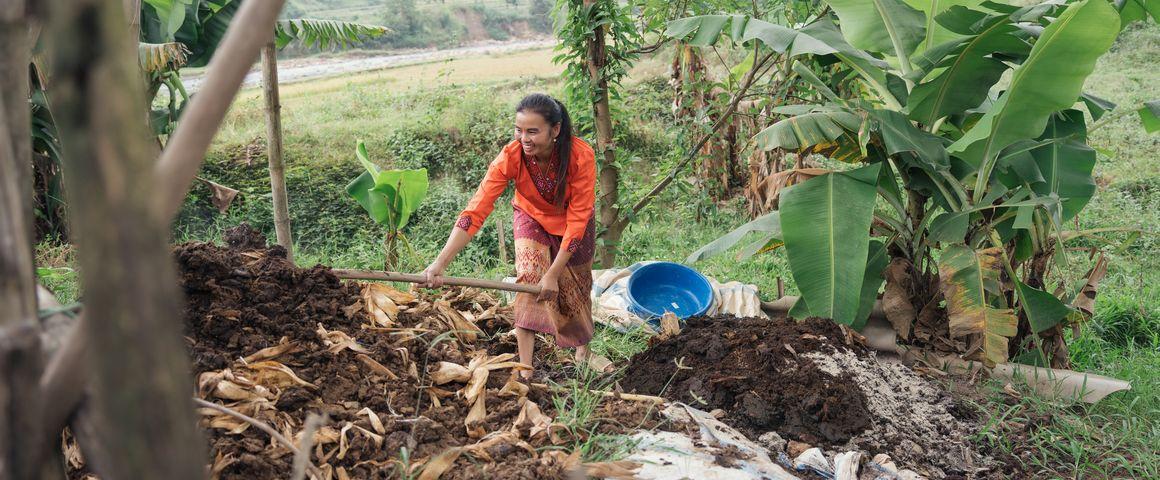
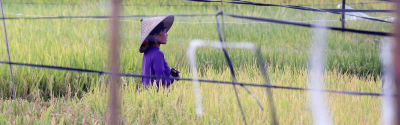
Farmer belonging to the ASSET project, which aims to promote agroecological transitions for more sustaine farming and food systems in Southeast Asia © ASSET project
"Talking about food systems within ASEAN and the Asia-Pacific region means talking about the future for hundreds of millions of people. The problem nowadays is not producing enough, but producing good food in the right way." Imelda Bacudo, expert in food systems at FAO, assigned to the "Green bond for sustainable agriculture" ASEAN policy initiative, one of 230 or so people at TARASA25 in November 2025. The event was held in the Laotian capital Vientiane. Scientists, farmers, policymakers, young leaders, civil society and the private sector were all there, to share the latest results of innovative projects on agroecology in Asia-Pacific. This impressive turnout was proof of a shared political will to work together to design new viable, sustainable, healthy and equitable food systems.
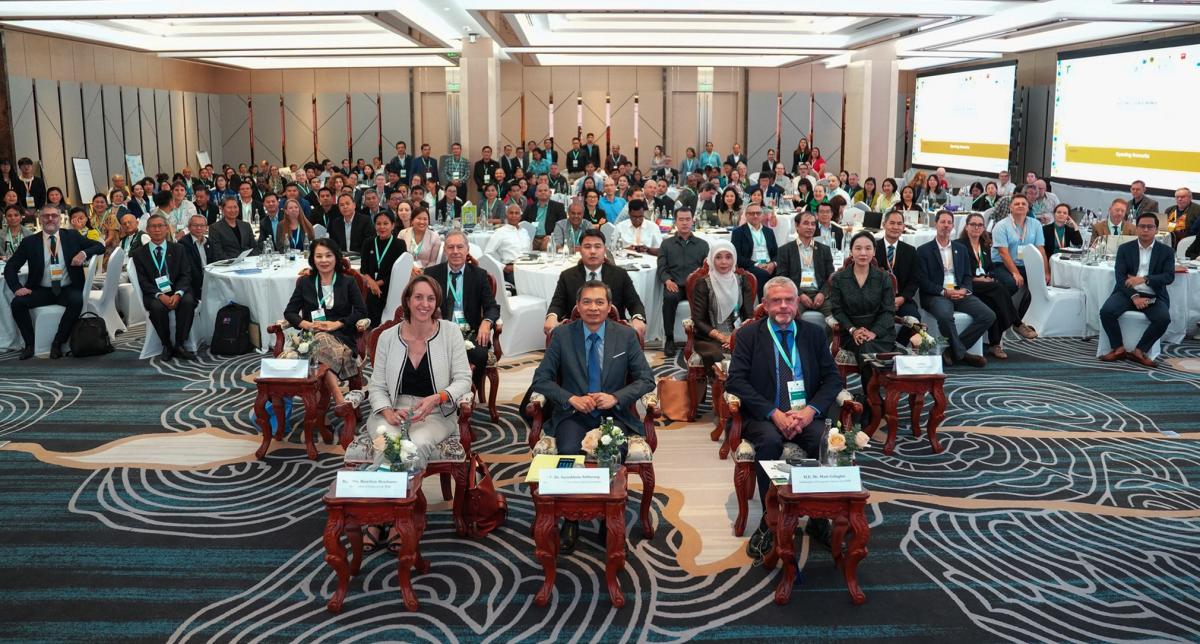
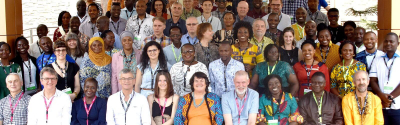
Group photo at TARASA25 (Transitioning Towards Agroecology and Regenerative Agriculture: A Contribution to Food Systems Transformation), held in Vientiane in November 2025. Several senior officials from Asia and Europe were present © V. Oeu, ASSET project
The discussions at TARASA25 reminded everyone that there is no such thing as a one-size-fits-all agroecological transition. Solutions must be adapted to the territories, production systems and constraints specific to each country. That diversity calls for shared tools to guide public action.
The ASEAN Policy Guidelines on Agroecological Transitions (AET) adopted in 2024 are a regional framework. They aim to include agroecology in regional strategies and help member States strengthen their national policies, while allowing each country to adapt their implementation to the local situation.
CIRAD played an active part in drafting the guidelines, in partnership with the ASEAN secretariat, the Lao facilitated Initiative on Agroecology in ASEAN (LICA) and AFD. By providing its more than 20 years of experience in the field in Southeast Asia, CIRAD helped to turn the results of research and field experiments into strategic benchmarks on a regional scale.
The guidelines, which were presented at TARASA25, are therefore based on research aimed at demonstrating the viability and diversity of agroecological transitions. Since 2023, regional scientific networks have been developing shared tools to assess not just productivity but also biodiversity, soil quality and the social aspects of practices. The aim is to move on from pilot projects and have comparable assessments on a territorial if not a national scale.
Research has identified a number of pathways: diversifying systems, reducing input use, integrating crop and livestock farming, agroforestry, or structuring sustainable value chains. It has shown that such approaches can be both ecologically appropriate and economically viable, which makes the policy guidelines more credible.
The role of scientific institutions goes well beyond producing data. As several participants in TARASA25 pointed out, agroecology requires coordination between sectors. Research helps to being together ministries, farmers' organisations, scientists and technical partners and cover climate, food security and rural development issues side by side.
Regional programmes such as the ASSET project, coordinated jointly by GRET and CIRAD, are an illustration of this dynamic. By articulating territorial experiments and public policy, they show that research can also support development in other ways than providing technical expertise. By linking researchers, the authorities and grassroots players in several Southeast Asian countries, the ASSET project fosters exchanges of experience and the adaptation of practices to local situations.
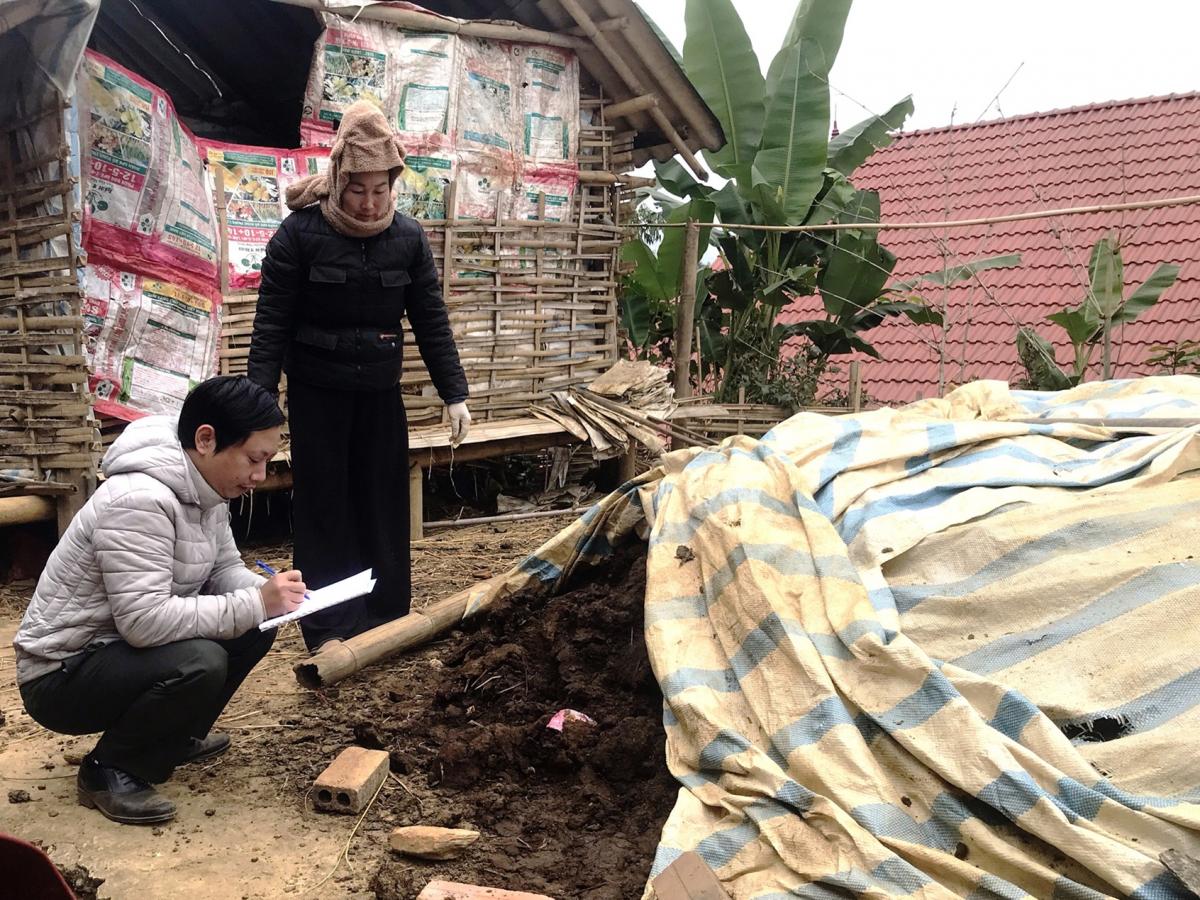
Lò Thị Quyết, Chair of the Farmers' Union in Mường Chanh municipality, Vietnam, and an ASSET project staff member check the quality of a silage heap as part of on-farm technical monitoring operations. Silaging, a technique introduced and supported by the ASSET project, serves to stock fodder to feed livestock during the dry season © ASSET project
These networking operations are part of a territorial approach: the principles discussed on a regional scale are converted into action tailored to the agricultural and institutional realities of each territory. This facilitates changes in practices and support mechanisms, while allowing their gradual rollout on a wider scale.
In Vietnam, as part of the ASSET project, the fodder–silage–compost model is an illustration of another type of scaling up. This integrated crop and livestock farming model was tested on around 60 farms in 2022, in partnership with provincial extension services, in four pilot villages in the Northwest of the country, and aimed to improve farmers' fodder autonomy, recycle organic waste and cut input costs.
Three years on, it is now practised by more than 800 families in over 70 villages and 15 municipalities in the region. Its extension rests on a close partnership between the project, farming communities, and local support services, which provided technical backup and passed on knowledge.
The impact now stretches beyond farm level. Điện Biên province is currently revising its existing policies to include explicit support for agroecological practices. The fodder–silage–compost model is also quoted as an example of integrated crop and livestock farming in the ASEAN Policy Guidelines on Agroecological Transitions.
Results & impact 18 September 2026
Results & impact 16 September 2026

Results & impact 11 September 2026