








Just out 25 September 2026
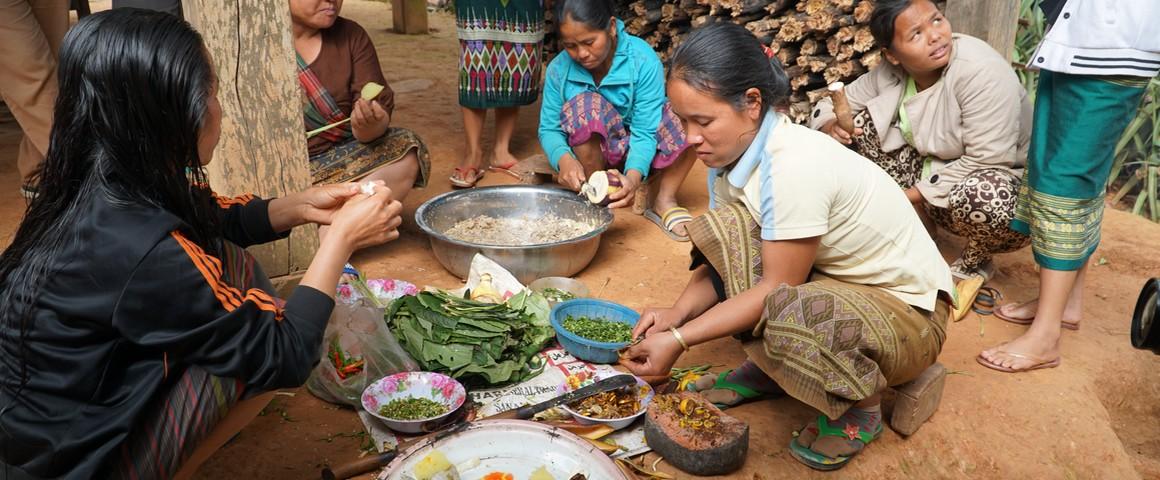
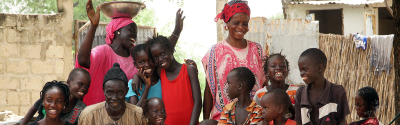
Group cookery session in a village in northern Laos © Caroline Dangléant, CIRAD
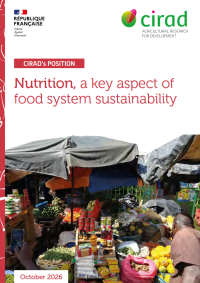
How can we reconcile human health, environmental sustainability and food security? This is the central question in CIRAD's latest position paper. The establishment's answer is clear: nutrition is a key aspect of food system sustainability.
Global food systems produce cheap calories, but with no guarantee of sufficient nutrient intake. More than one in five children suffer from stunting, while obesity rates among adults have reached 16% worldwide. Under-nutrition, micronutrient deficiencies and overweight may co-exist in a given region, particularly in Africa, forming what is known as the "nutrition triple burden". According to the World Bank, unless action is taken, this could cost some 41 000 billion dollars over the next decade.
For CIRAD, the nutrition aspect is inseparable from environmental, economic, sociocultural and social justice-related objectives. Its research aims to make food systems levers for global health, capable of supplying a quality diet while staying within the planet's limits, in line with EAT-Lancet Commission recommendations. The priority target for the establishment is the world's most vulnerable population groups: farming families, rural households, women and children, and low-income urban inhabitants.
Download the paper: English version - French version
The paper presents the four thematic pillars that articulate CIRAD's research with its partners in both North and South:
CIRAD intends to pursue and consolidate its research in four directions: improving food nutritional, sanitary and functional quality; developing complementary food diversification, fortification and biofortification strategies; documenting gender issues; and analysing and taking action on food system governance. To this end, it will be using participatory research and impact assessment of the various interventions implemented, by maintaining its long-term collaboration with other French research organisations and with its partners in tropical and Mediterranean countries.
Just out 25 September 2026
Just out 27 July 2026