













Science at work 14 October 2026


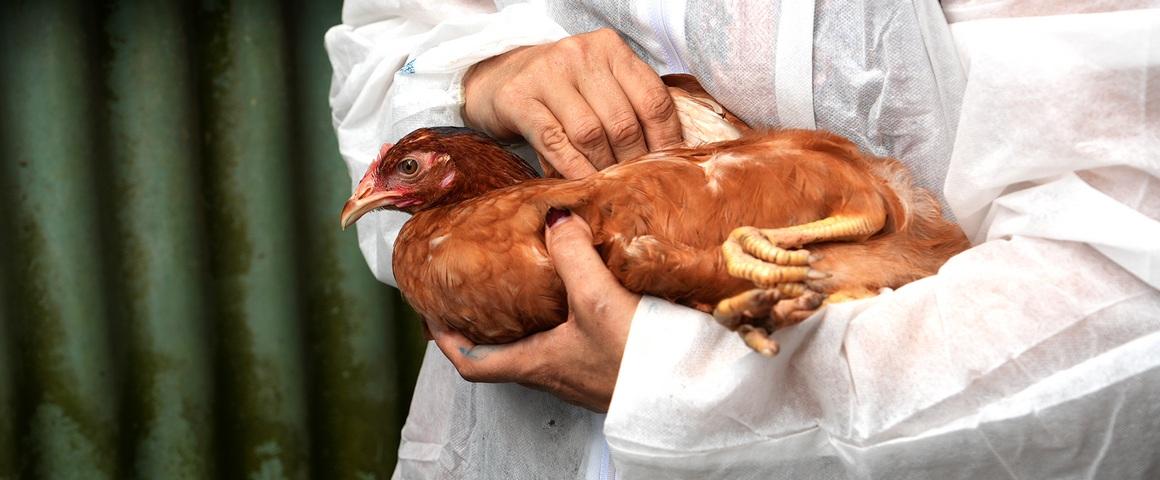
In the municipality of Petit-Bourg in Guadeloupe, chickens are used as "sentinel animals", to trigger early warnings in the event of West Nile virus circulation © Y. Sanguine, CIRAD
The number of horses in Guadeloupe is small, at around 1000. The detection of some 20 serious cases of West Nile fever in the summer of 2024 was worrying for veterinarians, as it meant that the virus was probably present at most of the island's riding stables. Acro 2024 as a whole, just one human case was observed, which turned into a form of meningitis. Beyond Guadeloupe, Martinique also reported the presence of the virus, albeit circulating less rapidly.
Sylvie Lecollinet is a virologist at CIRAD, working on Basse-Terre, Guadeloupe. She was surprised by how the disease spread across what is known as "butterfly island" due to its shape: "the emergence was spectacular. In less than a year, most of the island's horses were almost certainly exposed to the virus, although most remained asymptomatic. The virus is also found in mainland France, but has not circulated as fast. It is essential that we understand why it spread so quickly in Guadeloupe, to anticipate and prevent similar events more effectively, both in the archipelago and elsewhere".
West Nile virus is circulating on every continent apart from Antarctica. In humans, most cases are asymptomatic. Fewer than 1% of cases turn into potentially serious neurological diseases (meningitis, encephalitis, etc). In horses, however, the disease is generally serious, causing trembling and problems with posture or movement (coordination issues, paralysis, etc).
The virus is spread by mosquitoes, particularly those of the genus Culex, which are found in both tropical and temperate zones. It can spread extremely rapidly, as in the early 2000s, when it spread across the entire American continent in less than ten years, from the east coast of the USA (New York) to Canada and Argentina.
To study the phenomenon, CIRAD has been using "sentinel animals", in this case chickens. Culex mosquitoes, which carry West Nile virus, prefer to bite birds, and chickens are therefore one of their favourite targets. They have the advantage of not falling sick when they are infected, and in particular of not amplifying the virus. "Animals "seroconvert", in other words they develop antibodies in the blood and make blood tests positive, which is a and early marker of infection", Sylvie Lecollinet says. "This approach is very useful for revealing the presence of the virus without modifying the risk of infection for humans."
To this end, teams from CIRAD have been working for more than a decade with poultry farmers on Basse-Terre. Every three months, zootechnicians visit the farms to take blood samples from the chickens. Those samples are then analysed in the laboratory.
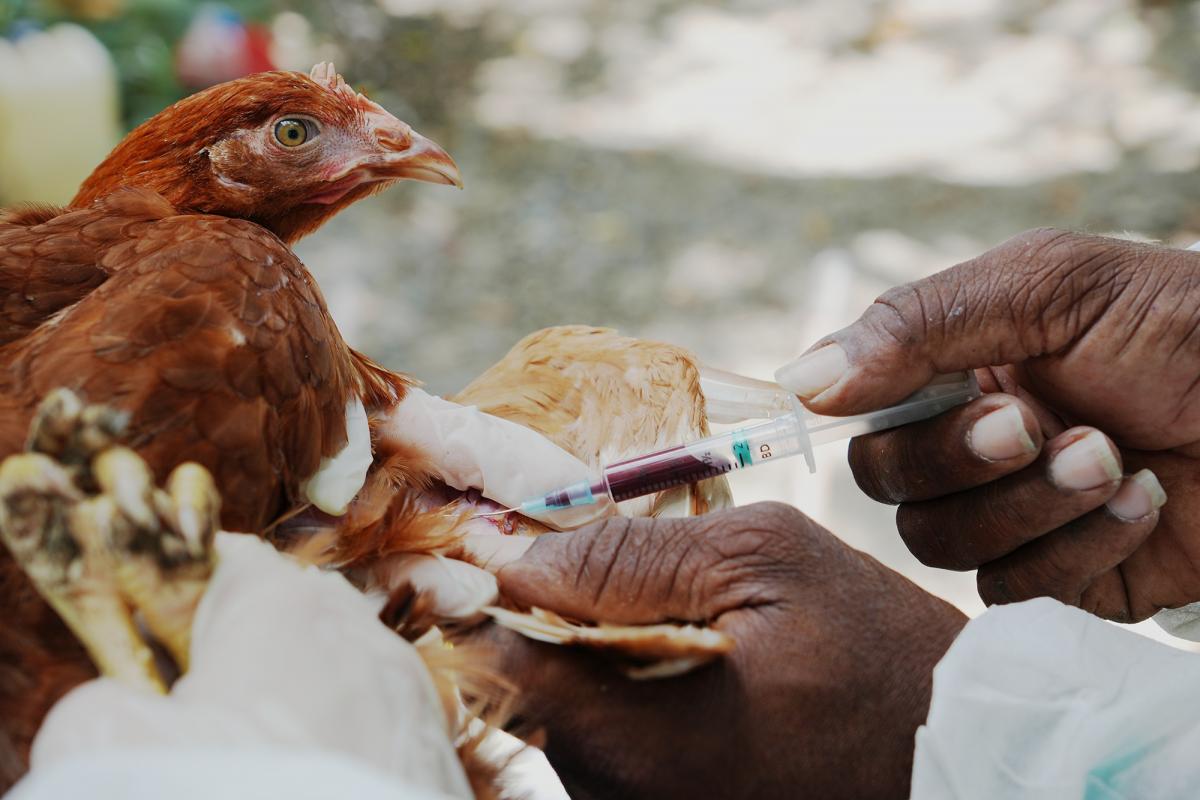
Taking blood samples from a chicken on a farm in Petit-Bourg, Guadeloupe. Although they may be exposed to the virus and develop appropriate markers of infection, chickens do not amplify the virus or play any role in its transmission to humans or other animals © Y. Sanguine, CIRAD
The farms being monitored are near environments favourable to the mosquitoes that carry West Nile virus: mangroves and marshy forests. If seroconversion is observed, CIRAD immediately informs Guadeloupe's veterinary services (DAAF), which pass on the information to the different animal health players on the island: veterinarians, or the wildlife monitoring network SAGIR, headed by the Office français de la biodiversité. The information is also sent to the regional health authority, health establishments (university hospitals, etc) or French reference laboratories and centres.
In the medium term, CIRAD is planning to work alongside the archipelago's veterinarians to use dogs as new sentinels of the West Nile virus risk in Guadeloupe. A survey done in 2025 showed that dogs had been significantly exposed to the virus, almost as much as horses, paving the way for new surveillance possibilities. "Infection rates in dogs are often higher than in chickens, making them particularly effective sentinels", Sylvie Lecollinet says. "Dogs do not develop symptoms, and the fact that they are found all over the territory would allow us to cover it entirely at a lower cost, via an appropriate surveillance system. Their proximity with humans would also help us estimate the risk for local people more accurately."
West Nile fever rarely causes deaths in humans, but it is estimated that just under one in every hundred cases turns into a serious form, with severe neurological symptoms.
In addition to monitoring chickens, mosquito traps are regularly installed near emergence foci. Analyses of the traps serve to determine mosquito numbers and species diversity and tests for West Nile virus.
"West Nile virus is amplified in nature by wild birds, so we are trying to identify the bird species that have contributed to its emergence in Guadeloupe", Sylvie Lecollinet adds. Several sampling sessions were organised in early 2025 in five parts of the island, with the help of ornithologists.
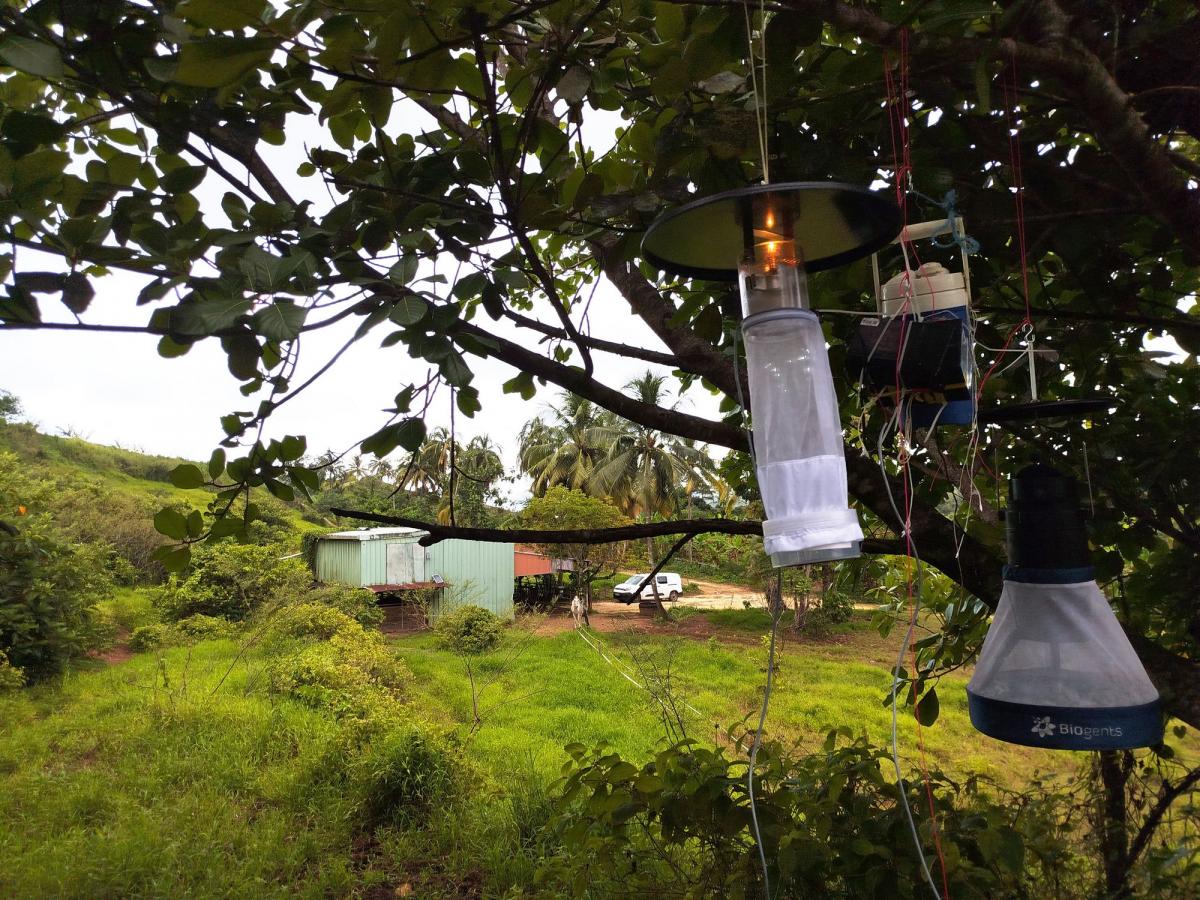
Mosquito trap installed at stables on Lake Goyave, , Guadeloupe, one of the West Nile virus emergence foci in 2024 © L. Viry, CIRAD
As with Aedes aegypti mosquitoes, which carry dengue, Culex mosquitoes can reproduce quickly. In 2024, Culex mosquitoes were regularly detected in containers near housing or animals (water tanks, drinking troughs, etc.). Local people are therefore encouraged to empty any recipients containing stagnant water regularly, since that is where mosquitoes lay their eggs.
Science at work 14 October 2026
Science at work 7 October 2026
Science at work 30 September 2026