














Expert view 12 October 2026
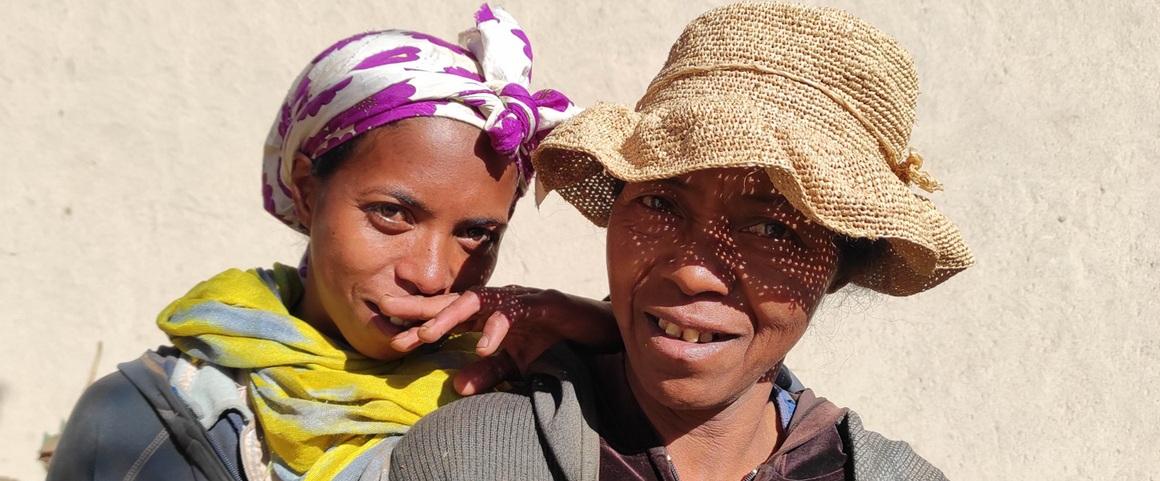
Malagasy women farmers © P. Burnod, CIRAD
L’essentiel
© DR
Salohy Rafanomezantsoa is a PhD researcher at CIRAD and AgroParisTech, specialising in land tenure and spatial planning. In Madagascar, she is involved in research projects on land governance and has focused in particular on inequalities in access to land between men and women in the Boeny region of western Madagascar.
Salohy Rafanomezantsoa: In the Boeny region, agriculture is the main economic activity and provides a livelihood for nearly 98% of households. Access to land is therefore essential to enable people to produce food, to earn an income and to ensure their family’s food security.
Women play a major role in farming activities. Within couples, work is generally shared between partners, although some tasks are still socially associated with either men or women.
The problem becomes apparent when we consider land rights. My research shows that women are less likely than men to own land in their own right. Where couples do not have jointly owned plots, women are more dependent on land owned by their partner in order to carry out their farming activities. This dependence becomes particularly problematic when a couple separates or when a woman is widowed. She may lose access to the land she has been cultivating and be forced to rebuild her farm with very limited resources.
To continue farming, some women seek to rent land or to access it through indirect forms of land tenure. However, several widows interviewed for the study said they faced greater difficulties than men in obtaining land through rental or sharecropping arrangements. Their age, more limited financial resources and weaker social networks can all limit their ability to negotiate access to land. Land inequalities therefore affect far more than the amount of property women own: they also directly affect their economic opportunities, their ability to produce and, more broadly, their autonomy.
S. R.: Indeed, there are significant inequalities in access to land among women themselves. Marital status, age and family norms all have a strong influence on their ability to build or rebuild landholdings. Our research shows a close relationship between women’s rights and changes in their landholdings, but this relationship depends heavily on their life trajectory.
In the Boeny region, widowed women often have larger landholdings than women who live with a partner. This may seem surprising, but several factors help to explain this finding.
First, when they become widows, women gain greater autonomy in their decisions and rights. They no longer need to negotiate their choices with a partner and can decide for themselves to purchase a plot when they have the necessary resources. Our interviews show that they are particularly active in the local land market, making purchases under conditions comparable to those of men.
Second, in the area studied, older women who become widows may also inherit land from their birth families to which they generally did not have direct access when they married. This inheritance is usually shared equally among siblings. However, younger widows and separated women rarely benefit from this arrangement, as they are still considered likely to remarry.
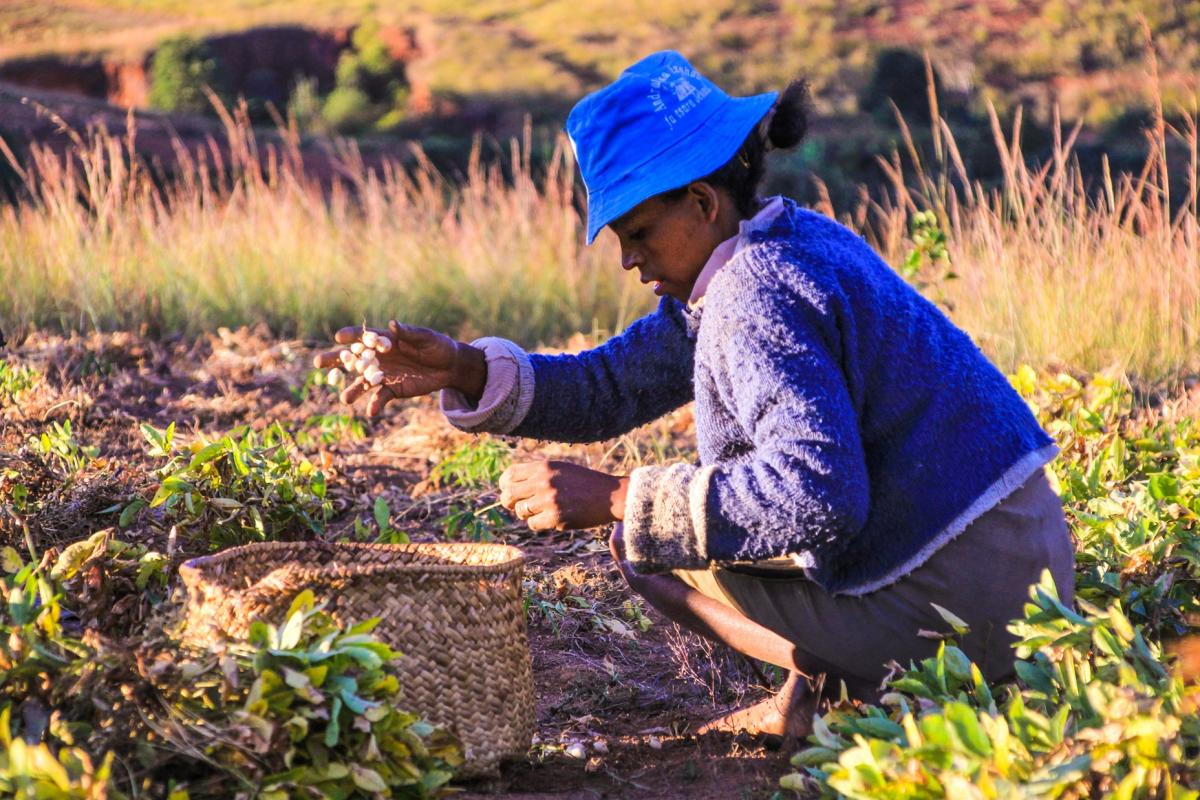
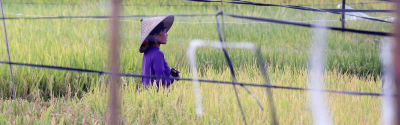
Woman farmer in the Highlands, Madagascar © M. Andriamanantena, CIRAD
S. R.: When it comes to gender and land tenure, conventional survey methods use the household as the basic unit of analysis. There are generally two types of households: two-parent households, made up of a man and a woman, and single-parent households. In both cases, interviewers tend to speak to the “head of household”.
This initial bias has a very simple consequence: in two-parent households, surveys are conducted almost exclusively with men. But in Madagascar, more than 99% of single-parent households consist of women living alone, while less than 1% of the single-parent households we studied were headed by men. If this is not taken into account, we end up comparing women who live alone with men who live as part of a couple.
These research methods can unintentionally overlook women who live with a partner, or even those who live with their parents. These surveys also tend to obscure the differences between separated and widowed women, as well as between younger and older women. Yet, as I explained earlier, women’s life trajectories have a major influence on their access to land.
We therefore need research methods that are adapted to this reality: women’s life trajectories appear to be far more diverse than men’s. An adult man in Boeny is typically living with a female partner. An adult woman in Boeny, by contrast, may be living with a male partner, living with her parents because she is not yet either married, separated or widowed, or living alone following separation or widowhood.
S. R.: For single-parent households, we took account of the women’s age and marital status, including whether they were living with a partner, widowed or separated. This allowed us to identify the different pressures they face according to their circumstances.
There is, however, still a bias: we were able to interview women living alone in single-parent households, but not women who had returned to live with their parents after separating from their husband or after his death. In two-parent households, we were unable to interview the daughters.
For two-parent households, we conducted separate interviews with men and women. We found that it was important to interview husbands and wives separately, as women often do not speak freely when their husband is in the same room. The reverse is less often the case: men are generally at ease whether or not their wife is present.
Interviewing partners separately is not straightforward: it takes time and requires careful listening. Although these surveys are more difficult to conduct, they are essential if we want to identify land inequalities within couples. They also help us to understand and ultimately anticipate how women’s access to land may change following separation or widowhood.
S. R.: As already mentioned, a woman’s marital status can have a significant impact on her landholdings. She is likely to be at a disadvantage compared with her brothers when she leaves the family. Her position is not necessarily any better within her own couple: even when land is purchased jointly with her husband, the woman’s rights to these plots and the measures taken to secure them generally remain unrecognised.
One of the key findings of my research relates to how jointly owned land is secured within couples. In Madagascar, the law allows a jointly owned plot to be registered in the names of both spouses. In practice, however, this remains relatively uncommon. In most cases, the man handles the administrative procedures and the land documents are issued in his name alone. Moreover, standard forms and administrative procedures do not always clearly provide for two co-owners to be registered, which further reinforces the practice.
This situation can undermine women’s land rights, particularly following separation or widowhood. If a woman’s name is not included on the relevant documents, it is much harder for her to assert her rights to land that she and her husband acquired jointly. This risk is especially pronounced in cases of widowhood. In many parts of Madagascar, virilocal practices mean that a widow will often return to her village of origin, while her late husband’s family remains in place and is therefore in a stronger position to retain control over the land. My research thus shows that despite a relatively protective legal framework, social and administrative practices can still leave women with less secure land rights.
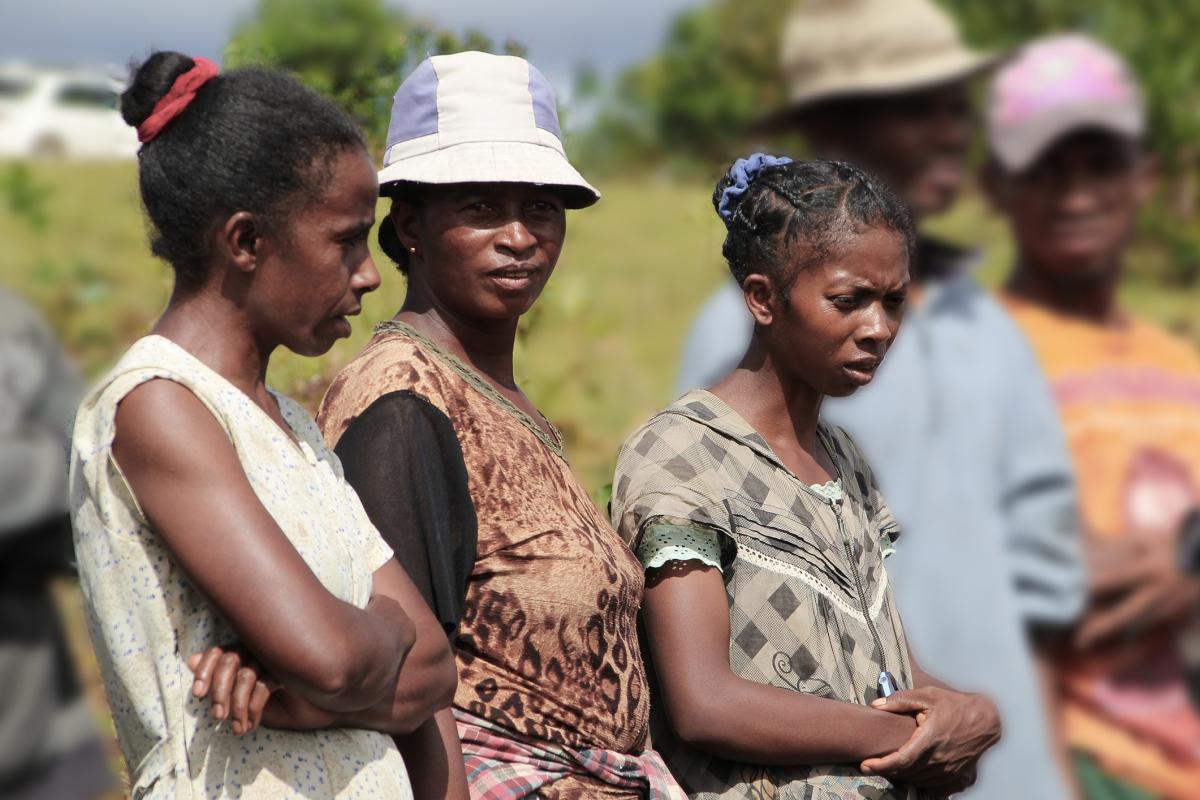
Women farmers in the Alaotra-Mangoro region, Madagascar © M. Andriamanantena, CIRAD
S.R.: Virilocality refers to the practice whereby, after marriage, a woman generally leaves her village of origin to live in her husband’s village. This practice is widespread in many parts of Madagascar and has a strong influence on the land trajectories of couples. Land acquired during the marriage is often located close to the husband’s family, as this is where the couple settles and establishes their farm.
This becomes particularly important following separation or widowhood. When a woman returns to her home village, it can be much harder for her to continue cultivating the land or to assert her rights over plots located far from her new place of residence. By contrast, her husband, or his family in the event of his death, generally remain on the land and are therefore better placed to retain control over it.
Research also shows that, in practice, this situation is often compounded by the fact that jointly owned plots are not registered in the names of both spouses. When the land documents mention only the husband, it is harder for a woman to have her rights recognised, particularly when dealing with her in-laws following widowhood. Virilocality is therefore not the sole cause of these inequalities, but it interacts with inheritance practices, social norms and land tenure security arrangements to undermine women’s rights.

Expert view 12 October 2026
Expert view 9 July 2026