








Expert view 12 October 2026

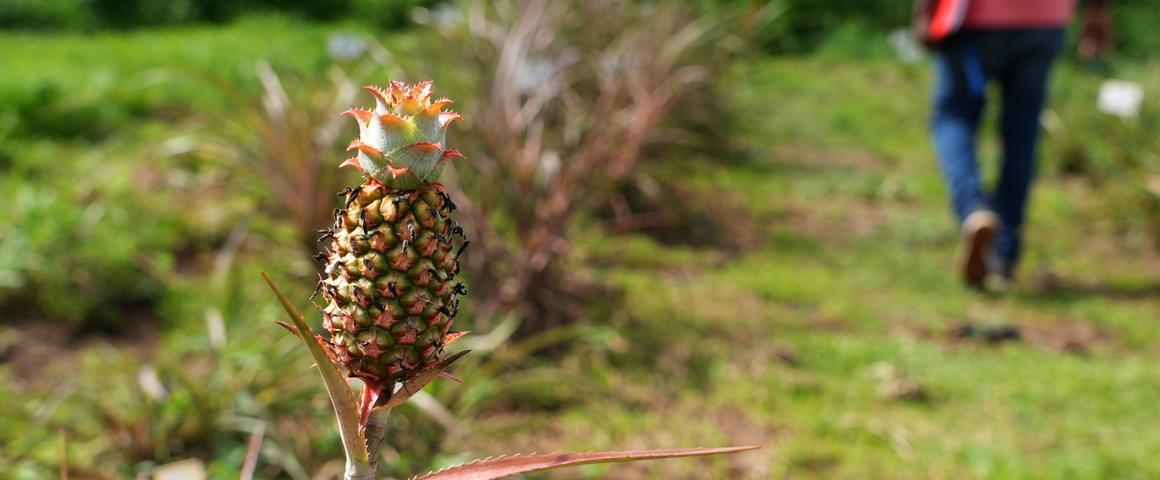
Pineapple is one of the "Tropical Plants" BRC collections. It is managed by CIRAD and housed on the Caribbean Agro-Environmental Campus (CAEC), Le Lamentin, Martinique © Ysaline Sanguine, CIRAD
Youri Uneau works for CIRAD, on the Roujol site in Petit-Bourg, Guadeloupe. He is Head of the "West Indies Tropical Plants" BRC (CRB-PT), which comprises five collections: pineapple, banana, sugarcane, yam and mango.
Youri Uneau: There are 6000 plant species that are used to feed humans across the world. According to FAO, just nine of them together make up 66% of crop production worldwide. And within those nine species, genetic diversity is steadily dwindling. That lower varietal and genetic diversity means less resilience to climate, sanitary and economic hazards, among others. Preserving crop diversity guarantees the future in the event of crises. We are already in a position to offer farmers different varieties, whether ancestral varieties that have been conserved or introduced, or new varieties created by studying collections.
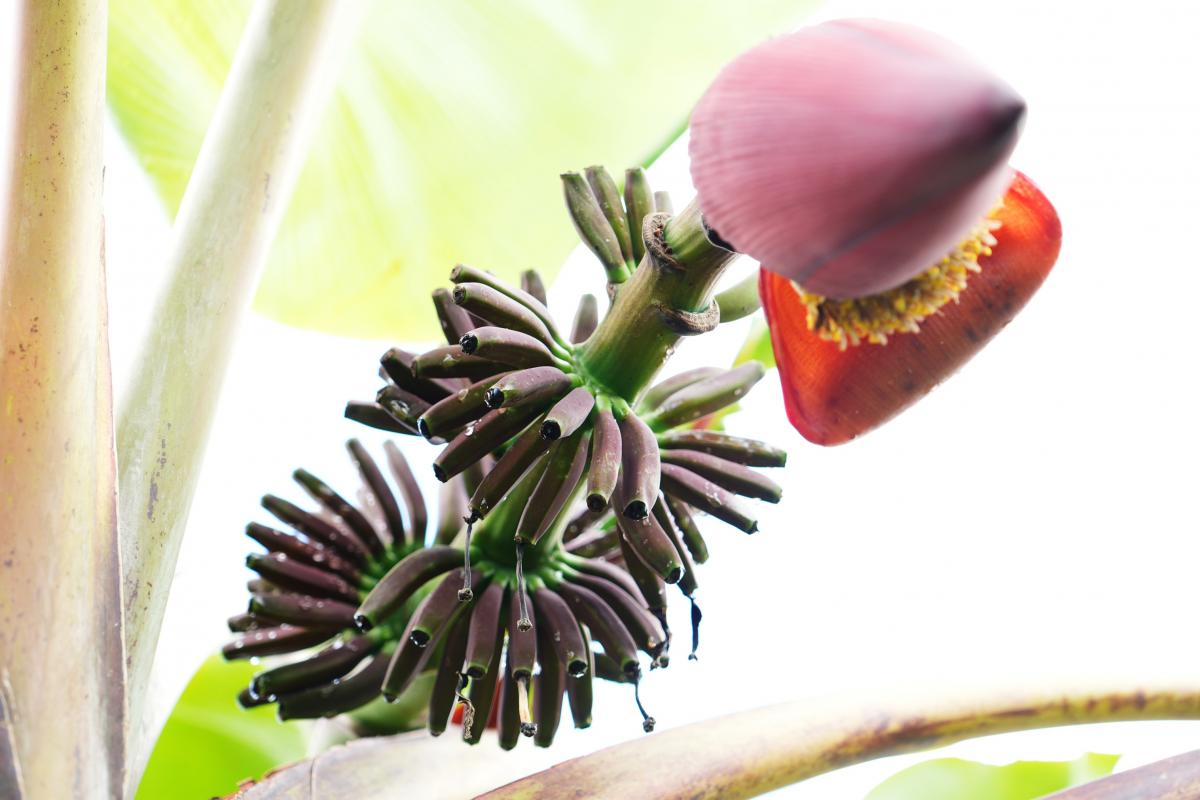
Musa acuminata malaccensis, a wild banana that originated in Malaysia, in the CIRAD field collection at Capesterre-Belle-Eau, Guadeloupe © Ysaline Sanguine, CIRAD
In farming, people sometimes talk about "seed banks", term that refers to infrastructures that conserve wild or cultivated plant seed. In France, it is more often biological resource centres that protect genetic resources. BRCs are structures that conserve all types of samples from the living world: human genetic resources for medicine, genomes, animals, etc.
There is an umbrella French national infrastructure for the various BRCs: RARe. It is a research infrastructure that is part of the national roadmap, and relies on a network of five biological resource centres, or "pillars". Those five pillars are: animals (domestic animals), environment (complex samples and environmental organisms), forests (forest trees), micro-organisms (micro-organisms and microbial communities) and plants (crops and related wild species). The Tropical Plants BRC is a member of the network and part of the plants pillar.
The CRB-PT is based in Guadeloupe, for its mango, banana, yam and sugarcane collections. The pineapple collection is based in Martinique. We share management with INRAE, who are in charge of the yam collection, while CIRAD manages the other four. These plants come from all over the world. Ty are conserved in the field or in vitro, or both.
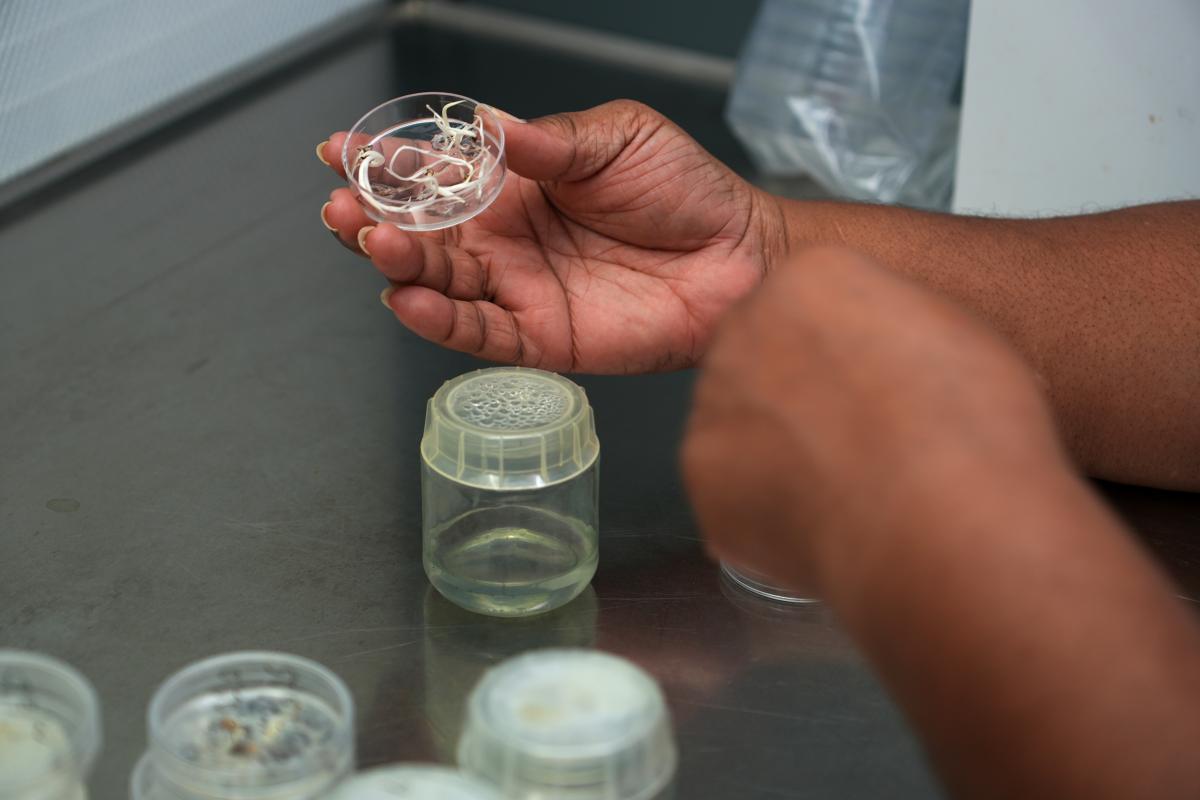
Propagating pineapple for in vitro conservation. CRB-PT, CIRAD collection, Le Lamentin, Martinique © Y. Sanguine, CIRAD
Y.U.: We have three types of activities: conservation, characterisation, and promotion. Conservation means acquiring or surveying rare or threatened planting material, and maintaining those resources in collections. Over the years, under the combined effect of farming becoming more focused on a small number of varieties and of the environmental crisis, certain varieties disappear from both fields and wild environments. The main task for a BRC is to avoid potential irreversible "losses". For instance, the banana collection in Guadeloupe conserves in the field and in vitro no fewer than 130 wild or ancestral varieties that could otherwise have disappeared, since farmers no longer grow them.
One of the specificities of our collections is that they are conserved both in vitro and in the field. This allows us to secure them and study them from various viewpoints, notably genetic or agronomic. This is known as characterisation. In the laboratory, the aim is to find out where plants come from, and whether varieties are related, among other things. We also try to understand the genetic criteria behind certain functional traits, for instance why some varieties can resist a certain disease and others can't. Having plants in the field also provides us with data on yields, quality, fruit size, and so on. This information is useful for producers, and potentially for processors.
This leads on to our work on promotion. To put it simply, the CRB-PT is not just a research tool: it has to be of direct use to stakeholders in the agricultural world. To this end, we are working with producer associations, agrifood processors, and agricultural advice services or educational establishments. We send varieties from our collections to farmers and individuals so they can test them in gardens or on farms.
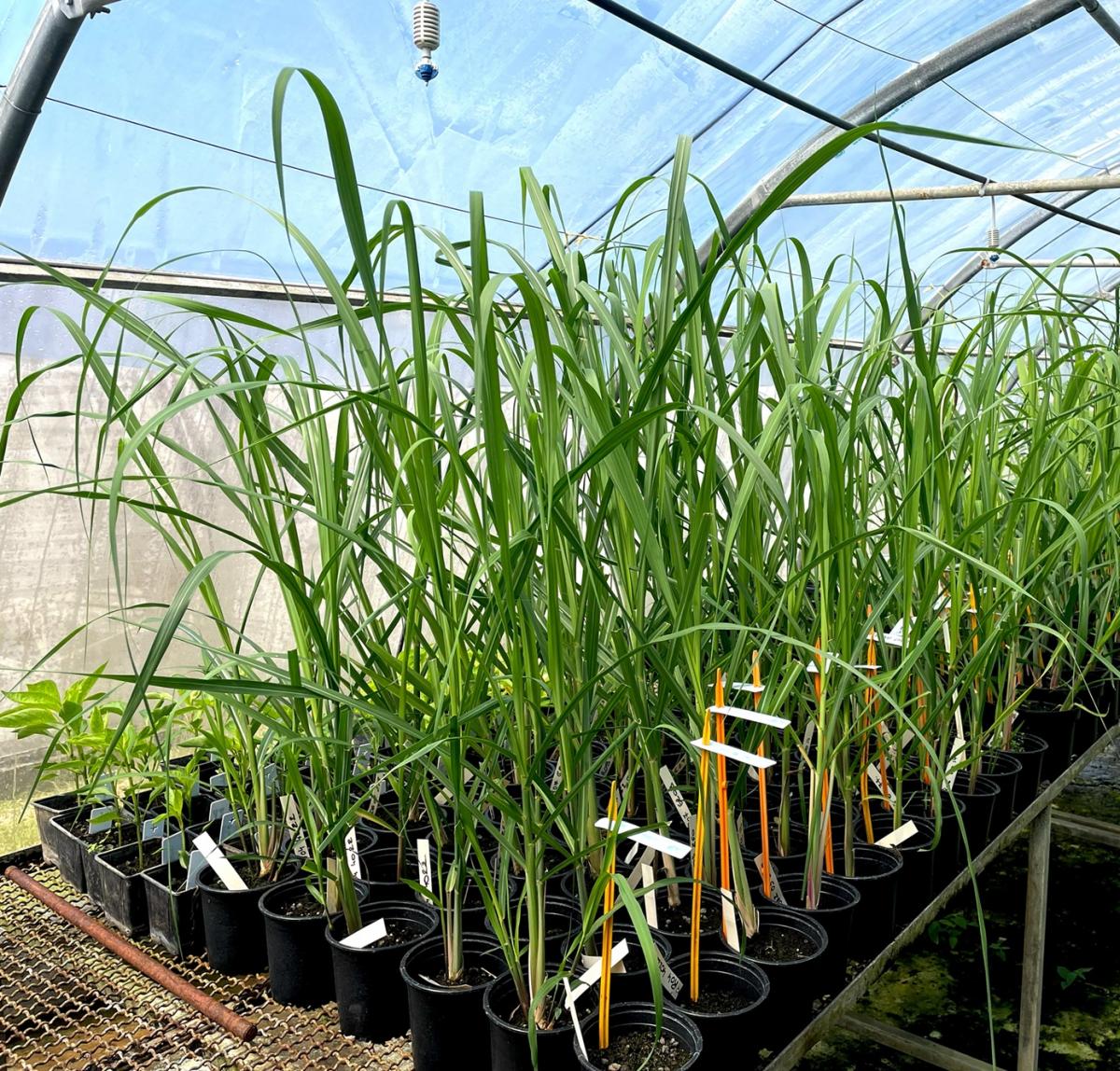
Sugarcane plants for the CIRAD collection, housed in Petit-Bourg, Guadeloupe © Youri Uneau, CIRAD
Y.U.: Depending on the value chains and the issues they face, the collections are used for different things. For example, at the moment, the yam and banana collections are mainly being used for to create and breed new varieties.
As regards banana, the dessert banana value chain currently faces major sanitary challenges, particularly black Sigatoka (or black leaf streak), and fusarium wilt (or Panama disease), which are caused by fungi. The global market relies on a single large family of varieties: Cavendish. In the 60s, it was Gros Michel that dominated the export market… until it was hit by race 1 fusarium wilt. There is every chance that the "just Cavendish" strategy will go the same way, and that the value chain will be forced to resort to another variety. In our collection, we have dessert banana varieties that seem to be more resistant to the fungi and are being assessed by our research teams. The idea is that we need to be able to adapt, either by diversifying plantations using "ancient varieties", or by developing new varieties by characterisation.
Dessert bananas are the world's most widely trade fruit. However, banana diversity is much wider than it looks. There is a wide diversity of plantain, or cooking, bananas, which are widely consumed in the tropics and would be worth promoting. And there are some lesser-known varieties that are grown for their ornamental flowers.
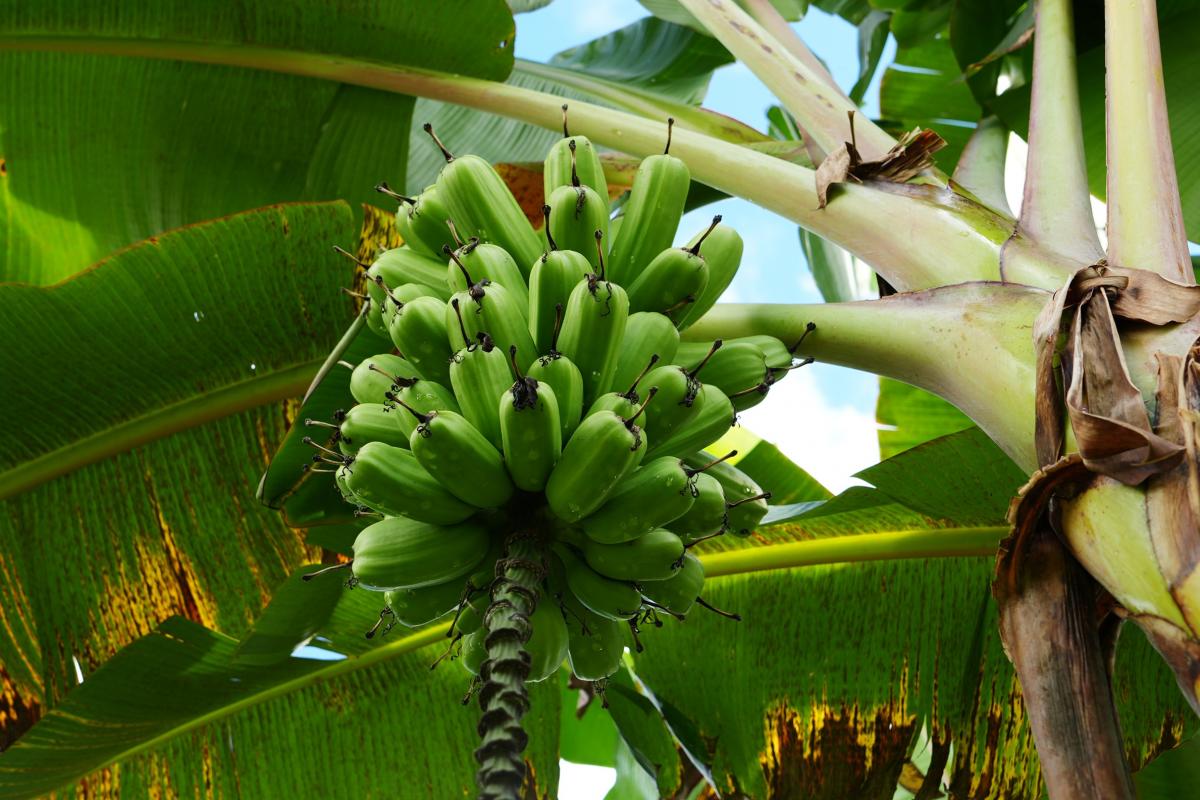
"Popoulou", a cooking banana from the Pacific. CRB-PT, CIRAD collection, Capesterre-Belle-Eau, Guadeloupe © Ysaline Sanguine, CIRAD
Some of the varieties being conserved offer economic prospects that go beyond food products. Growing ornamental pineapples can be very profitable: they have long stems, beautiful flowers and small fruits that last well after cutting. Some varieties produce thorny leaves and can therefore be used as hedging plants.
As regards sugarcane, we are currently looking to diversify its agrifood uses other than making sugar. We are working with processors to find the best varieties for making juice: what is known as "chewing cane". For mango, as there are early and later varieties, plantings could be diversified by growing both types, to extend the season. Some fruits are also good for drying, and offer export opportunities in the form of dried mangoes or fruit puree for making fruit desserts, for instance.
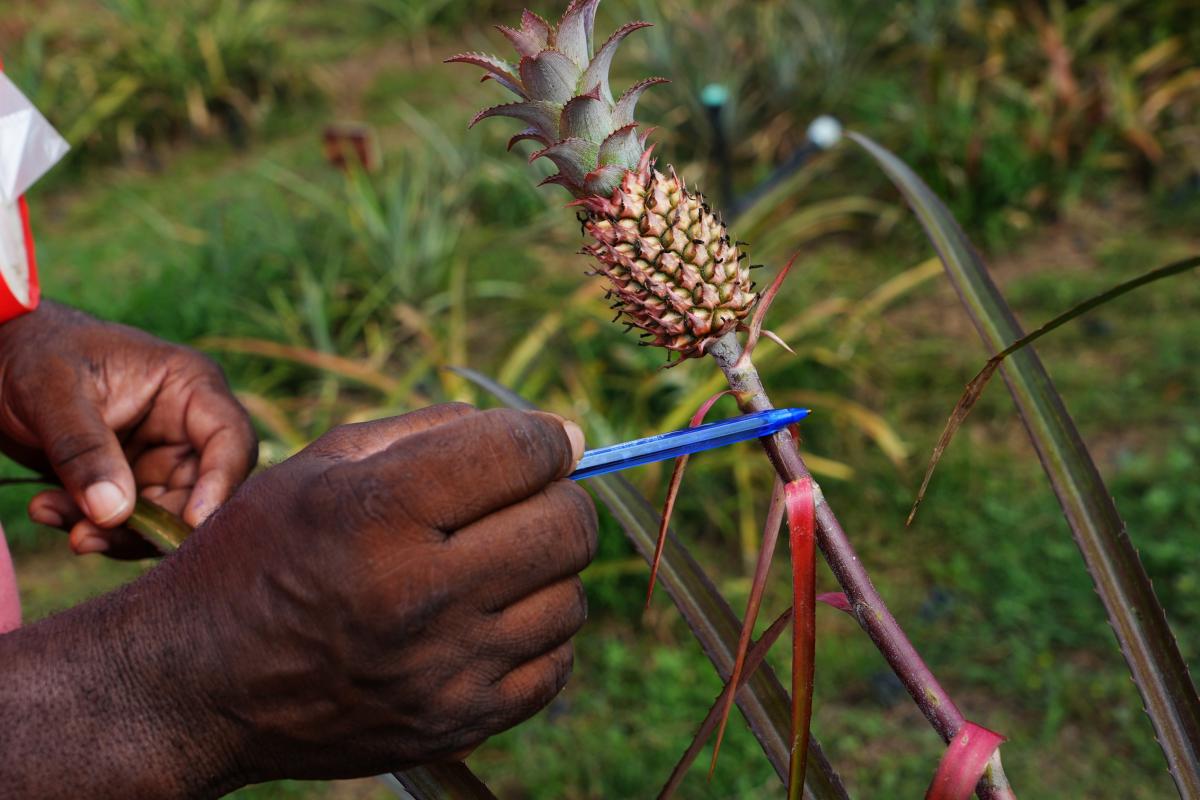
Long-stemmed pineapple, ideal for ornamental use. CRB-PT, CIRAD collection, Le Lamentin, Martinique © Ysaline Sanguine, CIRAD
Y.U.: The main aim is to step up our operations to promote the different collections. We are trying to diversify our partnerships, in terms of both research and development. We are lucky to have a very strong network of scientific partners in both the Caribbean and Europe, but we have counterparts on other continents doing similar work, from whom we could learn.
In terms of private-sector collaborations, the demand is there. I think our collections could fuel innovations on the part of the private sector or firms, but we often face administrative and regulatory obstacles. In Guadeloupe alone, our work to promote sugarcane could help to redynamise the value chain, with new products.
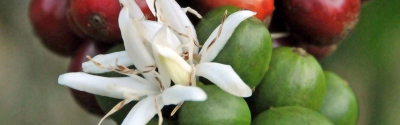
We are also keen to expand the CRB-PT with new collections, particularly coffee or cocoa. Mammee apple (Mammea americana L.), for which colleagues in Martinique have already established and characterised a collection but that does not currently have a clear management framework, could also be included in our activities. These are heritage value chains with a long history in the West Indies, and high economic potential. Traditional creole gardens are full of planting material that has acclimatised over the years but has not yet been characterised. CIRAD knows both coffee and cocoa well, and has collections in French Guiana, at the "Tree Crops" BRC.
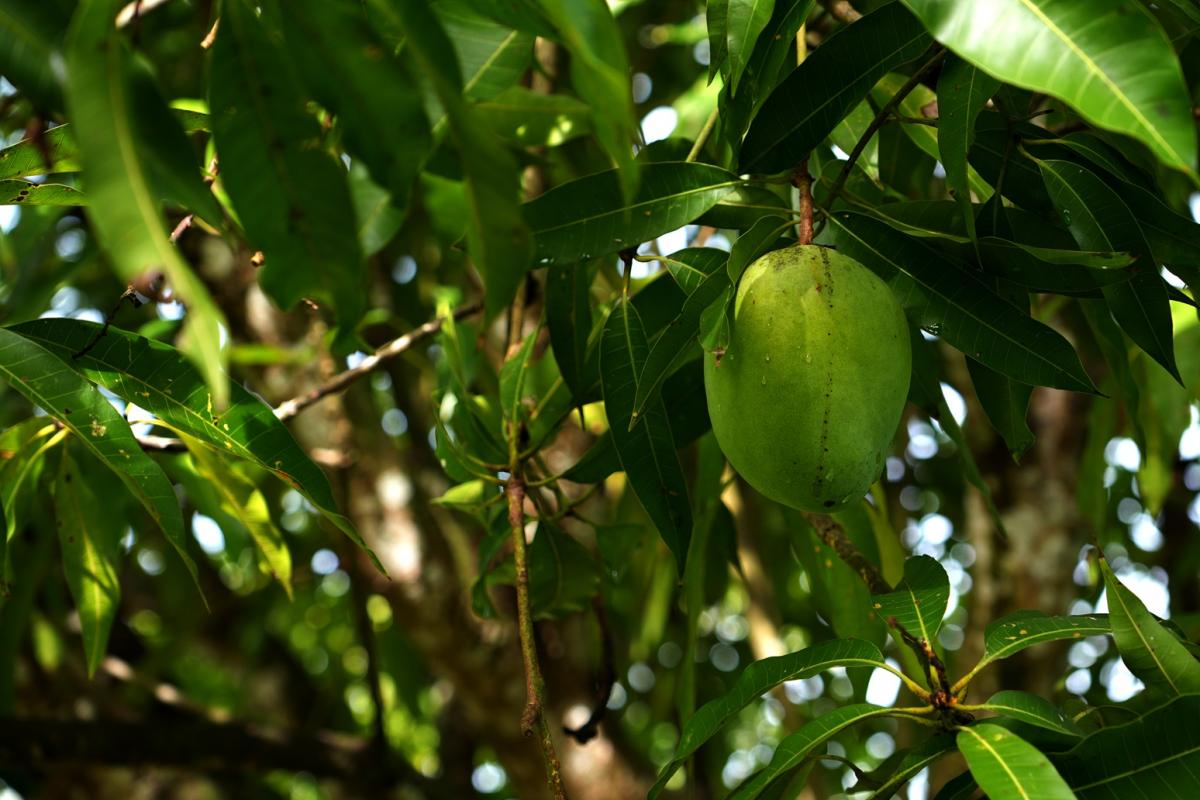
Late-fruiting mango tree, which produces fruit until September. CRB-PT, CIRAD collection, Petit-Canal, Guadeloupe © Ysaline Sanguine, CIRAD
Expert view 12 October 2026
Expert view 7 September 2026