










Expert view 7 September 2026
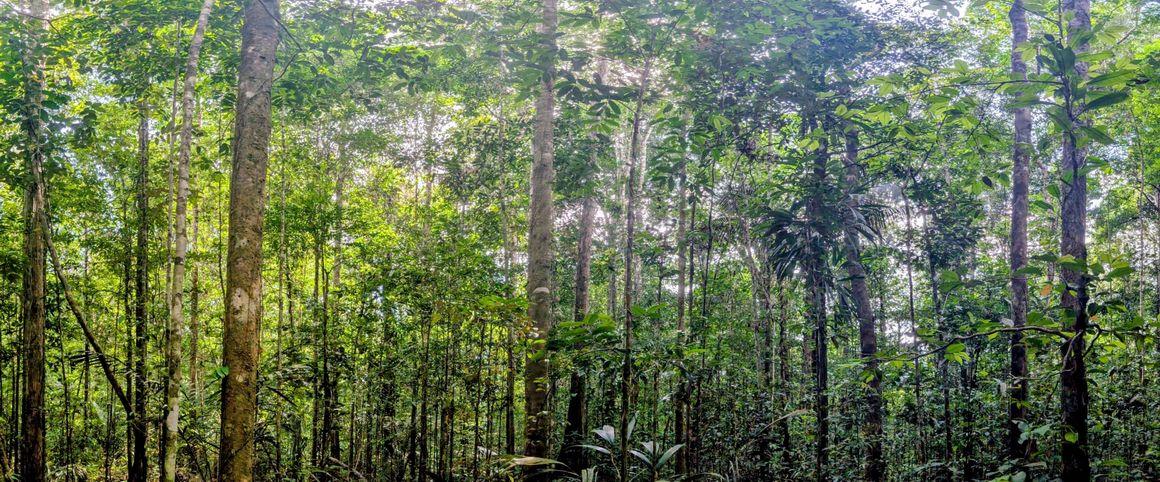
Forest in French Guiana © Daniela Florez, CIRAD
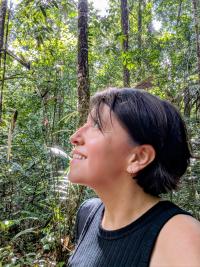
© DR
Daniela Florez is a CIRAD researcher with the "Ecology of the Forests of French Guiana" (ECOFOG) research unit. She specialises in tree chemistry and the use of natural substances, and is currently working in Kourou, French Guiana. In her work, she uses NIRS to identify plant species more effectively. She considers that NIRS is a revolutionary tropical forest inventory tool, and will prove vital for the development of the Guianan forest-wood sector.
Daniela Florez : Despite decades of research, we still do not know the full range of plant species, particularly in tropical zones. However, we desperately need such knowledge. Tropical rainforests are home to a major share of the world's terrestrial biodiversity. They play a key role in ecosystem functioning worldwide.
The floristic wealth of the Amazon Basin is estimated at more than 15 000 species, of which just 6000—fewer than half— have been formally identified and validated in taxonomic terms! This uncertainty is a major issue when it comes to knowing, and consequently managing, tropical biodiversity. It makes forest inventories less reliable, and inventories are vital for management, ecological modelling and forest dynamic monitoring strategies.
In tropical regions, identifying species still relies on morphological criteria: the external appearance of plants, and in particular their fertile elements, flowers, etc, which are rarely accessible. Many species are very morphologically similar, and individuals of a given species sometimes show variations resulting from their adaptation to changing environmental conditions. This situation makes it very difficult to identify living trees, and mistakes are often made, an issue compounded by the lack of specialist taxonomists.
The ecological and economic consequences of those errors are far from negligible, since they skew biodiversity inventories, distort estimates of available resource volumes and jeopardise sustainable management strategies. Improving forest inventories is therefore more than just a matter of botanical research: there is much more at stake.
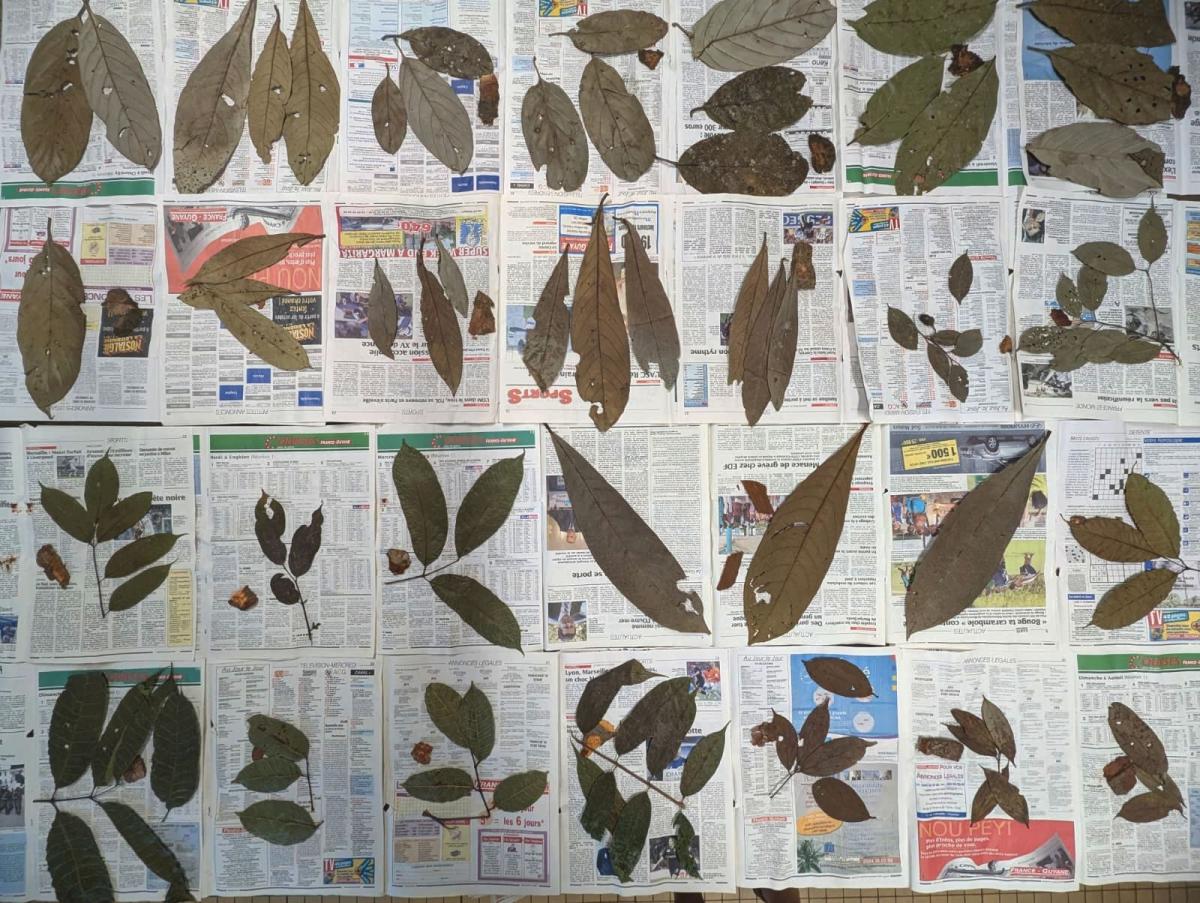
Tree leaves awaiting identification. Cayenne herbarium © Daniela Florez, CIRAD
D.F.: The conventional DNA barcode method has allowed significant progress on identifying species. However, its ability to discriminate is still limited whet comes to hyper-dense environments like the Amazon, where many species are of recent origin and where genera do not always form groups with a shared genetic history.
More recently, NIRS has proved to be a promising alternative for the rapid, non-destructive, transferable and reproducible identification of plant species. You only need to shine a near-infrared light on plant tissue—leaves, bark, wood, fruit, roots, etc—to obtain what is known as a "spectrum". Each species has its own specific spectrum.
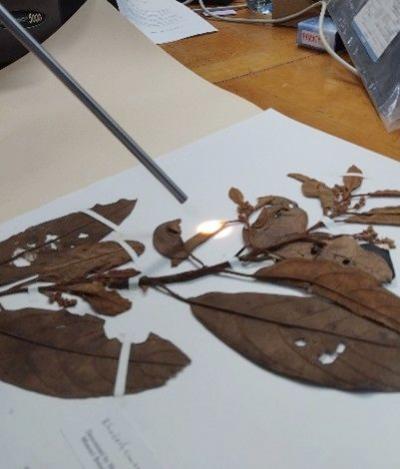
Prise de spectres sur feuilles à l’herbier de Cayenne © Max Hildebrandt, CIRAD
That light is invisible to the human eye: infrared is in a spectral range of between 1000 and 2500 nanometres, whereas the human eye can only see wavelengths of between roughly 380 and 780 nanometres. However, if you shine it on plant tissue, it makes the chemical bonds vibrate and reflect some of the light, which produces a spectrum.
The Cayenne herbarium uses this method to analyse tree leaves. It is both quick and non-destructive, unlike DNA analyses, which take time and mean sampling tissue, which is then destroyed. In practical terms, NIRS measures the leaves' "spectral signature", in other words their specific chemical fingerprint, by simply shining a light on samples.
Every plant species has its own spectrum or signature, like an ID card or fingerprint. Using NIRS makes it easier to identify species and distinguish between trees that look similar, and gives quick results without destroying samples. This is revolutionary, and makes a real change for researchers, who can analyse a large number of specimens in a short time.
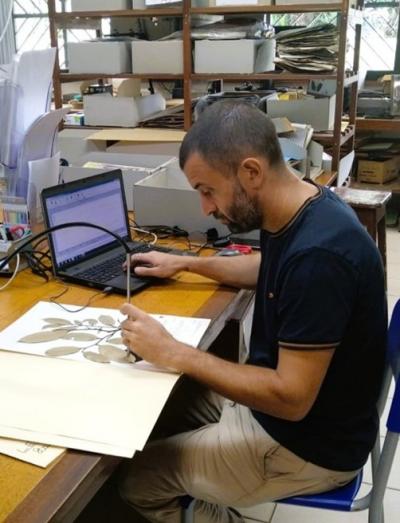
Romain Lehnebach, a CIRAD researcher who works with Daniela Florez. Recording spectra on leaves from the Cayenne herbarium © Daniela Florez, CIRAD
D.F.: My work addresses a strategic issue for French Guiana: the sustainable development of its entire forest-wood sector. My speciality, the use of natural substances, contributes directly. By eloping NIRS at the Cayenne herbarium, we can identify local species and pinpoint their properties better.
The logic behind it is simple. First of all, it makes it easier to identify tree species, which also makes it possible to satisfy demand for greater volumes of more diverse timber, while improving the traceability of forest products and protecting rare and threatened species.
As well as research, one of the key issues for such inventories is to share data and expertise with other organisations and players in the territory. In that sense, the spectral signatures collected are a valuable database for research organisations, forest managers, stakeholders in the timber value chain and institutions involved in biodiversity preservation.
Pooling knowledge serves to harmonise identification methods, make inventories more reliable and increase scientific cooperation on a regional and international level. It's a win-win for everyone.
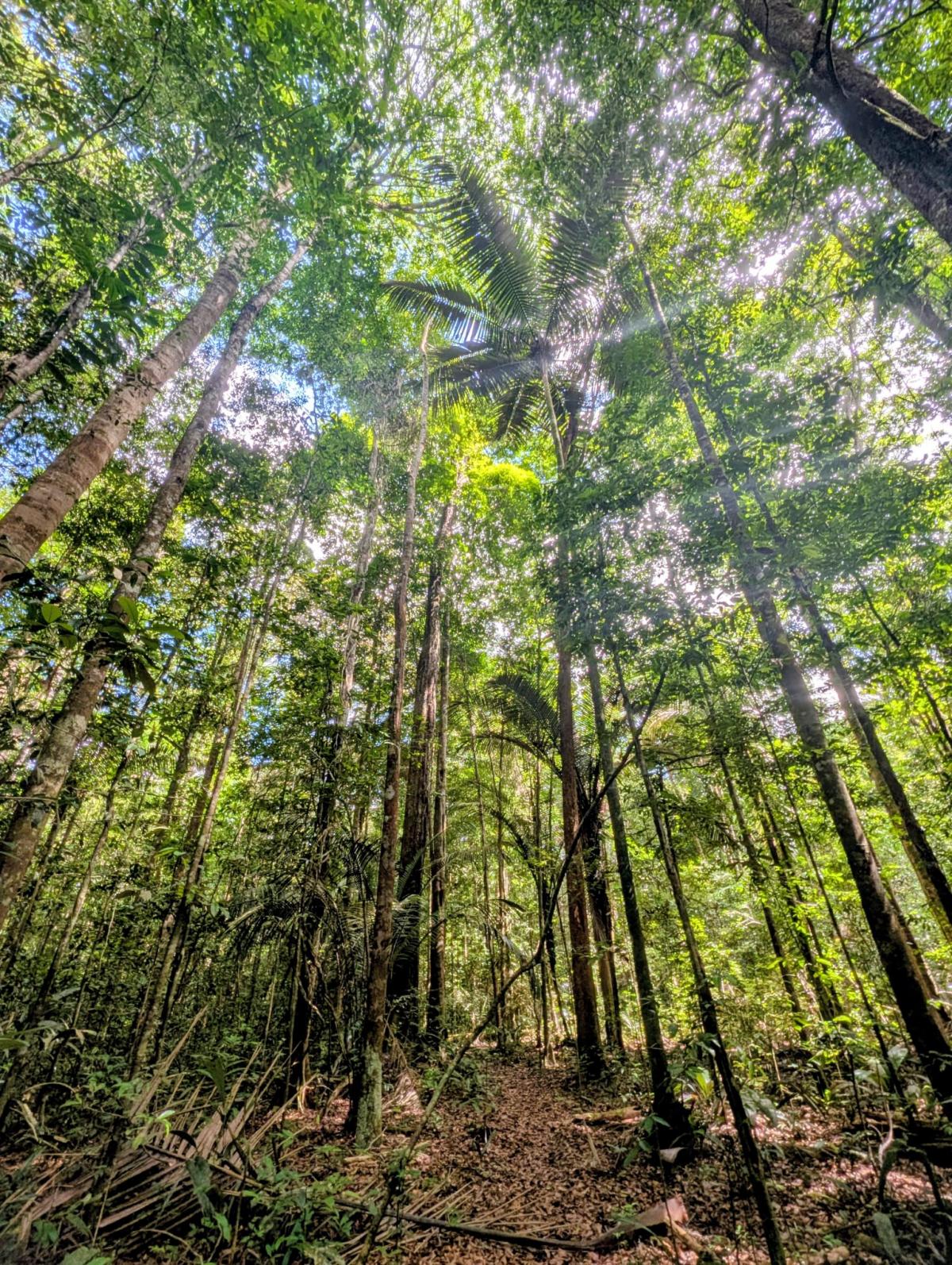
Forest in French Guiana © Daniela Florez, CIRAD
Expert view 7 September 2026
Expert view 9 July 2026