


















Call to action 25 November 2025

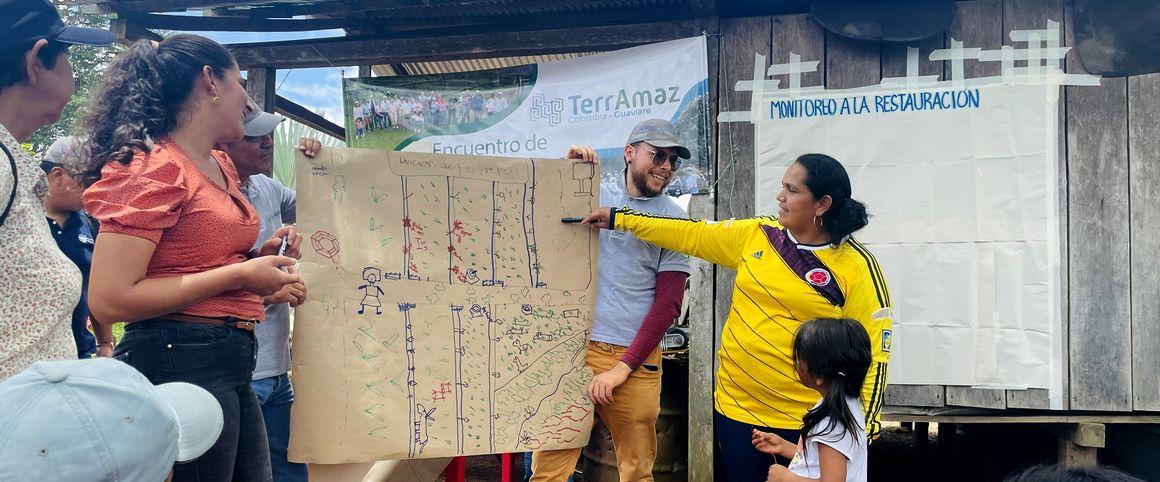
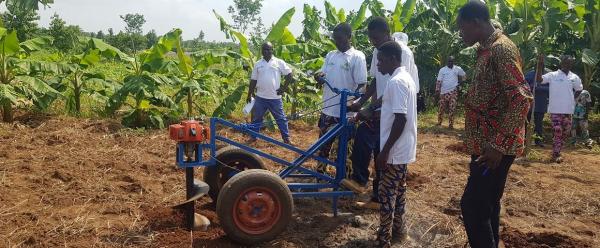
Beneficiaries of the TerrAmaz project explain the rotational grazing system practised in Guaviare, Colombia © Cristina Rosero Ramírez, CIRAD
Tropical deforestation is one of the main drivers of climate change and biodiversity erosion. In the Amazon, it is still a threat for 4.7 million hectares of remaining forests. The current monitoring and warning systems do not distinguish between legally authorised and unauthorised deforestation. This omission makes it difficult to translate international commitments into concrete results.
The TerrAmaz project (2021-2025), coordinated by CIRAD and funded by the Agence française de développement (AFD), served to test, in several Amazonian territories, territory-based approaches reconciling local development and forest conservation. In Guaviare district, Colombia, researchers built a novel analysis framework for use in identifying legal and illegal deforestation zones, based on national law and land use plans for each municipality.
This pioneering work showed that 75% of deforestation in Guaviare was illegal, primarily because territorial governance remains fragile following decades of armed conflict.
The authors of this issue of Perspective are calling for a pragmatic, inclusive approach in terms of environmental legality. They recommend building temporary solutions associating the local authorities: conservation agreements, sustainable conversion plans, and "green title" systems, to regularise certain past illegal situations without resorting to blanket amnesties. The aim is to include as many players as possible in the zero deforestation process.
The study also highlights the need to reform budget allocation rules for local institutions in charge of controlling deforestation. Funds are currently allocated based on population size rather than on the area of forest to be managed. The authors recommend indexing public funding to the area actually being protected or managed sustainably, to give territories the means to act.
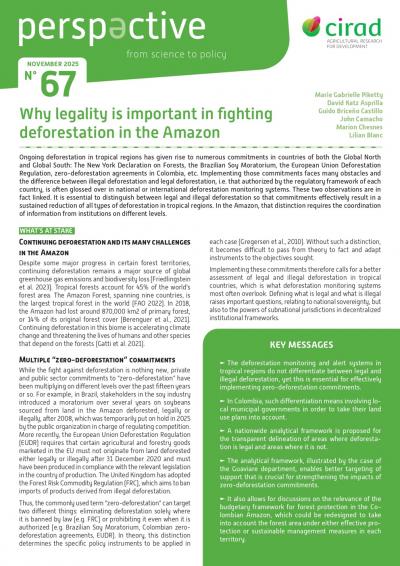
Read Perspective 67 - Why legality is important in fighting deforestation in the Amazon
Call to action 25 November 2025
Call to action 18 November 2025
Call to action 13 November 2025