Deforestation, pesticides, intensive livestock farming, fishing quotas, water management, climate-friendly diets, and so on... the debates surrounding our food future are increasingly polarised, to the extent of hindering the most urgent transitions. An international team of scientists has published a novel position statement in Nature Food: rather than avoiding controversy, food system scientists should learn to engage actively.
The situation: debates are often over-simplified
According to the article's authors, issues relating to agriculture, food, health and the environment are systematically seen as either/or choices: nature conservation or development, agricultural production or biodiversity, yields or public health. "This over-simplification masks diverging power relations, values and economic interests, and stops us dealing with the real causes of food and environmental crises", says one of the authors, Patrick Caron, a CIRAD researcher and co-president of Agropolis International.
As a result, nothing seems to be changing, despite a multitude of innovations. Polarisation outweighs capacity to engage in the necessary structural reconfigurations.
The proposal: a four-stage framework for turning potential for conflict into capacity for action
The team proposes a four-stage transdisciplinary dialogue approach:
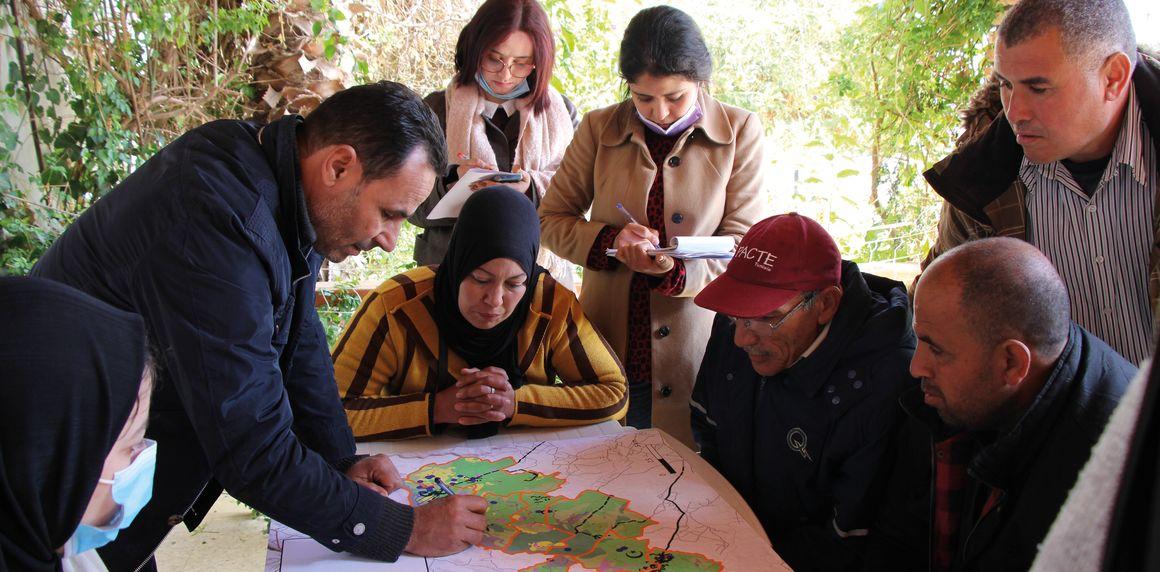
1. Mapping players, their values and their interests;
2. Building a safe, respectful space for dialogue, in which everyone can express diverging views without fear of reprisals;
3. Explaining and accepting diverging views rather than hiding them under a false consensus;
4. Co-constructing acceptable multi-sectoral decisions.
To illustrate their proposal, the authors quote a concrete example: in the foothills of the Sierra Nevada, in California, ten years of dialogue between farmers, engineers and environmental associations resulted in an alternative to building a dam that would both guarantee agricultural irrigation and preserve ecosystem functioning, with no need for legal or political conflict.
Another example relating to water in New Caledonia that goes even further in terms of dialogue, consultation and co-construction:
A new book published by Springer retraces how a water policy was established in New Caledonia. It was co-written by scientists and political players, and looks back at the 2019 co-design process, which involved one in 600 New Caledonians. This participatory operation served to define strategic objectives reconciling the often diverging interests of the various stakeholders. The book shines the spotlight on an experiment that enabled the creation of a common good, in a difficult context and despite the complexity surrounding the integration of local knowledge of water in policybuilding.
The authors call for a rethink of how scientists are trained and assessed academically, since they are currently not encouraged to engage publicly in societal debate.
To test this controversy-based approach, CIRAD, through its science-society unit, and Agropolis International will be inaugurating the Montpellier Controversy Academy with an initial debate on 14 October on "Should we ban meat from our plates?".
Reference
Jackson, L.E., Jarne, P., Shrivastava, P. et al. Engagement in food system-related controversies can strengthen science–policy–society interfaces. Nat Food (2026). https://doi.org/10.1038/s43016-026-01416-y - Free access to pdf
Public expression guidelines to improve science-society dialogue
Top help its staff members, particularly scientists, express themselves in public debates, CIRAD published a set of public expression guidelines in summer 2026 (available in English shortly). The document is intended to combat misinformation and improve science-society dialogue.
"The guidelines include a reminder of the texts that safeguard staff members' freedom of expression and the academic freedoms of senior CIRAD scientists, within a framework of good practice and responsibility, in the interests of the establishment's public service remit", say Estelle Jaligot, Ethics and Research Integrity Officer, and Marie-Laurence Pouxviel, Communication Officer, who piloted the project.