





Institutional news 22 October 2026

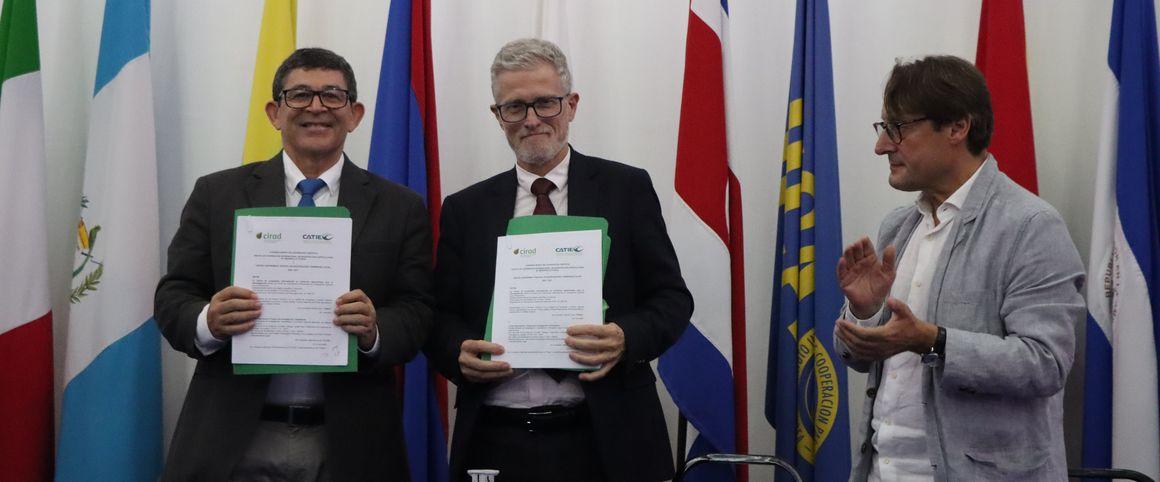
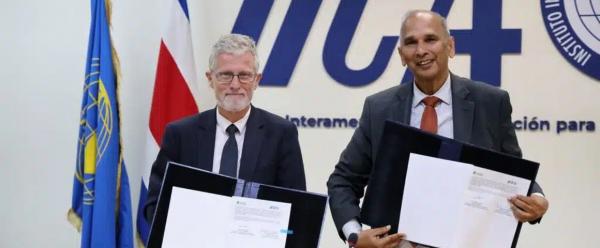
CATIE Director General Luis Pocasangre and CIRAD Regional Director Tanguy Lafarge at the signing of the agreement © CATIE
This new stage of the organisation's cooperation rests on their shared principles: forest, soil and water conserving, reduced pesticide use to produce more healthy food, and international cooperation.
This agreement overs research, cooperation, training and joint sourcing of funding. It is due to run for five years, but I'd like it to last forever, as I know this is a sincere partnership that will hugely benefit both institutions.
Adaptation to climate change and biodiversity protection were not priorities for us in 1985, but the environmental context is now top of the list.
The previous agreement dated back to 1985, a year after CIRAD was founded,making it one of the first signed by the new establishment. Since then, CIRAD researchers have constantly been on assignment at CATIE, and the two organisations have been conducting long-term joint research on coffee, cocoa and banana agroforestry systems.
This cooperation has given rise to some 800 scientific publications, including 95 over the past five years. What started as a CATIE-CIRAD joint scientific platform is now dP Agroforesta, a platform in partnership for research and training associating 11 Latin American organisations. This scientific cooperation initiative is devoted to research and to promoting agroforestry systems, to address the socioeconomic and environmental challenges facing farming families in the region.
The partnership plays a central role in training professionals for the region. Within the framework of dP Agroforesta, more than 65 master's dissertations and several joint PhDs have been completed, and many CATIE scientists have studied in Montpellier, France.
Luis Pocasangre is just one example: he trained in biotechnology during his master's at CATIE, supervised by a CIRAD researcher. "I trained at CATIE and see myself as a product of ther CIRAD school", he says.
The French Ambassador to Costa Rica, David Izzo, attending the signing ceremony as an honoured witness.
He reminded those present of the growing challenges climate change poses for agriculture. This year, due to the effect of El Niño, rainfall on the Caribbean coast of Costa Rica has almost doubled, while it has been halved in other regions, with effects on crops such as coffee, cocoa and banana.
"What I like best is CATIE and CIRAD's philosophy of making the fruits of their labours available to producers and farmers. This is why our support is vital", the ambassador stressed.
During his visit, David Izzo attended the graduation ceremony for CATIE master's students, alongside the first Vice-President of the Republic, Francisco Gamboa Soto. He also took part in a symbolic ceremony marking the very first sponsorship by the embassy a cocoa variety from Martinique, as part of a new initiative aimed at supporting funding of the CATIE cocoa genetic resources collection, one of the largest and best characterised in the world. Lastly, he visited the Aquiares coffee farm, where he discovered the activities of the ECOFFEE project coordinated by CIRAD, which aims to reduce pesticide use in coffee growing.
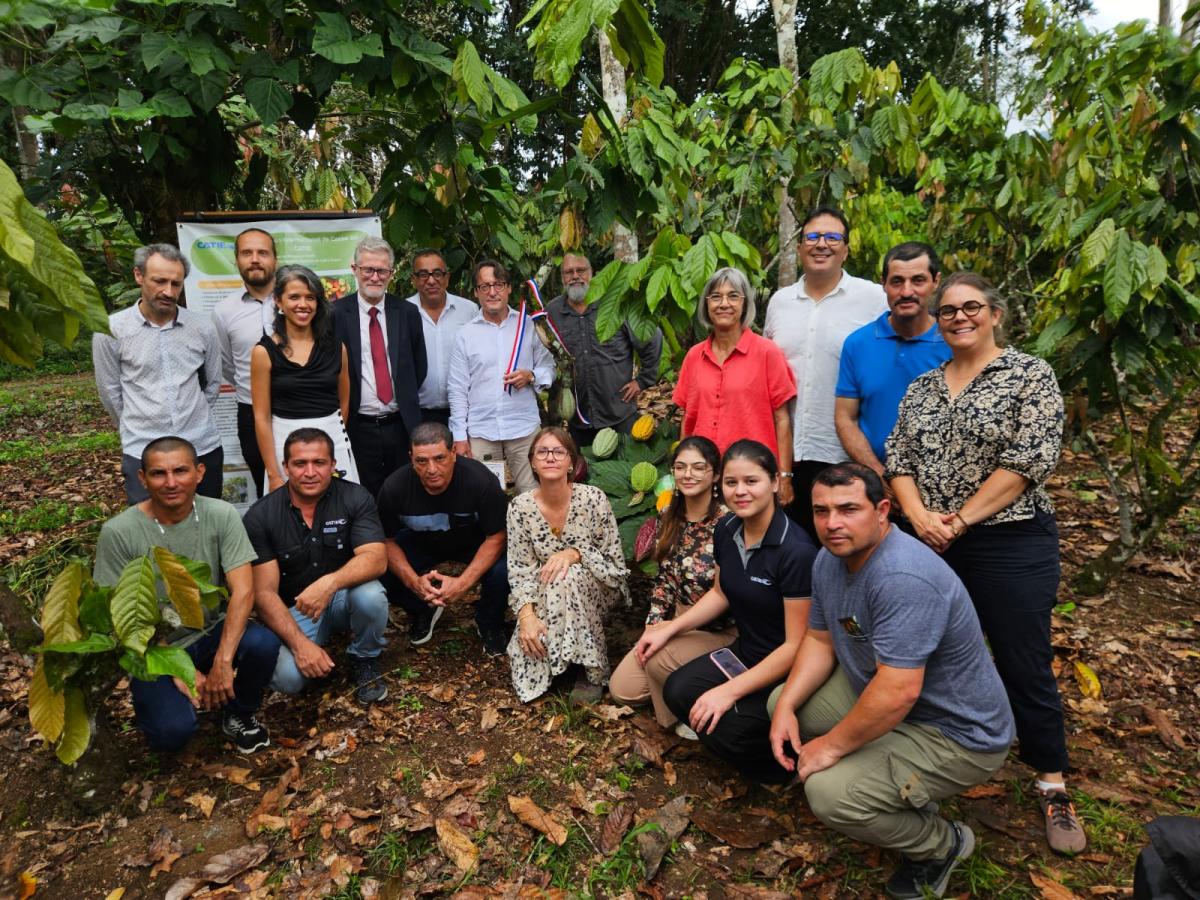
Teams from CIRAD and CATIE surrounding Catherine Abadie, CIRAD Representative in Costa Rica, assigned to CATIE © CATIE
Institutional news 22 October 2026
Institutional news 8 June 2026