Key figures
952 million tonnes of fruit are produced worldwide each year.
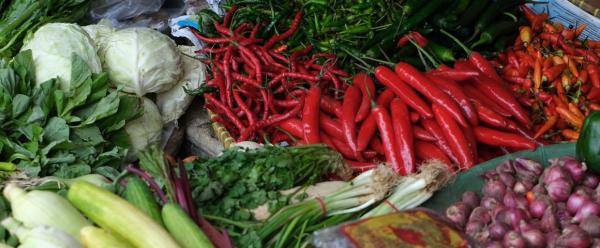
1200 million tonnes of vegetables are produced worldwide each year.
The global fruit and vegetable market (1376 billion dollars) is worth ten times more than the cereal market and exceeds that for meat (1078 billion) [Data Bridge 2024 data].
These figures provide a very partial picture of the value chain, due to the proportion of output that is consumed on a local or regional level, which is not taken into account in in national statistics. In most tropical countries, fruit and vegetables are produced on small family farms that supply local, domestic and even global markets. Large farms are primarily geared towards supplying supermarkets and the export market.
The value chain in five characteristics
- There is a range of species and types of biology (seeds or plants, annual or perennial), even within the fruit and vegetable category (fruit vegetables, leafy vegetables, root vegetables, etc).
- Fresh horticultural products are perishable, and susceptible to a multitude of pests and diseases. Losses and wastage are estimated at between 30 and 50% of fruit and vegetables production worldwide.
- Local and regional operations are often informal, and above all multi-site and multi-player (often very small-scale), and generally overlooked in statistics regulations and policies, both upstream (eg seed and plant management) and downstream (eg cross-border trade).
- Fruits, vegetables, herbs, etc are subject to sanitary pressure. Quality and appearance criteria, which are related to freshness, mean large volumes of pesticides, both natural and synthetic, are used. The horticultural sector is one of the largest chemical pesticide consumers, and generates increasingly substantial hidden costs in terms of the environment (ecotoxicology) and health.
- The sector is highly dependent on water supplies. In some contexts in the global South, the water supply depletion and water and soil pollution that result from intensive horticultural production (bananas, periurban agriculture) have triggered numerous controversies. Agroecological transition is a vital lever for producing more and better.
Main issues for CIRAD
Supporting the value chain's agroecological transition
In view of the specificities of the horticulture value chain, CIRAD is working to support its agroecological transition. In specific terms, this means:
- Co-designing more diverse production systems based on ecosystem services, which may be more resilient to climate, health and economic risks and less dependent on inputs and outside resources.
- Managing the long-term soil fertility, water resources and non-renewable natural resources (fossil fuels, mineral resources ) required to produce and use horticultural products.
- Succeeding in reconciling low- and high-tech in order to adapt to different contexts and meet sanitary, nutritional and sensorial quality requirements.
Co-designing and building more sustainable food systems
The challenge is to find solutions that reduce producers' socioeconomic risks while guaranteeing consumers access to healthy, attractive and cheap products and respecting the environment.
- Contributing to fair, sustainable food systems by limiting synthetic chemical use and fostering local biodiversity.
- Inventing systems that provide producers with a living wage (eg rolling out strategies that se to cut losses at the pre- and postharvest stages, guaranteeing that horticultural products will have the health (zero pesticides and zero biological or chemical contamination), organoleptic and nutritional qualities the market demands.
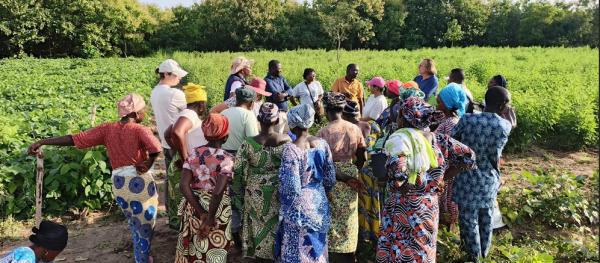
- Guaranteeing decent jobs (status, job creation, jobs for women and for migrants) throughout the value chain. This calls for education and training, regulations, professionalisation and recognition of activities.
- Working on product value and quality: certification, seed, organic, labels, etc.