












Science at work 23 September 2026

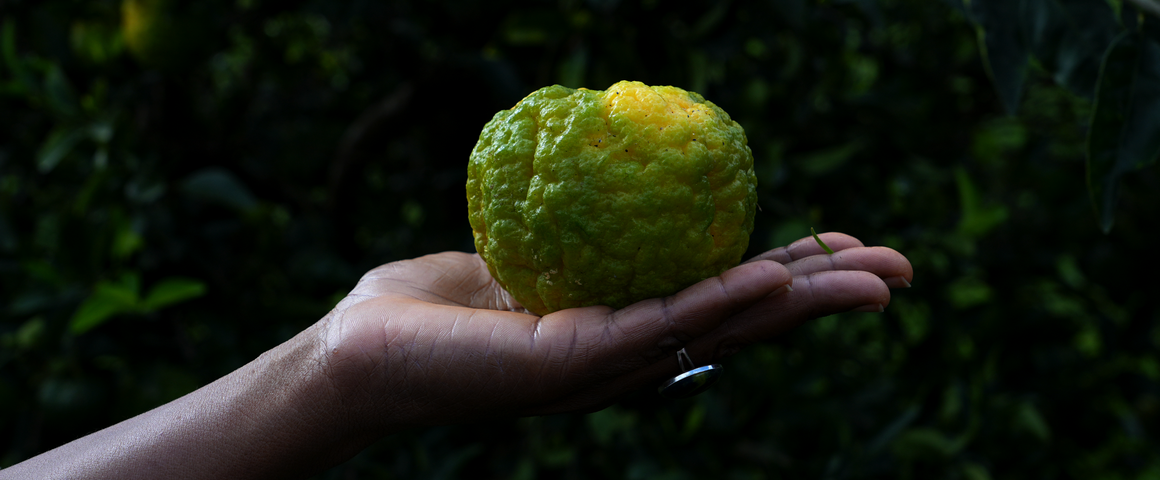
Mandarin collected in Martinique, with a very thick skin and a sweet flavour. This unusual variety is grown in the field in the heritage citrus plot of the Caribbean Agro-Environmental Campus (CAEC) in Martinique © Y. Sanguine, CIRAD
Health and climate risks are increasingly threatening citrus crops. In recent years, a number of territories and countries have suffered the loss of a large proportion of their orchards as a result of drought episodes or the rapid spread of diseases. This situation is driving research actors to preserve known biodiversity, while also studying it more closely with a view to developing both genetic and agronomic solutions.
The San Giuliano site in Corsica houses a huge citrus collection, with 1 064 accessions spread across 13 hectares. Each accession represents a distinct genotype: lemons in a range of colours, mandarins in all shapes, clementines, oranges, citrons, and much more.
However, this diversity is at risk. For several years, highly aggressive pathogens have been ravaging orchards throughout the world. Yellow dragon disease, or Huanglongbing (HLB), which is incurable, has for example devastated orange production in Florida in the United States. The pathogen is transmitted by the psyllid, a small insect vector. Although the disease has not yet reached the Mediterranean region, psyllids are already present in Spain, Portugal, Israel and Cyprus.
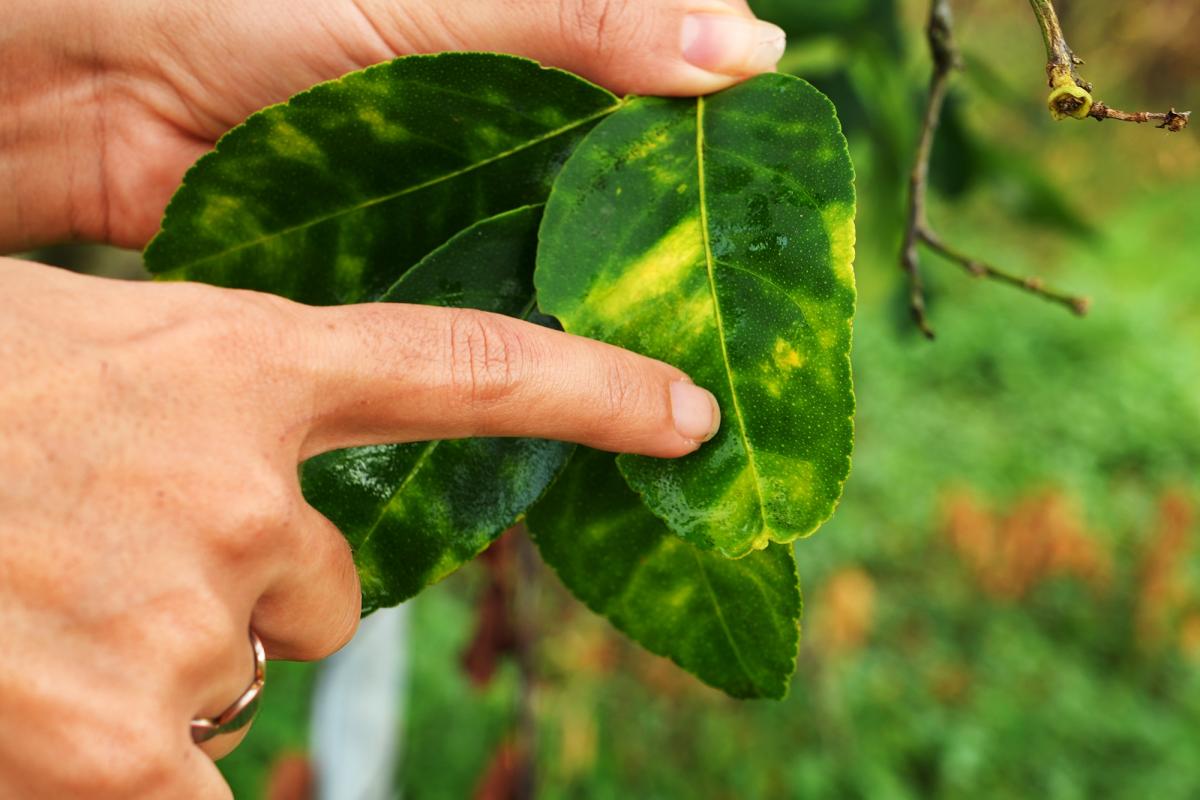
Yellow dragon disease (HLB) is characterised by yellow spots on leaves. It is incurable and can decimate orchards in just a few years. In Guadeloupe, citrus production has fallen by more than 80% since 2012, driving up imports as well as prices for island consumers © Y. Sanguine, CIRAD
Health challenges are compounded by the growing frequency of extreme climate events such as heat, frost, drought and wind. To safeguard the collection, French research has invested in the construction of ARCHE, an insect-proof greenhouse that can house living, disease-free accessions. Some genotypes are also preserved in a cryobank, for a dual conservation strategy.
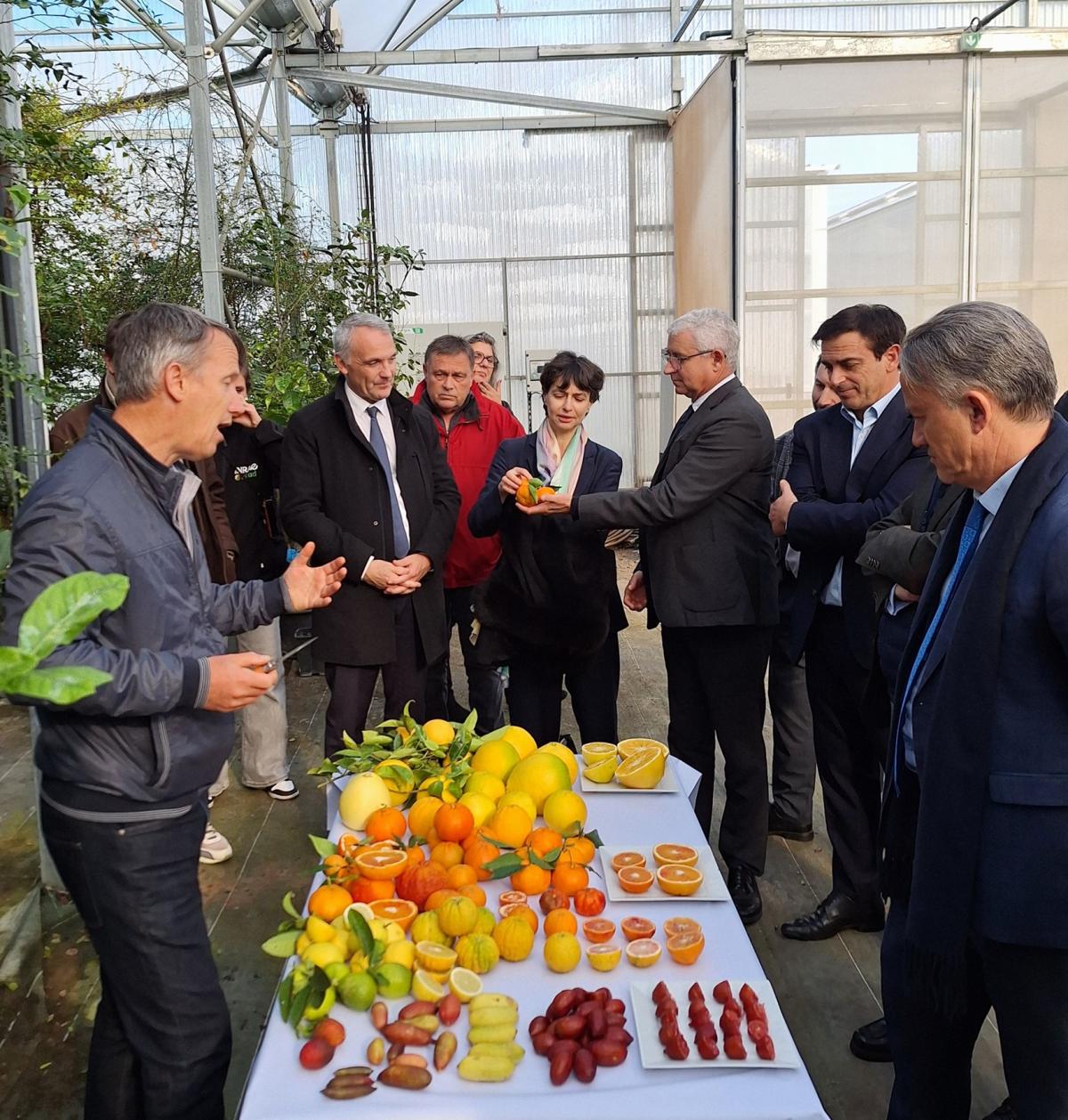
Presentation of part of the Citrus CRB collection at the inauguration of ARCHE on 5 December. Pomelos, oranges, mandarins, finger limes, as well as new hybrids developed by research, shown to Philippe Maugin (CEO of INRAE), Elisabeth Claverie de Saint Martin (CEO of CIRAD), Eric Jalon (Prefect of Corsica), Dominique Federici (President of the University of Corsica Pasquale Paoli), MP Francois-Xavier Ceccoli, Pierre Papadopoulos (DRAF of Corsica) and his deputy Fabrice Guichon, as well as Thomas Kupisz (Sub-Prefect of Corsica). © A. Farisano, CIRAD
Protecting the collection directly benefits research and agriculture: within these biodiversity treasures are genes that confer resistance to pathogens, along with information on the origins of different species and their evolution. This knowledge is essential for developing new citrus varieties that meet the needs of the citrus sector in Corsica and the Mediterranean basin, as well as in the overseas territories and tropical countries.
The Citrus CRB thus supplies genetic material to around 30 countries every year.
Similar to Corsica, two other French islands, Guadeloupe and Martinique, are mobilising to preserve their citrus fruits. For several years, teams from CIRAD have been conducting field surveys in Creole gardens to collect unique accessions: citrus fruits that have hybridised naturally and adapted to the microclimates of the Caribbean islands.
In Martinique, Eric Chiffrin, an agricultural technician at CIRAD, has already assembled more than 30 varieties of oranges, mandarins, grapefruits, pomelos and clementines. He cultivates them in what is referred to as a “heritage plot” at the heart of the Caribbean Agro-Environmental Campus (CAEC). As yellow dragon disease continues to spread across the island, the aim is to ensure that these citrus fruits, part of Martinique’s biological heritage, are not lost. Local residents allow CIRAD to take a few grafts, in return for which they will be able to recover their variety from the CAEC should their trees die.
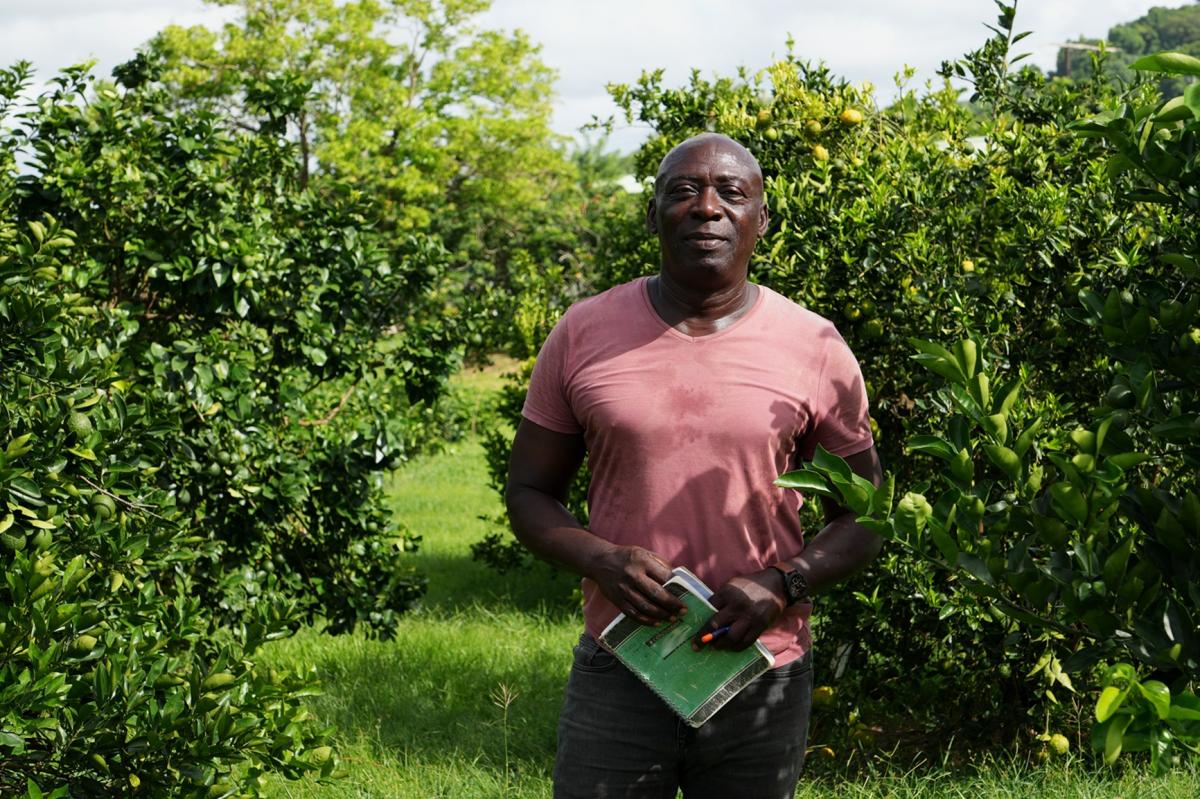
Eric Chiffrin in the CAEC heritage citrus plot. Around 30 accessions are currently grown in the field. The technician plans to double the plot in the next few years © Y. Sanguine, CIRAD
Guadeloupe is equally active and also maintains its own heritage plot at the CIRAD site in Roujol. Native citrus fruits from Guadeloupe are grown there, alongside others, including microcitrus from Australia. Microcitrus australasica, finger lime or Australian lime: whatever the name, this citrus fruit is notable for its resistance to yellow dragon disease.
The West Indies, Réunion and French Guiana are the only European territories where yellow dragon disease has been detected. Research conducted by French research bodies in these overseas regions is therefore essential, as it enables solutions to be developed for these territories. Similarly, conserving and studying West Indian citrus biodiversity, and assessing new, more tolerant or even resistant genotypes resulting from research programmes, helps to support and prepare the entire European sector to adapt effectively to the threat of HLB.
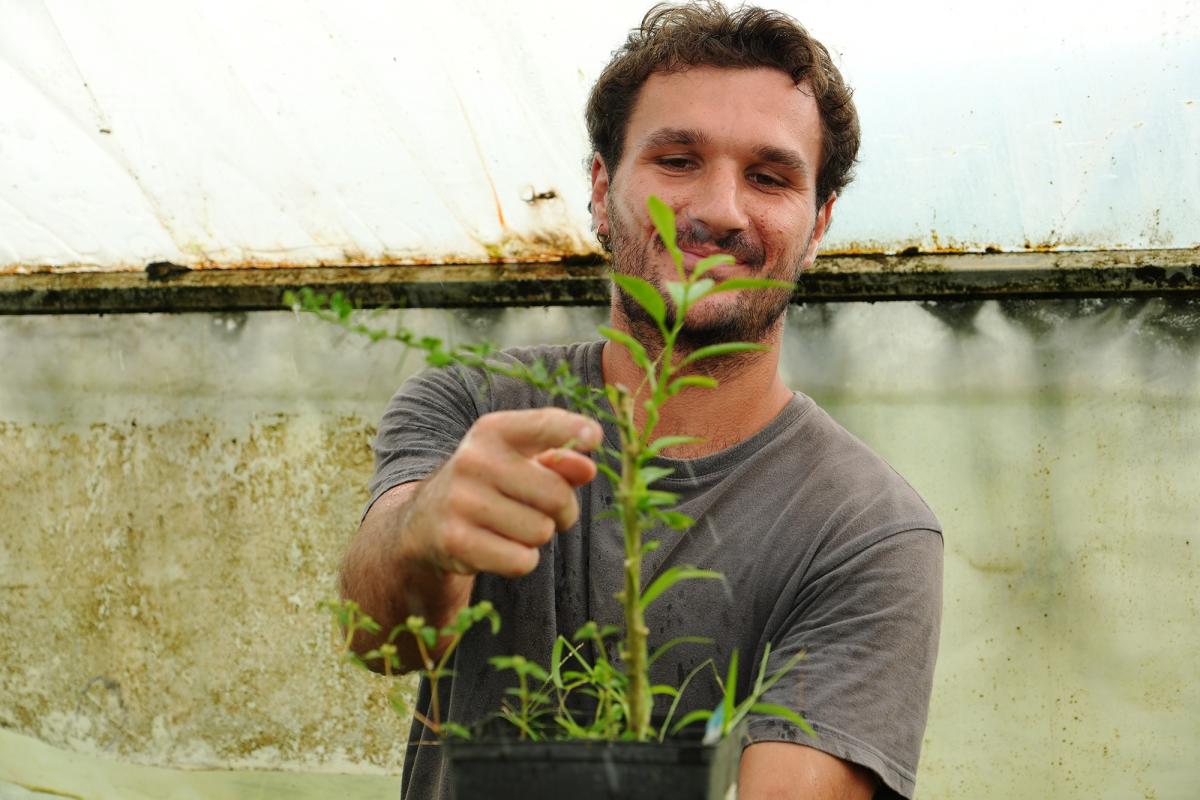
Guillaume Rambert, a Civic Service Volunteer at CIRAD, with a microcitrus/mandarin hybrid grafted onto a rootstock. Experiments are underway to test the resistance to HLB of hybrid populations developed by CIRAD. CIRAD site in Roujol, Guadeloupe. © Y. Sanguine, CIRAD
In both fields and greenhouses, these living collections are crucial to the future of citrus sectors around the world. Not only do they make it possible to rapidly restart activities in the event of a disaster, through the distribution of rootstocks seeds or scions, but their study also ensures a better understanding of genetic and biological mechanisms in citrus fruits. Research thus focuses not only on the determinants of quality, but also on adaptation to biotic and abiotic constraints and stresses. This rich diversity must be safeguarded, as it is the cornerstone of a viable and sustainable citrus industry.
Science at work 23 September 2026
Science at work 9 September 2026
Science at work 17 August 2026