










Results & impact 21 October 2026

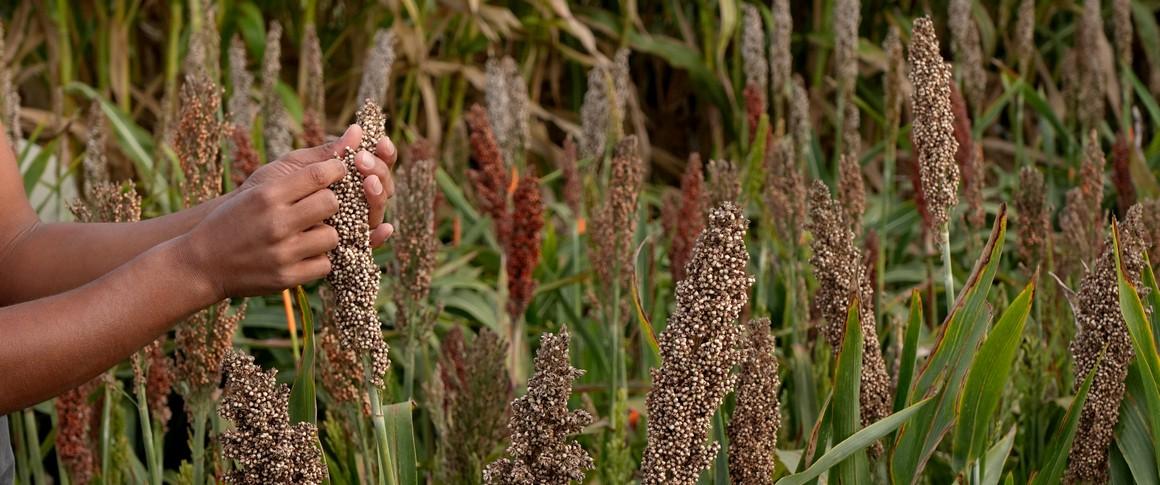
Sorghum in a CIRAD experimental plot at the Diascope experimental unit (INRAE) in Mauguio, Occitanie, France © Y. Sanguine, CIRAD
The Global Sorghum Conference, the largest international event devoted to sorghum, is being held from 14 to 18 September. Montpellier hosted the last event in 2023, and this time, the host is Lubbock, Texas.
Research and investment in sorghum have gathered speed in recent years, for good reason: the plant is particularly resistant to water shortages, a major asset in the light of global warming.
It is the world's fifth largest cereal in terms of production, and a staple food for more than 300 million people, primarily in Africa. However, it is also widely used to feed animals, notably in the form of fodder. In several African countries, farmers prefer so-called "dual-purpose" sorghum varieties, which are grown to feed both humans and livestock.
Red, brown, white and other coloured grains: sorghum boasts a wide range of colours. Likewise, in terms of size, for different uses, some plants may be up to seven metres tall, while others are not more than a metre. Like wheat, sorghum has a long stem topped with a panicle full of edible seeds.
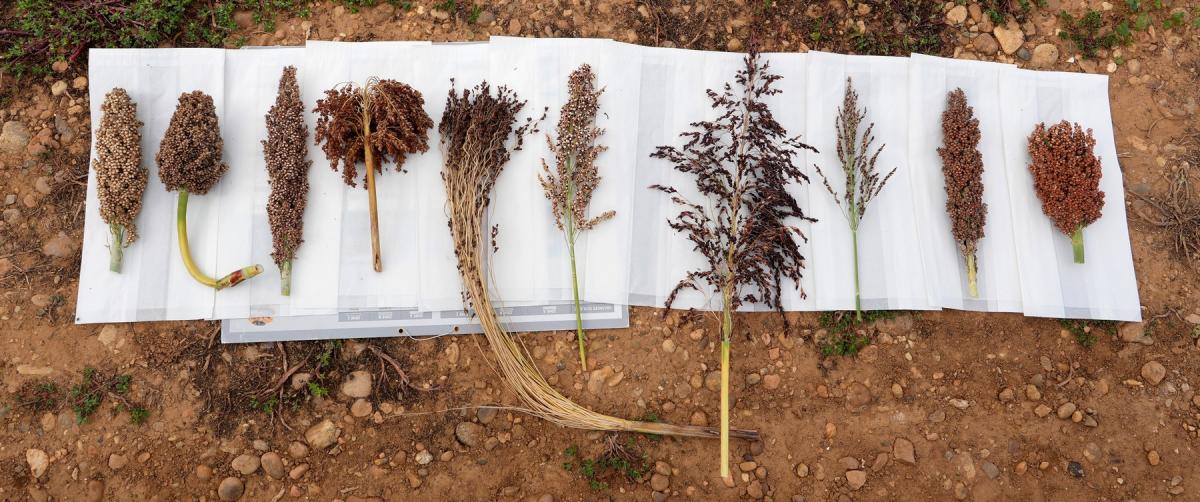
Sorghum panicles from different varieties. Sorghum produces white, red, brown or other coloured grains. The most compact panicles, like those on the left and right of the photo, correspond to varieties that have evolved in very dry climates. The least dense panicles are more suitable for damp climates. In Provence, France, farmers grew sorghum for many years, to make brooms, thanks to the supple fibres produced by some varieties (5th from left) © Y. Sanguine, CIRAD
Sorghum has a very deep root system, which allows it to find water lower down than maize, for instance. It also needs less water and can withstand extreme heat. However, maize yields are significantly higher, which is hardly surprising: "maize has benefited from decades of research and extensive varietal breeding", says Florentin Pietrus, agricultural technician at CIRAD and head of an experimental sorghum site in Mauguio, near Montpellier, France. This is what sorghum has not been given: research, investment, and time.
In France, a small number of farmers have already begun growing sorghum. In Gard department, farms are producing grain to feed livestock, using an agroecological method, "conservation agriculture".
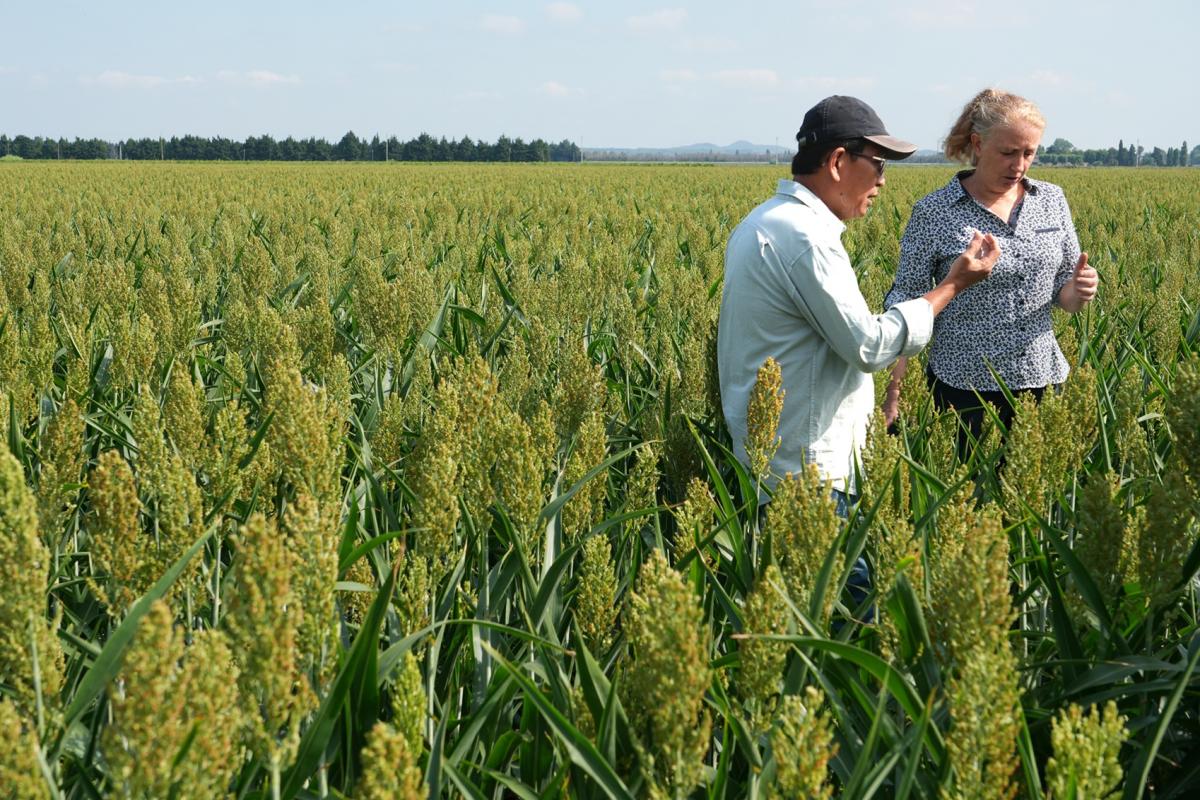
Sorghum field of around five hectares, belonging to a farming couple based in Camargue, in Gard department. In July 2025, the couple hosted a scientific delegation from Cambodia for a visit co-organised by CIRAD. In the photo, the French farmer talks to a man from the Cambodian Ministry of Agriculture © Y. Sanguine, CIRAD
During intense droughts, if the panicle dies, some sorghum varieties can grow another once climate conditions improve. This surprising ability is proof of the plant's resilience, and guarantees stable yields for farmers even in the event of a climate catastrophe. However, despite these clear advantages, Florentin Pietrus remains cautious. "There is no such thing as a miracle plant", he points out. "No plant can grow without water."
Moreover, sorghum has yet to prove its economic viability for French farming systems. In Mali, for instance, stable yields and the fact of being dual-purpose (to feed both humans and animals) are determining factors as regards the choice of varieties. In France, the sorghum value chain to feed humans does not yet exist: sorghum is only grown for animal feed.
For CIRAD, sorghum's potential is obvious. In addition to its research on cropping systems and varietal breeding, alongside African scientific partners, CIRAD teams are also working on sorghum agrifood processing. In Benin, a project on making bread from sorghum flour was launched this year. Why not make sorghum bread in France, in a few years' time?
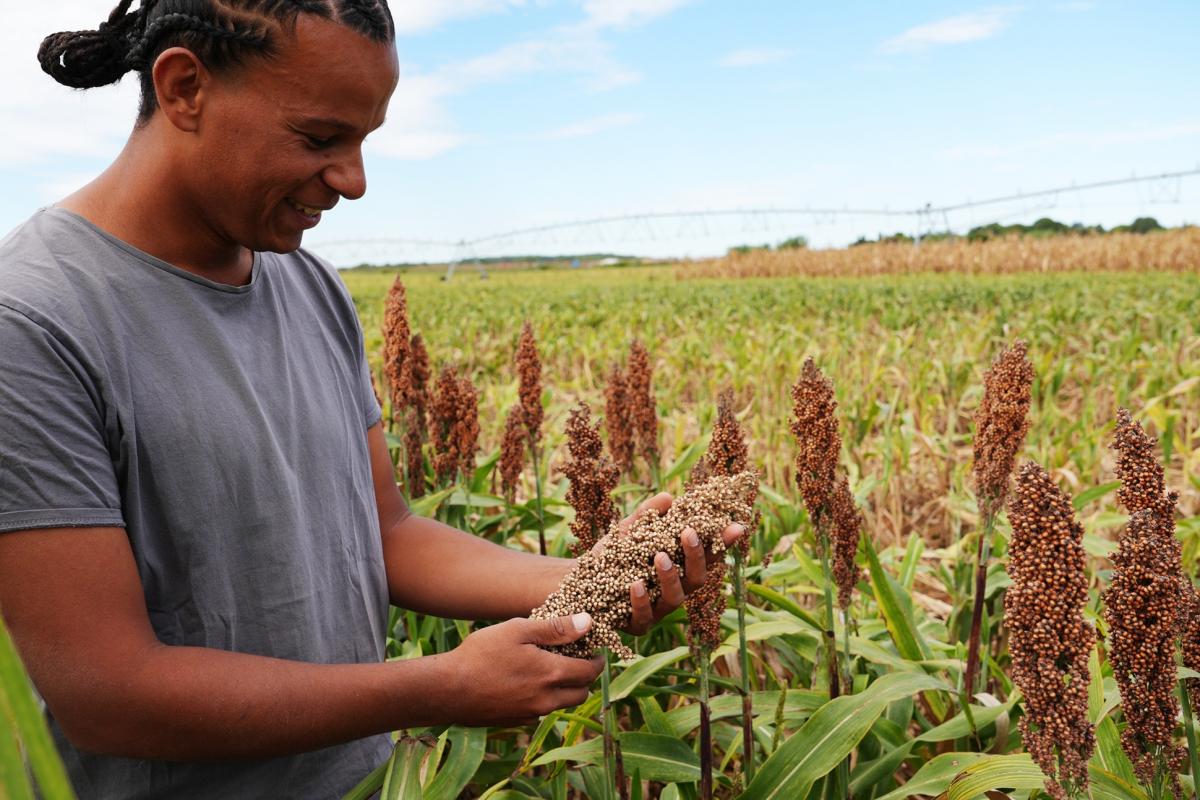
Florentin Pietrus in his experimental plot in Mauguio, Occitanie, France © Y. Sanguine, CIRAD
Results & impact 21 October 2026

Results & impact 18 September 2026

Results & impact 11 September 2026