














Results & impact 18 September 2026

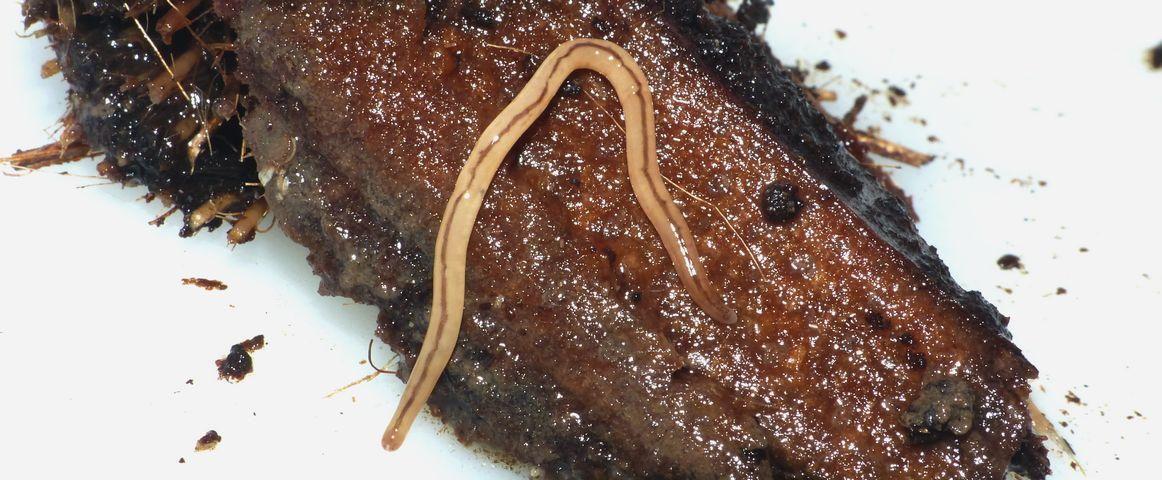
Earthworm of the species Geonemertes pelaensis found in Martinique by a CIRAD researcher in 2018 © Mathieu Coulis, CIRAD
The worm species discovered in Martinique and New Caledonia belongs to the ribbon worms group, small invertebrates that are so-called because of their often slim, flat shape. long. They have a specificity that marks them out from other worms: an organ that extends from the mouth to grab prey, in the same way as chameleons use their tongues. The ribbon worms group comprises a large number of species, most of which are aquatic, but there are also terrestrial species, as is the case with the "new" worm: Geonemertes pelaensis.
Geonemertes pelaensis originated in Oceania, and is now found in many tropical regions worldwide. It has several characteristics that allow it to colonise: it is hermaphrodite, can reproduce from a very small number of individuals, and can travel easily via plant, soil or goods shipments. Human activity is therefore the most likely reason for its global spread.
As regards the two specimens discovered in Martinique and New Caledonia, scientists think that their spread was "recent", in other words a decade or so ago. Genetic analyses have revealed very few differences between the worms studied. When two populations are separated for a long period, their DNA gradually accumulates mutations and becomes increasingly different, which is not the case here.
"The research on this worm may seem trivial, but it is a real pioneer front for many scientists", says CIRAD ecologist Mathieu Coulis, one of the study's co-authors. "We know very little as yet about the soil macrofauna, but it has a massive impact on both natural and cultivated terrestrial ecosystems. The lessons we will learn from this study will help us document the spread of invasive exotic species, how tropical island environments respond, and invertebrate genetics."
Islands are home to an exceptional share of the world's biodiversity, but their isolation makes them particularly vulnerable to biological invasions. During their evolution, island species have often faced fewer predators and competitors than their continental cousins. When a new species is introduced, it may therefore find itself in an environment with few obstacles to its development, while local species that are often unique in the world and only found in small numbers, are particularly fragile in the face of the new competitor or predator. That vulnerability explains why 86% of extinctions attributed to invasive species occur on islands. In Martinique, various players are working together to fight invasive exotic species. DEAL and OFB, which are working in Martinique, are examples of this.
During a previous study, an invasive flatworm, Platydemus manokwari, was observed feeding on a snail species endemic to Martinique. This example demonstrates the threat posed by invasive exotic species (IESs) to the rich but fragile fauna of tropical island ecosystems.
"If we can pinpoint how Geonemertes pelaensis was introduced and spread, it will be easier to anticipate certain risks, step up biological surveillance and protect island ecosystems better", Mathieu Coulis explains.
Scientists do not yet know what ecological impact Geonemertes pelaensis will have on ecosystems in Martinique and New Caledonia. The species is a predator that feeds on other invertebrates, so it may disrupt the local fauna… or maybe not. Sequencing the intestinal DNA of the specimen from Martinique revealed that it had eaten an invasive cockroach. This was a surprise for the scientists, as Geonemertes pelaensis is not known to do so. The individual from New Caledonia, for its part, had eaten a moth of another of the island's invasive species.
Could this invasive predatory worm help to control other invasive species? Direct field observations are required to assess the impact on the environment and limit disruption of local equilibria, as much as possible.
Genetic studies have demonstrated that different individuals of the species Geonemertes pelaensis are clearly related, despite being discovered across the world: in Martinique, Cuba, Bermuda, New Caledonia and even Japan. However, if we compare these results with a DNA archive provided by the National Center for Biotechnology Information (NCBI) in the US, the relationship is less certain.
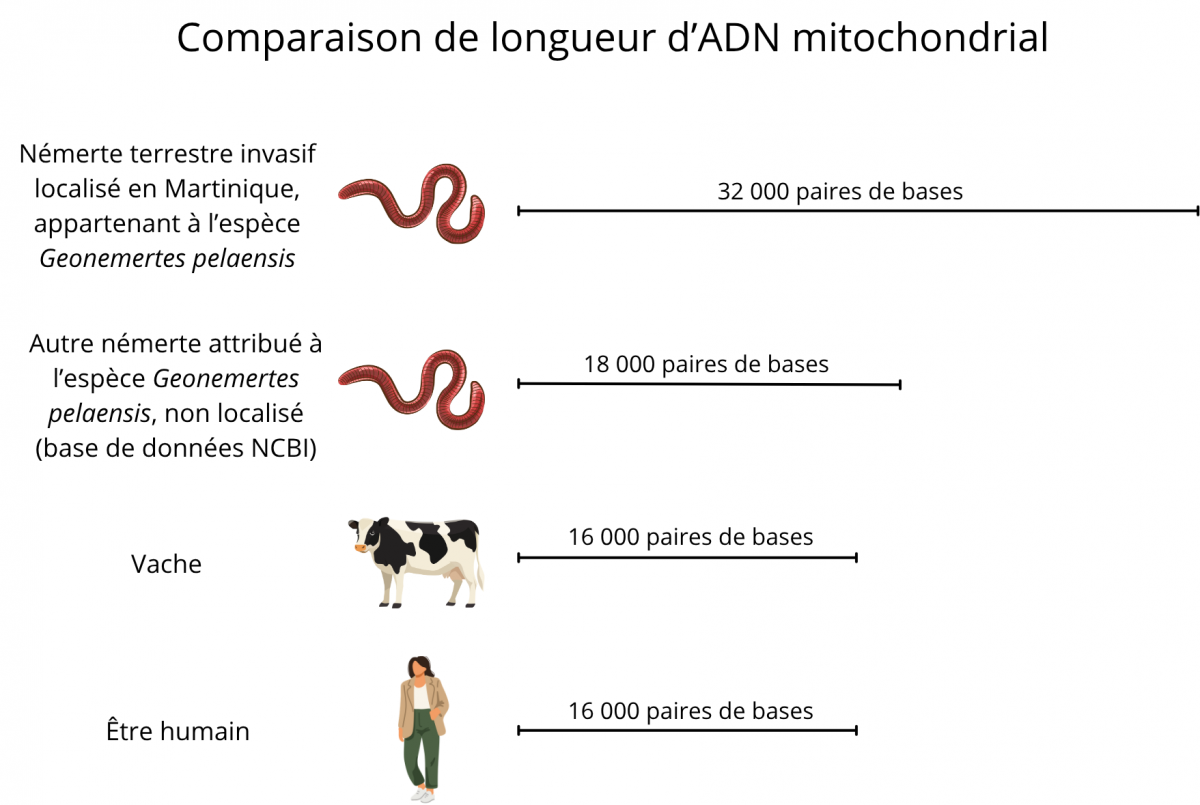
The NCBI biological archive identifies its sample as belonging to the species Geonemertes pelaensis. However, the mitochondrial DNA* of its sample is much shorter than that of the other worms. According to Romain Gastineau, genetics researcher at the University of Szczecin in Poland and lead author of the study, "the most likely hypothesis is that the ribbon worm from the NCBI does not belong to the species Geonemertes pelaensis. It is more likely to be an as yet unknown species that looks a lot like Geonemertes pelaensis, or at least enough to be confused with it." The NCBI was unable to supply a photo of the worm from which the NA sample was taken.
This discovery confirms that the true diversity of the soil macrofauna in tropical environments is still largely underestimated. "Many species look so similar to the naked eye that it's impossible to tell between them without resorting to genetics", Mathieu Coulis says. "In the tropics, some worm species have only been seen a few times. How many species might we have mixed up, for want of knowledge?"
There has been another exceptional discovery: the DNA of the Geonemertes pelaensis specimen found in Martinique and New Caledonia has a mitochondrial genome almost twice as large as most animals. It has 32 000 base pairs**, compared to 16 000 for most animals. Another genetic mystery that calls for more research...
This research was conducted in partnership by the University of Szczecin in Poland, CIRAD, the National Natural History Museum (MNHN) in Paris and an international team of research institutes in Canada, Hungary and Australia.
In Martinique, the specimen was collected at Fort-de-France in 2018. The one from New Caledonia was found in the village of Yaté in 2024. The two worms were transferred to the MNHN in Paris, where they were identified as belonging to the species Geonemertes paleansis. DNA extraction and sequencing were done in Canada, at the Institut de biologie intégrative et des systèmes at Université Laval in Quebec.
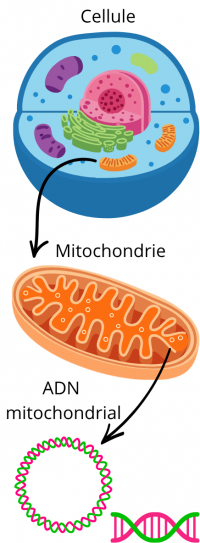
* Mitochondrial DNA: inside a cell, there is the nucleus, which contains a major share of DNA. However, a fraction of the DNA is outside the nucleus, in the "mitochondria", which function like organs for the cell. In the mitochondria, DNA is grouped in the form of a circular chromosome: the mitochondrial genome.
** DNA base pairs: base pairs are the reference unit for estimating DNA size. One pair corresponds to two nucleotide bases, making a rung of the ladder in the famous DNA helix.
Gastineau, R., Coulis, M., Otis, C. et al. Molecular characterisation of the invasive terrestrial nemertean Geonemertes pelaensis: long and complex mitogenome and presence of NUMTs. Sci Rep 16, 3312 (2026). https://doi.org/10.1038/s41598-025-33230-0
Justine Jean-Lou, Gey Delphine, Vasseur Julie, Thévenot Jessica, Coulis Mathieu, Winsor Leigh. 2021. Presence of the invasive land flatworm Platydemus manokwari (Platyhelminthes, Geoplanidae) in Guadeloupe, Martinique and Saint Martin (French West Indies). Zootaxa, 4951 (2) : 381-390. https://doi.org/10.11646/zootaxa.4951.2.11
Results & impact 18 September 2026
Results & impact 16 September 2026

Results & impact 11 September 2026