

















Results & impact 18 September 2026


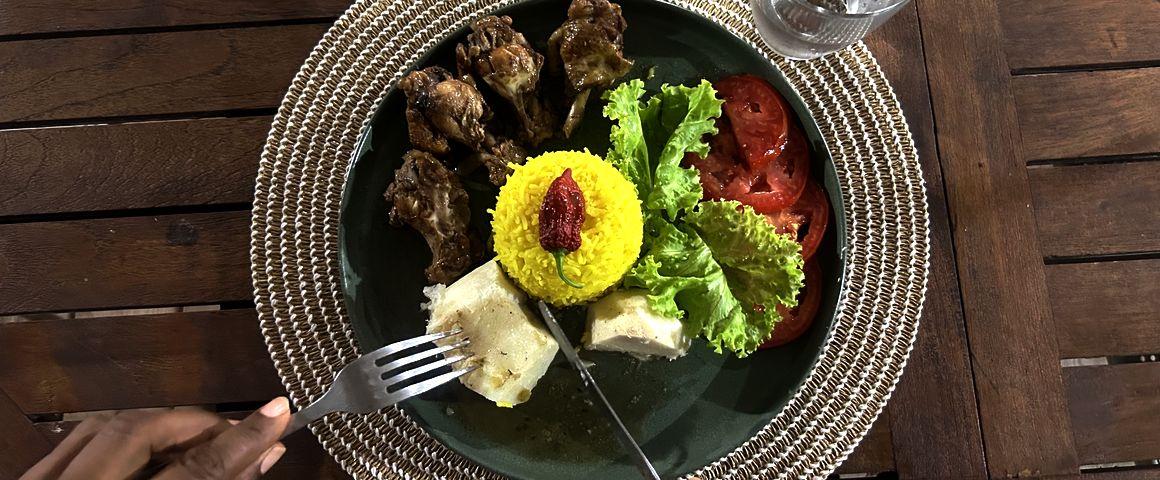
Chicken fricassée served with yams, rice and salad © J. Réminy, CIRAD
Since January 2024, scientists have interviewed young people in Martinique aged 15 to 30 about their food choices and eating habits. The findings confirm that meat plays a central role in their diets, with most respondents eating it several times a week, while vegetarian and vegan diets remain very uncommon.
Meals are thus often centred around meat and starchy foods, and people do not eat enough fruit, vegetables or pulses. Previous studies have shown that fruit and vegetable consumption is lower in Martinique than in mainland France (-36% for fruit and -9% for vegetables), despite the island’s agricultural potential.

In-depth interview with a student in Ducos, Martinique © S. Fréguin-Gresh, CIRAD
“Daily schedules and routines impact eating habits. For instance, we found that many teenagers and young adults regularly skip breakfast, often because of school timetables or travel times”. Sandrine Fréguin-Gresh is a researcher in agricultural economics and rural geography at CIRAD. She coordinates the MARACUDJA project.
The MARACUDJA project is led by CIRAD, in collaboration with INRAE. It was selected under a joint call for projects launched by the French Agency for Ecological Transition (ADEME), the Martinique Regional Health Agency (ARS), the Martinique Directorate for Food, Agriculture and Forestry (DAAF), and the Territorial Authority of Martinique (CTM).
According to Sandrine Fréguin-Gresh, beyond individual preferences, eating habits are strongly influenced by factors relating to lifestyle and the food environment: food prices, especially the cost of fruit and vegetables, limited time for cooking, financial constraints and difficulties accessing shops. Students appear to be particularly affected, with many opting for quick meals or institutional catering where this is available. School and university canteens therefore play a key role in providing affordable access to balanced meals.
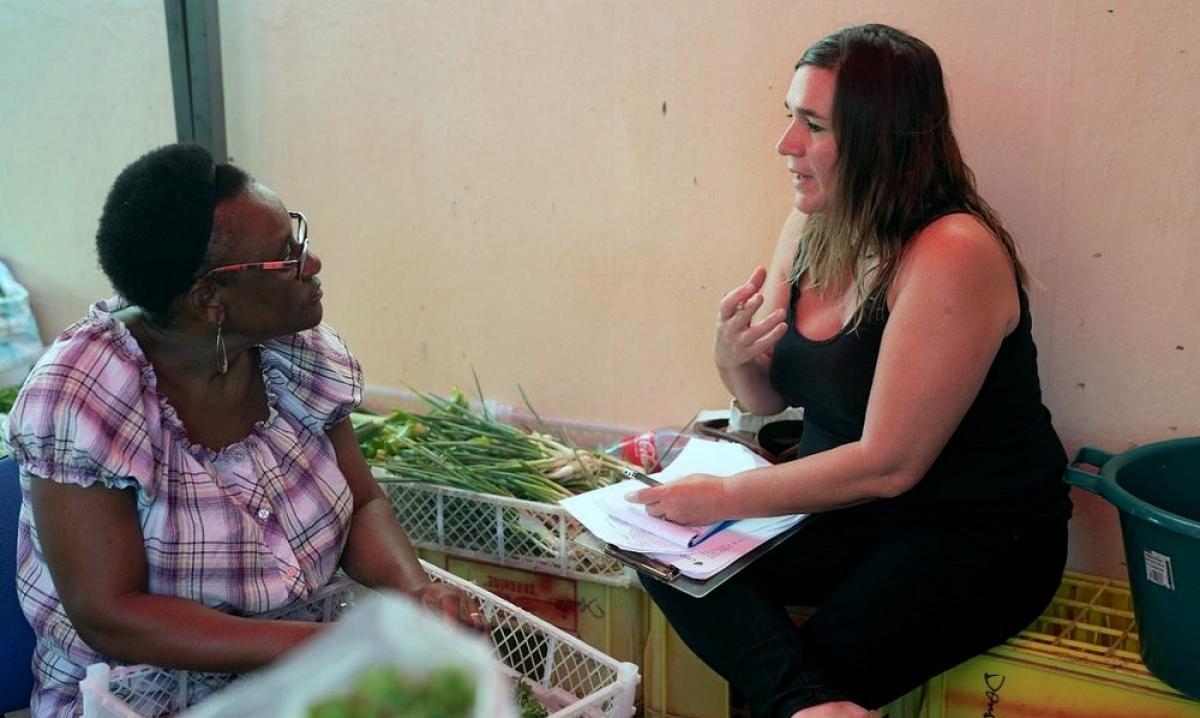
Sandrine Fréguin-Gresh, on the right, interviews a fruit and vegetable seller at an open-air market (Le Robert, Martinique) © Élise Fitte-Duval
“While individual factors do influence what people eat, they are not enough to explain eating habits”, says Sandrine Freguin-Gresh. “We need to look instead at the food environment. For example, an affordable institutional catering service in a convenient location creates availability, access and continuity over time for the people in the surrounding area. If the food on offer is healthy, it provides an alternative to less desirable options, such as ultra-processed ready meals that are easy to store and transport”.
For the researchers, therefore, improving the diets of young people in Martinique is not just a matter of individual choices. Families, educational establishments, local authorities, producers, institutional catering providers and health professionals all have a vital role to play in creating an environment conducive to healthier eating.
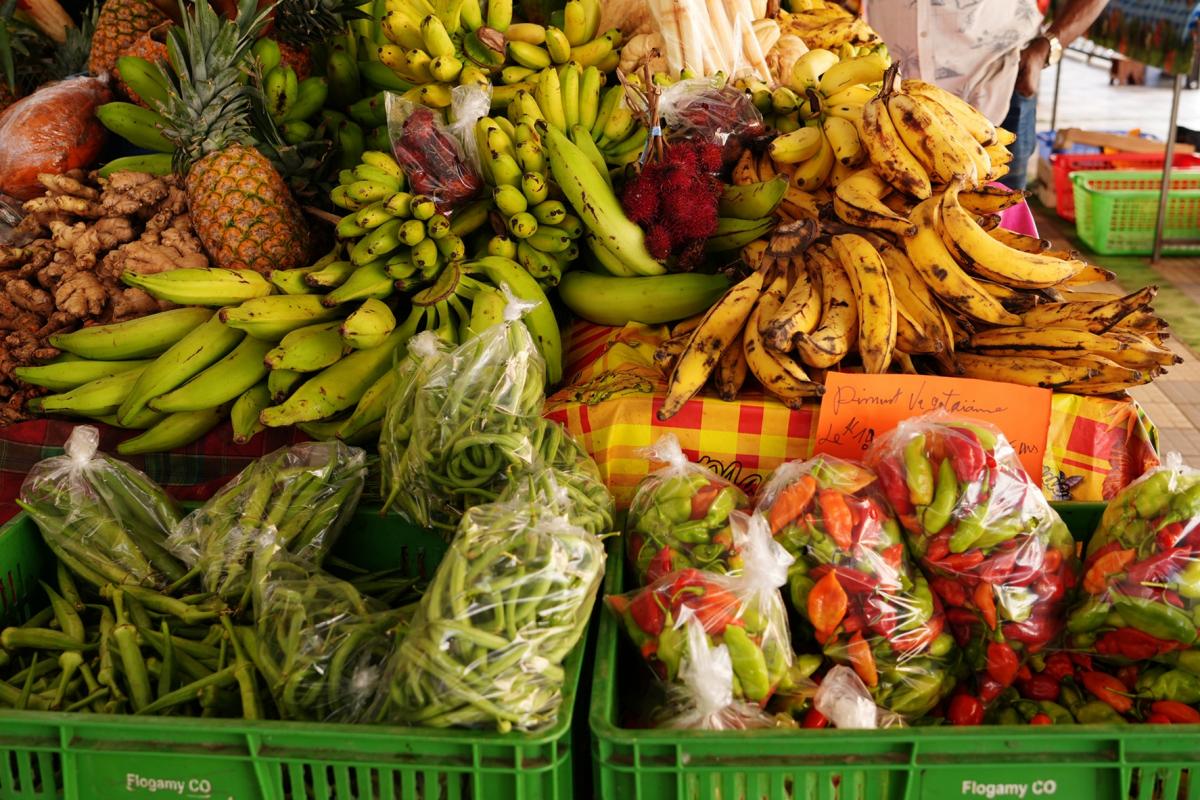
Local fruit and vegetables sold at the Fort-de-France market © Y. Sanguine, CIRAD
Another finding from the MARACUDJA project is that many respondents have limited knowledge of the different sources of plant-based protein and their nutritional value. Yet pulses are rich in plant-based protein and feature in many traditional Martinique recipes.
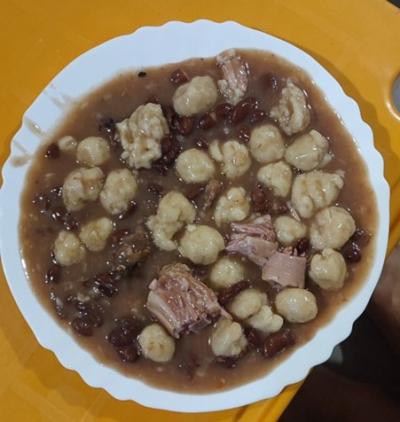
Dombré with pork tails, a traditional Caribbean dish made with dumplings and a kidney bean or lentil sauce © S. Fréguin-Gresh, CIRAD
Culinary traditions therefore offer a valuable means of achieving a more balanced diet. Family recipes, locally grown vegetables, garden produce and knowledge transmission from one generation to the next remain important reference points. Adapting local recipes and promoting local vegetables, pulses and other locally produced foods could help reconcile enjoyment, health and cultural identity.
The surveys nevertheless show that the belief that a proper meal must include meat remains deeply rooted, making it harder to shift towards a more plant-based diet.
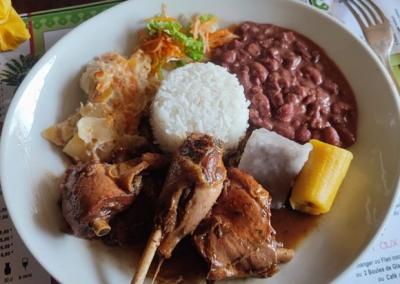
Rooster fricassee served with red beans, peyi vegetables, salad and gratin © S. Fréguin-Gresh, CIRAD
Based on their findings, the researchers have identified several ways to support a transition towards healthier eating that reflects the realities of life in Martinique. In particular, they recommend:
These different actions would help to strengthen young people’s food autonomy, to promote Martinique’s culinary heritage and to create an environment more conducive to adopting sustainable eating habits that benefit both health and local food systems.
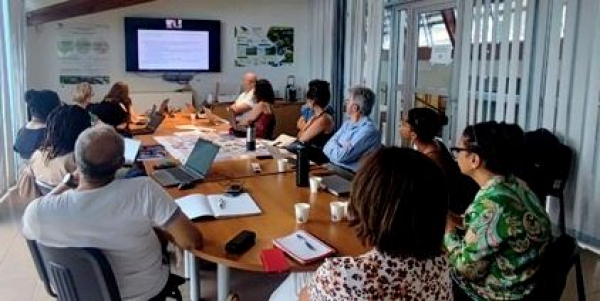
Feedback workshop at the CAEC on 5 June 2026, attended by representatives of the DAAF, the three EPCI of Martinique and the Carbet des Sciences © DR
The findings of the MARACUDJA project were presented on 5 June 2026 at the CAEC, during a morning of discussions bringing together the project partners and key stakeholders in food, education and local development, and again on 25 June 2026 at Villa Chanteclerc, at a meeting organised by the project’s funders.
This study follows on from the call for projects launched in 2023 by the Directorate for Food, Agriculture and Forestry (DAAF), the French Agency for Ecological Transition (ADEME), the Martinique Regional Health Agency (ARS), the Directorate for the Economy, Employment, Labour and Solidarity (DEETS) and the Territorial Authority of Martinique (CTM), with the aim of promoting a balanced, locally sourced diet and diversifying protein sources.
These feedback sessions provided an opportunity to share the study’s main findings, to inform collective discussions about how to promote more sustainable eating, and to highlight the benefits the project offers for Martinique.
Results & impact 18 September 2026
Results & impact 16 September 2026

Results & impact 11 September 2026