








- Home
- Worldwide
- Our regional offices
- Continental Southeast Asia
- News : Continental Southeast Asia
- CIRAD supports South–South agricultural cooperation Viet Nam Africa
CIRAD supports South–South agricultural cooperation between Viet Nam and Africa
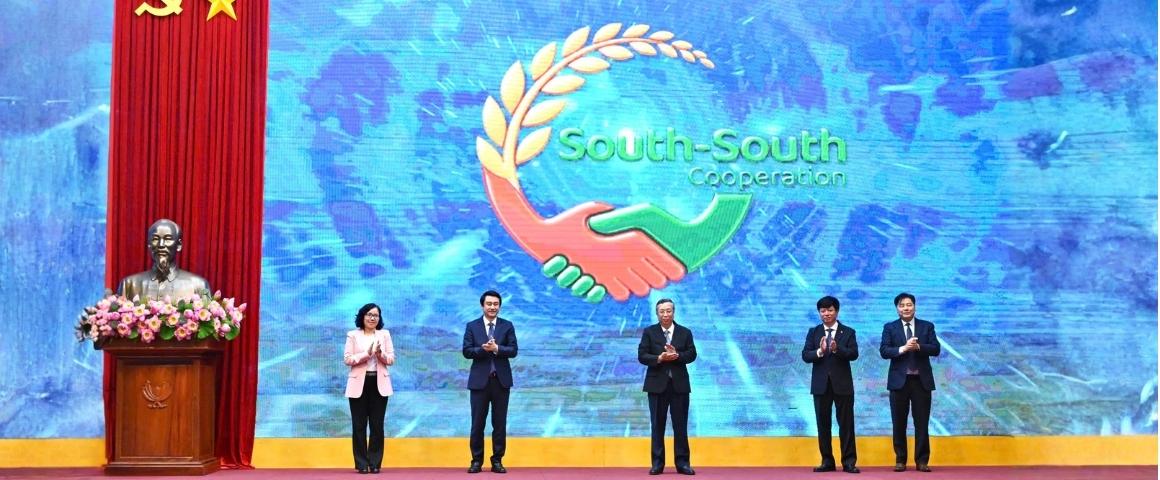
From left to right: Nguyễn Phương Trà, Lê Anh Tuấn, Hoàng Trung, Phạm Ngọc Mậu and Lê Quốc Thanh. © VAN News
Viet Nam has launched a new South–South Cooperation Working Group in Agriculture, creating a platform for cooperation with African partner countries around shared agricultural challenges. For CIRAD, which took part in the launch event in Hanoi, the initiative opens new opportunities to connect research, policy and field action between Africa, Asia and Europe.
On 29 May 2026, the Ministry of Agriculture and Environment of Viet Nam, in coordination with the Ministry of Foreign Affairs, launched the South–South Cooperation Working Group in Agriculture at a meeting on agricultural cooperation between Viet Nam and African partner countries.
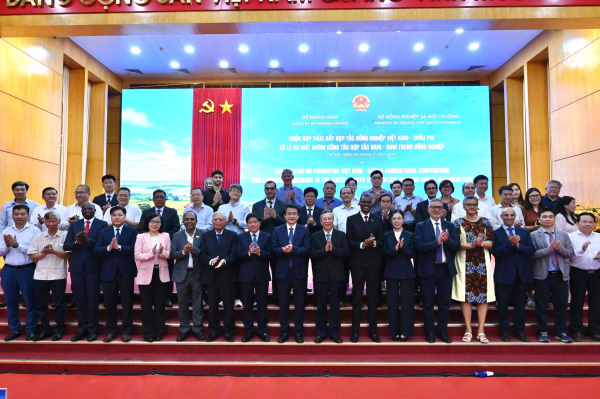
Participants at the launch of the Working Group on South-South Cooperation in Agriculture, held in Hanoi on May 29, 2026. © VAN News
The event brought together more than 150 participants, including representatives of Vietnamese ministries and agencies, international organisations, development partners, research institutes, universities, sector associations and businesses. The African diplomatic presence included ambassadors from Angola, Mozambique, Burundi, the Democratic Republic of the Congo, Ghana, Rwanda and Zimbabwe, as well as representatives of other African missions and the Ambassador of Viet Nam to Nigeria.
For CIRAD, the event highlighted one of the main challenges of South–South cooperation: turning shared experience and political dialogue into practical action on the ground.
A new platform for operational cooperation
Giving cooperation a common framework
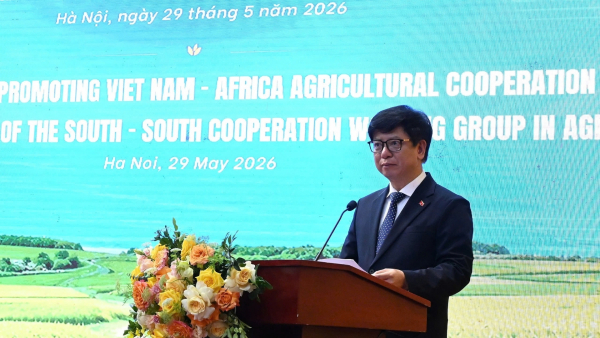
Phạm Ngọc Mậu, Deputy Director General of the International Cooperation Department at the Ministry of Agriculture and Environment and Head of the South–South Cooperation Working Group in Agriculture. © VAN News
Phạm Ngọc Mậu, Deputy Director General of the International Cooperation Department at the Ministry of Agriculture and Environment and Head of the South–South Cooperation Working Group in Agriculture, positioned the new mechanism as a way to align Viet Nam’s agricultural expertise with priorities expressed by partner countries. Previous cooperation had produced concrete results, but often remained fragmented. The Working Group is expected to address this gap by connecting policy, expertise, research, private-sector capacity and triangular cooperation initiatives.
To make this operational, the Working Group will focus on six pillars of action:
- building a focused portfolio of South–South agricultural cooperation initiatives
- mobilising a Vietnamese expert network
- promoting triangular cooperation models
- increasing private-sector participation
- strengthening coordination with African embassies, Vietnamese diplomatic missions in Africa, ministries and localities
- gradually building a broader cooperation ecosystem, including needs, experts, businesses, priority projects, pilot models, financing mechanisms and dialogue channels
Priority fields include rice systems, food crops, coffee, aquaculture, livestock, forestry, irrigation, agricultural extension, climate adaptation and agricultural value chains.
A response to shared agricultural pressures
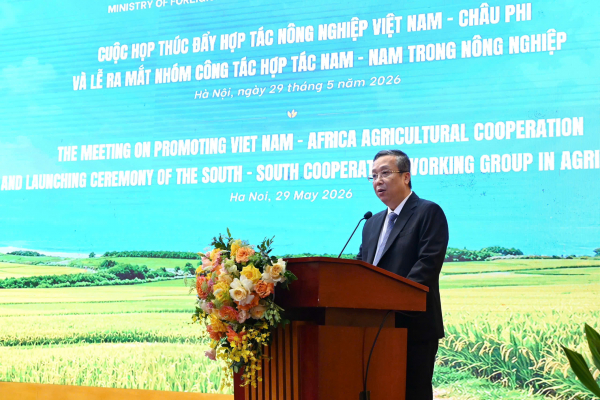
Hoang Trung, Vice Minister of Agriculture and Environment. © VAN News
Hoàng Trung, Vice Minister of Agriculture and Environment, framed the launch as a response to shared pressures facing countries of the Global South, including food security, climate change, disrupted supply chains and pressure on natural resources. He also stressed that Viet Nam’s agricultural experience should not be seen as a model to be copied directly, but rather as a source of practical lessons that can be adapted to different contexts.
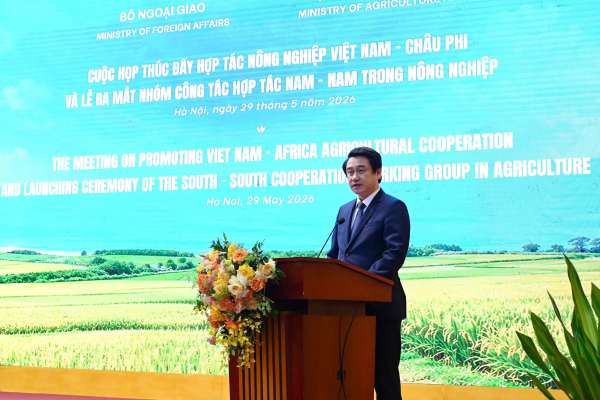
Lê Anh Tuấn, Deputy Minister of Foreign Affairs. © VAN News
Lê Anh Tuấn, Vice Minister of Foreign Affairs, reaffirmed the Ministry’s commitment to work closely with the Ministry of Agriculture and Environment to support the Working Group. He outlined three priorities: helping create a favourable political environment and deepen trust between Viet Nam and African countries; accompanying Vietnamese businesses in identifying opportunities for agricultural investment, agro-processing and technology transfer in Africa; and building a partner network to mobilise resources and develop new projects, including through triangular, multi-party and public–private partnership models.
Connecting Viet Nam’s experience with African partner-country priorities
Viet Nam’s experience
Viet Nam’s agricultural transformation was one of the main reference points for the discussion. Over the past decades, the country has moved from food insecurity to becoming a major agricultural producer and exporter, with recognised experience in rice systems, irrigation, agricultural extension, smallholder farming, aquaculture, value chains and market integration.
This experience has also travelled beyond its borders: more than 2,000 Vietnamese experts have worked in countries of the Global South, supporting programmes based on adapted technologies, farmer training and hands-on learning. The video below traces this trajectory, from field cooperation and productivity gains to the creation of the new Working Group.
Priorities from Angola and Zambia
The first panel gave the floor to partner countries, with Angola and Zambia outlining concrete agricultural priorities. For Fernando Miguel, Angola's Ambassador to Viet Nam, the question is not whether Angola has agricultural potential, but how to turn that potential into productivity after years of disruption. With fertile land and favourable climatic conditions, Angola is seeking practical cooperation to strengthen irrigation, improve access to seeds and techniques, support farmer training, and adapt mechanisation to smallholder conditions.
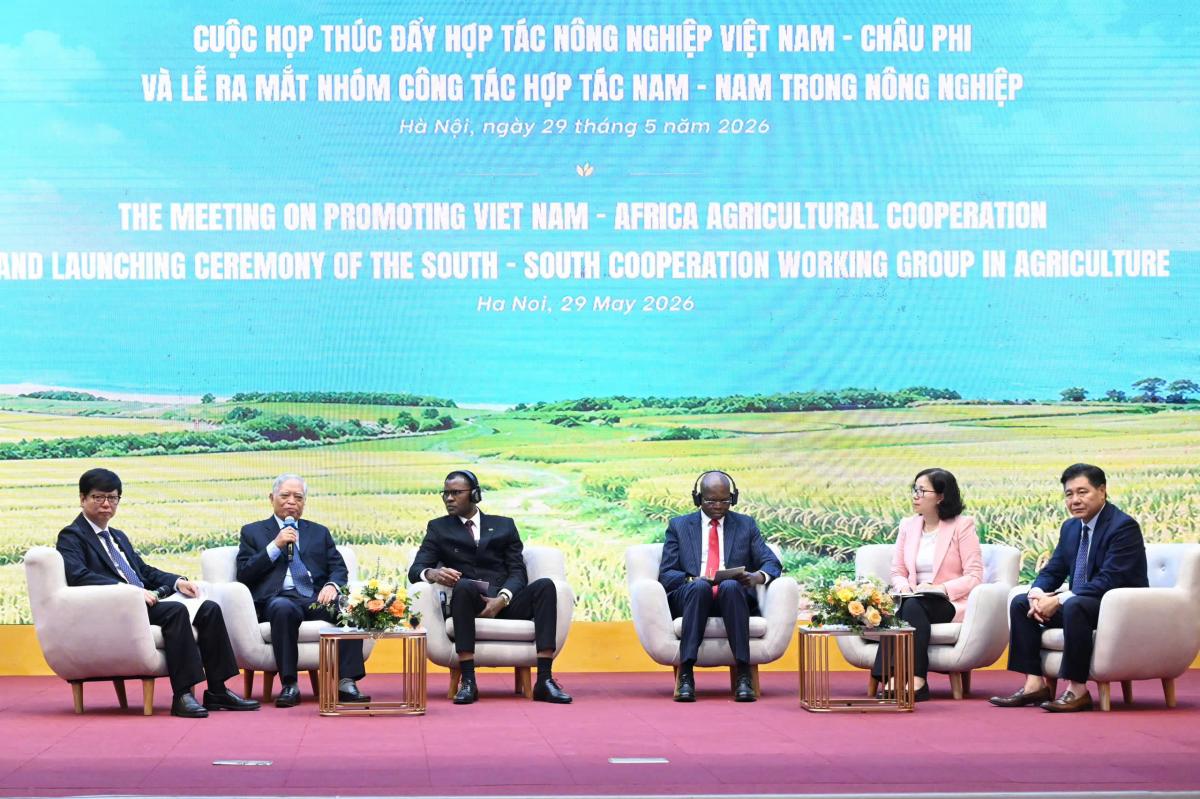
Panel 1 on cooperation needs and opportunities, with Phạm Ngọc Mậu, Bùi Bá Bổng, Fernando Miguel, Morecome Mumba, Nguyễn Phương Trà and Lê Quốc Thanh. © VAN News
For Zambia, the discussion centred on agriculture’s role in economic diversification. Morecome Mumba, High Commissioner of Zambia to Malaysia, pointed to agriculture as a key sector for economic diversification, with opportunities to increase productivity, improve water management, and develop value chains in areas such as rice, coffee and aquaculture.
These perspectives point to a cooperation model built around joint diagnosis, field adaptation, capacity building and sustained support. They also bring African experience, local knowledge and territory-specific solutions into the discussion, making South–South cooperation a process of mutual learning rather than one-directional transfer.
Partnership platforms as tools for cooperation
The second panel focused on how South–South cooperation can move “from policy to the field”, bringing together representatives from CIRAD, FAO, IDH, Xuan Thien Group and the Vietnam Academy of Forest Sciences to discuss how agricultural cooperation projects in Africa can be designed, tested and sustained in real conditions.
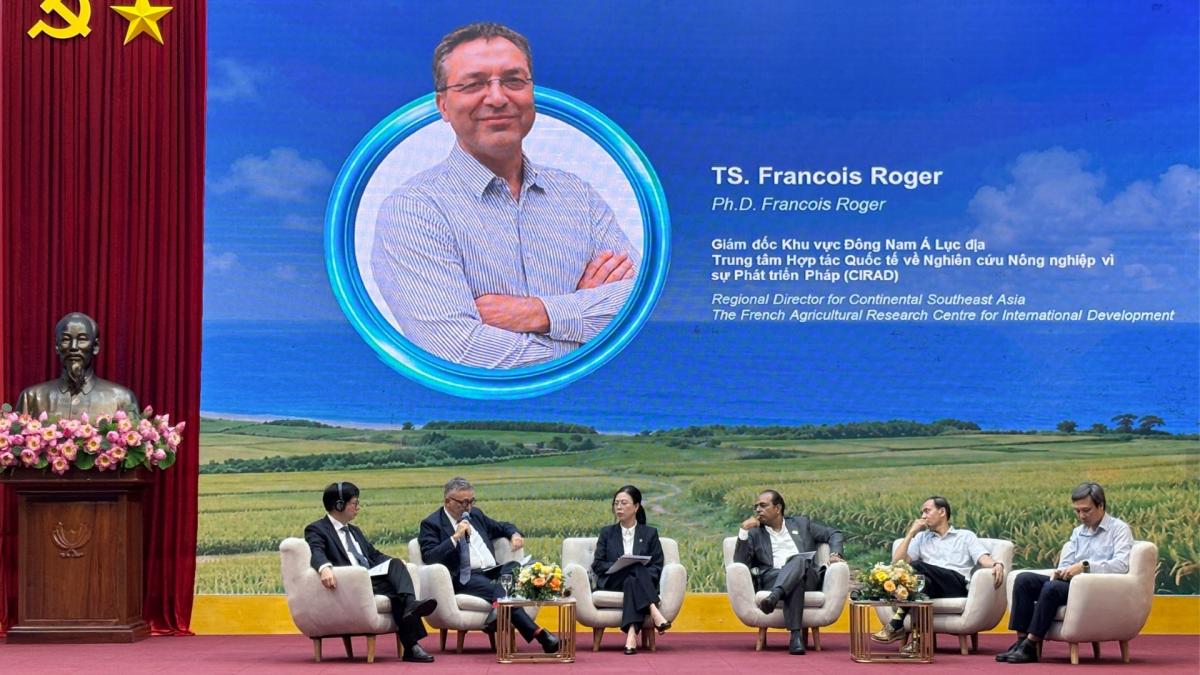
From left to right: Phạm Ngọc Mậu, François Roger, Thai Kieu Huong, Vinod Ahuja, Huynh Tien Dung and Tran Lam Dong. © CIRAD
“For us, South–South cooperation is not a one-way transfer of technology,” said François Roger, CIRAD Regional Director for Mainland Southeast Asia. “It is mutual learning, joint experimentation, and the co-design of solutions with farmers, researchers, public authorities, communities and the private sector.”
Gilles Anglès, Attaché de coopération Santé et Développement social at the French Embassy in Viet Nam, also emphasized France’s role as a facilitator between African and Asian partners, including through triangular cooperation. Referring to the CIRAD-coordinated Viet Nam–Senegal exchange, he linked this approach to broader priorities such as One Health and the need to connect health, agriculture, environment and development.
FAO brought a complementary perspective. Vinod Ahuja, FAO Representative in Viet Nam, noted that “transferring technology is often relatively straightforward”, while the deeper elements of agricultural transformation are much harder to replicate from one context to another.
Research in action
Moving cooperation from policy to the field
CIRAD can draw on its work in Africa and Southeast Asia to support this emerging cooperation framework. Through its regional offices, long-established partnership network, and research platforms, CIRAD works with institutions in more than 100 countries in tropical and subtropical regions.
These partnerships bring together scientists and institutions around shared challenges including agroecology, sustainable food systems, One Health, climate adaptation, biodiversity conservation, aquaculture, value chains and territorial resilience.
Viet Nam–Senegal bilateral visit
The recent Viet Nam–Senegal cooperation on agroecology and rice systems offers a concrete example of how South–South cooperation can move from shared interest to scientific exchange.
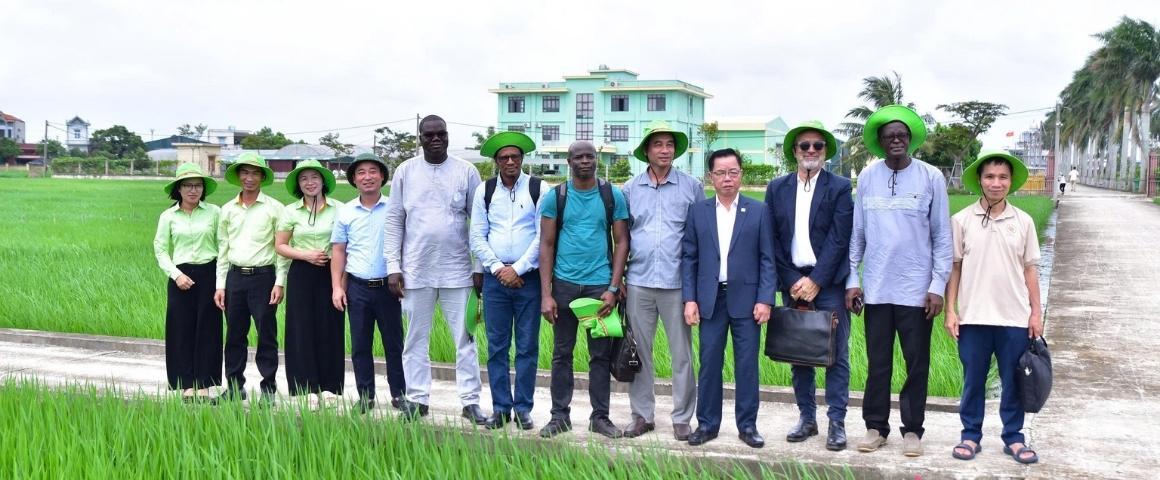
The Senegalese delegation visiting Thai Binh Seed’s rice breeding facilities in Hưng Yên province, Vietnam. © C. Quan, VAN news
Coordinated by CIRAD and supported by the French Ministry for Europe and Foreign Affairs, the FEF-R project enabled two reciprocal study missions in 2025: first from Viet Nam to Senegal, then from Senegal to Viet Nam. As detailed in previous CIRAD articles on both exchanges, the missions connected policy dialogue, research institutions and field visits, while exploring shared challenges around food security, climate change, salinisation and resilient farming systems.
For the new Working Group, this example is relevant because it shows a method: comparing field realities, involving research institutions, identifying possible next steps and opening pathways for future joint projects.